

In this piece, I’ll talk about the DePIN Revolution and how 5G networks and crypto-powered Wi-Fi are revolutionizing global communication.
- What is DePIN Revolution?
- How DePIN Works in Wi-Fi & 5G
- Benefits of Crypto-Powered Wi-Fi & 5G
- Reduced Cost of Building Infrastructure
- Network Building Speed
- Connect Underserved and Rural Areas
- Earning Potential from Hotspots
- Network Community Control
- Network Resilience
- Innovation and Increased Competition
- Challenges and Risks
- Regulatory ambiguity
- Token Price Risk
- Network Quality and Reliability
- Scalability
- Security
- Cost of Hardware and Setup
- Barriers to Adoption
- DePIN vs Traditional Telecom
- Real-World Use Cases
- Broadband Access in Remote Areas
- Improved Urban Coverage
- Networks for IoT Devices
- Smart City Infrastructure
- Reliable Communication During Emergencies
- Wi-Fi/5G for Mobile Devices
- Networks for Business and University Campuses
- Future of DePIN in Global Connectivity
- Conclusion
- FAQ
You will discover how decentralized physical infrastructure networks leverage token rewards, community-owned hotspots, and blockchain incentives to expand inexpensive internet access globally and challenge established telecom infrastructures.
What is DePIN Revolution?
The emergence of Decentralized Physical Infrastructure Networks, a concept that builds real-world infrastructure like Wi-Fi and 5G networks using blockchain and cryptocurrency incentives, is known as the “DePIN Revolution.”
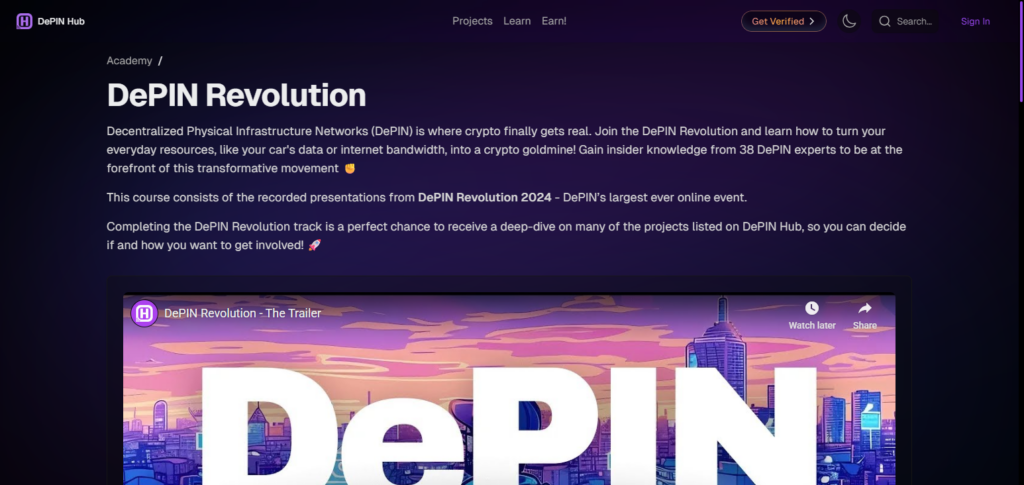
DePIN enables people to set up hotspots or nodes and earn tokens for offering coverage and connectivity rather than depending on big telecom companies. Community-owned wireless systems can lower costs, enhance connectivity in remote areas, and improve transparency, as shown by initiatives like Helium Network and World Mobile.
DePIN seeks to democratize internet access while generating new economic opportunities worldwide by fusing smart contracts, token rewards, and wireless technologies.
How DePIN Works in Wi-Fi & 5G
Community Based, Operated Hotspots & Nodes: Customers buy and install Wi-Fi hotspots or 5G small cells at their houses or work, and as a result, their network coverage is improved and receive cryptocurrency as a reward.
Token-Based Incentives: Participants earn cryptocurrency tokens on the blockchain for coverage, data relay, and downtime, aligning motivation with network expansion.
Proof-of-Coverage: Hotspot networks are covered through the use of and compliance with cryptographic and coverage-proven location challenges.
Blockchain Reward Mechanisms: Token rewards are calculated and distributed using blockchain technology and smart contracts.
Community-Based Voting: Token holders can control the advancement and setting of guidelines and rewards for the network.
Data Transfer and Payment: The closest hotspot connects to the device, and data utilization is recorded on the blockchain.
Collaborated IoT & 5G Frameworks: The Helium Network and Pollen Mobile use combined decentralized 5G and IoT for user-based wireless networks.
Benefits of Crypto-Powered Wi-Fi & 5G
Reduced Cost of Building Infrastructure
Hotspots funded by the community lower great amounts of capital expenditure required by telecoms and allow more cost-efficient and cost-effective network builds.
Network Building Speed
Almost anyone can build a node. This leads to the network growing more easily and more quickly in urban and rural areas, without needing to wait for telecoms to get permission.
Connect Underserved and Rural Areas
It becomes economically viable to serve low population areas due to decentralized networks, especially areas that traditional network providers neglect.
Earning Potential from Hotspots
Those who participate in hotspot activities earn cryptocurrency. This turns providing Internet access into a financially-beneficial activity for the community.
Network Community Control
Networks and services are controlled by the users instead of corporate entities, which leads to greater equity and transparency.
Network Resilience
A network built on a decentralized infrastructure removes points of failure and makes the entire network more resilient to outages and censorship.
Innovation and Increased Competition
Networks like the World Mobile and Helium Networks break up Telecom monopolies, and in turn, increase competition for the improvement of services. This also makes room for greater innovation.
Challenges and Risks
Regulatory ambiguity
Decentralized networks could run into compliance issues or blockades by governments as laws relating to telecommunication and spectrum licensing differ across jurisdictions.
Token Price Risk
Hotspot earnings are dependent on the value of the crypto token, and therefore, volatility can directly impact the operator’s profitability.
Network Quality and Reliability
Community ownership of the infrastructure creates issues with consistency in speed, uptime, and overall service quality.
Scalability
The blockchain may become congested with rapid expansion and result in slower processing times and elevated transaction costs during times of high activity.
Security
If not properly secured, the decentralized nodes may become exploited for hacking, and there are spoofing and fraudulent coverage claims.
Cost of Hardware and Setup
The costs associated with setting up and acquiring hotspots or 5G equipment can be substantial and are not certain to yield a profit.
Barriers to Adoption
The Helium Network and Pollen Mobile projects continue to rely on user adoption, and the level of awareness compared to standard telecom companies is still minimal.
DePIN vs Traditional Telecom
| Feature | DePIN (Decentralized Physical Infrastructure Networks) | Traditional Telecom |
|---|---|---|
| Ownership Model | Community-owned infrastructure operated by individuals and node providers | Centrally owned and controlled by large telecom corporations |
| Incentive Structure | Token-based rewards for providing coverage and maintaining uptime | Revenue generated through customer subscriptions and service fees |
| Infrastructure Deployment | Rapid expansion through crowd-sourced hotspot installations | Slow rollout due to high capital expenditure and regulatory approvals |
| Cost Structure | Lower upfront network cost distributed among participants | High infrastructure and maintenance costs borne by the company |
| Governance | Often governed by token holders through decentralized voting | Corporate executives and shareholders control decisions |
| Coverage Expansion | Incentivized growth in underserved and rural areas | Focus mainly on high-profit urban markets |
| Transparency | Blockchain-based reward distribution and public verification | Limited operational transparency |
| Examples | Helium Network, World Mobile | Companies like AT&T, Verizon |
Real-World Use Cases
Broadband Access in Remote Areas
Decentralized hotspots can provide low-cost Wi-Fi services to rural and remote areas, where traditional telecom providers have not deployed network infrastructure because it is not economically feasible in the rural areas they serve.
Improved Urban Coverage
Small cells and Wi-Fi that are installed and maintained by communities expand urban 5G+Wi-Fi coverage, and alleviate network congestion in crowded urban areas.
Networks for IoT Devices
With systems like the Helium Network, IoT devices like smart trackers, meters, and sensors can communicate at low costs, and no coverage outages.
Smart City Infrastructure
With DePIN systems, smart cities can have integrated systems for traffic monitoring, environmental data collection, and improved public safety.
Reliable Communication During Emergencies
While traditional telecom and Wi-Fi services are out, decentralized communication services are still operational.
Wi-Fi/5G for Mobile Devices
Services like Pollen Mobile and World Mobile provide decentralized alternatives to traditional telecom carriers.
Networks for Business and University Campuses
Businesses and universities can install decentralized 5G networks for internal communications.
Future of DePIN in Global Connectivity
As blockchain, IoT, and 5G technologies continue to advance, DePIN’s future in global connectivity appears more and more bright. Decentralized networks have the potential to significantly lower deployment costs and increase coverage in underserved areas by fusing token incentives with physical infrastructure.
Scalable, community-driven approaches that challenge established telecom behemoths are already being demonstrated by initiatives like Helium Network and World Mobile.
DePIN may interact with edge computing, smart cities, and possibly upcoming 6G systems if collaborations with established carriers expand and legal clarity improves, ultimately changing how wireless networks are built, owned, and accessed globally.
Conclusion
The development, ownership, and monetization of wireless infrastructure have all fundamentally changed as a result of the DePIN Revolution.
Decentralized networks enable people to become infrastructure producers instead of merely consumers by fusing blockchain technology with actual Wi-Fi and 5G gear. Initiatives like World Mobile and Helium Network demonstrate how community-driven connection may reduce costs, increase access in remote areas, and enhance transparency.
The long-term goal of decentralized, incentive-powered telephony might transform global connections and build a more inclusive, resilient digital future, even while issues like legislation, token volatility, and scalability still exist.
FAQ
What is the DePIN Revolution?
The DePIN Revolution refers to Decentralized Physical Infrastructure Networks, where blockchain and crypto incentives are used to build and operate real-world infrastructure like Wi-Fi and 5G networks through community participation.
How does DePIN differ from traditional telecom?
Unlike centralized telecom companies, DePIN networks are community-owned. Individuals deploy hotspots or nodes and earn tokens, while governance and rewards are managed transparently via blockchain systems.
How do participants earn rewards in DePIN?
Users earn crypto tokens by installing hotspots, providing wireless coverage, transferring data, and maintaining network uptime. Rewards are distributed automatically through smart contracts.
Is DePIN only for Wi-Fi and 5G?
No. While wireless networks are a major use case, DePIN also applies to energy grids, storage networks, transportation systems, and other physical infrastructure powered by token incentives.
What are some examples of DePIN wireless projects?
Notable projects include Helium Network for IoT and 5G connectivity and World Mobile, which focuses on expanding affordable internet access globally.