

In this piece, I’ll talk about how Selective Privacy is changing how, in the digital era, financial privacy and legal compliance are balanced.
- What is Selective Privacy?
- What Are Zero-Knowledge Proofs (ZK Proofs)?
- How ZK Proofs Enable “Legal” Privacy
- Proof of Tax Liability Without Disclosure
- Verifiable Compliance of Certain Transactions
- Vouching For/Against Certain Financial Activities
- Audit-Proof Cryptographic Attestation
- Indirectly Owning Verified Customer/KYC Data
- Automated Compliance in DeFi
- Data Storage Risk Reduced
- Benefits of ZK-Based IRS Compliance
- Improved Financial Privacy
- Less Disclosure to Comply
- Less Exposure to Data Breaches
- Accuracy and Efficiency of Audits
- Verification without Trust
- Self-Custodial Protection
- Web3 and Defi Freedom
- The IRS & Crypto Tax Reporting
- The Problem: Privacy vs. Transparency
- Technical & Regulatory Challenges
- Real-World Use Cases
- Privacy-Focused Blockchain Networks
- Layer 2 Scaling Solutions for Ethereum
- Compliance in Enterprise Blockchain
- Systems for Verifying Identity
- Proof of Reserves and Solvency
- Selective Tax Reporting
- Future Outlook: Privacy-Compliant Crypto Infrastructure
- Conclusion
- FAQ
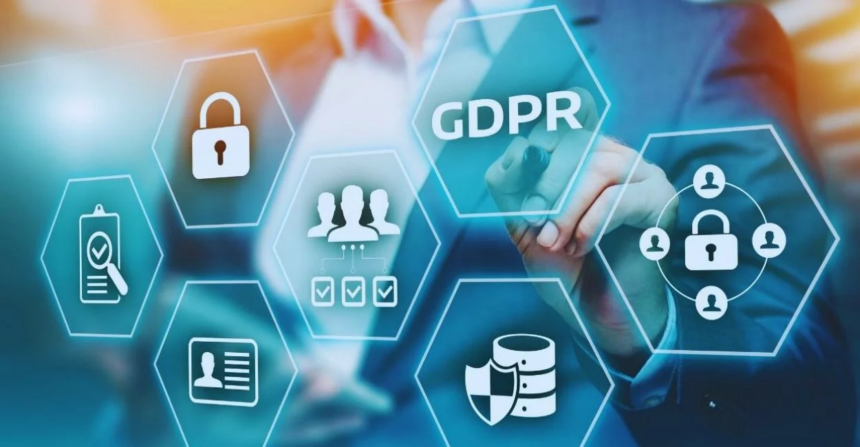
You will discover how crypto tax reporting frameworks, Zero-Knowledge proofs, and selective disclosure help people and companies maintain legal compliance while shielding private transaction data from needless public disclosure.
What is Selective Privacy?
A data-control technique known as “selective privacy” permits people or organizations to disclose some information while keeping the rest private.
t refers to demonstrating compliance in blockchain and digital finance—such as tax responsibility, identification verification, or transaction validity—without disclosing complete wallet histories or private information.
By employing cryptographic techniques like Zero-Knowledge proofs to verify claims without disclosing underlying information, this strategy strikes a compromise between transparency and confidentiality.
In regulatory settings, such as IRS reporting, where users must prove accuracy and legality while minimizing needless data exposure, selective privacy is particularly crucial for lowering security risks, identity theft, and surveillance concerns in decentralized ecosystems.
What Are Zero-Knowledge Proofs (ZK Proofs)?
Cryptographic techniques known as Zero-Knowledge Proofs (ZK Proofs) enable one party (the prover) to demonstrate to another (the verifier) that a statement is true without disclosing any underlying information.
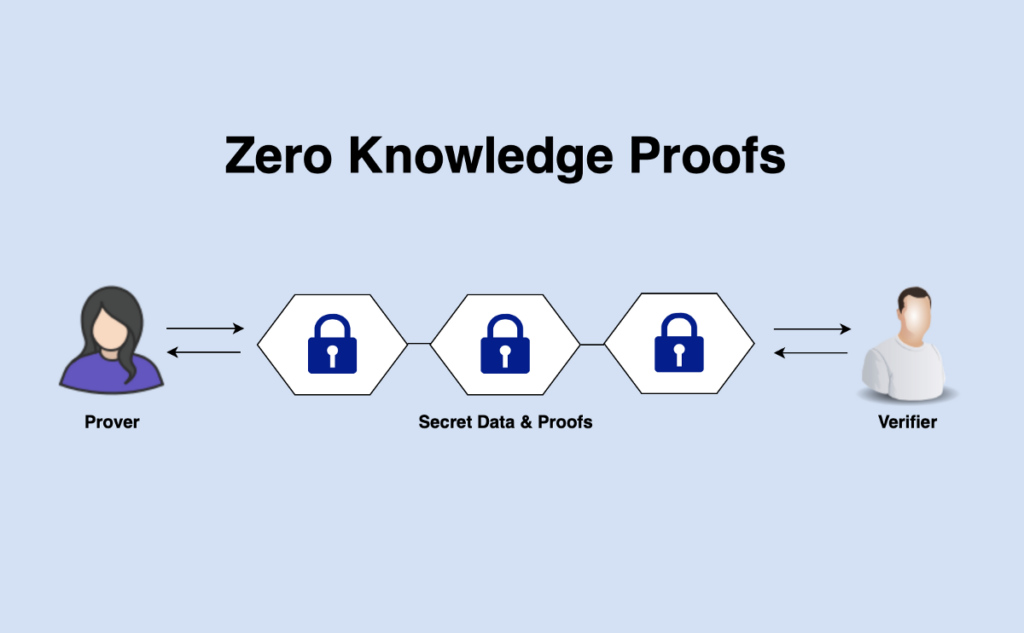
This implies that someone can demonstrate they have enough money, a legitimate transaction, or accurate tax computations in blockchain systems without disclosing wallet balances or transaction histories. The efficiency and trust assumptions of popular implementations such as zk-SNARKs, zk-STARKs, and Bulletproofs vary.
ZK proofs are crucial for safe digital identification, DeFi compliance, and privacy-preserving regulatory reporting in contemporary financial systems because they improve privacy, minimize data exposure, and allow scalable verification.
How ZK Proofs Enable “Legal” Privacy
Proof of Tax Liability Without Disclosure
Users can prove tax liability without disclosing their whole wallet transaction history. This allows people to prove gainful income tax, thus showing compliance to the IRS as well as maintaining the privacy of their wallet.
Verifiable Compliance of Certain Transactions
Users can protect their other financial activities by disclosing a compliance transaction of the reported income event, thus fully transparent transaction.
Vouching For/Against Certain Financial Activities
Users can conceal the details of assets and the distribution of assets and can prove total assets before and after a particular instant.
Audit-Proof Cryptographic Attestation
During an audit, taxpayers can provide verifiable proof of the calculations, thus leaving it to the public to provide access to the keys and data.
Indirectly Owning Verified Customer/KYC Data
Data related to KYC is not compromised as individuals can prove meeting the KYC regulatory threshold without showing the complete identity.
Automated Compliance in DeFi
ZK proofs enable DeFi protocols to have a layer of compliance that can verify compliance without the collection and storage of sensitive information by the users.
Data Storage Risk Reduced
Because the financial data is not stored as a whole, it is not subject to unauthorized access and leaks and remains legally compliant.
Benefits of ZK-Based IRS Compliance
Improved Financial Privacy
Users can prove income or capital gains without revealing their complete financial history. This spares their financial data from being exposed.
Less Disclosure to Comply
ZK technology provides the ability to meet IRS reporting obligations without having to disclose more information than necessary.
Less Exposure to Data Breaches
Not disclosing complete wallet records or financial data means fewer risks of data breaches.
Accuracy and Efficiency of Audits
Data criptosystems can absolutely prove mathematically relevant records and, thus, can resolve most of the disputes and shorten the audit period.
Verification without Trust
Compliance can, Lex mathematically be verified, without the trust of third parties, which increases the level of confidence.
Self-Custodial Protection
Users can prove compliance without revealing any of their keys or exposing their finances.
Web3 and Defi Freedom
ZK technology for IRS Reporting can be used to funnel freely into any decentralized application for automatic compliance with tax reporting while preserving users’ privacy.
The IRS & Crypto Tax Reporting
Cryptocurrency transactions are subject to capital gains and income tax regulations since the Internal Revenue Service (IRS) views cryptocurrency as property for federal tax reasons.
Users must compute gains or losses based on the difference between the purchase price (cost basis) and the sale price when they trade, sell, or spend digital assets. Cryptocurrency obtained through airdrops, staking, or mining is typically subject to ordinary income tax.
Even if exchanges do not provide tax forms, taxpayers are nevertheless required to record their actions on an annual basis. Under US tax law, inaccurate reporting of cryptocurrency transactions may lead to fines, interest, or audits.
The Problem: Privacy vs. Transparency
| Aspect | Privacy Focus | Transparency Focus |
|---|---|---|
| Data Visibility | Users keep wallet addresses, balances, and transaction history confidential. | All transactions are publicly visible on blockchain explorers. |
| Regulatory Compliance | Share only required tax information using selective disclosure. | Full transaction history may be reviewed for compliance verification. |
| Security Risk | Lower exposure reduces risk of hacks, identity theft, and targeting. | Public visibility can expose high-value wallets to cyber threats. |
| Audit Process | Provide cryptographic proof of accuracy without revealing raw data. | Authorities may request complete financial records. |
| User Control | Individuals control what financial data is revealed and to whom. | Greater oversight by regulators and centralized institutions. |
| Trust Model | Trust built through mathematical verification (e.g., ZK proofs). | Trust built through open ledger transparency and third-party review. |
| Financial Confidentiality | Protects business strategies, investments, and personal wealth. | Public traceability can reveal trading strategies and holdings. |
Technical & Regulatory Challenges
High Computational Costs: Implementing ZKP in giant systems gives rise to several challenges. It requires enormous computing and processing costs.
Scalability Limitations: Some ZKP systems show improvements, however, they still struggle to manage real-time environments with high transactional latency and throughput challenges.
Complex Integration: If ZKP systems are to be integrated into wallets, exchanges and tax softwares, they will need a major overhaul in the underlying systems and the integration of special cryptography.
Lack of Standardization: Compliance to ZKP-based reporting is a cross jurisdiction and cross platform reporting problem.
Regulatory Uncertainty: ZK-based tax reporting methods have no endorsed guidance from the tax authorities like the Internal Revenue Service.
Legal Interpretation Risks: If there is association of PETs with tax evasion and illicit activities, they will come under the regulatory radar.
Audit Acceptance Challenges: There may be government agency requirements for additional proof above the levels of cryptographic proof for audits.
Real-World Use Cases
Privacy-Focused Blockchain Networks
Zcash uses zk-SNARKs for shielded transactions. ZK-SNARKs allow users to prove that they sent a payment without revealing the sender, receiver, or amount of the payment.
Layer 2 Scaling Solutions for Ethereum
ZKSync and StarkNet use ZK proofs to execute transactions outside of Ethereum, and ZK proofs provide the same security and transparency as transactions on Ethereum.
Compliance in Enterprise Blockchain
Businesses on Polygon use ZK technologies to meet requirements to control supply chain and finance through selective disclosure.
Systems for Verifying Identity
Digital ID solutions based on ZK technology allow users to prove their age (as well as their residency or accreditation) without revealing their full ID, which is important for KYC and other financial regulations.
Proof of Reserves and Solvency
Exchanges can use ZK proofs to show they have enough assets to cover their liabilities without revealing customers’ individual balances.
Selective Tax Reporting
New accounting solutions for crypto are looking at ZK systems to show the users’ taxable income without revealing the entire transaction history in their wallet.
Future Outlook: Privacy-Compliant Crypto Infrastructure
Integrating Zero-Knowledge technology directly into popular blockchains, wallets, and financial apps will probably be the main focus of privacy-compliant cryptocurrency infrastructure in the future.
ZK-based scaling solutions are being used by networks like Ethereum more frequently, increasing the efficiency and accessibility of privacy-enhancing verification. Authorities like the Internal Revenue Service may eventually accept cryptographic proofs as legitimate compliance tools when regulators improve their policies around digital assets.
Global digital banking may eventually shift toward safe, selective transparency as standardized frameworks that allow users to automatically provide audit-ready proofs develop. This would enable legally compliance reporting without compromising financial anonymity.
Conclusion
A significant development in digital finance is selective privacy, which closes the long-standing gap between regulatory transparency and individual anonymity. Users can prove transaction legality, asset ownership, and tax compliance without disclosing their whole financial history by utilizing Zero-Knowledge proofs.
By using mathematical verification instead of blind disclosure, this method lowers security risks, restricts needless data sharing, and builds confidence.
Selective privacy may serve as the cornerstone of compliant crypto ecosystems as regulatory frameworks develop and privacy technologies mainstream, guaranteeing that legal requirements are fulfilled while upholding the fundamental right to financial privacy in an open digital environment.
FAQ
What is selective privacy in crypto?
Selective privacy is the ability to prove specific financial or compliance-related information without revealing full transaction histories, wallet balances, or personal data.
Is selective privacy legal?
Yes. Selective privacy focuses on complying with regulations while minimizing unnecessary data exposure. As long as required information is accurately reported to authorities like the Internal Revenue Service, it remains within legal boundaries.
How do Zero-Knowledge (ZK) proofs support selective privacy?
ZK proofs allow users to verify the truth of a statement—such as total taxable income—without revealing the underlying data used to calculate it.
Can the IRS audit a ZK-based tax report?
In principle, yes. A ZK-based system can generate cryptographic proofs that confirm accuracy. However, formal regulatory standards for accepting such proofs are still evolving.