

People exchange contracts based on future events, such as elections or economic trends, in prediction markets, which are cutting-edge platforms.
- What Are Prediction Markets?
- Factors Behind Polymarket’s Success
- Incentivized Participation
- Crowdsourced Wisdom
- Real-time Information Flow
- Transparency
- Decentralized Structure
- Focus on High-Interest Events
- How Polymarket Works
- Event Creation
- Prediction Contract Trading
- Market Price and Probability
- Staking money and accuracy
- Real-time Informational Trading and Price Updates
- Event Closing and Contract Paying
- Market Trading Movements
- Real-World Applications
- Election Forecasting
- Economic Indicators
- Corporate Decision-Making
- Public Health Events
- Sports and Entertainment
- Global Crisis Prediction
- Investment Strategies
- Risks and Ethical Considerations
- Legal Issues
- Price Impacting
- Market Inefficiency Due to False News
- Death Wagering
- Finacial Risk
- Market Participation
- Privacy and Security
- Pros & Cons
- Conclusion
- FAQ
These marketplaces frequently predict results more accurately than traditional news or polls by combining a variety of viewpoints and rewarding precise predictions with real money.
I’ll go into great detail on prediction markets in this post, including its benefits, practical applications, and methods of operation.
What Are Prediction Markets?
Specialized financial platforms known as prediction markets allow users to purchase and sell contracts depending on how future events turn out. The price of each contract reflects the overall likelihood that a particular prediction—such as the outcome of an election, a sporting event, or a technical advancement—will come to pass.
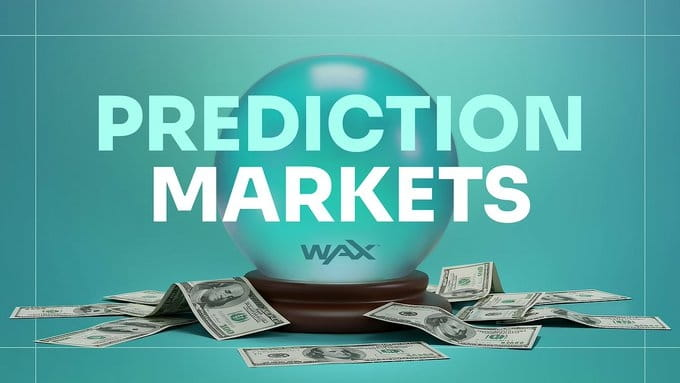
Prediction markets, which are motivated by actual financial stakes, combine the facts and opinions of a wide range of participants, in contrast to traditional news or expert forecasts. The market converges toward an accurate projection because traders are more eager to invest when they are more certain of a certain conclusion.
By using the wisdom of the crowd, platforms such as Polymarket have demonstrated that these markets can frequently forecast events more quickly and correctly than traditional news sources.
Factors Behind Polymarket’s Success
Incentivized Participation
Users put up real money, causing them to make predictions based off of reason and fact, instead of guesswork.
Crowdsourced Wisdom
The platform draws from an entire world of knowledge, providing a collective understanding beyond that of a single expert.
Real-time Information Flow
The market reflects changes in news and events in real-time, resulting in a continuous, accurate representation of the current expected outcome.
Transparency
Users can see market movements and trades, improving confidence in the system.
Decentralized Structure
Users from multiple regions can participate freely, and the system runs with reduced centralization and bias.
Focus on High-Interest Events
The system prioritizes liquidity and engagement by focusing on critical economic, social, and political events.
How Polymarket Works
Event Creation
Polymarket lists upcoming future events (elections, economic predictions, news worldwide) for users to trade predictions on.
Prediction Contract Trading
Users purchase predictions on whether events will occur, by buying either “yes” or “no” contracts.
Market Price and Probability
Based on crowd opinion, the contract price reflects their collective estimation of the future event.
Staking money and accuracy
Users stake real money, this encourages them to do research and make informed decisions, instead of mindlessly guessing.
Real-time Informational Trading and Price Updates
Continuous trading of contracts provides the information and price updates to the markets.
Event Closing and Contract Paying
Once the event is complete, winning contracts pay out, rewarding those who predicted it correctly, thus closing the event.
Market Trading Movements
Users can see all publicly trading movements, to assess and evaluate all trade activities.
Real-World Applications
Election Forecasting
Predict results of national and local elections with more accuracy than standard polling methods.
Economic Indicators
Predict the changes of Gross Domestic Product (GDP) and other financial indicators.
Corporate Decision-Making
Companies utilize market predictions to drive their product launches, mergers, or other business initiatives.
Public Health Events
Monitor real time the probability of outbreaks and the development of vaccines.
Sports and Entertainment
Anticipate major tournaments, shows, events, etc. and predict their winners.
Global Crisis Prediction
Predict events in the world such as politics, natural disasters, or major global policies.
Investment Strategies
Prediction markets in addition to other financial models are used by investors and hedge funds.
Risks and Ethical Considerations

Legal Issues
Due to the nature of prediction markets, many jurisdictions see them as a form of gambling, creating legal and compliance issues.
Price Impacting
Prediction markets are meant to represent the wisdom of the crowd. However, if an individual trader holds a large enough position, they may be able to impact prices and prediction accuracy.
Market Inefficiency Due to False News
If a prediction market is subject to false news, a value may be ascribed to a possibility that is not truly possible.
Death Wagering
Wagering on the outcomes of tragic, societal, and newsworthy events can raise serious moral issues.
Finacial Risk
Predictions can be proven to be wrong, and participants may suffer serious financial losses.
Market Participation
If too few people trade on an event, predictions can remain wildly inaccurate.
Privacy and Security
If a prediction market is not properly protected, personal information and the transactional history of users may be at risk.
Pros & Cons
| Pros | Cons |
|---|---|
| High Accuracy – Aggregates diverse opinions, often outperforming traditional news and polls. | Regulatory Issues – Subject to gambling laws in many countries. |
| Real-Time Updates – Market prices adjust instantly with new information. | Financial Risk – Participants can lose money on incorrect predictions. |
| Incentivized Participation – Users are motivated to research and make informed bets. | Market Manipulation – Large traders may influence outcomes. |
| Transparency – All trades and market movements are publicly visible. | Ethical Concerns – Betting on disasters or sensitive events can be morally questionable. |
| Global Insights – Access to information from a worldwide participant pool. | Liquidity Limitations – Low participation in niche markets can reduce accuracy. |
Conclusion
In conclusion, by utilizing financial incentives and collective intelligence, prediction markets have shown themselves to be effective instruments for predicting future occurrences. Crowdsourced betting frequently outperforms traditional news and expert predictions, as demonstrated by platforms such as Polymarket.
Although there are risks and moral dilemmas, prediction markets are a priceless tool for companies, governments, and individuals looking for trustworthy foresight because of their accuracy, transparency, and real-time insights.
FAQ
What are prediction markets?
Prediction markets are platforms where participants trade contracts based on future events, with market prices reflecting the likelihood of each outcome.
How do prediction markets work?
Users buy and sell “yes” or “no” contracts on events. Prices adjust in real-time, aggregating collective knowledge to forecast outcomes accurately.
Why are they often more accurate than traditional news?
Financial incentives encourage informed participation, and the wisdom of the crowd captures diverse insights faster than expert opinions alone.
What are the risks?
Participants can lose money, markets may be manipulated, and regulatory or ethical concerns can arise depending on the event.
Where are prediction markets used?
They are used for elections, economic trends, corporate decisions, sports, public health forecasts, and global event predictions.