

In this piece, I’ll go over the Modular vs. Monolithic 2026 controversy and investigate who is driving the blockchain race: Solana’s monolithic performance paradigm or Ethereum’s modular ecosystem.
- What is Modular Blockchains?
- What is Monolithic Blockchains?
- Key Comparison: Modular vs Monolithic Blockchains (2026)
- The Ethereum Layer-2 Ecosystem in 2026
- Dominance of Rollups
- Adoption of Major Layer 2 Networks
- More Affordable Transactions
- Security Model of Inheritance
- Increasing Total Value Locked (TVL)
- User Experience is Enhanced
- Fragmentation of the Ecosystem
- Integration of Enterprises and Institutions
- Advancements in ZK Technology
- Performance Comparison: Solana vs ETH L2
- Decentralization & Security Analysis
- Base-Layer Decentralization
- Security Inheritance Model
- Validator Hardware Requirements
- Network Attack Surface
- Smart Contract Security
- Censorship Resistance
- Risks in the L2 Ecosystem
- Historical Stability of the Network
- Developer & Ecosystem Growth
- Market Metrics & Adoption Data (2026)
- Risks & Challenges
- Network Outages & Stability Risks
- Layer-2 Fragmentation
- Bridge Exploit Risks
- Validator Centralization Pressure
- User Experience (UX) Challenges
- Regulatory Risks
- L2s Decentralization and Sustainability Risks
- Trade-offs in Scalability
- Risks Related to Smart Contracts
- Future Outlook: 2027 and Beyond
- Conclusion
- FAQ
Scalability, security, decentralization, and real-world adoption patterns influencing the future of cryptocurrency infrastructure will all be compared.
What is Modular Blockchains?
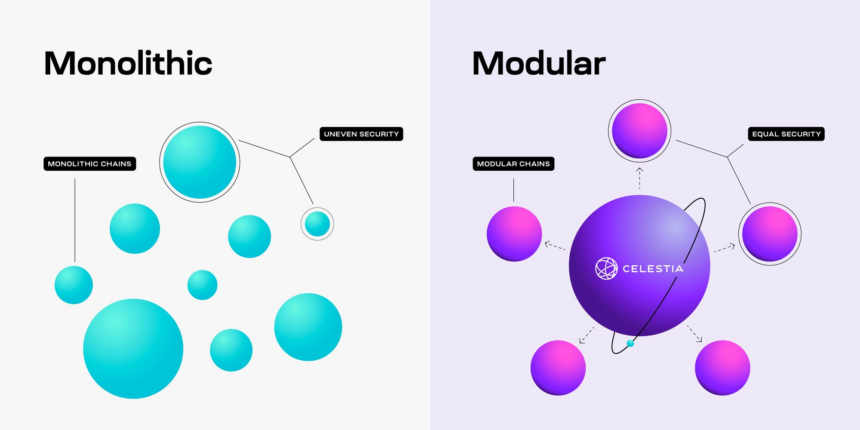
Instead of managing everything on a single chain, modular blockchains divide key operations—execution, consensus, settlement, and data availability—into several layers. By enabling various networks to optimize particular activities, this design increases scalability and flexibility.
Ethereum, for instance, employs a modular approach by assigning transaction execution to Layer-2 rollups like Arbitrum and Optimism while maintaining security and settlement on its base layer.
This division maintains decentralization while lowering fees, increasing throughput, and reducing congestion. Compared to conventional monolithic blockchain frameworks, modular solutions allow for more scalability, faster innovation, and configurable settings.
What is Monolithic Blockchains?
Networks that manage execution, consensus, settlement, and data availability in a single, cohesive layer are known as monolithic blockchains. Tight integration and smooth composability between applications are made possible by the fact that all operations take place on a single chain rather than being divided across several layers.
One such example is Solana, which achieves fast speed and cheap fees by processing transactions, validating blocks, and storing data on the same network. Strong performance and a more seamless user experience are possible with this design.
However, if network demand increases, monolithic systems may encounter scalability constraints and greater hardware needs for validators, which could affect decentralization.
Key Comparison: Modular vs Monolithic Blockchains (2026)
| Feature | Modular Blockchains | Monolithic Blockchains |
|---|---|---|
| Architecture Design | Separates execution, consensus, settlement, and data availability into different layers | All core functions handled on a single unified layer |
| Example | Ethereum with Layer-2 rollups | Solana |
| Scalability | High scalability via rollups and parallel L2 networks | Scales within one chain using performance optimization |
| Transaction Speed | Fast on L2, depends on rollup design | Very high native throughput |
| Fees | Lower on L2, variable across networks | Generally low and consistent |
| Security Model | L2s inherit security from Ethereum mainnet | Security depends entirely on the base chain |
| Composability | Fragmented across multiple L2 ecosystems | Strong composability within one global state |
| Decentralization | Base layer highly decentralized | May require high hardware specs for validators |
| Complexity | More complex multi-layer ecosystem | Simpler single-layer structure |
| Best For | Custom scaling solutions, flexibility, ecosystem diversity | High-speed apps, DeFi, and consumer applications |
The Ethereum Layer-2 Ecosystem in 2026
Dominance of Rollups
The use of optimistic rollups and zk rollups is driving most of Layer 2 innovation. Rollups execute transactions off-chain and secure them by finalizing them on Layer 1 (Ethereum).
Adoption of Major Layer 2 Networks
Leading firms in Layer 2 networks include Arbitrum, Optimism, Base, and zkSync. They provide cheaper and faster transactions than the Ethereum mainnet.
More Affordable Transactions
Gas fees on Layer 2 networks are lower than those on the Ethereum mainnet. Therefore, DeFi, NFTs, gaming and microtransactions will be more feasible and affordable in in 2026.
Security Model of Inheritance
Most Layer 2 networks have acquired Ethereum’s security, meaning that the ultimate settlement and dispute resolution rely on Ethereum’s validator network.
Increasing Total Value Locked (TVL)
Strong adoption of DeFi protocols, bridges and stablecoin issuers is evident as billions in TVL is spread across the major Layer 2 networks.
User Experience is Enhanced
Improved wallet integrations, faster confirmations, and cross chain bridges have made it easier for users to interact with Layer 2 networks.
Fragmentation of the Ecosystem
The spread of users and liquidities across different Layer 2 chains results in the need for bridges and cross chain solutions to maintain composability.
Integration of Enterprises and Institutions
Due to scalability and compliance tooling along with network effects, enterprises and finetech businesses are building more on Ethereum Layer 2 Networks.
Advancements in ZK Technology
There have been improvements in zero-knowledge rollups that are making them more efficient as well as improving their privacy and smart contract execution scalability.
Performance Comparison: Solana vs ETH L2
| Metric | Solana | Ethereum Layer-2 Ecosystem |
|---|---|---|
| Architecture Type | Monolithic (single-layer execution) | Modular (L2 rollups + Ethereum settlement) |
| Transactions Per Second (TPS) | Thousands of TPS on base layer | Hundreds to thousands TPS per L2 (varies by rollup) |
| Transaction Finality | Fast native finality (seconds) | Fast on L2; final settlement on Ethereum mainnet |
| Average Transaction Fees | Very low, often fractions of a cent | Low on L2; higher if bridging to mainnet |
| Composability | Strong single global state composability | Fragmented across multiple L2s |
| Network Congestion Handling | Scales via high-performance validators | Scales horizontally via multiple rollups |
| Security Model | Secured by Solana validator network | L2s inherit Ethereum’s base-layer security |
| Hardware Requirements | Higher validator hardware requirements | Ethereum mainnet validators + L2 operators |
| Ecosystem Flexibility | Unified ecosystem | Multi-chain L2 ecosystem |
| Best For | High-speed DeFi, trading, consumer apps | Scalable DeFi, enterprise apps, modular scaling solutions |
Decentralization & Security Analysis
Base-Layer Decentralization
Ethereum is one of the most decentralized smart contract platforms because it has thousands of validators located all around the globe. Solana has a large number of validators, but it is possible that their requirement of more powerful hardware may reduce the number of participants.
Security Inheritance Model
Ethereum Layer-2 networks inherit the base-layer security of Ethereum. Because rollups have to depend on Ethereum for settlement and dispute resolution, the overall trust assumptions are strengthened.
Validator Hardware Requirements
Agile design for Solana is built on high-performance. This requires more powerful and higher bandwidth hardware, which means that the risks of centralization could potentially increases. Less powerful hardware is required for Ethereum validators.
Network Attack Surface
Monolithic networks like Solana have all of their activity focused on one single chain, so one outage could take down the whole network. Ethereum’s modular approach means that they have a number of different L2 networks to prevent the risk of having one single point of failure.
Smart Contract Security
Ethereum has a lot of experience and history when it comes to audits and smart contract security. This experience is something that the majority of the L2’s have to operate independently for.
Censorship Resistance
In Ethereum, the large number of validators spread out across the network makes it harder to censor the activity. Solana also has a good distribution, but has been more criticized historically because of the centerization of their validators.
Risks in the L2 Ecosystem
The L2 ecosystem adds additional risks pertaining to smart contracts and security that the L1 ecosystem does not have. L2 Ethereum users need to use bridges to move their assets to other chains which adds more risks to an already complicated process.
Historical Stability of the Network
The Ethereum Mainnet has consistently demonstrated great uptime, and while the L2 networks can be paused at times, the base layer is not affected. The Solana network has a history of outages when congestion is high and other networks may also be affected.
Developer & Ecosystem Growth
Active Developer Base: The Layer-2 ecosystem within Ethereum attracts numerous builders due to Ethereum’s extensive documentation and tools available for the rollups (Arbitrum, Optimism, and zkSync).
Tooling & Infrastructure Support: The developer tools on Ethereum L2s (Truffle, Hardhat, OpenZeppelin) are very mature and provide less friction for development due to the integration with the wallets, oracles, and bridges.
Funding & Grants: Both ecosystems acquire a lot of funding, but the Ethereum Layer-2 funds and grant programs encourage cross-chain innovation on optimistic and zk rollups, more than other ecosystems.
Protocol Diversity: The modular ecosystem hosts a varied selection of DeFi protocols, NFTs, and DAOs, whereas Solana houses dynamic, and high throughput applications for gaming, DeFi and social.
Onboarding & Community Growth: Ethereum Layer-2s are more likely to accommodate ecosystems for onboarding and cross-chain tools for more seasoned builders and less so for novice ones.
Ecosystem Events & Hackathons: The Ethereum Layer-2s and Solana ecosystems provide numerous funds provision for hackathons, and other events that accelerate development.
Institutional Interest: Solana and Ethereum Layer-2 institutional projects focus on the Solana consumer and trading modules for performance. Ethereum Layer-2 compliance systems are integrated with the institutional projects.
Interoperability Development; Builders focus on cross chain bridges and interoperability layers for L2 networks and stand-alone chains to extend ecosystems.
Educational and Support Materials: Extensive educational resources, developer academies, and active communities on Discord and Twitter provide support to Solana and L2 builders.
Market Metrics & Adoption Data (2026)
| Metric | Solana | Ethereum Layer-2 Ecosystem (L2s) |
|---|---|---|
| Total Value Locked (TVL) | ~$23 B (late 2025 data as proxy for 2026) | ~$39–40 B in Layer-2 networks alone |
| Daily Active Users / Addresses | ~3.2 M daily active wallets (2025) ( | L2 networks process ~1.9 M+ daily transactions (2025) |
| Transactions Per Second (TPS) | ~1,000+ (base layer) | Rollups combined throughput >5,600 TPS (peak) () |
| Cost per Transaction | Very low ($<0.01) | Very low on L2 (depends on rollup & mainnet settlement) |
| Market Adoption Focus | Consumer/retail & high-frequency use cases | Scalability for DeFi, enterprise & secure settlement |
| Developer Activity | Strong growth trend YoY (fastest growing base) | Many developers focused on multiple Layer-2 rollups |
| Ecosystem Liquidity Metrics | High DEX volumes; strong retail trading activity | Large liquidity via DeFi protocols on L2s contributing to overall Ethereum TVL ( |
Risks & Challenges
Network Outages & Stability Risks
Solana’s past outages from congestion has caused the reliability of Solana to be questioned. This is especially concerning in periods of high congestion.
Layer-2 Fragmentation
The Ethereum L2 ecosystem is divided across many rollups resulting in fragmented liquidity which creates problems for the overall user experience.
Bridge Exploit Risks
Transferring assets between Ethereum L2s or to mainnet is bridge-based which have been traditional exploit and hack targets.
Validator Centralization Pressure
Because of Solana’s high hardware demands, there may be an increasing risk for centralization in the future because less people will be able to participate in the validation.
User Experience (UX) Challenges
Using Ethereum L2s can be a confusing experience as L2s involve a network of bridges and gas tokens. This is especially true for the new users.
Regulatory Risks
Uncertain governing laws globally can impact DeFi, staking, and token issuance structures within both ecosystems.
L2s Decentralization and Sustainability Risks
The economy sustainability of L2s is at risk in the long-term as some rollups rely on a constantly changing incentive or sequencer model.
Trade-offs in Scalability
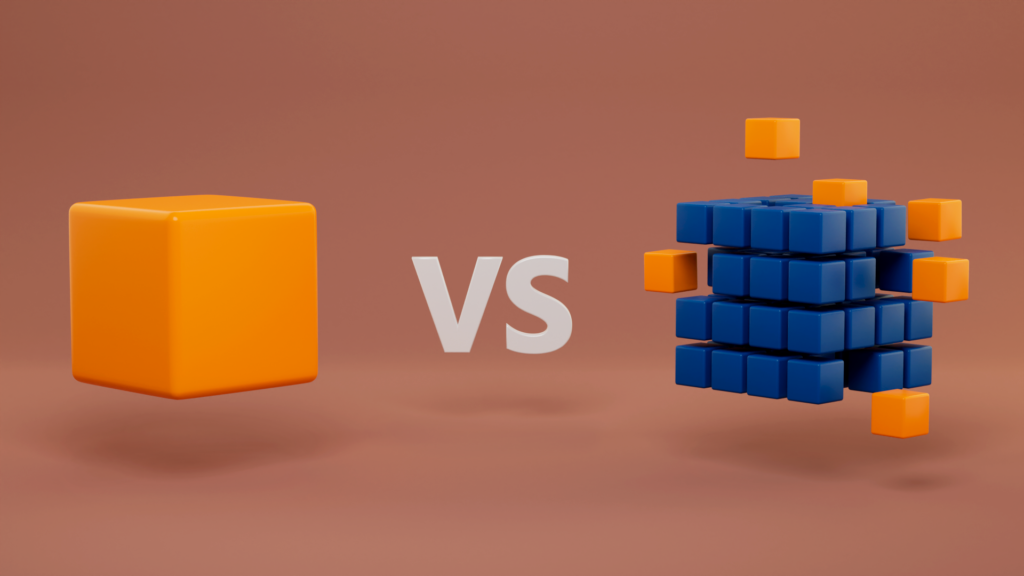
There is increased complexity in coordination between layers in modular scaling, while monolithic scaling pushes the hardware to its limits.
Risks Related to Smart Contracts
The fast-changing nature of the ecosystem can lead to bugs and eventually exploitation in rollups, sequencers, or lower layers.
Future Outlook: 2027 and Beyond
It is more likely that modular and monolithic systems will coexist and develop in the blockchain landscape in 2027 and beyond than that one would completely replace the other. As Ethereum and its Layer-2 rollups continue to improve scalability, interoperability, and security, modular ecosystems will become more appealing for large-scale DeFi and enterprise adoption.
Monolithic chains like Solana will simultaneously push the limits of low-cost transactions and high-throughput speed, meeting real-time demand for consumer-facing applications.
By 2028 and beyond, blockchain ecosystems may become more integrated, effective, and user-friendly due to developments in zero-knowledge technologies, cross-chain bridges, and hybrid scaling models.
Conclusion
Two potent but distinct scaling theories are highlighted in the 2026 argument between modular and monolithic blockchains. Decentralization, security inheritance, and adaptable scalability through rollups are given top priority in the modular approach spearheaded by Ethereum and its Layer-2 ecosystem.
On the other hand, Solana’s monolithic strategy emphasizes seamless composability within a single global state, cheap costs, and high throughput.
2026 demonstrates the emergence of specialization rather than a certain champion. Solana shines in real-time use cases, consumer apps, and high-speed trading, while Ethereum’s modular stack dominates secure DeFi settlement and enterprise-ready infrastructure.
Ecosystems that strike the optimal balance between scalability, security, decentralization, and user experience will probably win the future rather than a single architecture.
FAQ
Which model is better for DeFi in 2026?
Ethereum’s modular ecosystem dominates secure DeFi settlement, while Solana is strong in high-frequency trading and low-cost DeFi applications.
Can modular and monolithic models coexist?
Yes. In 2026, both models serve different use cases—modular systems focus on scalability and decentralization, while monolithic chains emphasize speed and efficiency.
Does Solana need Layer-2 scaling?
Solana primarily scales at the base layer through performance optimization. While additional scaling solutions exist, its core philosophy is high-speed monolithic execution.
Why does Ethereum use Layer-2 solutions?
Ethereum uses Layer-2 rollups to reduce congestion, lower fees, and increase scalability while keeping the base layer decentralized and secure.