


I’ll go over how central banks view stablecoins in this post, including their rising popularity, regulatory issues, and possible effects on monetary policy and financial stability.
- What Are Stablecoins?
- How Central Banks See Stablecoins
- Innovation with Caution
- Financial Stability Risks
- Monetary Policy Risks
- Adequate Reserves & Transparency
- CBDC Integration
- Oversight & Compliance
- Consumer Protections
- Regulatory Trends for Stablecoins in 2026
- Global Regulatory Harmonization
- Mandatory Reserve Backing
- Licensing and Oversight for Issuers
- Anti-Money Laundering (AML) & KYC Compliance
- Consumer Protection Measures
- Integration with CBDCs
- Standards for Cybersecurity and Operational Risks
- Central Bank Digital Currencies (CBDCs) vs. Stablecoins
- Risks and Concerns Highlighted by Central Banks
- Risks Caused by Instability
- Controlled Monetary Policy
- Risks of Reserve Management and De-pegging
- Risks of Cybersecurity
- Risks of Money Laundering and Other Illegal Action
- Risks to the Rights and the Safety of the Consumer
- Risks Associated with the Legality and Regulation
- Adoption and Market Trends
- Growing Cross-Border Payments
- DeFi Integration
- Usage in Commerce and Retail
- Adoption by Regions
- Banking and Fintech Collaborations
- Trend Towards Regulated Stablecoins
- Institutional Interest
- Future Outlook
- Conclusion
- FAQ
Regulatory frameworks, adoption patterns, integration with central bank digital currencies (CBDCs), and the benefits and hazards stablecoins pose to the global financial system are some of the major trends we will look at in 2026.
What Are Stablecoins?
Cryptocurrencies known as stablecoins are made to have a consistent value and are typically based on fiat currencies such as the US dollar, euro, or other assets. Stablecoins provide price stability, which makes them appropriate for trading, remittances, and payments in contrast to more conventional cryptocurrencies like Bitcoin or Ethereum, whose values can swing significantly.

Generally speaking, they fall into one of three categories: algorithmic stablecoins, which preserve stability by automatically adjusting their supply; fiat-backed stablecoins, which are entirely backed by reserves of conventional cash; or crypto-backed stablecoins, which employ other cryptocurrencies as collateral.
Although they present security and regulatory issues, stablecoins have grown in prominence in decentralized finance (DeFi), cross-border transactions, and digital commerce. They provide a link between erratic cryptocurrencies and established financial systems.
How Central Banks See Stablecoins
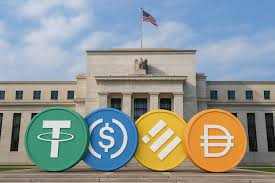
Innovation with Caution
- There is potential for stablecoins to enhance payments, remittance and enhance financial inclusion. Strict risks are monitored.
Financial Stability Risks
- Adoption on a large scale could disrupt the existing financial system and liquidity, requiring regulatory attention.
Monetary Policy Risks
- Stablecoins could undermine the control of central banks over monetary policy, money supply and interest rates.
Adequate Reserves & Transparency
- To avoid de-pegging of the stablecoin and avoid systemic risks, clear reserve backing is essential along with clear reporting.
CBDC Integration
- Most central banks view stablecoins as enhancing the digital payments ecosystem, and as a result are more inclusive to CBDC.
Oversight & Compliance
- Central banks require stablecoin entities to include licensing, KYC/AML, cybersecurity and other risk compliance mechanisms.
Consumer Protections
- Authorities demand the clear and conspicuous disclosure of the described risks, rules for the redemption of the stablecoin and user protections against the insolvency of the stablecoin issuer.
Regulatory Trends for Stablecoins in 2026
Global Regulatory Harmonization
- Uniform frameworks are desired by central banks and coordinating agencies to streamline cross-border compliance regulation.
- Licensing, reserve, and reporting requirements are the focus of harmonization.
Mandatory Reserve Backing
- Stablecoin issuers must hold reserves that are fully fiat or pegged asset transparent.
- Liquidity audits are a routine component of a reserve peg and de-pegging prevention audit.
Licensing and Oversight for Issuers
- Stablecoin issuance is reserved for regulated participants.
- Regulatory frameworks set capital, functioning, and risk response controls for the regulation.
Anti-Money Laundering (AML) & KYC Compliance
- KYC requirements will become more extensive, and the risk of cross-border payments will become more restricted to combat financial crimes.
- Cross-border payments will become more closely regulated.
Consumer Protection Measures
- The disclosure of risk, fee, and redemption policies will become mandatory under the regulation of central banks.
- The regulation will provide a customer safeguard for insolvent or cyber-attacks.
Integration with CBDCs
- Regulations are to be anticipated regarding the interplay of stablecoins and central bank digital currencies (CBDCs).
- The regulation balances financial stability and digital payment innovations.
Standards for Cybersecurity and Operational Risks
- Cybersecurity and technology resilience standards are stringent for stablecoin platforms.
- In the event of system failures or attacks, contingency planning must be implemented.
Central Bank Digital Currencies (CBDCs) vs. Stablecoins
| Feature | Central Bank Digital Currencies (CBDCs) | Stablecoins |
|---|---|---|
| Issuer | Issued and backed by central banks | Issued by private companies or organizations |
| Value Stability | Stable, pegged directly to fiat currency | Usually pegged to fiat or assets, but risk of de-pegging exists |
| Regulation | Fully regulated by the central bank | Subject to regulatory oversight, but varies by jurisdiction |
| Purpose | Enhance monetary policy, financial stability, digital payments | Facilitate fast payments, remittances, DeFi, and crypto trading |
| Integration with Financial System | Directly part of national payment infrastructure | Mostly operates alongside traditional banking and crypto systems |
| Transparency & Reserve Requirements | Fully transparent and centrally controlled | Requires audits and reserve backing, but standards vary |
| Monetary Policy Impact | Fully controlled by central banks | Can influence money supply indirectly, may affect monetary policy |
| Consumer Protection | Guaranteed by the central bank | Depends on issuer and regulatory framework |
Risks and Concerns Highlighted by Central Banks
Risks Caused by Instability
- The use of several stablecoins can create banks, liquidity, and run-issues during the stress periods of the market.
Controlled Monetary Policy
- The use of stablecoins has the potential to reduce central banks control over the money supply and the interest rate.
Risks of Reserve Management and De-pegging
- Failure to maintain or manage reserves can result in trust crises, value instability, and a systemic risk.
Risks of Cybersecurity
- Fraud, hacking, and operational failures to possess instruments of the user are also potential causes of true wealth of the user.
Risks of Money Laundering and Other Illegal Action
- Stablecoins that operate in a non-regulated or poorly regulated environment can allow for the financing of fraud, terrorism, and tax evasion.
Risks to the Rights and the Safety of the Consumer
- The consumer or user is at risk, as there are no guarantees for redeemability, no transparency, or usable recourse if the issuer goes bankrupt.
Risks Associated with the Legality and Regulation
- The existence of multiple regulations at the global level results in non-compliance and is a risk to the process of transacting in a borderless way.
Adoption and Market Trends
Growing Cross-Border Payments
- Stablecoins provide a cheaper and quicker alternative to traditional international payment methods.
DeFi Integration
- All crypto users will adopt stablecoins as a means for collateral, liquidity, and trading in DeFi.
Usage in Commerce and Retail
- Stablecoins settlements are convenient for merchants to accept stablecoins for payment.
Adoption by Regions
- Regions such as Europe, Africa and Asia have High Digital and Bank Infrastructure
Banking and Fintech Collaborations
- Partnerships allow for traditional finance integration and regulatory compliance.
Trend Towards Regulated Stablecoins
- Trust and Market legitimacy comes with regulation and institutional control of stablecoins.
Institutional Interest
- Corporate and financial institutions are interested in stablecoins for cross-border transactions and liquidity management.
Future Outlook

As central banks and financial authorities continue to strike a balance between innovation and financial stability, the future of stablecoins in 2026 is bright but will be strictly regulated. As quicker and more effective substitutes for traditional banking, stablecoins are anticipated to play a significant role in digital payments, international remittances, and decentralized finance.
There will probably be more cooperation between central banks, fintechs, and regulated issuers to guarantee openness, reserve sufficiency, and adherence to AML/KYC regulations.
Furthermore, a contemporary, hybrid digital financial environment will be shaped by the coexistence of stablecoins and central bank digital currencies (CBDCs). In order to ensure that stablecoins develop safely and sustainably alongside international financial institutions, authorities will continue to monitor systemic risks, cybersecurity concerns, and monetary policy consequences as use increases.
Conclusion
Central banks handle stablecoins in 2026 with a cautious yet hopeful stance. While keeping an eye out for threats to consumer protection, monetary policy, and financial stability, they acknowledge that stablecoins have the potential to improve digital payments, cross-border commerce, and financial inclusion.
Stablecoins may function safely alongside traditional finance thanks to changing regulatory frameworks around the world that place an emphasis on reserve transparency, licensing, cybersecurity, and AML/KYC compliance.
Stablecoins’ increasing integration with central bank digital currencies (CBDCs) portends a time when both governmental supervision and private innovation will coexist. Stablecoins are often seen by central banks as an auxiliary instrument that may update the financial system while preserving stability and confidence, rather than as a danger.
FAQ
. What are stablecoins?
Stablecoins are cryptocurrencies designed to maintain a stable value, usually pegged to fiat currencies or assets, making them suitable for payments, remittances, and trading.
Why are central banks interested in stablecoins?
Central banks monitor stablecoins to evaluate their impact on financial stability, monetary policy, and payment systems. They see potential benefits but also risks.
Are stablecoins regulated?
Yes, most countries in 2026 require issuers to follow licensing, AML/KYC, reserve backing, and cybersecurity rules, although regulatory frameworks vary globally.
How do stablecoins affect monetary policy?
Widespread stablecoin use could influence money supply and interest rates, potentially reducing central banks’ control over traditional monetary policy tools.
What risks do central banks associate with stablecoins?
Key concerns include financial instability, de-pegging risk, fraud, cyberattacks, money laundering, and consumer protection issues.