
This article will focus on the Best Stock Market Volatility Prediction Tools. Market fluctuation is inevitable and being able to predict them is very important to traders and investors. This is where the mentioned tools come in.
- Key Point & Best Tools to Predict Stock Market Volatility
- 1. AlphaSense
- AlphaSense Features, Pros & Cons
- 2. CBOE Volatility Index (VIX)
- CBOE Volatility Index (VIX) Features, Pros & Cons
- 3. PitchBook Institutional
- PitchBook Institutional Features, Pros & Cons
- 4. Refinitiv Eikon (LSEG)
- Refinitiv Eikon (LSEG) Features, Pros & Cons
- 5. Securitize Markets
- Securitize Markets Features, Pros & Cons
- 6. CB Insights
- CB Insights Features, Pros & Cons
- 7. StatsHub.ai
- StatsHub.ai Features, Pros & Cons
- 8. FactSet
- FactSet Features, Pros & Cons
- 9. Morningstar Direct
- Morningstar Direct Features, Pros & Cons
- 10. Statista Market Insights
- Statista Market Insights Features, Pros & Cons
- Conclusion
- FAQ
With the help of AI technology, analytics, and real-time financial information, traders and investors can reduce risks and take advantage of market opportunities. With these tools in your arsenal, your market prediction and your portfolio performance will improve greatly.
Key Point & Best Tools to Predict Stock Market Volatility
| Platform | Key Point |
|---|---|
| AlphaSense | AI-powered search for market intelligence, earnings calls, and expert insights. |
| CBOE Volatility Index (VIX) | Measures market expectations of future volatility via S&P 500 options. |
| PitchBook Institutional | Provides private market data, valuations, and deal tracking for investors. |
| Refinitiv Eikon (LSEG) | Comprehensive financial analytics, news, and trading data platform. |
| Securitize Markets | Platform for digital securities issuance and secondary trading insights. |
| CB Insights | Tracks private companies, venture capital, and emerging industry trends. |
| StatsHub.ai | AI-driven market data aggregation and real-time analytics for informed decisions. |
| FactSet | Integrated financial data and analytics for investment management and research. |
| Morningstar Direct | Investment research platform with data on funds, equities, and market trends. |
| Statista Market Insights | Provides statistical data, market reports, and global industry trends. |
1. AlphaSense
AlphaSense is the only AI-powered platform offering unmatched capabilities in market intelligence. Investors and analysts can rapidly search and locate critical documents, such as SEC filings, earnings calls, and research reports. AlphaSense’s NLP capabilities deliver relevant data, highlight critical insights, and uncovers trends, which are crucial to predicting the movement of the market.
In the Best Tools to Predict Stock Market Volatility, AlphaSense is recognized as the foremost tool and market engine, helping users synthesize sentiment analysis, corporate updates, and analyst reports. AlphaSense alerts users on the imminent market changes and flag volatility.
AlphaSense Features, Pros & Cons
Features
- AI led a financial document and filing searches.
- Market news and research insight.
- Competitive sentiment analysis.
- Dashboards and alerts that can be customized.
- Work tools integrations.
Pros:
- Access to information is expedited.
- Trends can be predicted before news covers them.
- Great AI and NLP.
- Great Research Time Efficiency.
- Research documents can be in different formats.
Cons:
- Research and data analysis are priced a bit higher.
- Not all users can easily learn how to operate the app.
- Not all data analysis and research can be historically accurate.
- No offline mode.
- Features that are more advanced are restricted to higher pricing.
2. CBOE Volatility Index (VIX)
CBOE Volatility Index measures the market risks, as it measures the expected and unlikely volatility for the future 30 days in the market, specifically for the S&P 500. A high VIX indicates high risks for the market, and thus, a high volatility to the market, while a low VIX indicates a low and calm volatilty to the market.
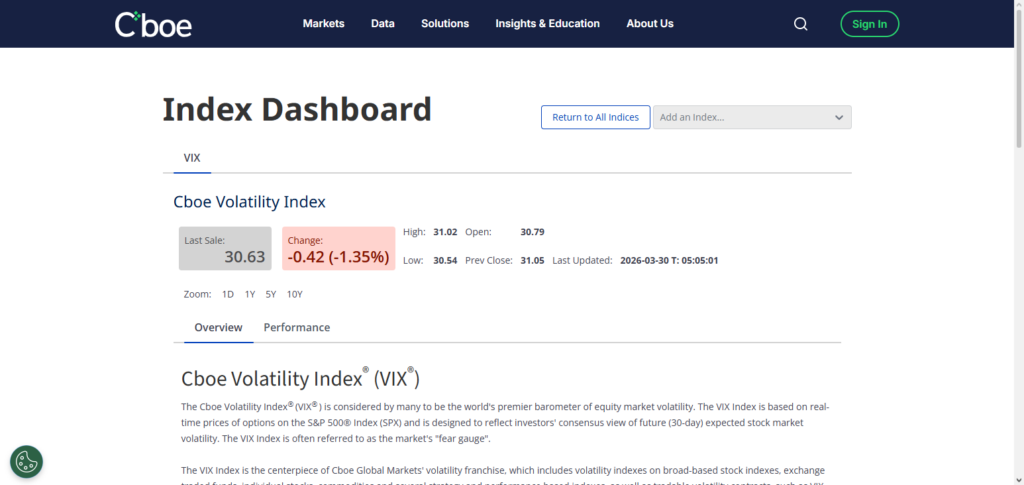
A low VIX indicates a calm and low volatilty to the market. For the VIX to be one of the Best Tools to Predict Stock Market Volatility, it is essential for market traders to accurately predict the risks in the market, and be properly prepared for the future market fluctuations.
CBOE Volatility Index (VIX) Features, Pros & Cons
Features:
- Measures implied 30-day S and P price volatility.
- Measures the overall sentiment of the people. (“Fear gauge”).
- Updates the index values in real-time.
- Access to current and past data.
- Historical data is used for research and in the creation of trading strategies.
Pros:
- Have insight and knowledge of market risks.
- It can be used in the creation of strategies to help.
- Price direction can easily be defended.
- There is data economically.
- Everyone can access the data.
Cons:
- Research and analysis are only based on S and P analysis, and not global.
- Data can be driven without some being factual.
- Research and analysis that is complete is useful, only when used.
- The research derived is only based on the data taken recently, and not in other confines.
3. PitchBook Institutional
PitchBook Institutional is all-inclusive in its offerings of the private market data for the Venture Capital, Private Equity, and Mergers and Acquisitions markets. It has information on the company valuations, history of deals, investors, and up-and-coming sectors.
PitchBook Institutional is ranked among the Best Tools to Predict Stock Market Volatility. It provides analyses of private market activities that can predict trends in the public market.
It aids understanding of the deal flows and private market investor sentiment in predicting public market equities volatility. Therefore, PitchBook is highly beneficial to hedge funds, family offices, and institutional investors as it helps to manage proactive risks.
PitchBook Institutional Features, Pros & Cons
Features:
- Data and analysis from private businesses and data of Venture Capital and private equity.
- Historical data and analysis for mergers and acquisitions and also data on the finances.
- Data pertaining market price and case.
- Data on the activity of investors.
- Data and analysis from the use of tools that are definitive.
Pros:
- Comprehensive data and analysis on the market.
- Anticipates trends ahead of traditional markets
- Detailed insights on new ventures
- Assists in pinpointing rapidly developing industries
- Analytics tailored to client specifications
Cons:
- Subscription fees are high
- More applicable to advanced users
- Time investment to reach desired proficiency
- Public market datasets are not current
- Information is contingent on limited private market transparency
4. Refinitiv Eikon (LSEG)
Refinitiv Eikon offers advanced analytics and financial data in real time, allowing traders to make timely decisions with the assistance of predictive tools. It is from the London Stock Exchange Group and it is among the most popular tools of the predictive market analytics tools.
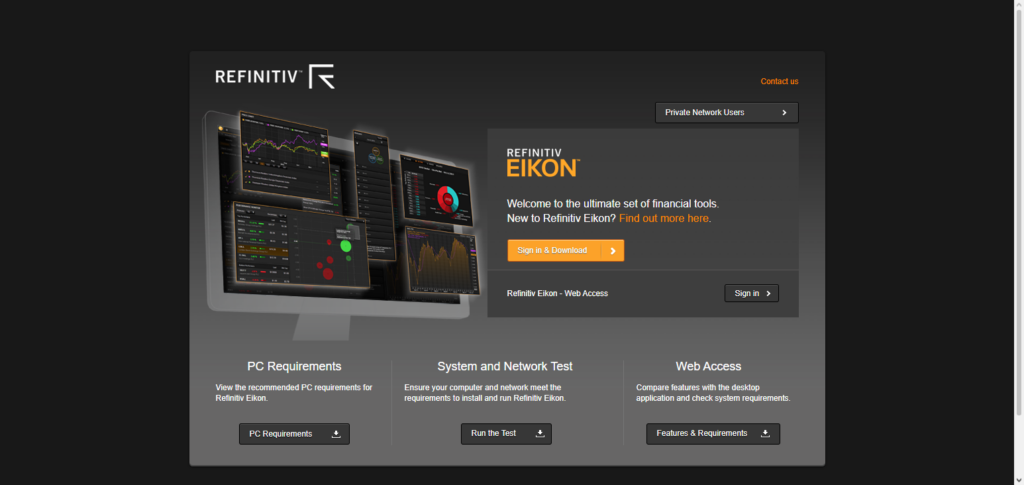
Eikon users can study the global trends, mega trends, and the price of assets to derive the predictive analytics and make strong decisions. Predictive analytics have reflexive impacts on the market. These predictive and prescriptive analytics are critical decisions in tactical and operational portfolio management.
Refinitiv Eikon (LSEG) Features, Pros & Cons
Features:
- Market insights and data are current
- Research and news consolidation
- Enhanced data visualization
- Tools for modeling scenarios and risk
- API and Excel integration
Pros:
- Global coverage is extensive
- Reliable and rapid data
- Analytical features are advanced
- Capable of professional trading
- Dashboards can be tailored
Cons:
- Uses of unclear value to small investors
- Difficult to operate
- Training is needed for full capability
- Systems may operate slowly on data-heavy platforms
- Can be intimidating to professional traders
5. Securitize Markets
Securitize Markets creates Software as a Service (SaaS) solutions to manage compliance, trading, and issuance for tokenized securities and other blockchain products. They have focused on providing a seamless cross-over between traditional finance and blockchain to provide integrated automation, transparency, and real-time data for transactions with the blockchain.

Securitize Markets is one of the Best Tools to Predict Stock Market Volatility because of its capabilities to track and analyze liquidity in novel classes of digital assets. The ability to track tokenized securities transactions, investor behavior, and activity in secondary markets can provide insight to the market ahead of other participants, especially when digital securities begin to merge with traditional securities, which may provide significant value for other investors.
Securitize Markets Features, Pros & Cons
Features:
- Trading and issuance of securities via tokens
- Compliance through Blockchain
- Monitoring liquidity in real time
- Analytics on secondary markets
- Management of digital assets
Pros:
- Transparency of transactions
- Innovative platform in the realm of digital finance
- Incorporates regulation
- Diversification of portfolios is enhanced
- Data in real time is available for tokenized securities
Cons:
- Less usage than standard markets
- Digital securities have limited market applications
- Blockchain knowledge is required
- Tokenized markets have lower liquidity than traditional markets
- Subscription may alter costs
6. CB Insights
CB Insights is a research platform that analyzes private companies, venture capital, banking, and emerging sectors. Their analytics enable users to find growth, disruption, and competition in a market. CB Insights is one of the Best Tools to Predict Stock Market Volatility. They analyze emerging sectors that could affect the value of publicly traded companies to help investors spot a potential upward or downward shift in the market.

They provide data on funding rounds, M&E activity, and technology adoption which help spot early indicators of risk or opportunity. Their analytics provide hedge funds, investors, and planners the data to manage risk of market volatility.
CB Insights Features, Pros & Cons
Features
- Tracks private companies and startups
- VC and PE funding analytics
- Industry trend reports
- Predictive market insights
- Risk assessment dashboards
Pros
- Identifies disruptive companies early
- Predictive analytics based on data
- Useful for strategic development
- Provides coverage for the world market
Cons:
- Smaller companies may find it costly
- Mainly concerns the private market
- Insufficient instantaneous data for the market
- Real-time analytics relies on a learning curve
- Casual investors will find this challenging
7. StatsHub.ai
StatsHub.ai uses AI-powered technology to provide analytical tools for real-time market and global economic data. StatsHub.ai also uses machine learning to make predictions, visualize trends, and to analyze data to help determine what factors may create a sudden spike in data volatility.
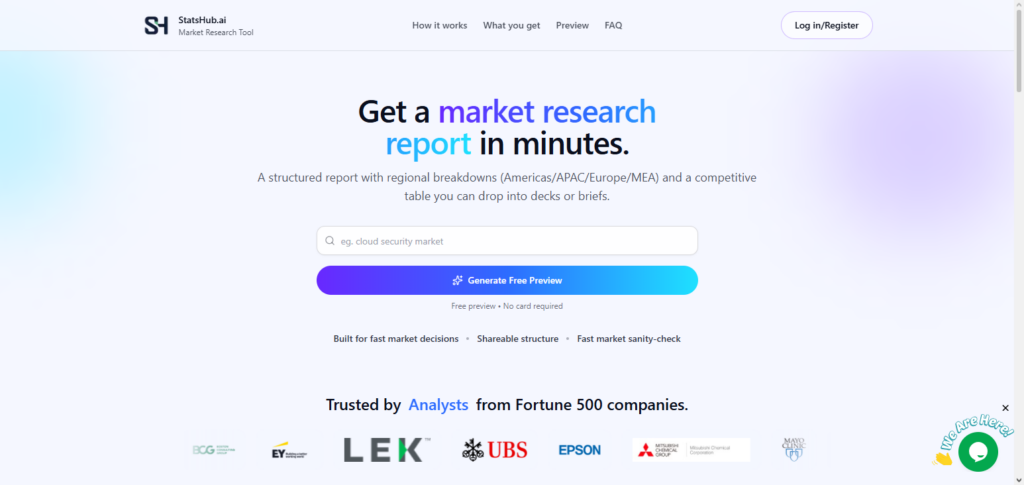
StatsHub.ai ranks top among the Best Tools to Predict Stock Market Volatility due to its data and research forecasting tools for a wide variety of data sets, stats and research, and analytics on equities, commodities, and macroeconomic forecasts.
Users can research and monitor market sentiment, price volatility, and market trends. StatsHub.ai analytics will help users to determine the cupola of data volatility, making analytics a vital tool in helping the user maintain the equipment to complete data analytics.
StatsHub.ai Features, Pros & Cons
Features:
- Market data aggregation powered by AI
- Predictive analytics for the present
- Detection of anomalies and alerts
- Dashboards for visibility
- Coverage of multiple assets (equities, commodities, macro)
Pros:
- Predictions based on data are quick
- AI trends can be seen prior to market visibility
- Integrates multiple data sources
- Alerts can be customized
- Interface is easy to use
Cons:
- Newness of the platform
- Full features may require a subscription
- Predictions made by AI are probabilistic and may not be true
- Historical data is less in comparison to other platforms
- Lack of a focus for a smaller user community
8. FactSet
FactSet is one of the top research analytics systems globally that provides financial research integrating tools across investment management, research and analytics on financial and risk management. FactSet has global market data, equity, fixed income and ETF data.
FactSet is also ranked among the top Best Tools to Predict Stock Market Volatility because FactSet has the tools to research historical price data, market volatility, and can perform modeling of data to help identify potential market swings.
Users of FactSet can create models and analytical tools that will help identify risks in global financial markets and help structure investment portfolios to capture market analytics. FactSet helps users to make research analytics that will allow them to capture market analytics and minimize risks of volatility to identify financial market analytics.
FactSet Features, Pros & Cons
Features:
- Data analytics and financial analytics are integrated
- Tools for the management of a portfolio
- Risk assessment and scenario analysis
- Monitoring of the market in real-time
- Reporting and dashboards that are customized
Pros:
- Data that is comprehensive is available to investors professionally
- Analytics on the prediction of volatility is admirable
- There is historical and real-time coverage
- The support of multiple asset classes
- Customer-defined interfaces
Cons:
- The subscription is costly
- More complex and intricate for novices
- Advanced features require training
- The system demands are high
- Numerous features require add-ons
9. Morningstar Direct
Morningstar Direct is an investment research platform providing detailed data on funds, stocks, and global markets. Additionally, it contains analytics, performance measurement, and portfolio construction resources. Morningstar Direct is among the Best Tools to Predict Stock Market Volatility because of the ability to remarket funds and the markets.
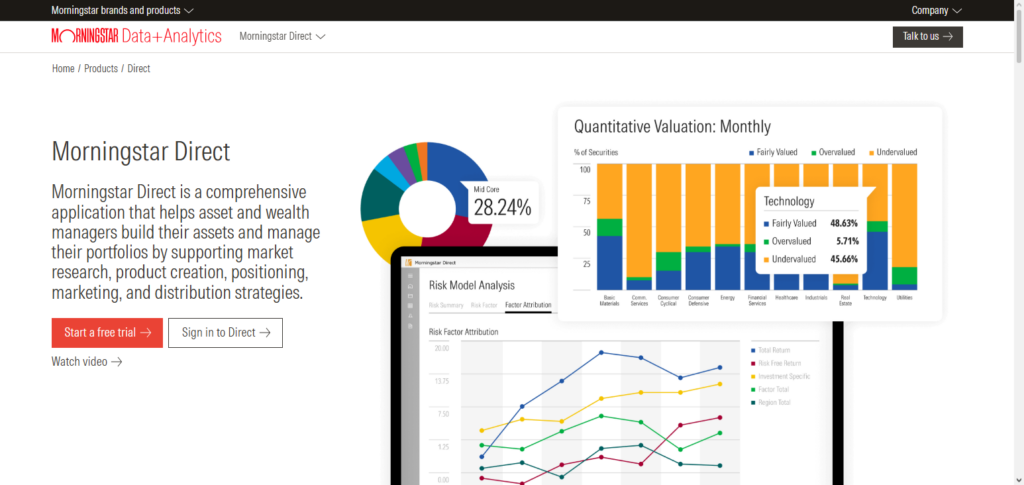
Investors are able to track, market benchmarks, and sector performance, flows of assets, and anticipate increased risk. Morningstar uses historical data, customized reports, and market predictors to help asset managers, advisors, and institutional investors manage the market’s uncertainty and protect the profits of their portfolio.
Morningstar Direct Features, Pros & Cons
Features:
- Platform for investment research
- Analytics on funds, equities and portfolios
- Benchmarking of performance
- Tools for the assessment of risk
- Coverage for the world market
Pros:
- Investment data that is reliable
- Strong fund and asset analysis
- Assists with monitoring volatility and risks
- Reporting tools easy to use
- Integrates with systems for managing portfolios
Cons:
- Real time trading data is scarce
- Trading data is scarce, and premium subscription is mandatory
- Investement funds is where the focus is
- Day traders are not the target audience
- You need to learn advanced features
10. Statista Market Insights
Statista Market Insights features a vast collection of industry reports, statistical data, and market trends across a multitude of industries. It combines corporate, global economic, and consumer data to aid customers and is one of the Best Tools to Predict Stock Market Volatility.
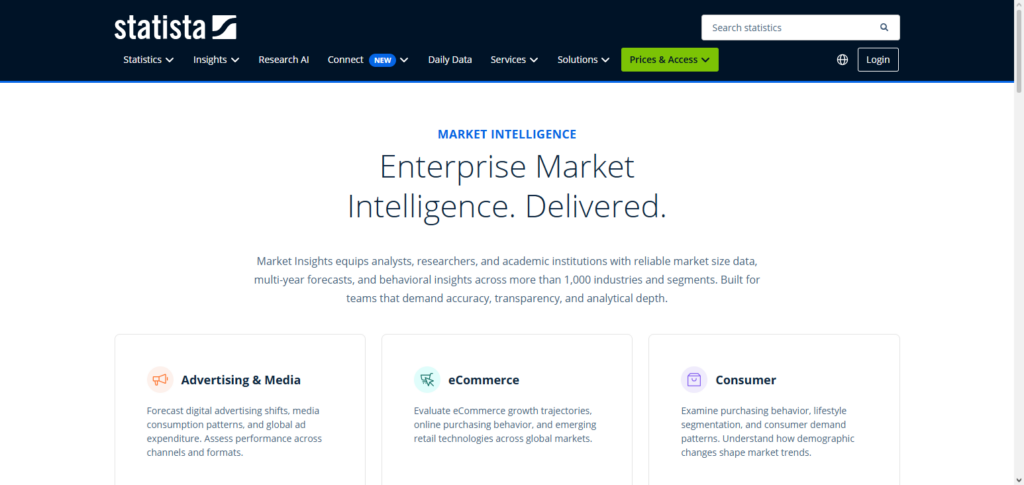
It helps analysts identify macroeconomic trends, industry disruptions, and changes in consumer patterns. Investors are able to use the information to anticipate market movement and make well-informed investments. Statista Market Insights is an inclusive platform providing a multitude of data to understand and control the investment risks and market fluctuations.
Statista Market Insights Features, Pros & Cons
Features:
- Reports and statistical data across various industries
- Market analysis for trends
- Global sectors future predictions
- Research data for consumers and businesses
- Dashboards and charts
Pros:
- Coverage across numerous industries
- Interface is easy to use
- Market analysis and macroeconomic are supported
- Data is available, both historical and future predicted
- Assists sectors identification which may affect volatility
Cons:
- Real time market data is not supported
- Trading analysis is limited
- Premium insights are subscription based
- Equity specific analysis not specialized
- Data may need to be cross verified
Conclusion
To stay ahead of a constantly changing market, it is critical to have accurate data, as well as predictive analytics, and a detailed overview of market conditions. Platforms like AlphaSense, VIX, Refinitiv Eikon, and CB Insights, which are featured in the Best Tools to Predict Stock Market Volatility, give investors the ability to track trends in the market, evaluate risk and make informed decisions.
Tools like these help traders and firms anticipate market fluctuations, protect their investments, and even find new trends in the market. At the pace the financial market moves, the use of these tools as part of an investment strategy is crucial to managing risk and being successful with investments in the long run.
FAQ
What are the best tools to predict stock market volatility?
The top tools include AlphaSense, CBOE Volatility Index (VIX), PitchBook Institutional, Refinitiv Eikon (LSEG), Securitize Markets, CB Insights, StatsHub.ai, FactSet, Morningstar Direct, and Statista Market Insights. These platforms provide data, analytics, and predictive insights to help investors monitor trends and manage risk.
How does the VIX help predict market volatility?
The CBOE Volatility Index (VIX) measures expected 30-day volatility in the S&P 500 using options pricing. Higher VIX levels indicate investor fear and potential market swings, while lower levels suggest market stability.
Can AI-powered platforms forecast volatility?
Yes. Tools like AlphaSense and StatsHub.ai use AI and machine learning to analyze large datasets, extract patterns, and provide predictive insights, helping investors anticipate market movements before they occur.
Are these tools suitable for individual traders or only institutions?
While platforms like FactSet, Refinitiv Eikon, and PitchBook Institutional are designed for professional and institutional use, tools like AlphaSense, VIX, and Statista Market Insights are also accessible to informed individual traders looking to improve decision-making.
How can I use these tools to reduce investment risk?
By monitoring market sentiment, economic indicators, private market activity, and emerging trends, these tools allow investors to anticipate periods of high volatility, adjust portfolio allocations, and implement risk management strategies effectively.