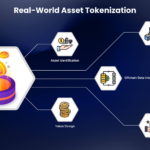

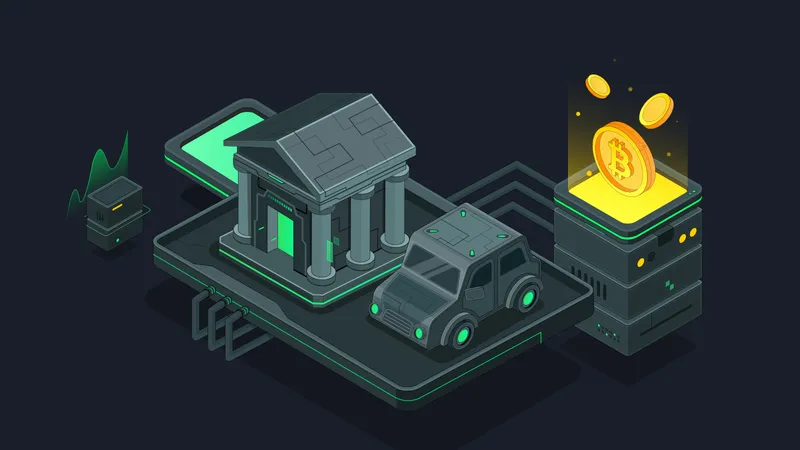
The Best RWA (Real World Asset) Crypto Projects will be covered in this post, along with leading platforms that transfer real-world assets to the blockchain, such as securities, loans, and real estate.
- Key Point & Best RWA (Real World Asset) Crypto Projects
- 1. Ondo Finance (ONDO)
- Ondo Finance (ONDO) Features, Pros & Cons
- 2. Chainlink (LINK)
- Chainlink (LINK) Features, Pros & Cons
- 3. Stellar (XLM)
- Stellar (XLM) Features, Pros & Cons
- 4. Centrifuge (CFG)
- Centrifuge (CFG) Features, Pros & Cons
- 5. Maple Finance (MPL)
- Maple Finance (MPL) Features, Pros & Cons
- 6. Goldfinch (GFI)
- Goldfinch (GFI) Features, Pros & Cons
- 7. Polymesh (POLYX)
- Polymesh (POLYX) Features, Pros & Cons
- 8. RealT
- RealT Features, Pros & Cons
- 9. MakerDAO (DAI)
- MakerDAO (DAI) Features, Pros & Cons
- 10. Harbor
- Harbor Features, Pros & Cons
- Conclusion
- FAQ
These initiatives, which include Ondo Finance, Centrifuge, Maple Finance, RealT, and Goldfinch, make on-chain access to physical assets safer, more transparent, and more effective. They range from tokenized real estate investments to decentralized lending and compliance-focused solutions.
Key Point & Best RWA (Real World Asset) Crypto Projects
| Project | Key Point |
|---|---|
| Ondo Finance (ONDO) | Focuses on structured crypto products, enabling users to access yield strategies with different risk profiles. |
| Chainlink (LINK) | Leading decentralized oracle network that securely connects smart contracts to real-world data and APIs. |
| Stellar (XLM) | Blockchain platform for fast, low-cost cross-border payments and tokenized assets. |
| Centrifuge (CFG) | Decentralized finance (DeFi) protocol that bridges real-world assets like invoices into blockchain lending markets. |
| Maple Finance (MPL) | Offers undercollateralized loans to institutional borrowers through decentralized credit pools. |
| Goldfinch (GFI) | Provides crypto-backed loans to real-world borrowers, enabling crypto investors to fund global credit markets. |
| Polymesh (POLYX) | Blockchain built for security tokens and regulated digital assets, ensuring compliance and identity management. |
| RealT | Tokenizes real estate properties, allowing fractional ownership and passive income via blockchain. |
| MakerDAO (DAI) | Decentralized stablecoin protocol enabling issuance of DAI, a USD-pegged stablecoin backed by crypto collateral. |
| Harbor | Tokenization platform for real-world assets, focusing on compliance, securities, and regulatory frameworks. |
1. Ondo Finance (ONDO)
Ondo Finance is a DeFi platform of structured crypto products that allows investors to hold yield-bearing assets, including RWA (Real World Assets) through the tunneling of investment tranches, which are tokenized from lower risk stable yield to higher risks and higher rewards.
With the use of innovative vaults and smart contracts, Ondo Finance integrates the investment principles of traditional finance with the investment agility of DeFi. The Best RWA Crypto Projects like Ondo provide seamless access to the investment vehicles of traditional finance to both institutional and retail investors.
Ondo Finance (ONDO) Features, Pros & Cons
Features:
- Structured yield products for different risk appetites.
- Tokenized investment tranches for real-world assets exposure.
- Smart contracts vaults for automated asset management.
- DeFi protocols integration for liquidity.
- Transparent risk allocation to investors.
Pros:
- Possibility to invest in on-chain assets in an institutional manner.
- Diversified risk-return and investment options.
- Greater transparency, automation, and reliability in risk yield from contracts.
- DeFi and traditional finance (TFin) integration.
Cons:
- TFin investment structure may lead to smart contract liquidity.
- Limited adoption within the DeFi ecosystem.
- DeFi ecosystem liquidity reliance.
- Deficient understanding of the finance structure.
2. Chainlink (LINK)
Chainlink is the most developed decentralized oracle. It provides smart contracts access to live data from other financial markets like real world assets (RWAs). Through providing the most chain-linked data relevant to lending, insurance, and tokenization, Chainlink unlocks the ability to use on-chain services.
Most well-performing RWA crypto projects use Chainlink to add automation, collateral management, and real world financial contract management services to their crypto financial services platforms. Chainlink’s decentralized ordereing provides the most reliability, security, and transparent integration of RWAs into finance services.
Chainlink (LINK) Features, Pros & Cons
Features:
- Decentralized oracle networks for on-chain contracts.
- Secured price feeds for DeFi protocols.
- APIs for external data.
- VRF for games and lotteries.
- Enterprise level with financial grades.
Pros:
- DeFi and RWA projects’ essential infrastructure.
- High level of decentralized and transparent data provisioning.
- Wide utilization in the blockchain ecosystem.
Cons:
- The data is less reliable, which is the truth of the external world.
- Fluctuation in LINK prices.
- Network congestion can also delay the speed at which changes are made.
- The cost of oracle requests.
- Difficulty on the part of non-technical people.
3. Stellar (XLM)
Stellar is a blockchain supplies the ability to achieve speedy and cost effective cross world asset tokenization integration. It enable the issuance of tokenized RWAs like fiat-backed stablecoins and other financial instruments.
Most well-performing RWA crypto projects utilize Stellar’s tokenization service, transaction management service, and liquidity service to integrate previously illiquid assets into their financial service platforms. Stellar’s consensus add to its high throughput and low fees which are perfect for micropayments, remittances, and digital asset issuance.
Stellar (XLM) Features, Pros & Cons
Features:
- Rapid payments across borders and for small amounts.
- Issuance of stablecoins and other assets.
- Minimal fees for transactions.
- Decentralized methods of reaching consensus.
- Collaborations with banks and companies in tech for universal payment systems.
Pros:
- Transactions at low cost.
- Adoption in the real world.
- Tokenization of assets is straight forward.
- Adoption on a large scale is possible.
- Financial inclusion is possible.
Cons:
- Smart contracts are limited in capability, especially when compared to Ethereum.
- Other blockchains that are mainly for payments.
- Adoption of partners is needed.
- XLM tokens are volatile.
- Compared to other chains, governance is more centralized.
4. Centrifuge (CFG)
Centrifuge is a decentralized finance (DeFi) protocol that integrates real-world assets (RWAs) such as invoices, real estate, and trade receivables with blockchain lending markets. Centrifuge provides asset owners with liquidity by tokenizing these assets as NFTs and using them as collateral in decentralized lending pools.
Furthermore, investors get to finance real-world assets, and with the Best RWA Crypto Projects, Centrifuge is integrated for more transparent and efficient on-chain financing of tangible assets. The Cednrifuge ecosystem comprises partnerships with other DeFi protocols to enhance the utility of the asset and the Tinlake pools.
Centrifuge (CFG) Features, Pros & Cons
Features:
- The bridge between real world assets and DeFi through tokenisation.
- Loan and invoice asset representation via NFTs.
- Provision of liquidity through Tinlake pools.
- Merger with DeFi systems on Ethereum.
- Focus on the inclusion of assets from businesses and institutions.
Pros:
- Illiquid assets can now serve as collateral.
- On-chain lending and collateralisation is transparent.
- Adoption by institutions is possible.
- Financing friction is reduced.
- Multiple asset classes are supported.
Cons:
- Participation in pools requires technical expertise.
- Compared to other DeFi protocols, user base is smaller.
- Issues with RWAs.
- The risk of smart contracts.
- The complexity of NFT representation.
5. Maple Finance (MPL)
DeFi lending protocols have also required borrowers to overcollateralize their loan in order to get a loan. Maple changes that by offering undercollateralized loans. This also means there is no overcollateralization which is usually done in a typical DeFi loan.
Real world assets backed loans become possible with Maple through their on-chain credit methodologies and risk management methodologies. RWA Crypto Projects regard Maple as the front runner in bringing true credit to DeFi as it connects real world borrowers and crypto lenders. The pools created by Maples’ proprietary technology offer transparency and automation.
Additionally, and importantly, there is the potential for yield in the pools, and by the smart contracts, there is the risk of loss and the allocation of that risk is also managed. With the added focus that Maple places on compliance and credit evaluation, the structured pools sets Maple apart in the RWA DeFi space.
Maple Finance (MPL) Features, Pros & Cons
Features:
- Institutional borrowers can take under-collateralized loans.
- Decentralized credit pools with credit committees.
- Smart contracts facilitate loans.
- Flexible risk distribution for lenders.
- DeFi lending and stablecoins integrated.
Pros:
- High-yield lending to institutions.
- Credit risks are managed with greater ease.
- Borrowing and lending can be done with greater flexibility.
- Smart contracts increase efficiency.
- DeFi system includes institutional borrowers.
Cons:
- Borrowers can default.
- Only institutions can borrow.
- MPL tokens can fluctuate wildly.
- The loans are unregulated.
- High costs for small investors.
6. Goldfinch (GFI)
Goldfinch enables investors to support small businesses and individual borrowers. Goldfinch is a protocol that provides loans to real world borrowers in emerging markets and doesn’t require overcollateralized crypto since it uses governance backed on-chain loans. Investors earn a digital cash flow from the real world credit repayment.
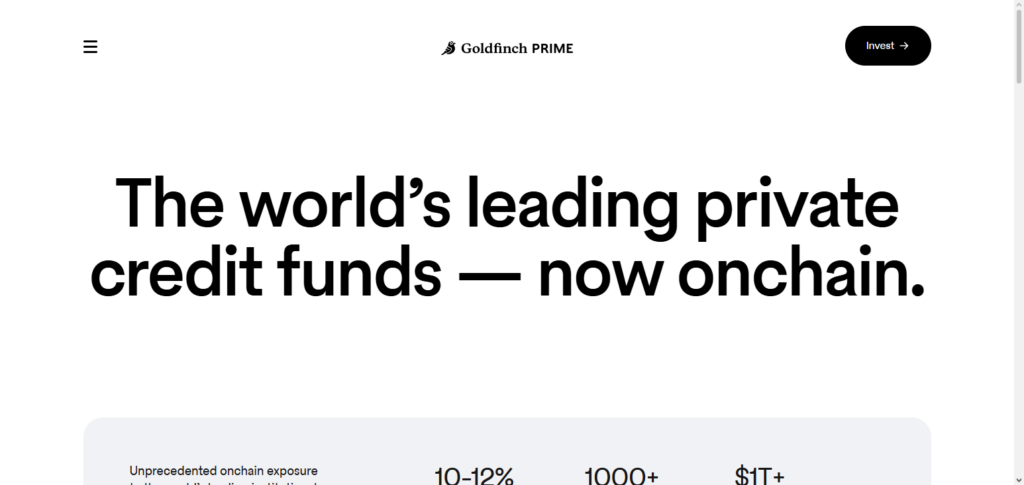
Goldfinch is helping to foster financial inclusion and use real world as a crypto project. Best RWA uses Goldfinch to defunnel DeFi liquidity and use it in a real world situation for the underserved. Goldfinch uses a model that combines off-chain underwriting and on-chain smart contracts to manage risk and provide transparency. Goldfinch is a great example of how the RWA is using blockchain social impact investing and global credit markets.
Goldfinch (GFI) Features, Pros & Cons
Features:
- Real-world lenders can receive loans with their crypto.
- Uses off-chain underwriting and on-chain contracts.
- Emerging markets lending is prioritized.
- Yield investors receive repayment.
- The protocol can be altered with GFI governance tokens.
Pros:
- Real-world economic lending bridges DeFi.
- Lending with social returns is now possible.
- Real-world loans can yield returns passively.
- Decentralized governance can be used.
- Repayment can be tracked transparently.
Cons:
- Borrowers can default on credit.
- Global adoption is restricted.
- Loans are complex.
- Tokens can lose value.
- Off-chain underwriting can be inaccurate.
7. Polymesh (POLYX)
Polymesh is a blockchain developed for compliant digital securities. Polymesh ensures all KYC, AML, and investor due diligence are compliant. Polymesh provides the ability to tokenize real world assets, whether that is equity, bonds, or alternative investments. Best RWA provides secure and compliant infrastructure using Polymesh.
Polymesh enables the governance of blockchain with Traditional Finance and provides clarity and control over processes to both issuers and investors. Polymesh provides the ability to trade on the secondary markets while reducing the legal frictions surrounding the markets enabling to the adoption of RWAs.
Polymesh (POLYX) Features, Pros & Cons
Features
- Designed blockchain for compliant digital securities.
- KYC/AML compliance built into the protocol.
- Security token issuance (STO) support.
- Network design that emphasizes governance.
- Integration with the institutional financial markets.
Pros
- For the tokenization of assets regulatory compliance.
- Security focused design for institutional investors.
- Secondary trading of security tokens.
- Transparent governance.
- Fintech + Blockchain = Traditional Finance.
- Transparent governance.
Cons
- Regulated assets = niche adoption.
- Over regulation = oversimplification.
- POLYX Token = speculative investing.
- Innovation within DeFi = stagnant.
- Regulation and the acceptance of it = speculation.
8. RealT
Tokenizing RealT’s real estate properties allows fractional digital ownership of real estate and passive income collection (on-chain) from property rentals. Each token illustrates a fractional ownership interest making it easier to invest in illiquid assets. RealT illustrates the tokenized real estate market’s potential and ranks in the Best RWA Crypto Projects. RealT merges DeFi with conventional property ownership.
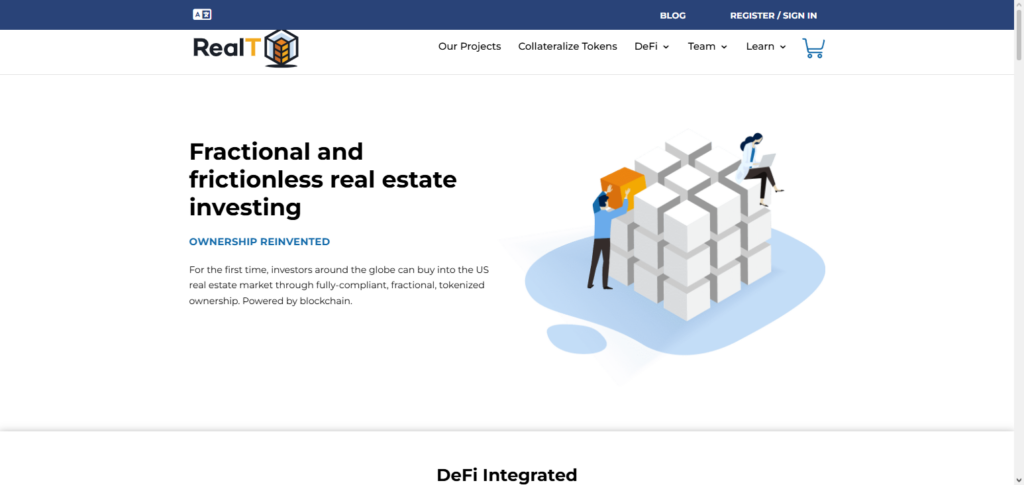
RealT offers automated rental payments, transparent record of ownership, and global ease of access to investors. RealT democratizes real-world assets using blockchain tech and enables the smaller investors in the property market to participate and earn continuous income streams and verifiable income streams.
RealT Features, Pros & Cons
Features
- Real estate tokenization allowing fractional ownership.
- On-chain distribution of rental income.
- Public records of property management.
- Global access to investors.
- Wallet and DeFi lending integration.
Pros
- Real estate investing for the masses.
- Rental income generates passive income.
- Ownership is verifiable and the process is transparent.
- Reduced investment threshold.
- Automated income distribution on the blockchain.
Cons
- Properties are few.
- Laws and regulations vary by jurisdiction.
- Low liquidity in the market.
- Real estate market = Token value.
- Crypto knowledge is mandatory.
9. MakerDAO (DAI)
MakerDAO is the protocol of DAI, a USD-pegged stablecoin that is crypto collateral-backed with real-word assets (RWAs) increasingly being used as the collateral. In this case, tokenized invoices or bonds as RWAs can be collateralized to mint DAI, therefore blockchain capturing some real economic value.
The best RWA Crypto Projects utilize the MakerDAO’s ecosystem to enhance the diversity of the collateral base, the stable liquidity, and the lending to real-world assets. MakerDAO’s governance facilitates decision-making by the community, and the smart contracts offer decentralized risk mitigation. With RWAs and stablecoins, MakerDAO brings Real-World economic activities to DeFi lending.
MakerDAO (DAI) Features, Pros & Cons
Features:
- A decentralized stablecoin is DAI.
- Permits lending against collateral of crypto.
- Governance is granted through the MKR token.
- DeFi lending and payment integration.
- Recently added RWAs as collateral.
Pros:
- Stablecoin collateralized by crypto and RWA.
- Decentralized governance.
- Extensive use in DeFi.
- Diverse collateral options.
- Clear risk and stability.
Cons:
- Smart contract risks.
- Changes in collateral value.
- Complexity of MKR token governance.
- Reliance on liquidity in the crypto market.
- Unclear regulations on stablecoins.
10. Harbor
Harbor is a platform for tokenizing real-world assets that focuses on compliance – especially with securities and other institutional-grade offerings. The platform uses automated KYC, AML, and investor eligibility checks to provide compliance. The Best RWA Crypto Projects integrate with Harbor because they tokenize private equity, real estate, or other regulated alternative assets.
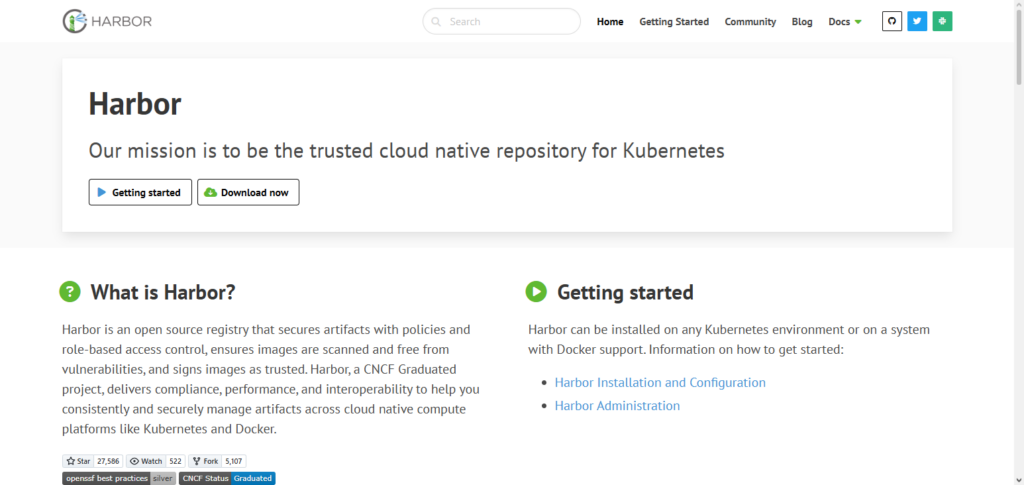
With Harbor, a user’s traditional assets can be moved on-chain, which increases liquidity and accessibility. The combination of strong regulatory compliance and on-chain asset movement makes Harbor essential for institutional participation in RWA tokenization, and expanding DeFi on RWA.
Harbor Features, Pros & Cons
Features:
- Compliance-centric tokenization platform.
- Covers real estate, securities, and other assets.
- Automated KYC and AML.
- Dividends and transfers via smart contract.
- Onboarding assets at the institutional level.
Pros:
- Complies strongly with regulations.
- Offers tokenized ownership of physical assets.
- Dividends are distributed transparently.
- Secondary trading is less friction.
- Institutions are likely to invest.
Cons:
- Compared to DeFi, adoption is low.
- Targets institutional investors.
- High complexity for retail participants.
- Legal frameworks govern.
- Token liquidity is likely to be low.
Conclusion
A significant development in the DeFi and blockchain ecosystem, the emergence of RWA (Real World Asset) Crypto Projects connects traditional finance with digital innovation.
While platforms like Polymesh, RealT, and Harbor offer regulatory compliance and tokenization frameworks, Chainlink guarantees dependable real-world data feeds, while projects like Ondo Finance, Centrifuge, Maple Finance, and Goldfinch give investors access to tangible asset-backed opportunities.
RWAs are further integrated into decentralized lending and liquidity markets via stablecoins such as DAI. When combined, these initiatives increase efficiency, accessibility, and transparency while enhancing the safety, inclusivity, and scalability of real-world asset investment on-chain, opening the door for widespread adoption.
FAQ
What are RWA Crypto Projects?
RWA (Real World Asset) crypto projects are blockchain-based platforms that tokenize or integrate tangible assets like real estate, invoices, bonds, or loans into decentralized finance, enabling on-chain investment and lending.
Why invest in RWA Crypto Projects?
Investing in RWAs offers diversification, transparent ownership, passive income, and exposure to real-world economic activities while leveraging blockchain efficiency and security.
Which are the leading RWA Crypto Projects?
Top projects include Ondo Finance, Centrifuge, Maple Finance, Goldfinch, RealT, Polymesh, Chainlink, Stellar, MakerDAO, and Harbor, each offering unique asset tokenization, lending, or compliance features.
Are RWA Crypto Projects safe?
While blockchain ensures transparency and immutability, risks remain, including regulatory compliance, market volatility, and project-specific vulnerabilities. Investors should conduct due diligence before participation.
How do RWAs integrate with DeFi?
RWAs are tokenized and used as collateral in lending platforms, structured products, or stablecoin issuance, enabling liquidity, yield generation, and access to decentralized financial markets.