


The Best Quantitative Forex Trading Platforms that assist traders in utilizing algorithms, data analytics, and automated strategies to enhance trading success will be covered in this article.
- What is Quantitative Forex Trading Platforms?
- Why Quantitative Forex Trading Platforms
- Data-Driven Decision Making
- Automated Trading Execution
- Improved Trading Accuracy
- Advanced Backtesting Capabilities
- Faster Market Analysis
- Better Risk Management
- Strategy Optimization
- 24/7 Trading Capability
- Key Point & Best Quantitative Forex Trading Platforms
- 1. MetaTrader 5 (MT5)
- MetaTrader 5 (MT5) — Features
- MetaTrader 5 (MT5) – Pros & Cons
- 2. cTrader
- cTrader — Features
- cTrader – Pros & Cons
- 3. NinjaTrader
- NinjaTrader — Features
- NinjaTrader – Pros & Cons
- 4. TradingView
- TradingView — Features
- TradingView – Pros & Cons
- 5. QuantConnect
- QuantConnect — Features
- QuantConnect – Pros & Cons
- 6. AlgoTrader
- AlgoTrader — Features
- AlgoTrader – Pros & Cons
- 7. MultiCharts
- MultiCharts — Features
- MultiCharts – Pros & Cons
- 8. Refinitiv Eikon + FX Trading
- Refinitiv Eikon + FX Trading — Features
- Refinitiv Eikon + FX Trading – Pros & Cons
- 9. MATLAB Financial Toolbox
- MATLAB Financial Toolbox Features
- MATLAB Financial Toolbox – Pros & Cons
- 10. Bloomberg Terminal (FXGO + Quant Tools)
- Bloomberg Terminal (FXGO + Quant Tools) — Features
- Bloomberg Terminal (FXGO + Quant Tools) – Pros & Cons
- Conclusion
- FAQ
For modern Forex traders looking for precision, efficiency, and reliable market results, quantitative platforms are crucial because they facilitate better decision-making through backtesting, risk management, and real-time execution tools.
What is Quantitative Forex Trading Platforms?
Quantitative Forex Trading Platforms are sophisticated trading systems that analyze currency markets and automatically execute transactions using statistical analysis, algorithms, data-driven techniques, and mathematical models.
These platforms use quantitative methods like risk modeling, machine learning, and backtesting to find profitable possibilities rather than depending on human judgment or feelings.
Quantitative Forex platforms are used by traders and institutions to process massive amounts of market data, optimize trading methods, and speed up execution, all of which contribute to more reliable, effective, and disciplined trading performance in the international Forex market.
Why Quantitative Forex Trading Platforms
Data-Driven Decision Making
Mathematical models used in quantitative platforms process high volumes of market data so traders can make statistics based decisions instead queuing with emotions.
Automated Trading Execution
These platforms also permit traders to automate strategies so that trades can execute instantaneously whenever the market conditions meet pre-defined rules.
Improved Trading Accuracy
This not only reduces human error and emotional bias but also results in a more disciplined and consistent trading performance.
Advanced Backtesting Capabilities
Backstory testing of Forex strategies with historical data before capital is risked improves the reliability of a given strategy – confidence.
Faster Market Analysis
Quantitative systems can digest market information in milliseconds, recognizing opportunities quicker than a human could analyze an event.
Better Risk Management
Built-in risk controls like stop-loss automation, portfolio analysis and exposure monitoring help safeguard trading capital.
Strategy Optimization
Using optimization and performance analytics tools, traders continuously refine trading models.
24/7 Trading Capability
These automated algorithms track the markets at all hours, allowing trades to be made even when the trader is out of reach.
Key Point & Best Quantitative Forex Trading Platforms
| Platform | Key Point |
|---|---|
| MetaTrader 5 (MT5) | Advanced algorithmic trading with built-in Expert Advisors, multi-asset support, and strong backtesting tools. |
| cTrader | Institutional-grade execution with cAlgo automation, advanced charting, and transparent ECN trading environment. |
| NinjaTrader | Powerful strategy development, market analysis tools, and automated trading focused on precision execution. |
| TradingView | Cloud-based charting platform with Pine Script strategy testing, social trading insights, and real-time analytics. |
| QuantConnect | Open-source quantitative research platform supporting Python/C# for algorithmic strategy design and backtesting. |
| AlgoTrader | Professional algorithmic trading solution offering automation, quantitative analytics, and multi-broker connectivity. |
| MultiCharts | Robust strategy backtesting with EasyLanguage scripting and high-performance automated trading execution. |
| Refinitiv Eikon + FX Trading | Institutional market data, analytics, and execution platform designed for professional Forex quantitative traders. |
| MATLAB Financial Toolbox | Advanced quantitative modeling, statistical analysis, and algorithm development for research-driven Forex trading. |
| Bloomberg Terminal (FXGO + Quant Tools) | Premium institutional platform combining FX execution, real-time data, quantitative analytics, and risk management tools. |
1. MetaTrader 5 (MT5)
One of those options is MetaTrader 5 ( MT5 ) one of the most popular quantitative Forex trading platforms thanks to its powerful automation and analysis capabilities.

It has multi-asset trading, advanced technical indicators and algorithmic execution via Expert Advisors (EAs). Traders can create, optimize and backtest their strategies in the integrated MQL5 programming language.
The platform offers depth-of-market data, economic calendars, and high-speed order execution thatn are well suited for professional strategies. The reason why MT5 is one of the Best Quantitative Forex Trading Platforms is that it combines accessibility with institutional-grade quantitative tools which suit retail algorithmic traders as well as advanced quantitative analysts!
MetaTrader 5 (MT5) — Features
- More advanced algorithmic trading with the MQL5 programing language.
- Support for trading multiple assets such as Forex, stocks, futures and CFDs.
- In-built strategy tester with multi-threaded backtest.
- DOM (Depth of market) and advanced order execution tools.
- Real-time economic calendar, technical indicators and ready-to-use Expert Advisors (EAs).
MetaTrader 5 (MT5) – Pros & Cons
| Pros | Cons |
|---|---|
| Powerful algorithmic trading with Expert Advisors | Interface feels outdated |
| Multi-asset trading support | Limited institutional analytics |
| Advanced strategy tester | Coding required for automation |
| Large broker availability worldwide | Customization learning curve |
| Huge community & indicators marketplace | Depends heavily on broker quality |
2. cTrader
cTrader is an institutional-grade platform at its core; it provides a highly scalable trading ecosystem and exacting execution, which makes it the goto choice for many quantitative Forex traders. It offers advanced charting, Level II pricing, and algorithmic trading via cAlgo where traders can build automated systems using .
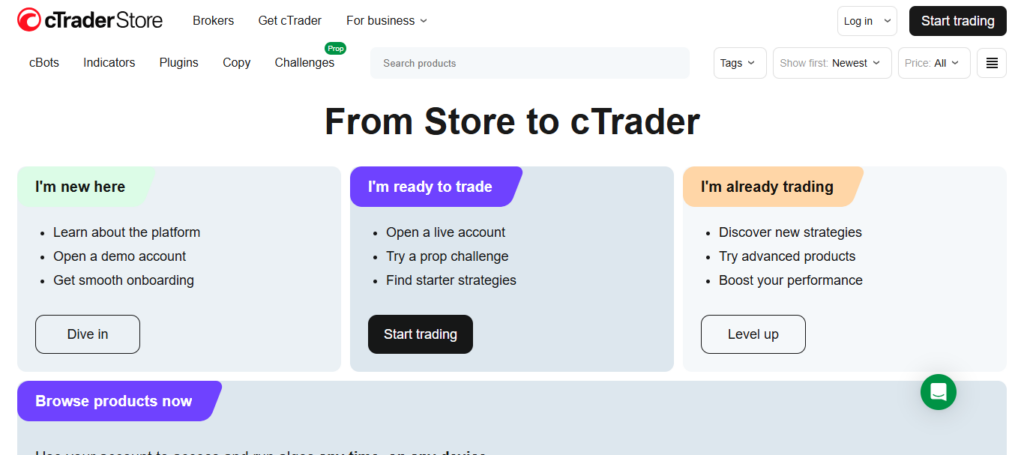
The ECN-based model provides price transparency and minimizes conflicts of interest with brokers The strategy optimization and backtesting of strategies capabilities allows traders to be effective in refining quantitative models.
Under the Best Quantitative Forex Trading Platforms, cTrader stands out for providing a clean interface alongside professional automation tools that is perfect for systematic traders hunting for accuracy, transparency and performance-based Forex execution.
cTrader — Features
- Ultra-fast execution in professional ECN trading environment.
- Trading strategies set of instructions performed by computer algorithms.
- Advanced charting tools with detachable and customizable layouts them.
- Access to Level II pricing and its exploit-free liquidity providers.
- Cloud syncrhonization for strategies, indicators and traded settings.
cTrader – Pros & Cons
| Pros | Cons |
|---|---|
| Modern and clean trading interface | Smaller community than MT5 |
| Excellent order execution transparency | Limited third-party plugins |
| Supports automated trading via cAlgo | Fewer brokers support it |
| Advanced charting tools | Requires coding knowledge |
| Ideal for ECN Forex trading | Less institutional research data |
3. NinjaTrader
NinjaTrader is more advanced for quantitative strategy development and algorithmic trading tools with professional analytics. Also, NinjaScript (which is based on C#) allows for custom indicators, automated strategies and complex execution models.
Its backtesting engine is very powerful, allowing for historical simulations and optimizations over a wide range of market conditions. The platform also integrates market replay features to create realistic testing environments.
Some top Best Quantitative Forex Trading Platforms that are valuable for NinjaTrader due to its precise charting, customization options and performance analytics make it possible for traders to create data-driven trading systems in terms of statistical edge coupled with disciplined execution.
NinjaTrader — Features
- Professional trading tools for advanced market analytics and execution.
- C# programming language for automated strategy development
- Backtesting and trade simulation environment with high performance
- Development of custom indicators and quantitative models.
- Large third-party ecosystem for add-ons and algorithms.
NinjaTrader – Pros & Cons
| Pros | Cons |
|---|---|
| Strong quantitative strategy development | Mainly focused on futures markets |
| Advanced backtesting engine | Forex broker options limited |
| Highly customizable indicators | Steep learning curve |
| Automation support | Paid license for full features |
| Professional-grade analytics | Complex for beginners |
4. TradingView
That said, a cloud-based option like TradingView has taken the quantitative traders by storm because of its flexibility, collaboration options, and ease of use.
They also provide advanced charting tools, real-time data visualization, and Pine Script programming to create automated indicators and trading strategies. Strategy testing can be carried directly in the browser within reach of global financial markets for traders.

Its social trading environment additionally permits sharing ideas and analyzing the market sentiments. Explanation: In the Ultimate Guide to Best Quantitative Forex Trading Platforms,
we introduce TradingView as a popular option that balances accessibility with robust quantitative research tools and the ability for traders to prototype algorithmic ideas in a highly accessible environment without complicated local downloads or weighty infrastructure.
TradingView — Features
- Cloud based charting platform everything you need with Forex market data in real time.
- Its own Pine Script language to build your quantitative indicators and strategies.
- Idea sharing and collaboration between traders
- Multi-device access without software installation.
- Strategy tester (for backtesting automated trading strategies)
TradingView – Pros & Cons
| Pros | Cons |
|---|---|
| Industry-leading charting system | Limited native automation |
| Cloud-based access anywhere | Advanced features require subscription |
| Social trading community | Strategy execution needs integration |
| Pine Script for strategy building | Not a full trading terminal |
| Excellent market visualization | Broker connectivity varies |
5. QuantConnect
QuantConnect open-source quantitative trading platform with research, strategy development, and automated execution Traders can build sophisticated Forex algorithms with the cloud-based Lean Engine, where Python or C# allows users to develop code.
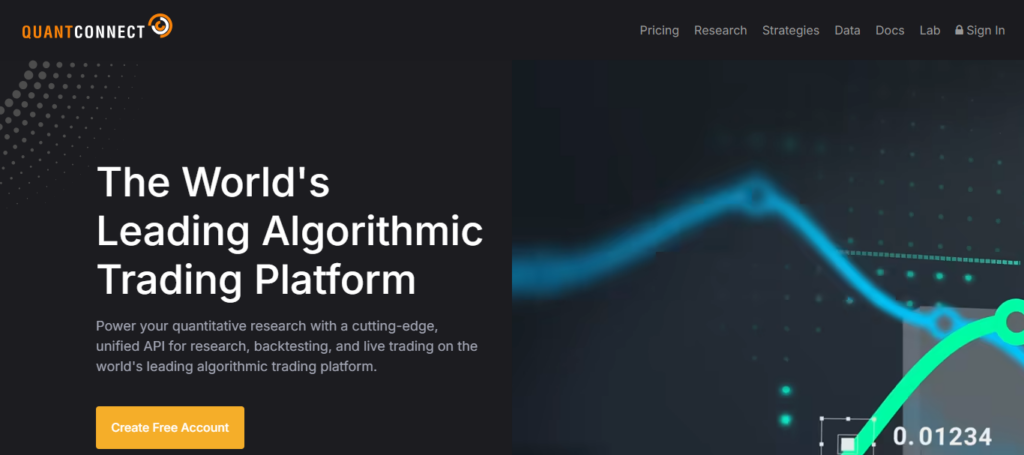
The platform allows you to leverage extensive historical datasets, machine learning integration, and realistic backtesting environments. Users can validate strategies before deployment through institutional-style research workflows.
In the Best Quantitative Forex Trading Platform 2023 ranking, QuantConnect is recognized for its ability to cater to data science individuals and quantitative researchers looking for powerful infrastructure with collaborative development tools that aid in research transitioning into live trading.
QuantConnect — Features
- Algorithmic trading platform (LEAN engine) of institutional grade
- Provide utilization of Python and C# for quantitative strategy development
- Forex backtesting data library.
- Live trading broker integrations with cloud deployment
- Ability to incorporate AI and machine learning models.
QuantConnect – Pros & Cons
| Pros | Cons |
|---|---|
| Institutional-level algorithmic trading | Requires programming skills |
| Supports Python & C# strategies | Cloud dependency |
| Massive historical data library | Not beginner friendly |
| Advanced backtesting infrastructure | Setup complexity |
| Multi-asset quantitative research | Limited manual trading features |
6. AlgoTrader
AlgoTrader is a fully-integrated algorithmic trading software solution for quantitative trading firms and the buy-side. It facilitates automated Forex execution, quantitative analysis and multi-broker connectivity across a unified infrastructure.
The platform allows for strategy automation, portfolio management, and advanced risk monitoring. If we talk about the Java-based architecture, then it is a flexible option for traders to integrate machine learning models and high-frequency trading strategies.
Best Quantitative Forex Trading Platforms: AlgoTrader is optimized for automated and algorithmic/quant strategies, used by hedge funds and institutions who want to run high-frequency trading on their own.
AlgoTrader — Features
- Algo trader/institutional execution management system
- Portfolio Management and Automated Forex Strategy Deployment
- Multi-broker and multi-exchange connectivity.
- Niche risk management and quantitative analytics.
- Java based strategy development for professional quants
AlgoTrader – Pros & Cons
| Pros | Cons |
|---|---|
| Institutional-grade algorithmic platform | Very expensive |
| Fully automated execution | Requires technical expertise |
| Strong risk management tools | Overkill for retail traders |
| Multi-asset & multi-broker integration | Complex deployment |
| Professional strategy automation | Enterprise setup required |
7. MultiCharts
MultiCharts is a commercial professional trading platform designed for quantitative traders to develop and execute high-performance strategies. It features EasyLanguage scripting, which enables traders to efficiently translate their trading ideas into automated strategies.
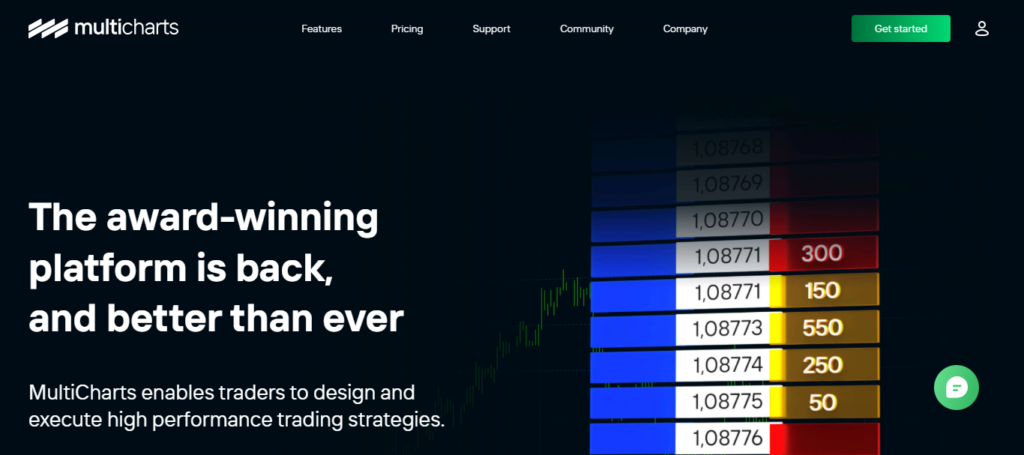
The platform provides robust analytic tools for performing backtesting, portfolio level analysis, and optimization to validate statistical trading systems. MultiCharts also connects to different brokers and data feeds, allowing for hassle-free Forex execution.
That said, among the Best Quantitative Forex Trading Platforms, MultiCharts earns its place due to its stability and speed, professional analytics for quantitative traders to put their tools to use running strategies, automating those strategies and testing them over years for performance.
MultiCharts — Features
- Charting and automated trading platform for professionals.
- Python Programming Language Python is a widely used programming language.
- Run thousands of backtests in seconds with portfolio optimizers.
- Automated Forex execution with broker connectivity.
- Enhanced order management and performance tracking.
MultiCharts – Pros & Cons
| Pros | Cons |
|---|---|
| High-speed execution engine | Paid software license |
| Advanced backtesting capability | Less beginner-friendly |
| PowerLanguage scripting flexibility | Smaller user community |
| Supports automated trading | Interface less modern |
| Broker connectivity options | Limited cloud functionality |
8. Refinitiv Eikon + FX Trading
Institutional-quality market intelligence and execution with Refinitiv Eikon plus FX Trading. It offers real-time Forex prices, sophisticated analytics, news sentiment analysis, and access to liquidity across the world.
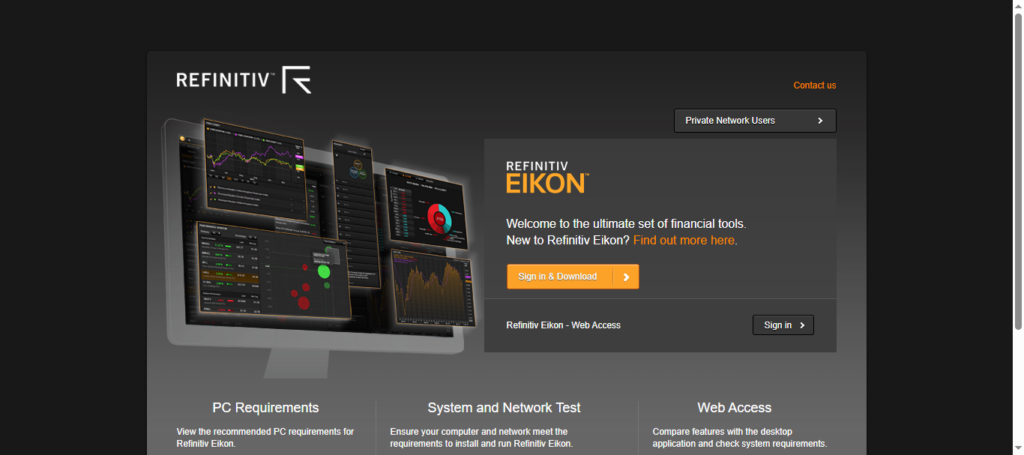
Quantitative traders have access to minute data, API connectivity & research dashboards for hypothesizing strategies. Ranked as one of the leading Quantitative Forex Trading Platforms, Eikon is already a choice for banks, asset managers and professional trading desks which require accurate data together with integrated research tools and sophisticated execution workflows that support data-driven Forex trading decisions.
Refinitiv Eikon + FX Trading — Features
- Data on institutional market and real-time Forex analytics
- Coupled FX execution venue with liquidity aggregation
- Tools for quantitative research and datasets from macroeconomic analysis
- News analytics and sentiment tracking
- Programmatic access for algo trading and quant tools.
Refinitiv Eikon + FX Trading – Pros & Cons
| Pros | Cons |
|---|---|
| Institutional FX liquidity access | Extremely expensive subscription |
| Professional research & analytics | Designed for institutions |
| Real-time global market data | Requires training |
| Advanced trading workflows | Heavy system requirements |
| Integrated news & macro analysis | Not ideal for retail traders |
9. MATLAB Financial Toolbox
The toolbox serves the need for quantitative research, mathematical modeling, and algorithmic strategy development. It is most commonly used by traders and researchers to build statistical Forex models, risk simulations & predictive analytics based on historical market data. With its rich domain of numerical computing abilities, it opens doors for implementing machine learning and intricate optimization techniques.
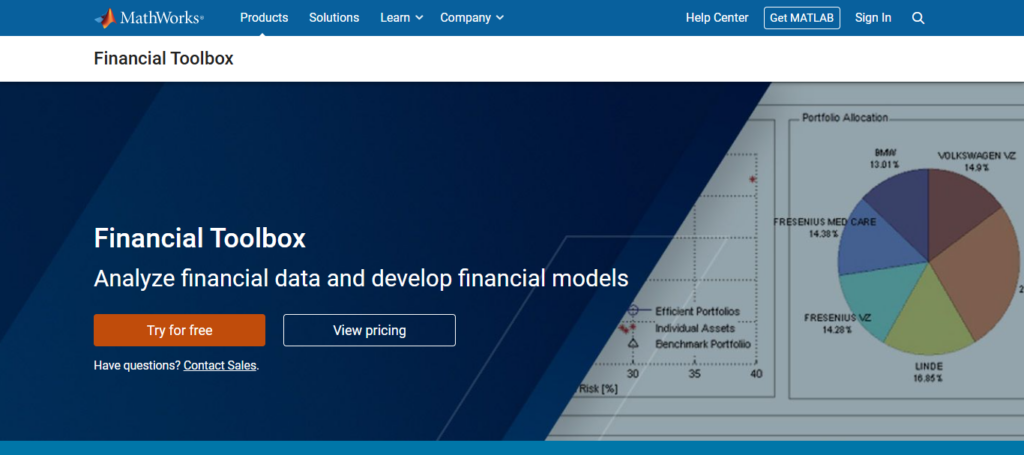
MATLAB is a leading Best Forex Trading Platforms for Quantitative Trading, traditionally used for quantitative analysis instead of execution, suitable for academics or quant analysts and researchers at institutions primarily engaged in model building, performance validation type work.
MATLAB Financial Toolbox Features
- Environment for quantitative modeling and financial algorithm development.
- Tools for statistical analysis and mathematical optimization
- Integration of AI & ML for Forex forecasting
- Robust frameworks for backtesting and risk modeling
- Big financial data visualization and simulation capabilities.
MATLAB Financial Toolbox – Pros & Cons
| Pros | Cons |
|---|---|
| Advanced quantitative modeling | Requires programming knowledge |
| Excellent statistical analysis | Expensive license |
| Institutional research standard | Not a direct trading platform |
| Powerful backtesting environment | Steep learning curve |
| Custom algorithm development | No native brokerage execution |
10. Bloomberg Terminal (FXGO + Quant Tools)
The combination of Bloomberg Terminal with FXGO and quantitative tools is the gold standard for institutional Forex trading and analytics.
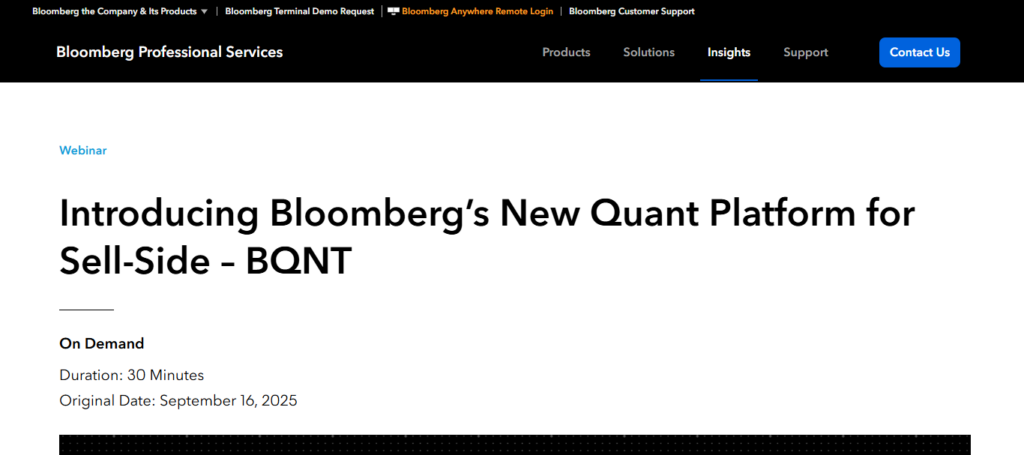
It integrates real-time global market data, sophisticated charting, algorithmic execution, and robust risk management systems. Once users become Quantitative Traders, they will have access to historical datasets of various financial institutions around the world and analytics models as well as execution algorithms.
Market Share — Strengths of Best Quantitative Forex Trading Platforms: Bloomberg Terminal – Composes unbeatable data coverage and professional workflow, used by hedge funds, banks, and institutions needing precise and reliable data for Quant.
Bloomberg Terminal (FXGO + Quant Tools) — Features
- Institutional-grade FX trading through FXGO execution system
- Global Market Data & Analytics Platform.
- Portfolio risk analytics and quantitative modeling tools
- Direct economic metrics, news flow and liquidity analysis.
- Automated-based quantitative workflows that you can automate with excel or API.
Bloomberg Terminal (FXGO + Quant Tools) – Pros & Cons
| Pros | Cons |
|---|---|
| World-class institutional data access | Very high subscription cost |
| FXGO professional trading system | Complex interface |
| Advanced quantitative analytics | Requires financial expertise |
| Real-time global market intelligence | Overqualified for retail traders |
| Institutional liquidity & execution | Dedicated training needed |
Conclusion
By utilizing data, automation, and sophisticated analytics to increase trading accuracy, the top quantitative forex trading platforms enable traders to go beyond manual decision-making.
Strong tools for strategy creation, backtesting, and real-time execution are offered by platforms like as Bloomberg Terminal (FXGO + Quant Tools), QuantConnect, and MetaTrader 5 (MT5). Quantitative platforms improve performance consistency, efficiency, and risk management for both institutional professionals and retail traders.
Adopting quantitative technology is increasingly necessary for competitive Forex trading success, but the choice of platform depends on trading objectives, technical know-how, and infrastructure requirements.
FAQ
What are Quantitative Forex Trading Platforms?
Quantitative Forex trading platforms are software systems that use mathematical models, algorithms, and statistical analysis to automate trading decisions. These platforms allow traders to test strategies, analyze large datasets, and execute trades automatically based on predefined rules instead of emotional decision-making.
Why are quantitative platforms important in Forex trading?
Quantitative platforms improve trading accuracy by removing human bias and enabling data-driven decisions. They help traders perform backtesting, risk analysis, and real-time automation, which increases efficiency and consistency in rapidly changing Forex markets.
Which platform is best for beginners in quantitative Forex trading?
Beginner traders often start with MetaTrader 5 (MT5) or TradingView because they offer user-friendly interfaces, built-in indicators, and simple automation tools while still supporting advanced quantitative strategies.
Which platforms are preferred by professional quantitative traders?
Institutional traders commonly use Bloomberg Terminal (FXGO + Quant Tools), Refinitiv Eikon + FX Trading, and AlgoTrader due to their advanced analytics, deep market data access, and enterprise-level execution capabilities.