



I’ll go over the Top Patent Monitoring Services in this post, which assist companies, inventors, and intellectual property specialists in tracking patent applications, keeping an eye on changes in the law, and staying one step ahead of rivals.
- Key Point & Best Patent Monitoring Services
- 1. Anaqua
- Anaqua Features, Pros & Cons
- 2. PatentTracker
- PatentTracker Features, Pros & Cons
- 3. PatSnap
- PatSnap Features, Pros & Cons
- 4. Innography (Clarivate)
- Innography (Clarivate) Features, Pros & Cons
- 5. IP.com
- IP.com Features, Pros & Cons
- 6. Questel Orbit Intelligence
- Questel Orbit Intelligence Features, Pros & Cons
- 7. LexisNexis PatentSight
- LexisNexis PatentSight Features, Pros & Cons
- 8. WIPO Patentscope Alerts
- WIPO Patentscope Alerts Features, Pros & Cons
- 9. Google Patents Alerts
- Google Patents Alerts Features, Pros & Cons
- 10. Docket Navigator
- Docket Navigator Features, Pros & Cons
- Conclusion
- FAQ
In today’s fast-paced innovation ecosystem, these services offer crucial insights into technology trends, portfolio management, and potential litigation risks, enabling firms to make well-informed decisions and successfully safeguard their intellectual property.
Key Point & Best Patent Monitoring Services
| Platform | Key Point |
|---|---|
| Anaqua | Offers comprehensive IP management with real-time patent monitoring and analytics for global portfolios. |
| PatentTracker | Provides automated alerts on patent applications, grants, and status changes to help manage IP risks. |
| PatSnap | Uses AI-driven insights to track patents, competitor activity, and emerging technology trends. |
| Innography (Clarivate) | Delivers advanced patent analytics, competitive intelligence, and customizable alerts for strategic decision-making. |
| IP.com | Focuses on prior art search and patent analytics with alerts to track innovations and litigation risks. |
| Questel Orbit Intelligence | Provides worldwide patent monitoring, deep analytics, and portfolio management tools for IP professionals. |
| LexisNexis PatentSight | Offers patent quality metrics, benchmarking, and monitoring for competitive and technology landscape insights. |
| WIPO Patentscope Alerts | Provides free access to global patent applications and automated alerts on specific fields or technologies. |
| Google Patents Alerts | Free tool for tracking new patents and publications with keyword-based notifications. |
| Docket Navigator | Specializes in litigation tracking with alerts on patent cases, filings, and court decisions. |
1. Anaqua
Best Patent Monitoring Service: Anaqua offers a single platform for managing intellectual property that smoothly integrates lifecycle management, docketing, analytics, and patent search.
Users can do freedom-to-operate searches, find prior art, and examine rival portfolios with its AcclaimIP search and analytics engine, which offers quick access to global patent data.
Anaqua is intended for intellectual property teams who require a centralized workspace that directly connects operations like renewal tracking and prosecution with alerts regarding new grants, changes in legal status, and citations.
Its strengths include lowering the barrier between patent research and operational execution and combining administrative and strategic activities into a single dashboard.
Anaqua Features, Pros & Cons
Features
- Alerts and dashboards that you can customize.
- Workflow integration (docketing).
- Analytics and Reporting.
Pros
- Strong alert customization.
- Good for corporate IP teams.
- Allows search plus management integration.
- Scalable for large portfolios.
Cons
- More expensive for smaller firms.
- Can be complex to set up.
- Requires training.
- User interface is not modern.
- Over monitoring is not needed.
2. PatentTracker
The best patent monitoring service is PatentTracker (by Minesoft), a specialist patent register monitoring service that automatically tracks legal status events across national registers including the USPTO, EPO, and German registers as well as international patent authorities like INPADOC families.
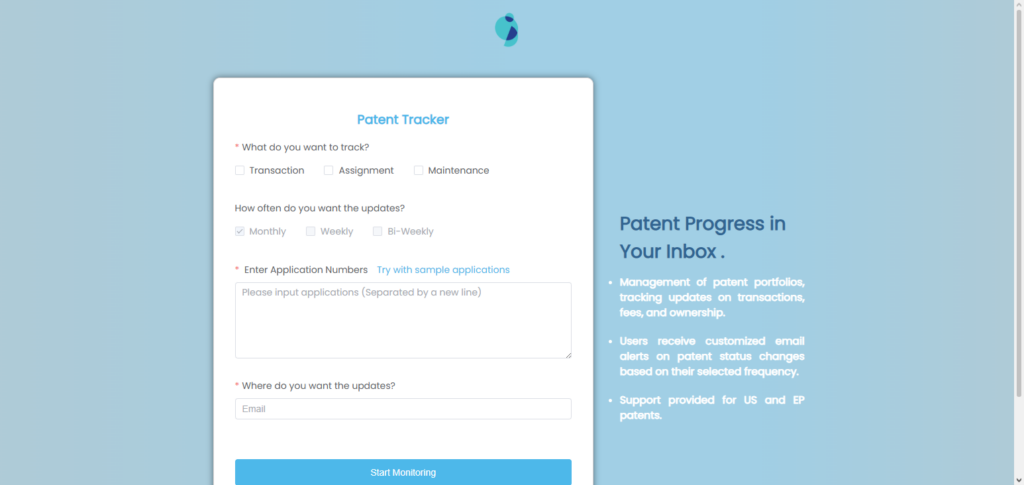
When there are changes, such as a grant, abandonment, or procedural modification, users can set up patent families, applicant names, or specific document events and receive email alerts. This guarantees that IP specialists never overlook crucial prosecution activity and saves hours of manually reviewing individual registries. Additionally, its archival feature serves as a backup store for modifications to patents under observation.
PatentTracker Features, Pros & Cons
Features
- Legal status tracking for patents.
- Automated Alerts.
- Email notifications.
Pros
- Alerts status are proven to be accurate.
- Simple to use.
- Great for prosecution teams.
- At low costs you can receive tracking that you would otherwise have to do manually.
Cons
- Analytics offered are limited.
- Search engine is weak and limited for reporting competitor status.
- Reporting is minimal.
- Not strong for competitor analysis.
- Focused on status only.
3. PatSnap
The best patent monitoring service is PatSnap, an AI-powered innovation intelligence platform that offers comprehensive worldwide coverage of over 170 million patent documents along with patent search, analytics, and visualization. By connecting technical content across filings using semantic and natural language search, it provides insight into citation networks, competitor R&D tactics, and upcoming technologies.
The analytics on the platform show trends, compare portfolios to those of rivals, and depict technological environments. R&D, intellectual property, and strategy teams frequently utilize PatSnap to identify white space opportunities, monitor new patent applications in certain domains, and produce reports that aid in investment and commercialization decisions.
PatSnap Features, Pros & Cons
Features
- Alerts on filings and citations.
- AI driven search.
- Maps of technology landscapes.
- Trend insights.
- Competitive portfolio comparison.
Pros
- Best visualization tools.* Strong AI / Semantic Search
- Excellent for R&D and strategy
- Dashboard is intuitive
- Good world-wide coverage
Cons
- Subscription cost is high
- Tougher of a learning curve
- There is excess data for non-serious users
- Some notifications are not flexible
- Limited data export
4. Innography (Clarivate)
Best Patent Monitoring Service: Innography (Clarivate) is a component of Clarivate’s IP analytics suite, which is intended for competition intelligence and enterprise-level patent analysis. It offers sophisticated search and visualization capabilities that enable customers to benchmark competitors, examine patent landscapes, and determine the trajectory of technical advancement.
Its analytics features, which help licensing plans and litigation risk assessments, include citation mapping, hierarchical charts, and portfolio summaries. Innography is appropriate for enterprises needing complex context on patent status, relationships, and influence across technical disciplines because Clarivate’s strength is deep data quality and structured patent information.
Innography (Clarivate) Features, Pros & Cons
Features
- Search with advanced filters
- Citation mapping
- Benchmarking of portfolios
- Competitive analyses
- Alerts (can set some custom ones)
Pros
- Strong analytics
- Good data quality
- Strong competitor analyses
- Good data visualization
- Good integration with Clarivate ecosystem
Cons
- High cost
- Complicated system
- Time-consuming set-up
- Not good for beginners
- Focus on analytics leaves gap for notifications
5. IP.com
Best Patent Monitoring Service: IP.com uses its unique Semantic GistTM engine to combine patent analytics with innovation workflows and ideation tools. The platform enables users to find prior art, quickly explore patent and non-patent literature, and keep an eye on pertinent patent activity across jurisdictions.

With capabilities for competitive intelligence, freedom-to-operate checks, and patent value, it is intended to expedite IP choices from early innovation to monetization.
The process of finding technology leaders, seeing trends, and producing insights that guide R&D and IP strategy is streamlined by IP.com’s analytics. Innovators, IP specialists, and business executives looking for in-depth knowledge of technology and patent activities are the target audience for the system.
IP.com Features, Pros & Cons
Features
- Search for prior art
- Search engine based on semantics
- Alerts on new patents
- Access to non-patent literature
- Dashboards with analytics
Pros
- Strong scouting of innovation
- Strong covered literature
- Strong prior art tools
- Good assistance for FTO analysis
Cons
- Interface is not intuitive
- Basic and premium tools have different alerts
- No litigation tracking
- Limited reporting
- Community of users is small
6. Questel Orbit Intelligence
Best Patent Monitoring Service: Questel Orbit Intelligence is a comprehensive worldwide intellectual property platform that integrates portfolio management capabilities with sophisticated analytics and deep patent search. Orbit Intelligence’s broad coverage of patent offices across the globe allows users to track prosecution activities, generate competitive landscape reports, and do multilingual searches.
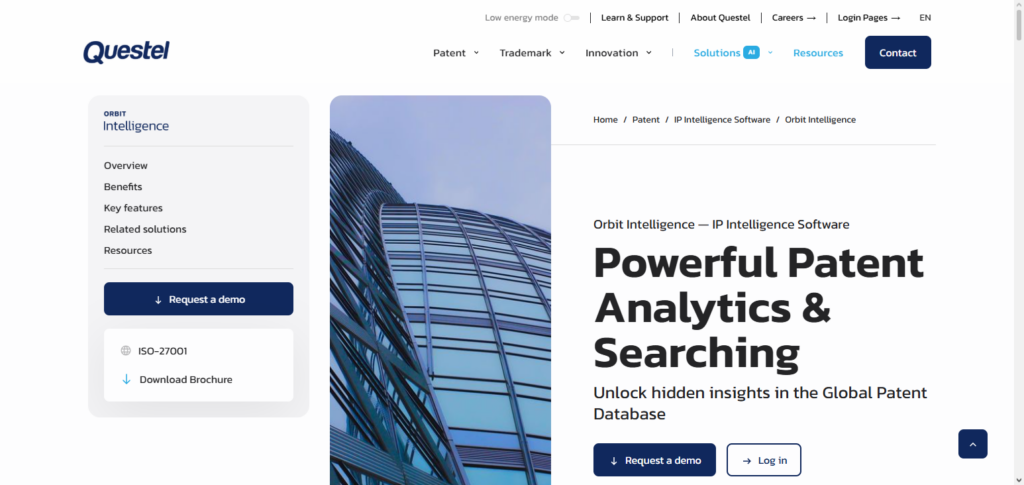
It is useful for corporate IP teams and mid-market law firms because of its adaptable interface, which facilitates cross-jurisdictional monitoring and semantic search. Decision-making and operational efficiency can be improved by managing portfolio data, legal status events, and analytics workflows simultaneously thanks to the platform’s interface with Questel’s larger intellectual property systems.
Questel Orbit Intelligence Features, Pros & Cons
Features
- Search and track patents globally
- Multiple languages supported
- Alerts and status tracking
- Dashboards on portfolios* Landscape reports
Pros
- Exceptionally comprehensive global coverage
- Search options are customizable
- Good multilingual support
- Useful for IP operations
- Excellent report quality
Cons
- Pricing models are more complex than usual
- IP litigation information is not their strongest area
- Training may be necessary
- Reporting is slower than average
- UI is out of date
7. LexisNexis PatentSight
The best patent monitoring service is LexisNexis PatentSight, which emphasizes strategic benchmarking and patent valuation over simple search. The Patent Asset Index, an objective index that measures the strength, market relevance, and impact of patent portfolios, is its most notable characteristic.

Users can compare portfolios, evaluate portfolio quality, and make judgments about licensing, M&A due diligence, and R&D priorities with the use of pre-corrected ownership data and thorough legal status updates.
High-level competitive intelligence and strategic planning are supported by PatentSight’s analytics, which highlight valuable assets across industries and display patterns to help executives and investors make decisions.
LexisNexis PatentSight Features, Pros & Cons
Features
- Patent Asset Index
- Benchmarking of portfolios
- Analytical reports
- Market relevance
- Strategic alerts
Pros
- Excellent valuation metrics
- Great for competitive planning
- Benchmarking visuals are clear
- Data is cleaned to a high standard
- Good quality for executive reporting
Cons
- Alerts for prosecution are not strong
- Limited raw data is exportable
- Tracking not simple is not a strength
- High costs
- Learning curve is steeper than average
8. WIPO Patentscope Alerts
The World Intellectual Property Organization (WIPO) offers the best patent monitoring service, WIPO Patentscope Alerts, a free worldwide search engine that provides extensive access to both national and international patent holdings.
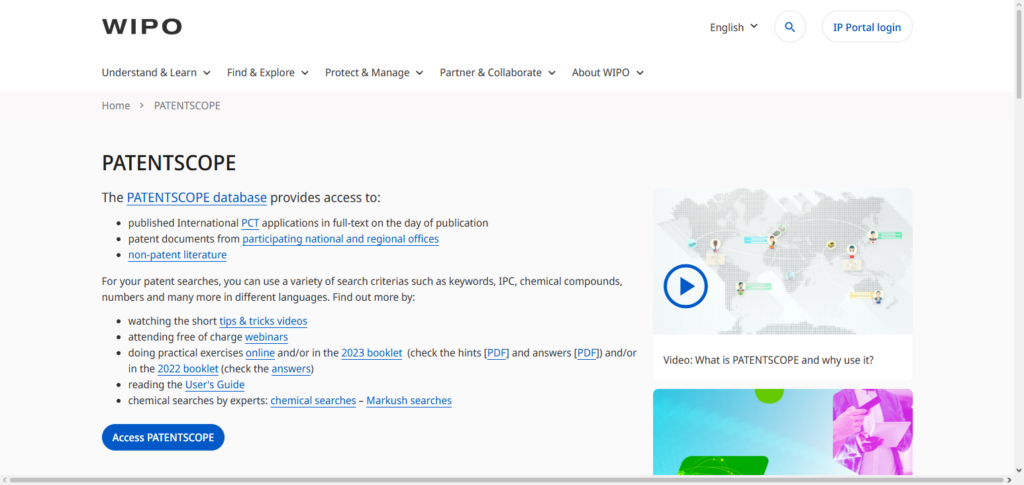
Users can look through published PCT applications and related materials from participating patent offices by utilizing keywords, classifications, applicant names, and more. With Patentscope’s bilingual interface and sophisticated search, customers can customize their queries and create notifications for new publications in relevant fields.
It is an invaluable resource for preliminary monitoring and extensive landscape study without subscription fees because of its worldwide coverage and full-text access.
WIPO Patentscope Alerts Features, Pros & Cons
Features
- Access to global patent applications
- Alerts for keywords and classifications
- Multilingual options
- Access to PCT
- Free
Pros
- No subscription fee
- Large scope of international data
- Alerts are easy to set
- Good initial landscape
- Data is official WIPO
Cons
- Analysis is not advanced
- Limited visualization options
- Alerts are basic
- UI is less polished
- No litigation insights
9. Google Patents Alerts
Google Patents, a searchable index of millions of patent documents from major patent offices worldwide, offers a free alerting tool called Google Patents Alerts, which is the best patent monitoring service. To be notified when new documents meet their requirements, users can set up alerts based on keywords, inventors, assignees, or classes.
Google Patents offers an accessible starting point for tracking developing ideas, basic prior art research, and monitoring new patent filings in target technology domains, even though it doesn’t offer as deep insights as specialized subscription services. It is helpful for solo inventors, students, or small teams due to its easy-to-use interface and free price.
Google Patents Alerts Features, Pros & Cons
Features
- Notifications for alerts (free)
- Alerts can be set for keywords or assignees
- Integration with searching Google Patents
- Patent data from all over the globe
- Clean and simple design
Pros
- Fully free
- Alerts configuration is simple
- Good for preliminary monitoring
- Easy search
- Good for individual usage
Cons
- Analytic abilities
- Dashboards for portfolios do not exist
- Alerts are not advanced for monitoring
- Tracking legal status is not done
- Tracking litigation is not done
10. Docket Navigator
Best Patent Monitoring Service: Docket Navigator is a platform for legal research and litigation intelligence that specializes in U.S. patent litigation and related practice areas. It gathers, arranges, and synthesizes comprehensive court docket entries—covering federal district courts, the ITC, and PTAB proceedings—with expert-written summaries and customized alerts, in contrast to standard patent search engines.

To keep track of cases that can affect patent strategy or competitive position, users can filter by motion kinds, parties, judges, and case outcomes. It is a vital resource for litigators, attorneys, and law firms involved in patent enforcement and defense because of its daily reports, analytics dashboards, and extensive historical coverage.
Docket Navigator Features, Pros & Cons
Features
- Alerts for litigation dockets
- Summaries for cases
- Tracking for motions
- Filters for judges and parties
- Timelines and analytics
Pros
- Focus on litigation is excellent
- Tracking of legal events is deep
- Case insights summarized
- Legal research time is saved
- Good for law firms
Cons
- Patent litigation is only available for the U.S.
- Not a tool for searching patents
- Alerts for status of patents not available internationally
- Expensive
- Not for use in legal activities
Conclusion
Making smart R&D decisions, staying ahead of the competition, and safeguarding intellectual property all depend on selecting the best patent monitoring service. While PatentTracker and Questel Orbit Intelligence provide accurate legal status tracking and worldwide coverage, platforms like Anaqua and PatSnap excel in delivering thorough analytics and portfolio management.
Docket Navigator is an expert in lawsuit monitoring, while services like LexisNexis PatentSight concentrate on patent valuation and competitive benchmarking. Accessible beginning points for extensive surveillance are offered by free tools such as Google Patents Alerts and WIPO Patentscope Alerts.
Whether analytics, worldwide alerts, lawsuit tracking, or cost effectiveness are your top priorities will determine which solution is best for maintaining a proactive, knowledgeable, and robust IP strategy.
FAQ
Which services are best for legal status tracking?
PatentTracker, Questel Orbit Intelligence, and Anaqua provide accurate alerts on patent prosecution, grants, renewals, and family updates.
Are there free patent monitoring options?
Yes, WIPO Patentscope Alerts and Google Patents Alerts offer global patent tracking with customizable keyword and classification notifications at no cost.
Which service is best for patent litigation monitoring?
Docket Navigator specializes in U.S. patent litigation, providing detailed docket summaries, case tracking, and alerts for motions, filings, and judgments.
How do I choose the right patent monitoring service?
Consider your needs: global coverage, alert frequency, analytics depth, litigation focus, or budget. Large enterprises may prefer comprehensive platforms like Anaqua or PatSnap, while startups may use free tools for initial monitoring.
Can multiple services be used together?
Yes, many organizations combine analytics, monitoring, and litigation tracking services to cover the full spectrum of IP intelligence, ensuring no critical updates are missed.