

The Top Forex Brokers for Multi-Jurisdiction Trading Desks will be covered in this post. Selecting a broker with multi-jurisdiction licenses guarantees safe trading, strong regulation, and access to international marketplaces.
- What Are Multi-Jurisdiction Trading Desks?
- How to Choose the Right Multi-Jurisdiction Broker
- Key Point & Best Forex Brokers for Multi-Jurisdiction Trading Desks List
- 1. IC Markets
- IC Markets Features, Pros & Cons
- 2. FXCM
- FXCM Features, Pros & Cons
- 3. IG
- IG Features, Pros & Cons
- 4. Saxo Bank
- Saxo Bank Features, Pros & Cons
- 5. CMC Markets
- CMC Markets Features, Pros & Cons
- 6. FxPro
- FxPro Features, Pros & Cons
- 7. Pepperstone
- Pepperstone Features, Pros & Cons
- 8. OANDA
- OANDA Features, Pros & Cons
- 9. Swissquote
- Swissquote Features, Pros & Cons
- 10. ThinkMarkets
- ThinkMarkets Features, Pros & Cons
- Key Features to Look for in Multi-Jurisdiction Forex Brokers
- Conclusion
- FAQ
These brokers provide competitive spreads, cutting-edge platforms, and dependable execution to effectively manage transactions across many nations and regulatory conditions, regardless of whether you are a professional, institutional, or retail trader.
What Are Multi-Jurisdiction Trading Desks?
Brokerage firms that are licensed and regulated in several nations are known as multi-jurisdiction trading desks. This enables them to provide trading services in several areas while adhering to regional financial laws.
These desks give traders access to international markets, improved financial security, and the capacity to carry out transactions under several regulatory regimes. They provide clients all over the world with transparency, confidence, and legal protection by operating under many jurisdictions.
For professional, institutional, and retail traders looking for low-risk settings, smooth cross-border access to forex, CFDs, and other financial instruments, multi-jurisdiction trading desks are very helpful.
How to Choose the Right Multi-Jurisdiction Broker
Assess their Regulatory coverage: Look up their licenses and make sure they are the FCA, ASIC, CySEC, and MAS. They will make sure that your broker is safe and compliant.
Assess the Trading Platforms: Make sure the broker offers a good, reliable, and fast trading platform. Examples include MT4, MT5, cTrader, and their own proprietary systems
Compare Fees and Spreads: Make sure the spreads and commissions are low. Also make sure the broker has low overnight fees so you can set limits on the trading conditions so they are better.
Assess the Instruments: When trading make sure you can trade many things, such as cfd, forex, indices, commodity and crypto instruments.
Assess Customer Service: Make sure they are helpful and responsive. Look up their tools and educational resources and make sure they are good and helpful
Key Point & Best Forex Brokers for Multi-Jurisdiction Trading Desks List
| Broker | Key Points |
|---|---|
| IC Markets | Low spreads, fast execution, multi-platform support, ideal for scalping. |
| FXCM | Regulated globally, strong trading tools, flexible account types. |
| IG | Extensive market access, advanced charting, educational resources. |
| Saxo Bank | Premium broker, global markets, institutional-grade research. |
| CMC Markets | Competitive pricing, excellent platform (Next Generation), risk management tools. |
| FxPro | Multi-asset trading, reliable execution, advanced MT4/MT5 support. |
| Pepperstone | Low commissions, fast execution, great for algorithmic trading. |
| OANDA | Transparent pricing, flexible lot sizes, strong analytical tools. |
| Swissquote | Swiss-regulated, robust trading platforms, wide forex & CFD selection. |
| ThinkMarkets | Tight spreads, strong mobile trading, global regulatory coverage. |
1. IC Markets
Established in 2007 in Sydney, Australia, IC Markets has built a reputation for itself as one of the Best Forex Brokers for Multi‑Jurisdiction Trading Desks. It has a high liquidity, raw spread, and fast execution systems.
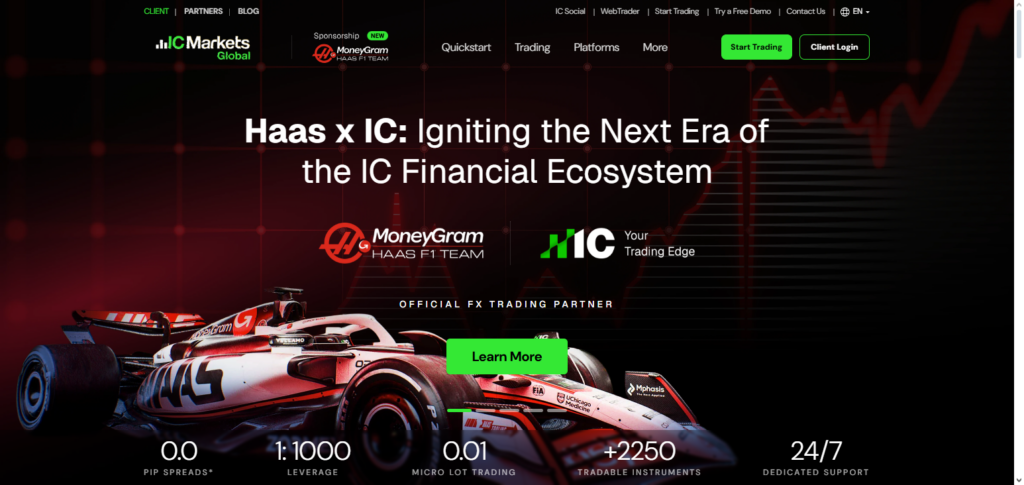
IC Markets has multiple regulators such as the Australian Securities and Investments Commission (ASIC), Cyprus Securities and Exchange Commission (CySEC), and the Seychelles Financial Services Authority (FSA).
This spread broker shows great security for traders. IC Markets provides raw spreads starting at 0.0 pips for commission structures. Traders can also use MetaTrader 4, MetaTrader 5, and C-trader. It also has high execution and a wide range of professional instruments.
IC Markets Features, Pros & Cons
Features
- Raw spreads beginning at 0.0 pips
- Rapid Execution Speed
- Supported on MT4, MT5, and cTrader
- Rectified by ASIC, CySEC, and the FSA.
- Extensive CFDs and Forex options
Pros
- Deep Liquidity: They hold institutional liquidity which means their pricing is great.
- Low Spreads: They offer raw spreads starting from 0.0 pips which lowers trading costs.
- Regulation: They hold licenses with ASIC, CySEC and FSA which covers multi-jurisdiction oversight.
- Multiple Platforms: They have services for MT4, MT5, and cTrader. They cover all types of trading.
- Fast Execution: They offer good order execution which is needed by scalpers and high-frequency traders.
Cons
- Education: They have limited offerings for beginner traders.
- forex Focused: They have little offerings for traders that want to diversify with non forex trading products.
- Social Trading: They offer little to no services for social trading or copy trading.
- Advanced Features: Some of their features may be too much for beginner traders.
- Commission Charges: They have high costs for traders that are on the Razor accounts which means more commissions for traders that do little volume.
2. FXCM
Forex Capital Markets (FXCM) is one of the Best Forex Brokers for Multi-Jurisdiction Trading Desks and has been in the Forex market for a long time. It was established in 1999 in New York.
After overcoming regulatory obstacles in the United States, FXCM now partners with global regulators such as the UK Financial Conduct Authority (FCA) and other local affiliations, which adds credibility to the supervision offered to traders.
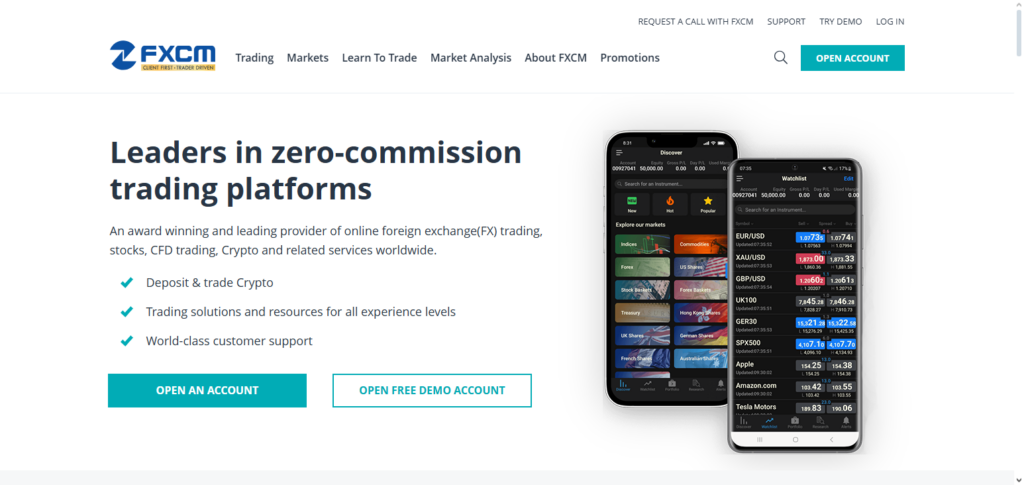
The company’s pricing structures generally encompass spreads and some account types which may include additional commissions, however, pricing on major and minor currency pairs is considered competitive across the industry.
FXCM provides sophisticated trading tools and research capabilities, retail and institutional trading services, and verticals throughout the global jurisdiction while focusing on transparency and the quality of execution.
FXCM Features, Pros & Cons
Features
- Established and active business for 24 years.
- Regulated by different Economic Bodies including the FCA.
- MT4 integration and Trading View in the same platform.
- Different account types available
- Trading platform has advanced analytics options.
Pros
- Reputation: They have been in the industry for more than 20 years which gives peace of mind.
- Regulators: They are regulated with the FCA and which means secure trading.
- Trading View: They have great charting and you are able to analyze greatly.
- Flexible Accounts: They cater to many strategies with their flexible accounts offerings.
- Research: They have good quality research for market insights.
Cons
- Spreads: They are wide with the spreads. This means increased costs.
- Reduced Assets: Smaller product selection than larger multi-asset brokers.
- No Proprietary Platform: Relies on outside third-party systems.
- U.S. Limitations: Deficient market access within the U.S.
- Not Ideal for HFT: Execution speeds aren’t optimal for high-frequency trading.
3. IG
Established in London in 1974 and with nearly fifty years of experience in the industry, the IG Group is one of the Best Forex Brokers for Multi-Jurisdiction Trading Desks with extensive experience.
Its regulation by the top bodies including the UK FCA, ASIC (Australia), FINMA (Switzerland), MAS (Singapore), JFSA (Japan), among others, provides one of the widest reach in terms of regulatory coverage.
The fees include UK spreads on forex pairs and commissions ranging from all other financial instruments such as CFDs, indices, and any other markets. The rest of the costs of the other markets varies and so do the spreads.
The rest of the services such as the platforms, education, and research within the markets plus access to global markets makes it a top tier broker for traders.
IG Features, Pros & Cons
Features
- Since 1974, the company’s operations.
- Regulated by the FCA, ASIC, MAS, and other bodies.
- Advanced charting functionalities.
- Variety in assets (Forex, Indices, CFDs)
- Advanced research and educational resources.
Pros
- Market Access: Large offering for trading forex, indices, and CFDs.
- Globally Regulated: Safe under FCA, ASIC, MAS and more.
- Advanced Tools: Superb charting and analytical tools.
- Educational Resources: Robust education for traders.
- Reliable Platform: Smooth and user-friendly trading environment.
Cons
- Complex Fees: New users may find the fee structure confusing.
- Higher Costs: More expensive for some products.
- Overwhelming Platform: Newcomers may find the extensive tools daunting.
- Reduced Crypto: CFD crypto offerings less than some rivals.
- Inactivity Fees: Fees for accounts that are inactive.
4. Saxo Bank
Saxo Bank is one of the Best Forex Brokers for Multi-Jurisdiction Trading Desks. Saxo is a fully licensed bank and broker. It is regulated by the Danish Financial Supervisory Authority and has additional licenses in varying jurisdictions, making the bank more compliant in terms of cross-border regulations.
Customer fees (>spreads and commissions) are directly linked to the level of service the bank provides. Fees per account level and product traded diverge. The bank has its own trading platforms allowing professional traders and institutions to trade directly in the foreign exchange and other multi-asset classes (CFDs, stocks, and bonds).
Saxo Bank Features, Pros & Cons
Features
- Established in 1992
- Global regulation and Danish FSA
- Own SaxoTraderGO platform.
- Multi-asset classes.
- Research of institutional quality.
Pros
- Premium Service: Access to more sophisticated grade research and tools.
- Banking Backing: Saxo is a fully regulated bank, providing more security.
- Global Markets: Comprehensive access to Currency, stocks, bonds and more.
- Proprietary Platform: SaxoTraderGO is sophisticated and easy to navigate.
- High-Quality Execution: Consistent pricing and order fulfillment.
Cons
- High Minimums: More elevated deposits limit access.
- High Costs: Smaller accounts get impacted by the high spreads and fees.
- Not Beginner Friendly: Most suitable for professional traders.
- Pricing Tier Complexity: The confounding nature of the fee structure.
- Low Promotions: Less offer of bonuses and incentives.
5. CMC Markets
Due to its extensive years of operation, CMC Markets has secured the Best Forex Brokers for Multi-Jurisdiction trading desks. It has also saved a space in the London Forex Trading Market for its competitive pricing in the London Forex Trading Market.
It has also obtained licenses and extended regulations in different countries (ASIC, FCA, BaFin, and MAS). In the proprietary platform, the broker offers a competitive spread (especially on major forex pairs) and a strong set of Trading and Analyzing Tools. The same case applies for the MT4 platform.
CMC fees include charges related to spreads, financing, and the platform for premium features, yet remain reasonable for frequent traders. CMC Markets has a broad selection encompassing forex, indices, commodities, and CFDs, supporting international trading with tailored solutions and multi‑jurisdiction compliance.
CMC Markets Features, Pros & Cons
Features
- Established in 1989
- Regulated by FCA, ASIC, and MAS
- Next Generation trading tools
- Spreads are competitive.
- Tools for Risk Management.
Pros
- Next Generation Platform: Full of features and highly customizable.
- Low Spreads: Low pricing for instruments.
- Global Regulation: Licensed by FCA, ASIC and others.
- Risk Tools: Features for comprehensive risk management.
- Greater Markets: Wide coverage of instruments.
Cons
- Complex for New Traders: Too much for new traders.
- No Social Trading: No collaborative trading features.
- Inactivity Fees: Fees for lack of activity on accounts.
- Cost of CFDS: Higher costs of some CFDs.
- Learning Curve: Takes some time for the more complex features.
6. FxPro
FxPro has been in business since 2002 and has been licensed as a Best Forex Brokers for Multi‑Jurisdiction Trading Desks. Retails Global Forex and CFD Trading and has the London head office.
They are licensed under several jurisdictions; thus, they have the UK FCA, Cyprus CySEC, and others who offer cross–jurisdictional compliance for the coverage of the International Financial Service. In addition to this, FxPro provides a wide range of features with competitive spreads, MetaTrader 4 and MetaTrader 5 support, and custom trading solutions.
The fee structure has spreads and commissions that are level dependent, and the brokerage is highly rated for the quality of their order execution and the robustness of their trading platform. The cross–jurisdiction compliance is a strong competitive differentiator for attracting trading clients.
FxPro Features, Pros & Cons
Features
- Established in 2002
- Regulated by FCA, CySEC & other countries
- Support for MT4, MT5 & cTrader
- Multi-asset availability
- Reliable execution
Pros
- Support for Multiple Platforms: MT4, MT5 & and cTrader.
- Reliable Execution: Stable performance during market volatility.
- Global Regulation: Oversight by FCA, CySEC and others.
- Multi-Asset Coverage: Inclusion of Forex, CFDs, and indices.
- Top Tier Pricing: Depth on pricing of major pairs.
Cons
- Wider Spreads: Less competitive pricing on some accounts.
- Education is Limited: Less guides and tutorials are offered.
- No Proprietary Tools: Depends on third-party platforms.
- Fewer Account Options: Less variety in account types.
- Limited Promotions: Fewer promotional offers and bonuses.
7. Pepperstone
One of the Best Forex Brokers for Multi‑Jurisdiction Trading Desks is also Pepperstone, which started its business in 2010 in Melbourne, Australia, and has gained a global presence which is why he has gained a global presence and a very competitive offer. He is granted CA, ASIC, DFSA, and SCB, which also gives them a strong presence in the other global regulatory bodies.
Upon their Razor accounts, the broker attracts high-volume and automated traders due to their attractive industry low spread (lower than 1 pip) and offer competitive commission structures.
High-volume traders can use Pepperstone on MT4, MT5, and Trade View, as well as cTrader for their advanced features. They also have global offices, and their regulatory coverage helps improve the execution quality and services for European, Asian, and Australian customers.
Pepperstone Features, Pros & Cons
Features
- Established in 2010
- FCA, DFSA, ASIC regulations
- Low latency & tight spreads
- Support for MT4, MT5 & cTrader
- Algorithmic trading
Pros
- Cost Effective: Low commission and spread costs.
- Quick Execution: Good for EA’s and scalping.
- Multiple Platforms: MT4, MT5 and cTrader available.
- Good Regulation: Regulated by ASIC, FCA, DFSA.
- Automated Trading: Good for trading automation.
Cons
- Limited Educational Content: Very basic education.
- No Social Trading: No social trading platform.
- Limited Crypto Offering: Less choice in crypto CFDs.
- Event-Driven Spread Changes: Spreads increase during news.
- Smaller Company: Not as big as competitors like IG.
8. OANDA
Since its inception in 1996, OANDA, headquartered in New York, has received global recognition as a Best Forex Broker for Multi‑Jurisdiction Trading Desks, with a regulatory footprint that encompasses the FCA (UK), CFTC and NFA (US), ASIC (Australia), and MAS (Singapore).
In several locations, OANDA has established a commission-free model that includes transparent pricing coupled with competitive spreads for the major and minor currency pairs.
The pricing model includes holding/rollover charges on overnight positions, while in most locations there are no deposit or withdrawal fees, which offers simplicity to the trader. OANDA is a strong candidate for multi‑jurisdictional trading as its compliance and reliable platforms are well sought by both institutional and retail traders for global access to the forex market.
OANDA Features, Pros & Cons
Features
- Established in 1996
- Regulated by FCA, CFTC, ASIC & MAS
- Pricing is transparent
- MT4 & proprietary OANDA platform
- Flexible lot sizing
Pros
- Easy to Understand Pricing: Easy to understand consistent pricing.
- Global Regulation: No regulation gaps with FCA, CFTC, ASIC, and MAS.
- Small Lot Sizes: Ability to trade smaller lots.
- Good Trading Tools: Good in-house trading tools.
- Stable Platform: Good stability and less downtime.
Cons
- Limited Asset Class Diversification: Limited non-forex assets.
- Wider Spreads: Higher spreads with exotic pairs.
- cTrader Not Offered: cTrader is not available.
- No Social Trading: No social/copy trading options.
- Limited Reports: Less research and market analysis.
9. Swissquote
Swissquote, which began operations in 2000 and is listed on the SIX Swiss Exchange under the ticker SQN, is a Best Forex Brokers for Multi‑Jurisdiction Trading Desks with banking-grade security and multiple certifications from the extensive regulatory bodies such as FINMA (Switzerland), FCA (UK), MAS (Singapore), SFC (Hong Kong), CySEC (Cyprus), DFSA (UAE), and others.
Swissquote offers transparent forex pricing starting at competitive spreads and no commission on several account types, although inactivity and conversion fees apply. Swissquote has built a reputation for having a strong suite of platforms along with so called “institutional grade” liquidity.
As such, it is attractive to traders that want Swiss financial reliability along with strong access to the global markets and regulatory coverage.
Swissquote Features, Pros & Cons
Features
- Established in 2000
- Regulated By FINMA, FCA, MAS, and others
- Banking services from Swiss professionals
- Diverse range of assets
- Strong proprietary trading platform
Pros
- Bank Level Security: Swissquote’s security is both high and bank-level because they have been granted a Swiss banking license and are regulated by the Financial Market Supervisory Authority (FINMA).
- Wide Market Access: Offers forex trading in addition to stocks and bonds.
- Advanced Technology: Offers powerful trading platforms.
- Multi-Regulatory: Their licenses are from the FCA, MAS, SFC, and more.
- Transparent Fees: Account and transaction fees are posted clearly.
Cons
- High Minimum Funding: Their required minimum deposit is high.
- Spread Costs: Some forex pairs have large (wide) spreads.
- Complex Fee Structures: This can be confusing to newbie traders.
- Not Beginner Focus: Just about the a** most** experienced trader to know what they are doing.
- Limited Promotions: Not many offers.
10. ThinkMarkets
Since their start in 2010, ThinkMarkets has become an excellent choice for Multi-Jurisdiction Trading Desks. They are regulated by the major financial authorities including the UK FCA, ASIC (Australia), CySEC (Cyprus), FSCA (South Africa) and provide their customers broad geographic regulation.
Spread fees begin at around 0.4 pips for EUR/USD and are commission-free for most CFDs, however, accounts that are inactive will incur fees. ThinkMarkets works on MT4, MT5 and ThinkTrader and offers over 4,000 CFDs and cryptocurrencies. They are one of the most competitive brokers for traders around the world.
ThinkMarkets Features, Pros & Cons
Features
- Established 2010
- Regulated by FCA, ASIC, and CySEC
- Available on MT4, MT5, and ThinkTrader
- Tight Spreads
- Over 4,000 instruments available for trading
Pros
- Competitive Spreads: Enhanced spreads (tighter) on most major pairs.
- Multiple Platforms: Available on MT4, MT5 & ThinkTrader.
- Wide Range of Instruments: 4,000+ assets to trade.
- Global Regulation: Companies are regulated by the FCA, ASIC, and CySEC.
- Mobile Trading: Great app ThinkTrader.
Cons
- Less Brand Recognition: Less internationally known.
- Inactivity Fees: Fees are charged to accounts that are not in use.
- Limited Educational Tools: Not many lessons or tutorials.
- Limited Proprietary Research: Less in-house research.
- Regional Support Limit: Less regional office presence.
Key Features to Look for in Multi-Jurisdiction Forex Brokers
International Regulatory Reach: Most traders see peace of mind when a broker is regulated by big authorities, such as, FCA, ASIC, CySEC, MAS. This means more protection of funds and compliance to supranational law.
Low Fees and Spreads: Profitable trading means trading at the lowest costs. To do this, find a broker with the lowest spreads, clear commissions, and no extra charges.
Stability of Trading Platforms: Traders love quick execution. They also appreciate charting tools. Brokers, with in-house platforms such as, MT4, MT5, C-trader, offer traders a more enjoyable experience.
Diversification: It is good to have the ability to trade different forex pairs, CFDs, commodities, crypto, and even indices.
Tools and Resources: Analysis, news, strategies, and tools to forge a traders’ decision should be prioritized when looking for a broker. These are important for self improvement.
Conclusion
For traders looking for dependable execution, strong regulation, and access to international markets, selecting the appropriate broker for multi-jurisdiction trading desks is essential.
Brokers with competitive spreads, sophisticated trading interfaces, clear fee structures, and broad regulatory coverage across several nations include IC Markets, FXCM, IG, Saxo Bank, CMC Markets, FxPro, Pepperstone, OANDA, Swissquote, and ThinkMarkets.
These brokers offer the security, adaptability, and resources required for effective cross-border trade, regardless of whether you are a professional trader, institutional client, or retail investor. Choosing any of these leading brokers guarantees a smooth, legal, and adaptable trading experience.
FAQ
What are multi-jurisdiction trading desks?
Multi-jurisdiction trading desks allow brokers to operate under regulations from multiple countries, giving traders access to global markets while ensuring compliance with different regulatory authorities. This setup enhances security, transparency, and flexibility for traders worldwide.
Why choose brokers with multi-jurisdiction licenses?
Brokers with multi-jurisdiction licenses offer higher safety for funds, access to local banking systems, and the ability to trade across regions without legal restrictions. They provide credibility and reduce the risk of fraud.
Which brokers are best for multi-jurisdiction trading?
Top brokers include IC Markets, FXCM, IG, Saxo Bank, CMC Markets, FxPro, Pepperstone, OANDA, Swissquote, and ThinkMarkets. These brokers have global regulatory coverage, competitive spreads, advanced platforms, and multi-asset offerings.
How do fees vary among multi-jurisdiction brokers?
Fees differ depending on account type, traded instruments, and region. Generally, brokers charge tight spreads, commissions on certain accounts, and occasional overnight or conversion fees. Choosing the right broker depends on your trading style and volume.