



The Top Crypto-Friendly Commercial Banks for Institutional Clients will be covered in this post. Institutional investors and enterprises require banks that offer advanced crypto services, secure custody, and regulatory compliance as digital assets gain popularity.
- Why Use Crypto-Friendly Commercial Banks for Institutional Clients
- Key Point & Best Crypto-Friendly Commercial Banks for Institutional Clients
- 1. Silvergate Bank
- Silvergate Bank Features
- Silvergate Bank Pros & Cons
- 2. Signature Bank (Signet Platform)
- Signature Bank (Signet Platform) Features
- Signature Bank (Signet Platform) Pros & Cons
- 3. JP Morgan Chase
- JP Morgan Chase Features
- JP Morgan Chase Pros & Cons
- 4. Goldman Sachs
- Goldman Sachs Features
- Goldman Sachs Pros & Cons
- 5. BNY Mellon
- BNY Mellon Features
- BNY Mellon Pros & Cons
- 6. State Street
- State Street Features
- State Street Pros & Cons
- 7. Revolut Business
- Revolut Business Features
- Revolut Business Pros & Cons
- 8. N26 Business
- N26 Business Features
- N26 Business Pros & Cons
- 9. Xapo Bank
- Xapo Bank Features
- Xapo Bank Pros & Cons
- 10. Sygnum Bank
- Sygnum Bank Features
- Sygnum Bank Pros & Cons
- Conclusion
- FAQ
These institutions, which range from Swiss innovators like Xapo and Sygnum to American leaders like Silvergate and Signature Bank, offer dependable solutions for trading, managing, and protecting digital assets.
Why Use Crypto-Friendly Commercial Banks for Institutional Clients
Safeguarding of Digital Assets: Banks with custodianship regulations can provide institutional clients with custody services, vault protection with insurance, and cold storage safeguards which protects against hacks and theft.
Staying Within The Boundaries of The Law: Banks offering custodianship services should rest have the client KYC/AML law around digital assets as banks should take the custodianship and confidentiality regulations as the benchmark for warding off regulatory risk.
Systems for Settlements and Payments: Solutions of banks such as Signature or Silvergate have the potential for providing real-time settlement and transfers and avoiding the uncertainty and risks in operations caused by time.
Services Available on the Scale of Institutions in The Crypto Ecosystem: Service providing institutions should have the ability to access crypto trading, crypto ecosystem lending services, token services, and investment products as these should not be offered to institutions by banks.
Connecting Traditional Banking and The Crypto Ecosystem: Use of integrated crypto-friendly commercial banks with digital assets gives institutional clients the ability to manage the cash flows in crypto, provide services in multi-currency, and manage the treasury services in conjunction with the crypto in the digital assets.
Lack of Risk: The combination of the audit, the reporting, and the secure system of the banks assists in the lack of risk in the institutions from the exposure of the market, the operational risk, and the risks from the compliance in the sub-systems.
Strategic Support and Advisory: Several of these banks offer advisory services and research and provide insight into how institutions can form crypto strategies that meet their financial objectives.
Key Point & Best Crypto-Friendly Commercial Banks for Institutional Clients
| Bank / Platform | Key Point |
|---|---|
| Silvergate Bank | Specializes in crypto banking; known for the Silvergate Exchange Network (SEN) enabling real-time crypto transfers. |
| Signature Bank (Signet Platform) | Offers blockchain-based payment network Signet for instant USD payments; strong crypto-friendly reputation. |
| JP Morgan Chase | Traditional banking giant with growing crypto services; offers JPM Coin and institutional crypto solutions. |
| Goldman Sachs | Provides crypto trading, custody, and advisory services for institutional clients; cautious but expanding crypto footprint. |
| BNY Mellon | Global custodian experimenting with digital asset custody and treasury services; supports tokenized assets. |
| State Street | Focused on institutional crypto custody and ETFs; integrating digital asset solutions into traditional finance. |
| Revolut Business | Digital-first banking for SMEs; allows crypto transactions, trading, and multi-currency accounts. |
| N26 Business | Mobile-first bank targeting freelancers/SMEs; limited crypto integration via partnerships, focused on ease-of-use. |
| Xapo Bank | Swiss-based bank fully licensed for crypto assets; offers trading, custody, and tokenized asset services. |
| Sygnum Bank | Regulated Swiss bank for digital assets; provides custody, trading, tokenization, and wealth management services. |
1. Silvergate Bank
Established in 1988, Silvergate Bank is a U.S. commercial bank and a pioneer of crypto banking. Through the bank’s Silvergate Exchange Network (SEN), institutional clients can send USD cryptocurrency to various crypto exchanges and wallets in real-time.
The bank also provides business checking and treasury accounts to crypto firms, exchanges, and institutional investors.
Silvergate is famous for crypto liquidity. digital asset firms, exchanges, and institutional investors, Silvergate provides lending, custody, and payment solutions. Silvergate combines regulatory compliance with crypto banking services.
Silvergate Bank Features
- Silvergate Exchange Network (SEN) allows real-time transfers of USD.
- Business accounts focused on crypto.
- Lending & credit solutions for institutions.
- Digital asset tailored payment and treasury services.
- Tools for reporting and compliance.
Silvergate Bank Pros & Cons
| Pros | Cons |
|---|---|
| Designed specifically for crypto businesses | Limited global presence (mainly U.S.) |
| Silvergate Exchange Network (SEN) enables fast 24/7 USD transfers | Focus mostly on USD, fewer other currency options |
| Strong regulatory compliance | Higher fees for smaller accounts |
| Deep integration with major exchanges | Minimal retail‑focused services |
| Institutional lending and treasury support | Exposure to crypto market volatility |
2. Signature Bank (Signet Platform)
Signature Bank, established in 2001, provides real-time USD payment processing for institutional clients on its blockchain-based Signet platform. Additionally, the bank offers commercial accounts and treasury services tailored for crypto companies where crypto and fiat on-chain and off-chain transfers are integrated.

Signet is ideal for crypto exchanges, hedge funds, and institutions focusing on speed and security, as it provides 24/7 settlement. Signature has been innovative in banking the digital asset space while remaining a compliant and safe financial institution. For the second year in a row, Signature Bank is ranked as the top bank for blending conventional banking and blockchain for commercial purposes.
Signature Bank (Signet Platform) Features
- Payment Network on blockchain Signet.
- 24/7 USD settlement instant.
- Commercial accounts for crypto companies.
- Management of treasury and support on FX.
- High compliance management.
Signature Bank (Signet Platform) Pros & Cons
| Pros | Cons |
|---|---|
| Instant real‑time USD settlement with Signet | Limited support for assets beyond USD |
| Strong compliance and risk controls | Mainly U.S.‑centric offerings |
| Good for treasury and institutional cash flows | Not designed for retail clients |
| Reduces settlement risk | Fewer global branches |
| Supports crypto exchanges & funds | Application/onboarding is complex |
3. JP Morgan Chase
As one of the oldest financial companies, JP Morgan Chase has been in operation since 1799. He offers institutional clients advanced crypto services, business accounts, custody services, and the instantiation of stablecoins through the JPM Coin service. Additionally, the bank offers hedge funds and asset management advisory services, as well as crypto trading and investment products. JP Morgan has historically been a conservative bank.

However, they are increasing their crypto business while offering clients the highest level of compliance and security. For the second consecutive year, JP Morgan is ranked as the leading commercial provider of banking services, combining conventional banking and emerging digital asset services.
JP Morgan Chase Features
- JPM Coin (payment stablecoin).
- Crypto custody services for institutions.
- Prime brokerage and crypto trading
- Corporate business accounts
- Integration and research of blockchain
JP Morgan Chase Pros & Cons
| Pros | Cons |
|---|---|
| Massive global reach and infrastructure | Conservative approach to crypto adoption |
| Institutional custody and JPM Coin | Higher fees than many fintechs |
| Wide range of financial products | Limited retail crypto services |
| Highly regulated and secure | Slow pace of crypto innovation |
| Strong corporate and institutional support | Complex product setup |
4. Goldman Sachs
Goldman’s offers banking and crypto services such as trading and custody for institutional clients. Goldman’s Structured crypto products, and other services such as research and trading access to digital asset regulated exchanges. Goldman’s supports developing blockchain technology and maintains other banking services.

Based on the balance of risk, compliance, and potential blockchain developing technology services, Goldman’s numerous digital asset services, commercial banking, and crypto services maintain top tier institutional banking for clients as well as providing commercial banking services. Best Crypto-Friendly Commercial Banks for Institutional Clients Goldman Sachs provides potential services and supports clients from both traditional and crypto banking services.
Goldman Sachs Features
- Services for crypto trading for institutions
- Digital assets advisory and tokenization
- Investment products in structured crypto
- Custodianship through partners
- Research and analytics
Goldman Sachs Pros & Cons
| Pros | Cons |
|---|---|
| Trusted for large institutional clients | Primarily focused on institutions, not SMEs |
| Deep research and analytics | High minimum requirements |
| Strong risk management | Conservative crypto rollout |
| Advanced investment and trading products | Limited retail crypto exposure |
| High liquidity and execution quality | Generally higher service costs |
5. BNY Mellon
BNY Mellon offers custody services and digital asset services for institutions. The bank has crypto custody, treasury services and tokenized asset management. They provide business accounts for institutional and large-scale corporate clients.
BNY incorporates compliance, security, and operational efficiency, and offers secure transactions, asset transfers, and institutional reporting. BNY is a pioneer in the crypto space and traditional finance and has earned the title, Best Crypto-Friendly Commercial Banks for Institutional Clients because they are able to digitally modernize the institutional banking world while having deep history and experience as a bank.
BNY Mellon Features
- Digital custody of crypto for institutions
- Infrastructure for tokenized assets
- Accounts for institutional banking
- Reporting and analytics for multi-assets
- Audit and compliance
BNY Mellon Pros & Cons
| Pros | Cons |
|---|---|
| Leading global custodian with strong security | Limited direct trading platforms |
| Tokenization and digital asset support | Slow pace of new crypto product rollout |
| Institutional reporting and analytics | Complex onboarding process |
| Highly regulated | Not geared toward retail clients |
| Multi‑asset support | Higher operational cost |
6. State Street
As a bank for custodians and institutional clients, and a provider of crypto custody services, ETFs, and investment solutions, State Street opened its doors in 1792. In addition to providing customers with business accounts, State Street focuses on compliance, the safe and innovative provision of digital assets, and the provision of digital assets.
In the institutional crypto ecosystem, the bank has become a sought-after partner by using safe custodianship and digital assets to accompany customers on the blockchain. Best Commercial Banks for Institutions with Cryptocurrencies State Street supplements the old-fashioned financial world with new-age financial technologies using blockchain.
State Street Features
- Crypto custody solutions.
- Supports crypto ETFs & digital funds.
- Institutional accounts & services.
- Blockchain and tokenized asset services.
- Risk and compliance services.
State Street Pros & Cons
| Pros | Cons |
|---|---|
| Trusted custodian for large institutional funds | Limited support for a variety of crypto assets |
| Institutional investment tools including ETFs | Conservative pace of crypto adoption |
| Strong compliance and risk frameworks | Higher institutional fees |
| Tokenized asset support | Onboarding can be slow |
| Secure and regulated | Not ideal for SMEs or startups |
7. Revolut Business
Digital banks began to open for business in 2015, and Revolut Business, a digital bank, opened for business in 2015 as well. In addition to its capability to trade crypto, a digital asset, and provide custodianship services, it enables customers to buy, sell, and hold the crypto digital asset.
Revolut goes the distance by providing online banking services, managing business expenditure, and making conversions with different currencies, especially through multiple currencies.
While it has limited custodial services, it has integrated crypto in a way that meets regulatory standards, especially for customers with crypto in their business accounts. Best Commercial Banks for Institutions with Cryptocurrencies Using regulatory compliant technologies, Revolut Business facilitates crypto for corporate customers.
Revolut Business Features
- Multi currency business accounts.
- Integrated crypto trading.
- Digital banking user interface.
- Expense and payments tools.
- Business automation API.
Revolut Business Pros & Cons
| Pros | Cons |
|---|---|
| User‑friendly digital banking interface | Not a full crypto custodian |
| Multi‑currency support | Limited institutional‑grade crypto services |
| Fast onboarding and mobile‑first design | Not fully regulated as a bank in all regions |
| Built‑in crypto trading support | Lower security compared to traditional custody |
| Good for SMEs and startups | Crypto features less advanced |
8. N26 Business
N26 Business is a mobile European bank that started in 2013, and is focused on freelancers, SMEs, and institutional clients. N26 Business is a mobile bank that has easy to use accounts and basic crypto. N26 has quick, simple, and compliant services that are better than most banks when providing access to digital assets.
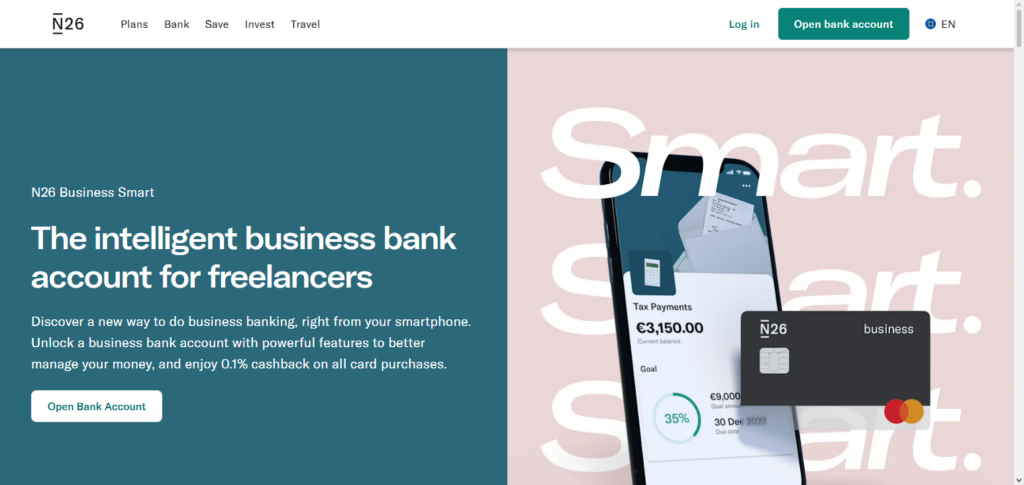
While their mobile banking and crypto is not as good as full custodians, their services are good for small to medium clients that are looking to access digital assets. N26 is a start up bank providing early access to crypto as and when it becomes needed. N26 is a crypto friendly commercial bank for providing services to institutional clients.
N26 Business Features
- Business accounts with a focus on mobile
- Payments in multiple currencies
- Basic crypto access via third-party partners
- Expense management tools
- Digital onboarding & app focus
N26 Business Pros & Cons
| Pros | Cons |
|---|---|
| Easy mobile‑first account setup | Very limited crypto services |
| Simple UX and onboarding | No native custody or trading |
| Multi‑currency support | Not suitable for institutional clients |
| Affordable for freelancers/SMEs | Fewer advanced banking products |
| Integrated expense tools | Smaller geographical availability |
9. Xapo Bank
Xapo Bank is a cryptocurrency-focused financial organization that was first established in 2014 as a Bitcoin wallet and custody provider before branching out into banking services. With its headquarters located in Switzerland, Xapo provides institutional and high-net-worth clients with multi-currency accounts, fully regulated cryptocurrency custody, and safe digital asset storage options.

Its services include seamless fiat-to-crypto transactions, debit cards connected to cryptocurrency holdings, and guaranteed cold storage. Xapo serves hedge funds, exchanges, and corporate clients looking for secure, effective, and scalable cryptocurrency banking solutions by fusing cutting-edge security measures with regulatory compliance. Xapo is reputable for safe digital asset management and is one of the top crypto-friendly commercial banks for institutional clients.
Xapo Bank Features
- Bank with crypto services, located in Switzerland
- Custody and cold storage for institutions
- Multi currency accounts for businesses
- Bitcoin Debit Card
- High security and insurance
Xapo Bank Pros & Cons
| Pros | Cons |
|---|---|
| Swiss‑regulated with strong oversight | Narrow retail service range |
| Institutional‑grade custody & cold storage | High onboarding requirements |
| Insurance‑backed storage solutions | Fees can be higher |
| Multi‑currency business accounts | Focused on high‑value clients |
| Seamless fiat‑crypto flows | Limited physical presence |
10. Sygnum Bank
Sygnum Bank is the first licensed digital asset bank in Switzerland. It first opened its doors to business in 2018. The Bank has institutional-grade digital shield services including trading, tokenization, and custody for digital assets.
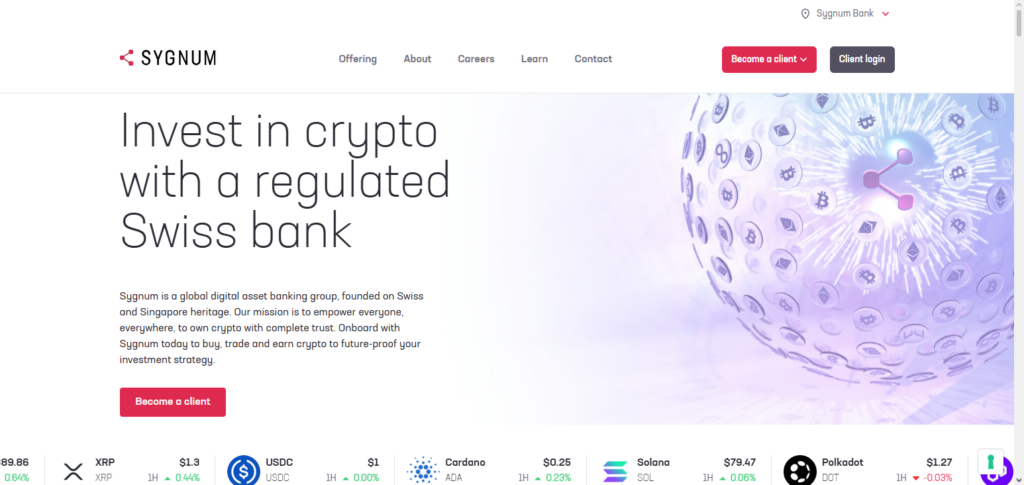
It has business accounts for the corporate, fund, and crypto exchange classes. Security, compliance, and innovation are the pillars on which Sygnum stands. The Bank is on the forefront of providing tailored services for tokenized securities, stablecoins, and crypto custody.
Being ranked the Best Crypto-Friendly Commercial Bank for Institutional Clients, Sygnum provides the most comprehensive and state-of-the-art services for seamless management of digital assets while integrating the traditional banking and crypto services.
Sygnum Bank Features
- Fully regulated digital bank in Switzerland with services for digital assets
- Custody and trading for Cryptos
- Smart contracts and tokenization
- Business accounts for institutions
- Combined management for Fiat and crypto
Sygnum Bank Pros & Cons
| Pros | Cons |
|---|---|
| Fully licensed Swiss digital asset bank | Higher minimums for accounts |
| Institutional custody & trading | Onboarding can be rigorous |
| Tokenization and smart contract support | European‑centric services |
| Integrated fiat + crypto management | Limited traditional banking products |
| Secure and highly regulated | Smaller global footprint |
Conclusion
Institutional clients need banks that combine security, innovative crypto services, and regulatory compliance in today’s quickly changing digital asset world. Blockchain-based payment networks, which facilitate real-time transfers and smooth cryptocurrency operations, are led by banks such as Silvergate and Signature Bank.
By providing custody, trading, and tokenization solutions, established behemoths like JP Morgan Chase, Goldman Sachs, BNY Mellon, and State Street are bridging the gap between legacy finance and digital assets.
For institutional crypto management, digital-first banks like Revolut, N26, and Swiss inventors AMINA and Sygnum Bank offer adaptable, completely regulated platforms. In the cryptocurrency economy, selecting the appropriate partner guarantees risk management, operational effectiveness, and strategic expansion.
FAQ
: What makes a bank crypto-friendly for institutional clients?
A crypto-friendly bank offers services such as digital asset custody, crypto trading, blockchain-based payment solutions, regulatory compliance, and tailored business accounts for institutional clients like hedge funds, exchanges, and corporate investors.
Which U.S. banks are most suitable for institutional crypto clients?
Silvergate Bank and Signature Bank are leading U.S. options, offering real-time crypto transfers through SEN and Signet platforms, respectively. JP Morgan Chase, Goldman Sachs, BNY Mellon, and State Street also provide custody, trading, and tokenization services with institutional-grade security.
Are digital-first banks good for institutional crypto management?
Yes, banks like Revolut Business and N26 Business provide flexible accounts, multi-currency support, and limited crypto integration. They are ideal for SMEs or institutional clients testing digital assets, though full custody or trading services may be limited compared to traditional banks.
Which Swiss banks cater to institutional crypto clients?
AMINA Bank (formerly SEBA Bank) and Sygnum Bank are fully licensed Swiss banks offering custody, trading, tokenization, and crypto-focused business accounts. They combine regulatory compliance with advanced digital asset services for institutional clients.