


The Best Crypto Exchanges With Lowest Slippage will be covered in this post, with an emphasis on platforms that provide narrow spreads, strong liquidity, and effective transaction execution.
- Why Choose Crypto Exchanges With Lowest Slippage
- Lower the Cost of Trade Execution
- Avoid Losing Profit on Gaps
- More Accurate Pricing
- Large Trades Become Viable
- More Reliability in Automated & Advanced Trading
- Key Point & Best Crypto Exchanges With Lowest Slippage
- 1. Binance
- Binance Features, Pros & Cons
- 2. OKX
- OKX Features, Pros & Cons
- 3. KuCoin
- KuCoin Features, Pros & Cons
- 4. Crypto.com App
- Crypto.com App Features, Pros & Cons
- 5. Bitget
- Bitget Features, Pros & Cons
- 6. MEXC Global
- MEXC Global Features, Pros & Cons
- 7. Gate.io
- Gate.io Features, Pros & Cons
- 8. BloFin Exchange
- BloFin Exchange Features, Pros & Cons
- 9. Coinbase Advanced
- Coinbase Advanced Features, Pros & Cons
- 10. Huobi (HTX)
- Huobi (HTX) Features, Pros & Cons
- Conclusion
- FAQ
Selecting exchanges with low slippage enables traders to minimize trading expenses, maintain profits, and precisely execute big orders. To help you make trading selections, we will examine leading exchanges such as Binance, OKX, KuCoin, and others.
Why Choose Crypto Exchanges With Lowest Slippage
Lower the Cost of Trade Execution
Less slippage means your trade will execute closer to the expected price. This will help avoid losses due to slippage in high-volume markets and volatile markets.
Avoid Losing Profit on Gaps
In gap situations traders stand to lose on profit in small movements in the market. This is especially pertinent in high frequency trading or trading with leverage.
More Accurate Pricing
Exchanges with low slippage will execute your trade with a price that is closer to the market price. This gives traders the ability to execute a trade at the price of their choosing and will make their trading strategy more predictable.
Large Trades Become Viable
Low slippage adds liquidity to the market making it easier to open and close large positions without affecting the price of the market.
More Reliability in Automated & Advanced Trading
With a large amount of slippage, the execution is more variable and a lot of the automated trading systems will execute in a way that is not expected making it less reliable.
Key Point & Best Crypto Exchanges With Lowest Slippage
| Exchange / Platform | Key Points |
|---|---|
| Binance | Largest global exchange with high liquidity, wide crypto selection, advanced trading tools, and staking options. |
| OKX | Offers futures, options, margin trading, and a strong mobile app ecosystem for crypto traders. |
| KuCoin | Known for a vast altcoin variety, low trading fees, futures trading, and strong community support. |
| Crypto.com App | All-in-one app with crypto buying, selling, card rewards, staking, and DeFi integrations. |
| Bitget | Futures-focused exchange with social trading, copy trading, and leveraged options. |
| MEXC Global | Wide token listings, margin & futures trading, and regular token launchpad events. |
| Gate.io | Strong altcoin selection, margin & futures trading, and crypto lending services. |
| BloFin Exchange | Emerging platform with multi-chain support, staking, and competitive fees. |
| Coinbase Advanced | User-friendly advanced trading interface, strong regulatory compliance, and high liquidity for major coins. |
| Huobi (HTX) | Long-standing exchange with spot, futures, and derivatives trading, plus a global presence and security focus. |
1. Binance
Changpeng Zhao (CZ) and Yi He created Binance in July 2017, and it has grown to be the biggest cryptocurrency exchange in the world in terms of trading volume, deep liquidity, and a huge user base in hundreds of countries.
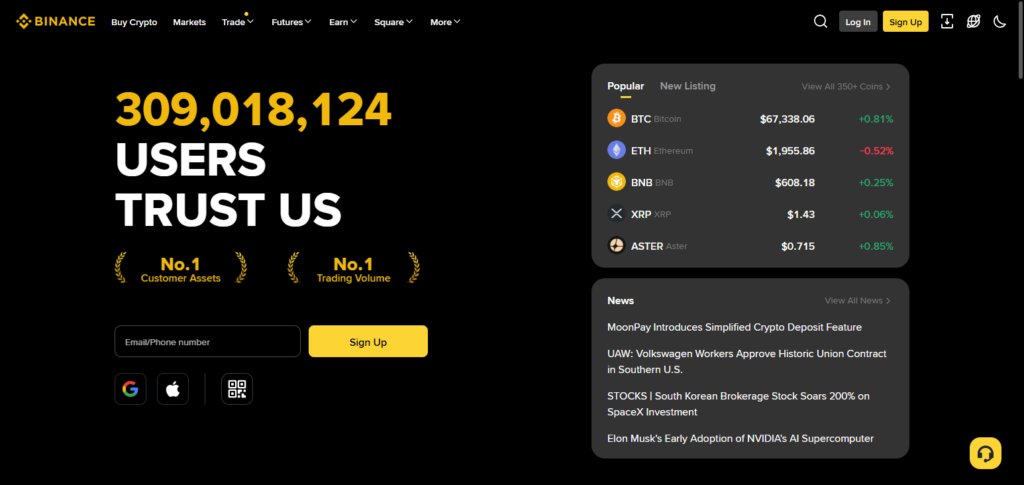
Binance has $0 cryptocurrency deposit fees, futures trading with 0.02 percent maker fees, withdrawals that vary by blockchain network, and cheap base trading fees of about 0.10 percent spot maker/taker (discounts available via BNB payments and VIP levels).
It is among the top exchanges in the market for narrow spreads and low slippage because of its high liquidity, which results in low slippage on main pairings.
Binance Features, Pros & Cons
Features
- Global liquidity & trading volume
- Spot, margin, futures, options & staking
- Fee discounts for native token (BNB) holders
- Advanced charting + APIs
- Multi-language
Pros
- Extremely high liquidity = low slippage.
- Trading fees as low as 0.10%.
- Large number of coins & trading pairs.
- Security – cold storage + audits.
- Pro traders can access advanced tools.
Cons
- Some regions face legal and regulatory challenges.
- Beginners can be intimidated by the interface.
- Different blockchains carry different withdrawal fees.
- Higher withdrawal limits are subject to KYC.
- Support is often slow to respond.
2. OKX
Founded by Star Xu in 2013, OKX was once known as OKCoin before changing its name to OKX in 2017. OKX is well-known for its derivatives markets, DeFi wallet integration, and sophisticated trading tools.
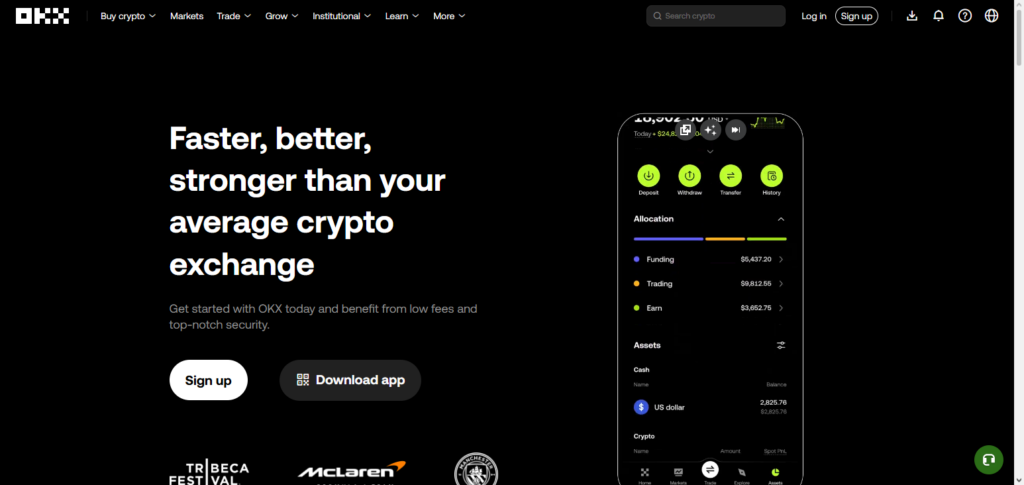
Regular users’ spot trading fees start at about 0.08 percent maker/0.10 percent taker, although ownership of OKB tokens or large volumes can result in fee reductions.
Particularly for high-volume pairs and futures contracts, OKX’s sizable order books and institutional-grade infrastructure typically result in competitive spreads and minimal slippage on important marketplaces.
OKX Features, Pros & Cons
Features
- Spot & derivatives (futures, options)
- OKB token perks
- DeFi wallet & earn products
- Available copy trading
- Advanced order types
Pros
- Major assets are supported by deep order books.
- Fees are competitive and are based on trading volume.
- Mobile & desktop interface is strong.
- Multi-jurisdiction global presence.
- Multiple asset classes are supported.
Cons
- There are fewer altcoin options compared to Binance.
- Confusion about account tiers
- Random service outages in high volatility
- Not suited for complete newbies
- KYC required for all features
3. KuCoin
Chun Gan, Ke Tang, and Johnny Lyu founded KuCoin in 2017, and it immediately became well-known for its wide range of altcoins. With tiered discounts and lower costs when utilizing its native cryptocurrency (KCS), KuCoin charges regular spot fees of about 0.1% for both makers and takers.

In addition to trading bots, KuCoin provides futures, staking, leverage, and spot. High-volume pairs frequently retain tight order books, resulting in moderate slippage, while being smaller than the major exchanges. However, for certain specialty assets, they have less liquidity than top-tier platforms.
KuCoin Features, Pros & Cons
Features
- Spot, margin, futures, lending
- KuCoin Shares (KCS) rewards
- Trading bots
- P2P marketplace
- Token launch platform
Pros
- Big variety for altcoins
- KCS boosts and low fees
- Great automation tools
- Strong community and good tutorials
- Increased flexibility for P2P
Cons
- Small coins have even lower liquidity
- Less regulation than Binance/OKX
- Support quality on varies on different things
- Don’t expect an easy user interface
- Warnings about margin risks are not very clear
4. Crypto.com App
Founded in 2016 by Bobby Bao, Gary Ohr, Chris Marszalek, and Rafael Melo, Crypto.com offers a comprehensive cryptocurrency ecosystem that includes staking, buying, selling, and its well-known Visa card. Compared to advanced trading, the Crypto.com App may charge greater fees for simple buys and sells (spread/merchant and financing fees).
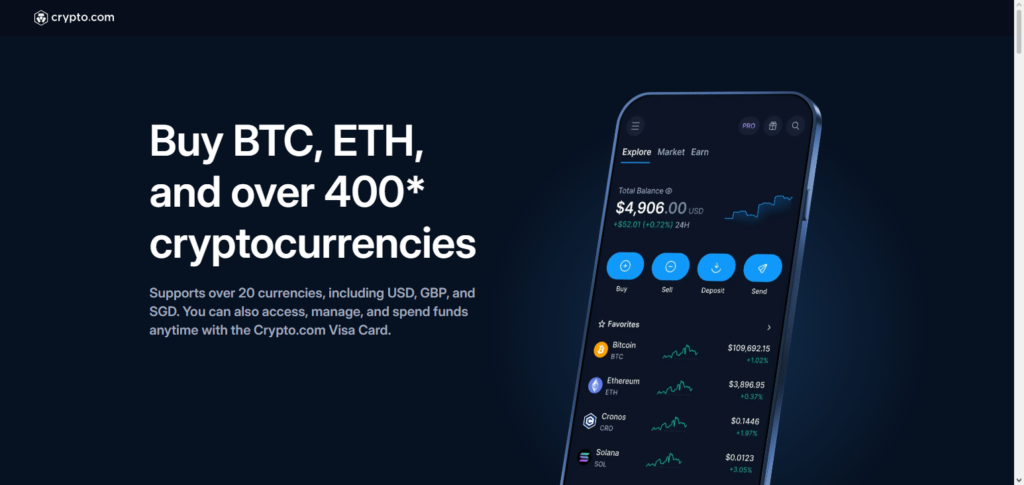
Spot trading fees have been reported to be roughly 0.075 percent on the exchange side, while in-app purchases may incur additional spread expenses. Although it’s suitable for beginners, active traders who want narrow spreads and the least amount of slippage use specialist exchanges.
Crypto.com App Features, Pros & Cons
Features
- Buy/sell crypto within the app
- Rewards for crypto Visa debit card
- Staking and earn programs
- Recurring buys and price alerts
- Fiat on/off-ramp
Pros
- Super easy for beginners
- Entire system in one place
- Rewards for cards and cash back
- Recurring purchases are easy
- Tools and education built in
Cons
- Spread higher than pure exchanges
- Simple buys have higher fees
- Charting and orders not very advanced
- Exotic pairs have lower liquidity
- Pro traders won’t like it
5. Bitget
Bitget, which debuted in 2018, is well-known for its robust derivatives and copy-trading environment. Futures fees are typically 0.02 % / 0.06 % for maker/taker, although spot trading fees often begin at 0.1 % maker and taker.
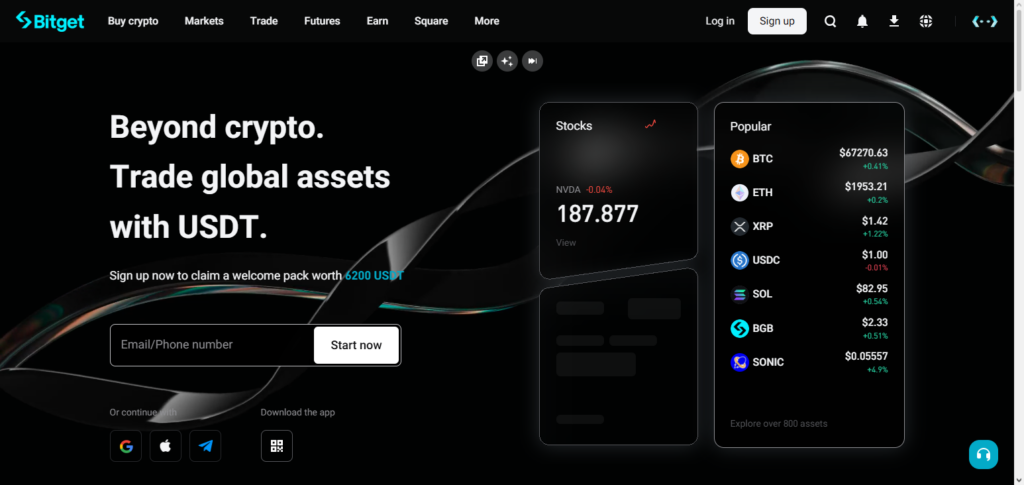
Technically focused traders and those who follow seasoned traders are drawn to Bitget. Compared to similar mid-tier platforms, Bitget is one of the better exchanges for tight execution because it usually offers relatively little slippage, especially on high-volume markets, and has substantial liquidity on main assets and attractive fee tiers.
Bitget Features, Pros & Cons
Features
- Spot and perpetual futures
- Social/copies trading
- Leverage as high as 125x
- Cross-platform account management
- Extensive analytics
Pros
- Superb derivatives trading
- Copy trading as an option for less experienced traders
- Reasonable trading costs for futures
- Excellent mobile application
- Major assets have good liquidity
Cons
- More expensive fees on some spot pairs
- Offers fewer small coins compared to major exchanges
- New traders might abuse the use of leverage
- Support response time is poor
- Compared to OKX/Binance, the brand trust is less
6. MEXC Global
Since its founding in 2018, MEXC has developed into a major international trading platform that supports a wide range of cryptocurrency assets. With maker fees as low as 0.0 percent and taker fees as low as 0.05 percent, along with token-based discounts, MEXC is widely recognized for providing some of the lowest trading fees available.
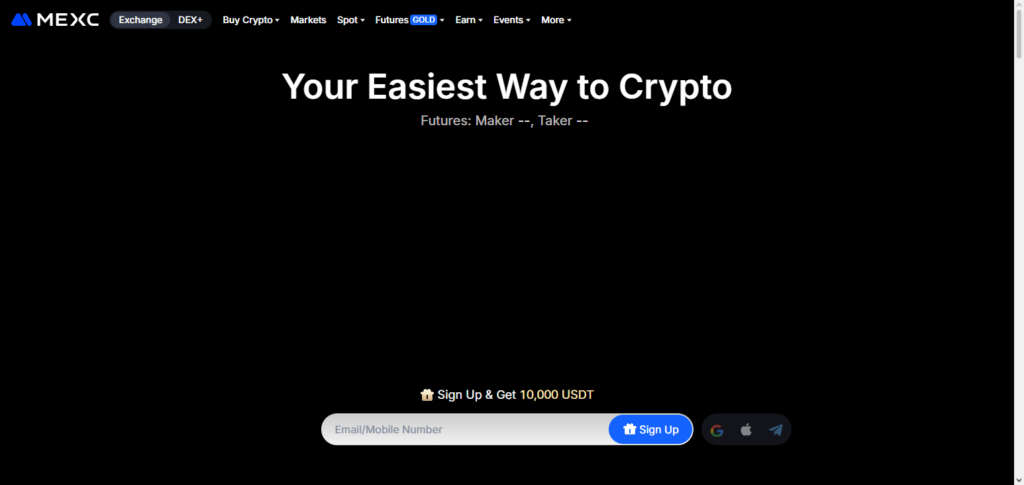
It appeals to cost-conscious traders because of its incredibly low charge structure. Although liquidity on smaller markets may still vary, MEXC’s extensive assortment and active marketplaces help ensure competitive slippage on many pairings, particularly for regularly traded assets.
MEXC Global Features, Pros & Cons
Features
- Broad token listings.
- Zero-fee maker tiers.
- Margin & futures.
- New token launchpad.
- Reward programs.
Pros
- Possibly zero trading fees.
- Good for discovering new coins.
- Strong worldwide coverage.
- Easy reward/bonus campaigns.
- Good trading tools.
Cons
- Low liquidity on tiny tokens.
- Not as clean and polished as other exchanges.
- Vague Regualtion
- Highly speculative assets.
- Slow customer support.
7. Gate.io
With thousands of trading pairs and services like spot, margin, futures, and IEOs, Gate.io has been in business since about 2013. Base spot trading fees can be lowered with VIP levels or GT token holdings, but they typically begin at 0.2% maker/taker.
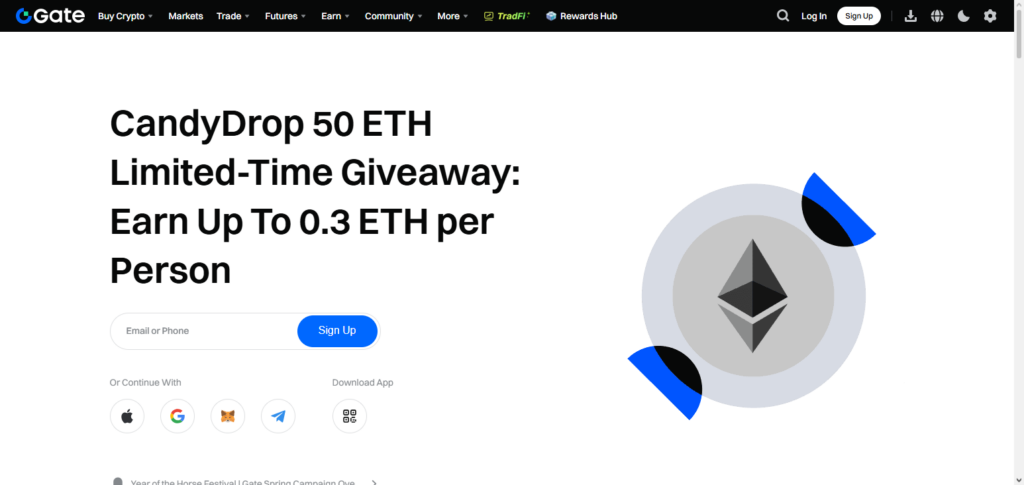
Futures markets offer tier discounts and reduced entry fees. Although spreads can be more common in smaller markets, Gate.io’s wide assortment and ample liquidity on well-liked pairs help keep slippage on large trades manageable.
Gate.io Features, Pros & Cons
Features
- Thousands of trading pairs
- Margin, futures, options
- Lending and earning
- IEO/Launchpad
- Staking and DAO tokens
Pros
- Large support for altcoins
- Strong margin and futures offering
- Active launches
- Earning and passive income options
- Community rewards
Cons
- Asymmetric default fees compared to competitors
- Higher slippage on thin pairs
- Some users feel that the UI is cluttered
- For larger volumes, a KYC is necessary
- Support is slow to respond
8. BloFin Exchange
A more recent platform, BloFin Exchange was created in 2020 and went live with its exchange in 2023. With features like copy trading, bots, unified trading accounts, and awards, it focuses on both spot and futures markets.
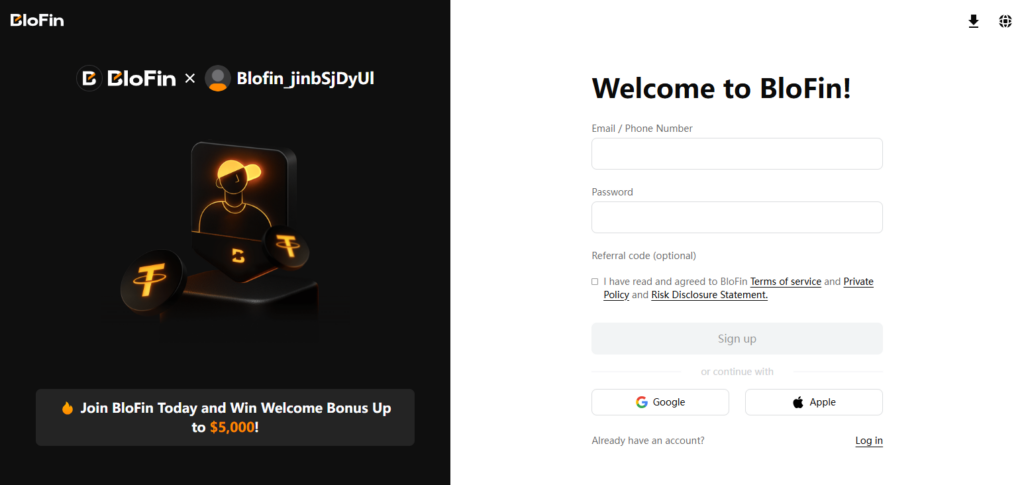
The platform advertises minimal trading costs and sophisticated tools, however fee details vary greatly and are frequently promotional. Traders should evaluate spreads before making big transactions because, as a new venue, its liquidity and slippage levels can be competitive on popular pairs but may still lag behind heritage leaders.
BloFin Exchange Features, Pros & Cons
Features
- Spot & futures markets
- Copy & bot trading
- Unified wallet
- Rewards and referral programs
- Multi‑chain support
Pros
- Competitive trading fee as part of a campaign
- Active traders gain access to new and innovative tools
- Copy trading is straightforward
- Trading is possible on both web and mobile
- New competitors have a good range of beta features
Cons
- Compared to major exchanges, liquidity is not as deep
- Volume and community are both smaller
- Higher slippage is possible on altcoins
- History and trust on the institutional side is less
- Limited support and documentation
9. Coinbase Advanced
To cater to professional traders, Coinbase developed Coinbase Advanced Trade (which evolved from Coinbase Pro) with a tiered maker/taker fee structure based on volume and an order-book mechanism. Depending on the 30-day volume, fees range from about 0.05 to 0.60 percent; they drastically drop for higher levels.
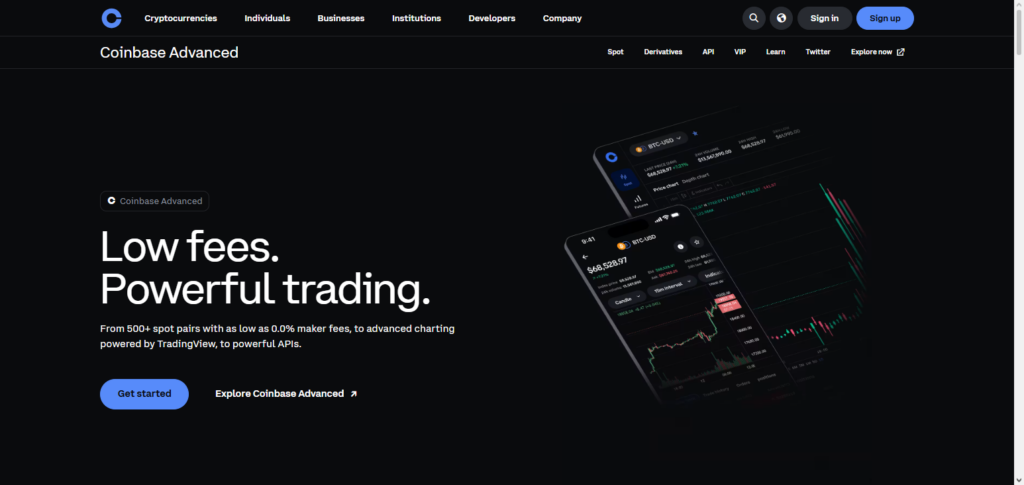
Strong regulatory compliance and institutional-grade custody are advantages of Coinbase Advanced; yet, compared to ultra-low-fee exchanges, its higher costs may result in wider spreads and more slippage for smaller transactions. Security and U.S. regulatory status are the platform’s strongest points.
Coinbase Advanced Features, Pros & Cons
Features
- Order‑book trading
- Tiered fee structure
- Regulated entity in the U.S. and globally
- Institutional custody options
- Fast fiat on and off ramps
Pros
- Most compliant with regulations
- Advanced security is evident
- UI aesthetics are professional and uncluttered
- Major assets have good liquidity
- Tax and export data is clear
Cons
- Compared to other exchanges, fees are higher
- There are fewer altcoins available
- Some trades in the exchange have a higher slippage than others
- Beginners may be discouraged with the advanced UI
- There are no promotional incentives
10. Huobi (HTX)
Leon Li launched HTX (previously Huobi) in 2013, and it has grown significantly throughout the world. Usually starting at 0.20 percent maker/taker, spot trading fees are reduced for holders of HTX tokens. Spot, margin, derivatives, and lending services are provided by Huobi/HTX.
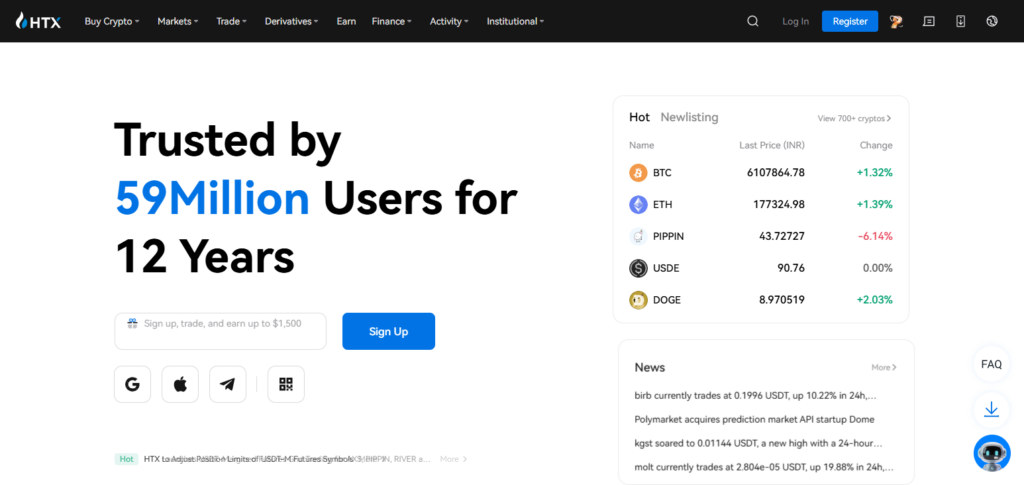
Reasonable liquidity is ensured by its extensive market presence and lengthy history, but because its fee levels are often greater than those of the lowest-fee exchanges, slippage and cost impact may be more obvious unless you’re trading higher-volume markets.
Huobi (HTX) Features, Pros & Cons
Features
- Spot, margin, derivatives
- Token incentives (HTX)
- Earn/staking products
- Institutional grade services
- Regional diversity
Pros
- Decade ‑ long exchange history
- Decent liquidity on majors
- Comprehensive product suite
- Community incentives & HTX benefits
- Multi ‑ lang support
Cons
- Fees higher than lowest ‑ fee venues
- Slippage can be more noticeable
- Regulatory pressure in some markets
- UI less intuitive vs newer apps
- Support speed and clarity vary
Conclusion
A critical consideration when choosing a cryptocurrency exchange, especially for high-frequency trading, is the concern of slippage, or the difference between the anticipated trade price and the price at which the trade is executed.
When it comes to industry-leading trading platforms, Binance provides the best conditions for trading with a low likelihood of slippage because of its high liquidity and fully developed order books. Competitively executed trading offers balanced slippage and liquidity to the OKX and KuCoin exchanges.
Considerable liquidity, slippage, and trading fees are available for high-volatility assets at MEXC Global and Bitget. Gate. io, Crypto.com App, Coinbase Advanced, Huobi (HTX), and BloFin Exchange, while they offer a little slippage for the limited order book and smaller derivatives markets and offers spot and derivatives trading, their slippage is a little higher than the previous markets.
MEXC Global and Bitget. Successful trading consists of a trading platform with the best liquidity, high-volatility trading pairs, and low trading costs. All traders, regardless of their skill level, stand to lose their profits and limit their losses.
FAQ
What is slippage in crypto trading?
Slippage occurs when the price at which your trade executes differs from the price you expected. It’s common during volatile markets or low-liquidity trading pairs. Exchanges with deep liquidity and tight order books reduce slippage.
. Which crypto exchanges have the lowest slippage?
Exchanges like Binance, OKX, KuCoin, and MEXC Global typically offer the lowest slippage due to large trading volumes and deep liquidity. Other platforms like Bitget, Gate.io, and Coinbase Advanced are reliable but may experience slightly higher slippage on smaller markets.
How do fees affect slippage?
High trading fees can increase overall trade cost but don’t directly affect slippage. Low-fee exchanges like MEXC Global and Bitget allow traders to minimize costs while benefiting from low-slippage execution on high-volume pairs.
Can slippage be avoided completely?
No, slippage can’t be fully avoided, especially in volatile markets. However, using high-liquidity exchanges, trading during peak market hours, and splitting large orders can significantly reduce slippage.
Are mobile apps as good for low-slippage trades as desktop platforms?
Mobile apps like Crypto.com and OKX are optimized for spot and futures trading, offering competitive execution. However, desktop platforms often provide better real-time order book visibility, which can help minimize slippage.