



Fractional ownership, alternative investment platforms, and digital marketplaces are making fine-art investing more accessible. In this article, I will review the Best Masterworks Rivals for Fine Art Investment Deals. I will review the platforms based on investment models, minimum investments, fees, artwork focus, ownership structures, liquidity, investor access and other key variables to help readers understand how these platforms compare.
What Are Masterworks Rivals?
Masterworks competitors are platforms that provide alternative entry points into fine art investing, fractional art ownership, physical art buying, or broader collectible and private market access. These platforms can differ in their investment models, minimum investment amounts, fees, artwork selections, ownership structures, investor eligibility, liquidity and exit options.
Some focus solely on fine art, while others offer art in conjunction with collectibles or alternative assets. Appreciating these differences helps investors understand what platforms have similar or different approaches to accessing the fine-art investment market.
Key Points
| Platform | Headquarters | Focus Area | Investment Model | Minimum Investment* | Key Advantage Over Masterworks |
|---|---|---|---|---|---|
| Mintus | United Kingdom | Fine Art, Collectibles | Fractional ownership of artworks | Varies by offering | Provides access to fine art, luxury collectibles, and diversified alternative assets. |
| Yieldstreet (Willow Wealth) | United States | Art, Private Markets | Art funds and alternative investments | Typically $500 to $10,000+ | Offers art exposure alongside real estate, private credit, and venture investments. |
| Arthena | United States | Fine Art | Professionally managed art funds | Fund-dependent | Uses data-driven art acquisition strategies managed by experts. |
| MasterExchange | International | Art & Collectibles | Fractional investment marketplace | Varies | Focuses on shared ownership of investment-grade artworks. |
| Public | United States | Stocks & Alternative Assets | Fractional alternative asset investing | Low minimums | Combines traditional investing with fine art opportunities in one platform. |
| Rally | United States | Collectibles & Art | Fractional ownership marketplace | Often under $100 | Offers secondary market trading and broader collectible asset exposure. |
| Otis | United States | Art & Collectibles | Fractional shares of alternative assets | Low minimums | Provides access to art, memorabilia, and cultural collectibles. |
| MyArtBroker | United Kingdom | Contemporary Art | Art marketplace and investment services | Varies by transaction | Direct access to blue-chip contemporary art markets and advisory services. |
| Particle | United States | Fine Art | Blockchain-enabled fractional ownership | Low entry threshold | Allows investors to buy shares in iconic artworks through digital ownership structures. |
| Securitize Alternative Art Offerings | United States | Tokenized Art Assets | Security token offerings | Varies | Enables regulated digital ownership and trading of art-related investments. |
1. Mintus
Mintus is a UK-based fractional fine art investment platform founded in 2020 and offering qualifying investors interests in high-value physical artworks. Platform Type: fractional art investing, Fine-Art Focus: proven artists, curated investment-grade works. Instead of buying the whole artwork, investors purchase shares in individual pieces.
The Minimum Investment is $3,000 and investments generally range from $15,000 to $100,000. Fee Structure varies depending on the artwork and is disclosed in each opportunity memorandum. To invest, investors need to meet applicable high-net-worth, sophisticated or qualified-investor requirements, but liquidity is still limited and a secondary market is planned.
Features
- Limited access to high-value physical artworks
focus on established & investment grade artists - Lower entry point vs. direct artwork acquisition
- Documentation and investment opportunities related to the artwork
- Ownership structured for qualifying investors
Pros
- Less capital outlay than purchasing a complete work of art
- Direct contact with individual works of art
- Curated investment opportunities.
- Providing details
- Dedicated to fine-art investing specifically
Cons
- less liquidity than public markets
There may be restrictions on investor eligibility - Fees may vary per artwork
- Holding periods can be long
- Not always accessible secondary markets
2. Yieldstreet (Willow Wealth)
Willow Wealth (formerly Yieldstreet) launched in 2015 and is a more general private-markets platform, not a specialized fine-art marketplace. Its Platform Type includes alternative investments, managed portfolios and private market funds. Its Fine-Art Focus has included art-equity and art-debt strategies, such as portfolios collateralized by blue-chip works of art.

Minimum Investment: This varies by the offering. For the Yieldstreet Alternative Income Fund, it currently lists $10,000. **Fee Structure Differs by fund/offering. May include management and fund expenses. Investor qualification is security specific. Private offerings generally require accredited investors and limited liquidity.
Features
- A broad-based private market investment platform
- Access to professionally-managed alternative-investment strategies
Exposure to art via selected funds or strategies - Diversification by portfolio
- Experience in investment and portfolio management on line
Pros
- More diversification beyond old-school stocks and bonds
- Supervised investment structures
- Several alternative asset classes
- Exposure to art without sourcing art directly
- Priced for investors seeking wider private market exposure
Cons
- Not fine art dedicated platform *
Minimums vary by investment - Fees vary depending on the fund or offering
- Lack of liquidity in private-market investments
- Art exposure may be indirect
3. Arthena
Arthena was created in 2013 to bring a quantitative approach to investing in fine art. Its Platform Type merges art investment products with the data-driven financial analysis, leveraging auction and artwork features to evaluate risk, valuation, and potential returns. Its Fine-Art Focus addressed liquid segments of the art market and professionally structured art investments.

The Investment Model employed fund structures and pooled capital, targeting high-net-worth investors. Publicly available historical information does not create a current universal Minimum Investment or Fee Structure and those figures should not be published as current platform-wide terms. It was later bought by Arthena.
Features
- Emphasis on quantitative analysis of the art market
- *Data-driven art investment
- Focus on history of modern and contemporary art
Investment fund structure - Uses market data to make investment decisions
Pros
- Data-driven investment methodology
- Art market analysis by professionals
- Exposure based on portfolio
- Integrates art knowledge with financial modeling
- Built for sophisticated investors
Cons
- Not structured as a simple art marketplace for retail
- Not a simple alternative of the present, but a historical platform
- Limited access for investors
- minimums can be substantial
- Based on availability of current offering
4. Master Exchange
MasterExchange was designed as a platform for investing in music royalties, not fine art. Its Platform Type was a digital marketplace for music-rights investments, where users could buy shares in future master-royalty revenues.
So its Fine-Art Focus is none, and it should not be marketed as a direct fine-art investment competitor to Masterworks. Investors bought shares in future music royalties through investment contracts and received royalty payments at regular intervals.
The minimum investment and fees are different for each offering. Most importantly, the MasterExchange website now states that the market has closed and operations have ceased which makes it not a current active alternative.
Features
- Investment digital marketplace
Music royalty investments, specializing in
fractionally exposed to intellectual property revenue - Blockchain based investment infrastructure
- Framework for investing in alternative assets
Pros
- fractional ownership of royalty assets
- Flow of digital investment
- Alternative exposure to conventional markets
- Possible periodic royalty distributions
- Tech-enabled ownership model
Cons
- Not a direct alternative to Masterworks
- Music royalties primarily
- Not a fine art investment platform
- Returns on investments supported by royalty performance
- Its marketplace is closed, so it should not be considered an active alternative
5. Public
Public (founded in 2019) is a multi-asset investing platform offering stocks, ETFs, crypto, bonds and alternative assets. Its Platform Type is thus broader than a particular art-investment service.

Public has offered fractional interests in collectibles and other assets in alternatives including art-related Gallery and Collection offerings through its alternative-assets structure. Minimum Investment varies per offering.
Its Fee Structure could include an initial markup of 0-10% (average ~5%), 2.5% fee on each side of secondaries and a possible 2% annual management fee on some assets plus possible carry.
Features
- Platform for multi-asset investing
Stocks, ETFs, bonds, crypto, and alternative assets
Alternative asset opportunities (fractional) - Art and collectibles type of offerings
- Experience in digital portfolio management
Pros
- Wide range of investment types
- Art exposure along with traditional investments
- easy-to-use digital platform;
- Selected assets fractional investment structure
- Centralized portfolio experience
Cons
- Not only fine art
- Fees can vary across offerings
- Availability of other assets varies
- There may be limited liquidity
- Eligibility restrictions may apply to individual offers
6. Rally
A fractional alternative-collectibles platform, Rally, launched in 2017, is not a specialized fine-art investment service. Its Platform Type allows investors to buy fractional shares of specific collectible assets, covering categories like cars, watches, memorabilia and other cultural assets.
Its Fine-Art Focus isn’t as strong as dedicated art platforms, so you’ll need to check each offering individually. The Minimum Investment is currently reported at $50 per offering. It charges a fee structure of about 5% sourcing fee & 1% brokerage fee on the offerings. No management or trading fee is mentioned. Liquidity is determined by the particular offering and the market.
Features
- A fractional investment platform for collectibles
Ownership structure of each individual asset - Collectibles in a variety of categories
- Low historical entry minimum
- Investment digital marketplace
Pros
- Lower cost to get into the investment
- Alternative collectible access
- Shared ownership model
- Individual assets can be chosen
- Adding non-traditional investments
Cons
- Collectibles can be tricky to value
- It is not mainly about fine art
- Terms of investment depend on the offering
- Liquidity varies by asset
- Alternative assets can come with substantial market risk
7. Otis
Founded in 2018, Otis was designed as a fractional investment platform for art and collectibles. Its Platform Type used separate investment series to give investors fractional ownership of specific assets. Its Fine-Art Focus included investment-grade paintings and extended to sculptures, sneakers, comics and other cultural collectibles.

Previously, the Minimum Investment was as low as $10, enabling non-accredited investors in the US to join in. Its historical Fee Structure was a 0-10% sourcing fee, 1% broker-dealer fee and 10% share of profits on art-share sales. In 2022, Otis was acquired by Public and its alternative assets continued within Public’s ecosystem.
Features
- Art and collectible fractional ownership
Investment products for single assets - Minimum investment amount in history
- Experience in digital investment
- Grew out of art into cultural collectibles
Pros
- Historically low barriers to entry
- Co-ownership of expensive collectible assets
- Exposure to artwork
- Wide selection of collectibles
- Open investment structure
Cons
- Otis acquired by public company
- Standalone Otis platform no longer dominant model
- Present offering differs from historical offering
- Can be illiquid
- Investors should consider current Public offerings instead
8. MyArtBroker
MyArtBroker is a secondary market art platform specializing in modern and contemporary prints and editions. Established in 2010 and based in London, The Fine-Art Focus showcases works by established artists and blue-chip print markets. Its Investment Model is to buy real physical artworks, not shares in an artwork-owning SPV (like fractional platforms).
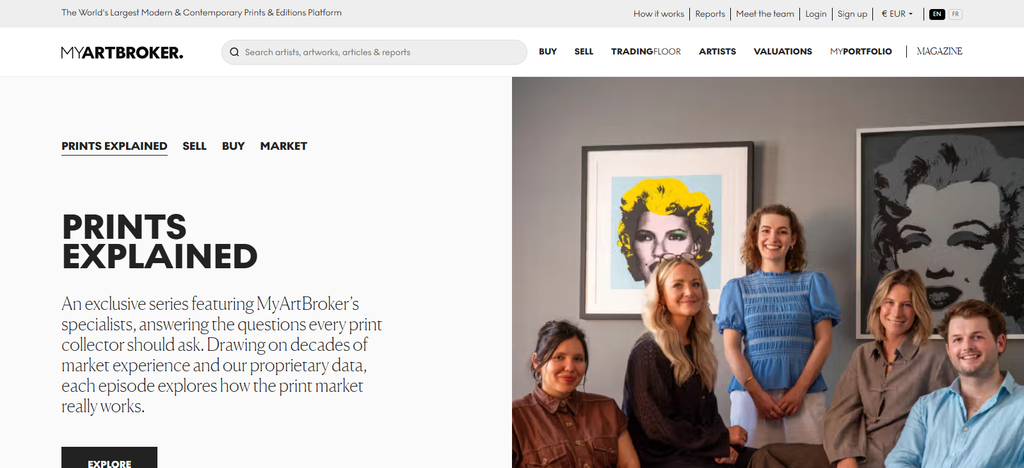
The platform does not work like a traditional fractional investment platform, therefore there is no comparable universal fractional Minimum Investment. Seller fees are 0% and buyer commission is averaged at around 18%. Specialist valuations using auction and private sales data are also provided, and private and secondary-market transactions are facilitated.
Features
- Physical art marketplace
- Focus on modern and contemporary prints
- Secondary-market transactions
- Specialist artwork valuations
- Auction and private-sales market data
Pros
- Investors purchase actual artworks
- Strong focus on established artists
- Specialist valuation services
- Access to secondary art-market liquidity
- No fractional ownership requirement
Cons
- Higher capital requirement for some artworks
- Not a fractional-investment platform
- Buyer commission applies
- Artwork liquidity is not guaranteed
- Primarily focused on prints and editions
9. Particle
Particle: Founded in 2021, Particle provides fractional access to top physical artworks using blockchain. Its Platform Type combines ownership of fine-art with digital certificates based on blockchain. It’s Fine-Art Focus is on high-value contemporary and culturally significant artwork. Its first major acquisition was Banksy’s Love Is in the Air.
The Investment Model breaks an artwork into fractional interests represented digitally instead of requiring one investor to buy the whole artwork. Historical reporting put the Minimum Investment for its offerings at around $10,000. Fees and liquidity will vary based on the artwork and the structure of the offering – so don’t assume there’s one prevailing fee.
Features
- Fractional ownership of physical artworks
- Blockchain-based ownership infrastructure
- High-value contemporary artwork focus
- Digital representation of fractional interests
- Individual artwork investment structure
Pros
- Fractional access to expensive artworks
- Blockchain-supported ownership records
- Lower capital requirement than whole-artwork purchases
- Focus on notable contemporary works
- Combines physical art with digital infrastructure
Cons
- Limited selection compared with traditional art markets
- Liquidity depends on individual offerings
- Blockchain adds structural complexity
- Fees vary by offering
- Investment terms can differ between artworks
10. Securitize Alternative Art Offerings
Securitize is a regulated digital-securities infrastructure platform not a dedicated fine-art marketplace. Its Platform Type is focused on tokenization of real-world assets and securities and provides infrastructure for issuance, investor onboarding, management and trading. Its Fine-Art Focus is on the individual issuer and offering, not a permanent art portfolio. Investment Model** may include digitally represented securities.
Minimum Investment, Fees, Investor Eligibility and Liquidity are determined by each offering. Securitize’s existing platform is generally focused on tokenized real-world assets and compliant on-chain securities, so any specific art offering should be considered on its own offering documents.
Features
- Tokenization of real world assets
- Digital securities infrastructure
- Regulated investor on-boarding
- Digital securities issuance and securities management
*Possible secondary market infrastructure
Pros
- Blockchain-powered investment infrastructure
- Ownership and transferability of digital items
- Platform with a regulatory focus
Allows more investment in real-life assets - May provide more efficient securities administration
Cons
- Not marketplace for fine art
- Art exposure varies for each individual’s offerings
Minimum Investment may vary - Fees vary by issuer and security.
- No assurance of secondary market liquidity
Conclusion
The Masterworks competitors give investors a range of options to get exposure to the fine art and broader alternative investment market. MyArtBroker offers physical prints and editions on the art market while platforms like Mintus and Particle are more directly focused on fractional ownership of art.
Public, Yieldstreet, Rally and Securitize offer other more broadly based alternative-asset or digital-investment structures. Beyond minimum investments, investors should also consider ownership structure, fees, selection of artwork, valuation methodology, holding period, liquidity, investor eligibility and exit options when evaluating these platforms.
Ultimately the choice of platform will be determined by the level of art exposure the investor wants, the investment structure, budget and liquidity needs.
FAQ
What are the best alternatives to Masterworks?
Masterworks alternatives include platforms such as Mintus, Public, MyArtBroker, Particle, and other alternative-investment services. However, their models differ, including fractional ownership, direct artwork purchases, collectible investing, and broader private-market exposure.
What is the minimum investment for Masterworks alternatives?
Minimum investments vary significantly by platform and individual offering. Some fractional platforms have historically offered relatively low entry amounts, while curated fine-art opportunities may require thousands of dollars or more.
Which Masterworks alternatives offer fractional art ownership?
Mintus and Particle are examples of platforms associated with fractional exposure to physical artworks. Public has also offered fractional alternative assets, including art-related offerings. Availability and terms can change by offering.
Can investors buy physical artwork instead of fractional shares?
Yes. Platforms such as MyArtBroker operate differently from fractional investment platforms by facilitating purchases of actual physical prints and editions. This gives investors direct artwork ownership rather than fractional exposure to an artwork-holding structure.
How do fine-art investment platforms charge fees?
Fee structures vary. Depending on the platform, investors may encounter management fees, sourcing or acquisition fees, transaction commissions, performance fees, or secondary-market charges. Investors should review the specific offering documents before investing.