


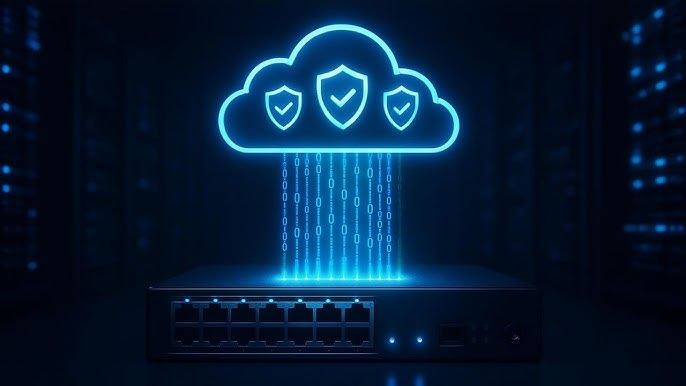


I will cover the Top Cisco Hypershield Deployment Mistakes to Avoid and the specific drops in security for modern enterprises.
Understanding these mistakes even helps the company progress zero trust security, shielding cloud workloads and shrink cyber risks, and improve hybrid and multi-cloud networks.
This includes issues such as identity integration omission and poor privileged account governance.
What is Cisco Hypershield Deployment?
The term “Cisco Hypershield deployment” refers to the implementation of Cisco’s AI-based security technologies and practices on company networks, applications, and workloads within cloud environments.
Once built, these technologies are designed to provide zero-trust security with mitigative and defensive capabilities for modern infrastructures. Cisco Hypershield aids organizations by protecting east-west traffic streams as well as other cloud-native applications and distributed container-based systems by way of enforcement of intelligent policies and automation.
Typical deployment includes identity services integration, microsegmentation, the cryptographic inspection of traffic, risk assessment and management, and high-privilege access management to buttress the defense and mitigate the risk and attack surfaces of the company to provide resiliency to the systems and networks against evolving threats and risks.
How To Choose Cisco Hypershield Deployment Mistakes to Avoid
Identity Integration Requirements.
Don’t forget to include solid Identity and Access Management. Examples are Applies to Multi-Factor Authentication, Single Sign-On (SSO), and directory services to ensure safe and secure integrated applications without exposure.
Access Policies Without Over-Permission
No permission policies are required for users, but providing them to applications to defend zero trust is crucial due to threats diminishing.
East-West Traffic Monitor
Select the security measures that would provide visibility to internal communications east-west traffic monitoring helps to expose lateral movement and defend threats that are hidden.
Deploy TLS for Encrypted Attack Traffic
Choose deployment options with Tranport Layer Security (TLS) to help scanning for ‘in’ and ‘out’ traffic and look for malware, ransomware, and phishing attacks while conducting sessions which are carried out in an encrypted manner.
Microsegmentation Within Hybrid and Cloud
Deploy microsegmentation to unbounded the movements of the attacker, limit the movements of the attackers and improve the security of the trust zone within hybrid and cloud infrastructures.
Defensive Measures that Protect All Cloud Workloads from Disruption
Always apply protective measures for Cloud Applications Virtual Machines, Workloads and consider threats that would disrupt the uniblock for cloud-based infrastructures.
Focus on Container Security
Container image scanning and runtime monitoring should be components of cloud-native application vulnerability management.
Risk Assessment Tools that Work in Real Time
Solutions should include threat monitoring, risk assessment, and management and supporting critical protection.
Security Policy Change Management with Automation
Establish critical protection and change management policies to align business processes and support protection for cloud-native applications as the greatest vulnerabilities.
Key Point & Top Cisco Hypershield Deployment Mistakes to Avoid
| Deployment Mistake | Key Point |
|---|---|
| Skipping Identity Integration | Weak identity integration can create unauthorized access risks and poor user verification. |
| Over-Permissive Policies | Broad access policies increase the chance of internal and external security breaches. |
| Ignoring East-West Traffic | Unmonitored lateral traffic allows attackers to move freely within the network. |
| Not Enabling TLS Inspection | Encrypted threats may go undetected without proper TLS traffic inspection. |
| Delaying Microsegmentation | Lack of segmentation makes it easier for threats to spread across workloads. |
| Underestimating Cloud Workload Coverage | Incomplete cloud protection leaves critical applications and data exposed. |
| Neglecting Container Security | Unsecured containers can introduce vulnerabilities into modern application environments. |
| No Continuous Risk Assessment | Without ongoing monitoring, new vulnerabilities may remain unnoticed for long periods. |
| Failing to Automate Policy Updates | Manual policy management can lead to outdated rules and configuration errors. |
| Weak Governance of Privileged Accounts | Poor control of admin accounts increases the risk of credential abuse and insider threats. |
1. Skipping Identity Integration
Skipping Identity Integration is one of the major mistakes that Cisco Hypershield users make.
Without linking the identity and access management systems, companies can’t effectively authenticate users, devices, and applications trying to access the network.
This creates gaps in visibility and increases the risk of unauthorized access. While implementing Cisco Hypershield Deployment Mistakes, companies tend to ignore the need for identity-based security policies. Identity Integration of Single Sign-on (SSO),
Multi-Factor Authentication (MFA) and directory services helps sustain safe authentication across multiple workloads. Ensuring proper identity Integration not only reduces the risk of insider threats but also enhances compliance, visibility, and user monitoring and improves threat detection.
Skipping Identity Integration – Implications
- Centralized management for identity and user authentication is eliminated.
- Loss of integration with Multi-Factor Authentication (MFA) and Single Sign-On (SSO).
- Loss of access visibility across multiple workloads.
- Weak Policies for identity-based access control
- Loss of user activity visibility and access control policies.
Skipping Identity Integration Why It Matters
| Aspect | Why It Matters |
|---|---|
| Security Risks | Without identity integration, organizations cannot properly verify who is accessing systems, applications, or workloads. This increases the risk of unauthorized access and insider threats. |
| Zero-Trust Security | Identity verification is a core part of zero-trust architecture. Skipping it weakens authentication controls and reduces overall network protection. |
| Compliance Impact | Businesses may fail to meet compliance requirements related to user authentication, access monitoring, and audit tracking. |
| Operational Visibility | Security teams lose visibility into user activity, making it harder to detect suspicious behavior or compromised accounts. |
| Long-Term Impact | Poor identity management can lead to credential misuse, data breaches, and higher cybersecurity management costs over time. |
2. Over‑Permissive Policies
Over-Permissive security policies grant excess access to users, applications, or workloads. This weakens the zero-trust security model and raises the risk of data breaches and lateral attacks.

The majority of companies that are implementing Cisco Hypershield overlook the principle of least privilege, which is essential to minimizing the attack surface. When addressing Cisco Hypershield Deployment Mistakes, it becomes apparent that overly permissive controls create major compliance and operational challenges.
Security teams should implement tight role-based access controls and periodically revisit policy settings. This eliminates excess access, enhances visibility, and increases network segmentation, which allows companies to restrict unwanted activities in their hybrid and cloud environments.
Over-Permissive Policies – Implications
- Access across disparate systems is unrestricted.
- The least privilege access paradigm is weakly enforced.
- User and application access are flexible.
- Simplified permission control is extremely unsecure.
- Increased exposure to the possibility of unauthorized access.
Over-Permissive Policies Why It Matters
| Aspect | Why It Matters |
|---|---|
| Expanded Attack Surface | Over-permissive access allows users and applications to access unnecessary resources, increasing potential attack points. |
| Insider Threats | Employees or compromised accounts with excessive permissions can misuse sensitive systems or data. |
| Compliance Challenges | Broad permissions may violate regulatory standards that require strict access control and least-privilege policies. |
| Security Complexity | Managing overly broad permissions creates confusion and increases the chance of policy misconfigurations. |
| Business Risk | Weak access control can result in data leaks, operational disruptions, and reputational damage. |
3. Ignoring East‑West Traffic
One of the biggest security risks in contemporary data center and cloud environments is ignoring east-west traffic. East-west traffic describes data communication between internal workloads and applications.
They are exploited by attackers to spread malware and to extract sensitive and classified information. One of the Hypershield Deployment Mistakes is focusing only on the internal traffic that enters and leaves the network. While it is important to safeguard internal network communications, it is of equal importance to safeguard external communications.
Cisco Hypershield creates visibility of internal flows and internal traffic segmentation. Monitoring east-west traffic is essential in improving an organization’s cyber security posture by implementing microsegmentation, preventing lateral movement, and protecting workloads.
Ignoring East-West Traffic – Implications
- Weak overall monitoring of internal traffic.
- The workload communication visibility is limited.
- Weak detection mechanisms are in place for lateral movements.
- There is no control among the systems.
- Increased reliance on overall external perimeter security.
Ignoring East-West Traffic Why It Matters
| Aspect | Why It Matters |
|---|---|
| Lateral Movement Risks | Attackers often move between internal systems after gaining access. Ignoring east-west traffic allows this movement to go undetected. |
| Threat Detection | Internal traffic monitoring helps identify malware spread, suspicious behavior, and unauthorized workload communication. |
| Data Protection | Sensitive information transferred internally may become exposed without proper visibility and monitoring. |
| Cloud Security | Modern hybrid and cloud environments rely heavily on internal workload communication that requires protection. |
| Security Visibility | Monitoring east-west traffic improves visibility into workload behavior and network segmentation effectiveness. |
4. Not Enabling TLS Inspection
Not enabling TLS inspection means encrypted traffic is left unchecked and security control is unable to detect threats. It is a risk because malware, ransomware, and phishing can be executed in the background in an encrypted format without detection and can be delivered in an organization’s network.

During the deployment of Cisco Hypershield, enterprises tend to disable the TLS inspection feature because they are worried about the performance and complexity of the deployment. However, performance concerns do not outweigh security.
If TLS inspection is skipped, threats will exploit this blind spot. Threats can be better identified without losing visibility of the network in encrypted formats. It enables detection of advanced persistent threats while sustaining a secure communications network.
Not Enabling TLS Inspection – Implications
- Uncontrolled encrypted traffic exists.
- Overall lack of visibility for secured communication.
- Poor malware inspection for malicious content over TLS.
- Rapidly processed traffic lacking thorough inspection.
- Encrypted threats are elevated to an unsecure situation.
Not Enabling TLS Inspection Why It Matters
| Aspect | Why It Matters |
|---|---|
| Hidden Threats | Cybercriminals use encrypted traffic to hide malware, ransomware, and phishing attacks from security tools. |
| Security Blind Spots | Without TLS inspection, organizations cannot analyze encrypted sessions for malicious activity. |
| Threat Prevention | Inspecting encrypted traffic improves the detection of advanced persistent threats and malicious payloads. |
| Compliance Support | Many compliance frameworks require organizations to monitor and secure encrypted communications. |
| Network Protection | TLS inspection strengthens overall security posture while maintaining secure communication across environments. |
5. Delaying Microsegmentation
Delaying microsegmentation increases exposure of critical systems to security risks. Microsegmentation splits workloads and applications into various levels of security zones to limit the spread of threats.
Organizations that defer segmentation often continue to rely on old perimeter security models that are ineffective in the face of modern cyberattacks. During many discussions on the Top Cisco Hypershield Deployment Mistakes to Avoid, segmentation delays increase the attack surface and deteriorate zero-trust architecture.
Cisco Hypershield supports segmented policy enforcement to create isolated workloads and safeguard important resources.
The early adoption of microsegmentation dramatically limits lateral movement, improves regulatory compliance, and significantly decreases security management overhead, as well as decreasing the consequences of security breaches within the hybrid cloud and data center ecosystems.
Delaying Microsegmentation – Implications
- Larger areas of the network are unrestricted.
- Delayed isolation for workloads.
- Increased opportunities for lateral movement across the network.
- Reduced control over application communications.
- Delayed movement along the zero-trust spectrum.
Delaying Microsegmentation Why It Matters
| Aspect | Why It Matters |
|---|---|
| Threat Containment | Microsegmentation limits how far attackers can move within the network after gaining access. |
| Zero-Trust Implementation | Segmentation supports zero-trust architecture by isolating workloads and controlling communication paths. |
| Reduced Attack Surface | Smaller security zones reduce exposure and improve workload protection. |
| Compliance Benefits | Segmented environments help organizations meet strict data protection and regulatory requirements. |
| Operational Security | Early microsegmentation deployment improves visibility and simplifies security management across infrastructure. |
6. Underestimating Cloud Workload Coverage
During Cisco Hypershield implementation, inadequate protection for cloud workloads is often underestimated. Today’s modern enterprise ecosystems span numerous cloud platforms, as well as containers and virtual machines, all of which necessitate comprehensive visibility of workloads.
Insufficient cloud workload protection leaves applications vulnerable to exposure as a result of misconfiguration, malware, and untrusted access. While analyzing Top Cisco Hypershield Deployment Mistakes to Avoid, an inadequate cloud security posture in hybrid environments remains a key issue.

Organizations must apply unified security policies across all cloud resources and perform continuous workload behavior monitoring.
Effective cloud workload protection diminishes the risk of exposure from the volatility of cloud-native infrastructure, improves threat visibility, postures for regulatory compliance, and increases operational resilience.
Underestimating Cloud Workload Coverage – Implications
- Insufficient protection of cloud workloads.
- Cloud security is poor.
- Monitoring of virtual environments is lacking.
- Poor visibility in multi-cloud environments.
- Increased risk from cloud misconfigurations.
Underestimating Cloud Workload Coverage Why It Matters
| Aspect | Why It Matters |
|---|---|
| Cloud Vulnerabilities | Incomplete protection leaves cloud applications exposed to cyberattacks and unauthorized access. |
| Hybrid Environment Risks | Organizations using multi-cloud and hybrid systems need consistent security across all workloads. |
| Misconfiguration Threats | Unsecured cloud workloads are more vulnerable to configuration errors and security gaps. |
| Data Protection | Sensitive customer and business data stored in cloud environments require continuous monitoring. |
| Business Continuity | Strong workload coverage improves resilience, uptime, and protection against service disruptions. |
7. Neglecting Container Security
Containers can run crucial business applications, and insecure images, insufficient defenses, unpatched applications are some of the major security issues businesses face and can be very damaging in cloud-native environments.
During deployment of Cisco Hypershield, most organizations ignore container runtime security and only focus on perimeter security. Inadequate container security is one of the top Cisco Hypershield deployment mistakes, as it raises risk of containerized applications being infected with malware, privileges being escalated, and unauthorized access being gained.
Container images should be scanned, runtime containment should be enforced and monitored, and least privilege access enforced and monitored. Container security helps organizations with their DevSecOps, increases safety of the application, and allows organizations to safely deploy their containerized applications.
Neglecting Container Security – Implications
- Deployment of container images is poor without security.
- Limited monitoring of containers.
- Poor vulnerability assessment for containers.
- Flawed DevSecOps Security Elaboration
- Heightened concerns with cloud-native apps
Neglecting Container Security Why It Matters
| Aspect | Why It Matters |
|---|---|
| Vulnerable Applications | Containers often host critical applications that can be targeted through insecure images or runtime vulnerabilities. |
| Malware Risks | Unsecured containers may allow malware or malicious code to spread quickly across environments. |
| DevOps Security | Container security is essential for maintaining safe DevSecOps and CI/CD pipeline practices. |
| Runtime Protection | Continuous monitoring helps detect suspicious activity within running containers. |
| Cloud-Native Stability | Secure containers improve the reliability and protection of modern cloud-native applications. |
8. No Continuous Risk Assessment
Organizations cannot cope with the dynamic nature of cyber threats without performing continuous risk assessments. The rapid evolution of security threats is caused by changing user behavior, system vulnerabilities, and the dynamic nature of the cloud.
While many organizations have reported positive outcomes from deploying Cisco Hypershield, the lack of assessment processes after deployment is evident, and the Long-term Security Impacts of Cisco Hypershield Deployment Mistakes illustrates this assessment gap.
Continuous risk assessments allow organizations to discover system misconfigurations and suspicious behavior, and close policy gaps. Organizations need to deploy automated monitoring systems and threat intelligence systems, and sustain analytics across their environments, to create a lasting defensive posture.
Continuous assessments reduce organizations’ exposure to advanced persistent threats and improve their compliance and defensive postures.
No Continuous Risk Assessment – Implications
- Unstable security monitoring patterns
- Lagging vulnerability assessment
- Minimal threat intelligence assessment
- Diminished consideration to developing cyber threats
- Poorly proactive security control
No Continuous Risk Assessment Why It Matters
| Aspect | Why It Matters |
|---|---|
| Evolving Threats | Cybersecurity risks change constantly, making regular assessment essential for identifying new vulnerabilities. |
| Visibility Gaps | Without ongoing monitoring, security teams may miss suspicious activities or policy weaknesses. |
| Proactive Defense | Continuous risk assessment helps organizations prevent attacks before damage occurs. |
| Compliance Monitoring | Regular evaluations support regulatory compliance and audit readiness. |
| Security Improvement | Ongoing assessments strengthen long-term security posture and incident response planning. |
9. Failing to Automate Policy Updates
Not automating policy updates leads to security control obsolescence and inconsistencies across different environments. Modern networks are dynamic due to cloud scaling, application updates, and infrastructure changes.
Manual policy management induces slowdowns, mistakes, and security gaps. Automation is crucial for keeping security policies accurate and responsive, particularly with regard to the top mistakes Cisco Hypershield deployment discussions.
Cisco Hypershield provides automated policy enforcement that adjusts to changing network conditions and workload behaviors. Updates are automated for efficiency and reduced error during routine tasks and to simplify compliance.
This ensures that security controls are up to date with the latest cybersecurity stipulations across the organization and cloud.
Failing to Automate Policy Updates – Implications
- Manual handling of security policies
- Delayed control of changes to infrastructure
- Heightened risks of inconsistent configurations
- Delayed enforcement of security controls
- Greater need for human control
Failing to Automate Policy Updates Why It Matters
| Aspect | Why It Matters |
|---|---|
| Human Errors | Manual policy management increases the chance of mistakes and inconsistent configurations. |
| Delayed Responses | Slow updates can leave systems exposed to emerging threats and vulnerabilities. |
| Dynamic Environments | Cloud and hybrid infrastructures change rapidly and require adaptive automated security controls. |
| Operational Efficiency | Automation reduces workload for IT teams and improves policy consistency across environments. |
| Better Compliance | Automated updates help organizations maintain current security standards and compliance requirements. |
10. Weak Governance of Privileged Accounts
The lack of proper governance of privileged accounts leads to the potential of insider threats, credential theft, and unauthorized access to critical administrative functions.
Privileged accounts contain permissions that could access, change, or delete critical systems, applications, and datasets. If governance policies are not in place, these accounts can be used by malicious users to move vertically or disrupt.
In Top Cisco Hypershield Deployment Mistakes to Avoid, not appropriately managing the monitoring or the extent of privileged access accounts is evident. Ensuring administrative functions are appropriately governed can be achieved by implementing privileged access management (PAM), multi-factor authentication, and session monitoring.
Strong governance policies create a safe enterprise infrastructure and address potential insider threats. This can also lead to increased compliance with regulations and the safe use of sensitive administrative credentials.
Weak Governance of Privileged Accounts – Implications
- Unjustified use of admin privileges
- Inadequate oversight of privileged accounts
- Poor control of session logs and monitoring
- Ineffective control of passwords and user credentials
- Greater risks of insider threats and credential misuse
Weak Governance of Privileged Accounts Why It Matters
| Aspect | Why It Matters |
|---|---|
| Unauthorized Access | Privileged accounts provide high-level access that attackers can exploit if not properly secured. |
| Insider Threats | Employees with excessive administrative privileges may intentionally or accidentally misuse systems. |
| Credential Theft | Weak password controls and monitoring increase the risk of stolen administrator credentials. |
| Audit and Accountability | Strong governance improves tracking, logging, and accountability for administrative activities. |
| Infrastructure Protection | Proper privileged access management protects critical systems, applications, and sensitive business data. |
Conclusion
Avoiding common Cisco Hypershield deployment errors is critical to capitalizing on architecture security and performance benefits. Weaknesses in identity integration, excessive permissiveness in access governance, poor container security, and lack of continuous risk evaluation are highly detrimental to modern IT environments.
The Top Hypershield Deployment Errors to Avoid include numerous mistakes. Companies can build a more robust zero-trust matrix of defense for cloud workloads, applications, and network resources. Better design and use of the architecture, along with automation,
microsegmentation, and governance of privileged access, help organizations increase visibility, lessen risk of cyber attacks, assure compliance, and provide protection against diverse security threats in hybrid and multi-cloud deployments.
FAQ
What is Cisco Hypershield architecture?
Cisco Hypershield architecture is an AI-driven security framework designed to provide advanced protection for modern hybrid, cloud, and data center environments. It focuses on zero-trust security, workload protection, microsegmentation, and automated threat detection to reduce cyber risks across enterprise networks.
Why is identity integration important in Cisco Hypershield deployment?
Identity integration helps organizations verify users, devices, and applications before granting access to resources. Without proper integration of authentication systems like MFA and SSO, businesses may face unauthorized access risks, weak visibility, and compliance challenges in their security environment.
What are over-permissive policies in network security?
Over-permissive policies give users or applications more access than necessary. This increases the attack surface and makes it easier for cybercriminals to exploit systems. Implementing least-privilege access controls helps strengthen security and reduce unauthorized activity.
Why is monitoring east-west traffic important?
East-west traffic refers to communication between internal systems and workloads. Monitoring this traffic helps detect lateral movement by attackers, prevent malware spread, and improve visibility across cloud and data center environments. Ignoring east-west traffic can create hidden security blind spots.
How does microsegmentation improve Cisco Hypershield security?
Microsegmentation divides workloads into smaller isolated security zones. This limits lateral movement and prevents threats from spreading across the network. It also improves compliance, visibility, and workload protection in hybrid cloud environments.