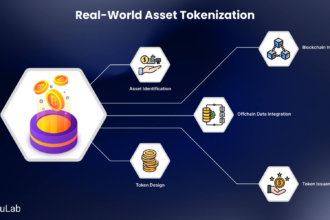



In this article, I will to explain the Most Trusted Forex Broker Business Models that define how modern forex brokers operate and instill trader confidence.
- What is Forex Broker Business Models?
- Why Most Trusted Forex Broker Business Models
- Transparency in Trade Execution
- Fair Pricing Structure
- Reduced Conflict of Interest
- Faster Order Execution
- Better Liquidity Access
- Stronger Risk Management
- Regulatory Compliance
- Improved Trader Confidence
- Scalability for All Traders
- Key Point & Most Trusted Forex Broker Business Models
- 1. STP (Straight Through Processing)
- STP (Straight Through Processing) – Features
- 2. DMA (Direct Market Access)
- DMA (Direct Market Access) – Features
- 3. Regulated broker model
- Regulated Broker Model – Features
- 4. Segregated accounts model
- Segregated Accounts Model – Features
- 5. Transparent commission model
- Transparent Commission Model – Features
- 6. Multi‑asset brokerage
- Multi-Asset Brokerage – Features
- 7. Low‑latency infrastructure
- Low-Latency Infrastructure – Features
- 8. Institutional liquidity aggregation
- Institutional Liquidity Aggregation – Features
- 9. Risk‑neutral broker (A‑book)
- Risk-Neutral Broker (A-Book) – Features
- 10. Investor protection schemes
- Investor Protection Schemes – Features
- Comparison Table – Most Trusted Forex Broker Business Models
- Conclusion
- FAQ
By understanding these models, traders can then assess transparency in the provision of order execution service and more about how actual pricing is done as well as safety of client funds.
Regardless if it is STP or DMA execution, the introduction of regulated and risk-neutral client funds in your broker model impacts long-term performance.
What is Forex Broker Business Models?
Forex Broker Business Models Forex broker business models are the different operational structures through which brokers execute trades and manage client orders, as well as generate revenue in foreign exchange (forex) transactions.
These models determine the way that a broker connects traders to liquidity providers, manages risk and earns income by means of spreads or commissions/losing trades. Some common types of models include Market Maker, ECN, STP and Hybrid systems with different levels of transparency pricing execution speed trader experience etc.
Why Most Trusted Forex Broker Business Models
Transparency in Trade Execution
Trusted models provide transparency around order execution and lower the potential for hidden manipulation.
Fair Pricing Structure
Trustworthy brokers have low spreads with a clear and understandable commission system in place.
Reduced Conflict of Interest
ECN or STP models eliminate scenarios when brokers benefit — i.e. make more money every time a trader loses.
Faster Order Execution
Easier to Read. Low Latency Execution – Business Models are very advanced which lead less requotes in the market.
Better Liquidity Access
Each broker is connected directly to numerous providers of liquidity-This will execute your trade more smoothly.
Stronger Risk Management
Established models cover hedging and controlling broker exposure for stability.
Regulatory Compliance
In terms of financial regulation, well-structured business models are easier to oversee.
Improved Trader Confidence
Brokers and clients build long-term trust through transparency and reliability.
Scalability for All Traders
Ideal for more novice traders, pro-traders and institute clients.
Key Point & Most Trusted Forex Broker Business Models
| Business Model | Key Point |
|---|---|
| STP (Straight Through Processing) | Client orders are sent directly to liquidity providers without dealer intervention, ensuring faster execution and reduced conflict of interest. |
| DMA (Direct Market Access) | Traders receive direct access to interbank market pricing with real market depth and transparent order execution. |
| Regulated Broker Model | Operates under financial authority supervision, ensuring compliance, trader protection, and operational transparency. |
| Segregated Accounts Model | Client funds are kept separate from broker operational funds, increasing safety and reducing misuse risk. |
| Transparent Commission Model | Brokers earn through clearly defined commissions or spreads without hidden fees or price manipulation. |
| Multi-Asset Brokerage | Provides access to forex, stocks, commodities, crypto, and indices from one trading account for diversified trading. |
| Low-Latency Infrastructure | Uses advanced servers and technology to minimize execution delay and slippage during trading. |
| Institutional Liquidity Aggregation | Combines liquidity from multiple banks and providers to offer tighter spreads and deeper market access. |
| Risk-Neutral Broker (A-Book) | Broker passes all trades to liquidity providers instead of taking opposite positions against clients. |
| Investor Protection Schemes | Compensation programs and protection policies safeguard trader funds if the broker faces financial issues. |
1. STP (Straight Through Processing)
STP (Straight Through Processing) is one of the Most Trusted Forex Broker Business Models because it does not have a dealing desk intervention and will route trader orders direct to external liquidity providers such as banks or financial institutions.
Instead of trading against clients, brokers make money primarily from spreads or a tiny markup. This prevents collusion and ensures transparency in the execution process. Unlike market makers, STP brokers typically process orders much faster (with less requotes) and in a condition of market-based pricing.
Traders get tight spreads and top-notch execution quality. This model also serves well those traders who are active in the market and strive for effective, fair pricing with impeccable order execution despite fast-moving forex markets.
STP (Straight Through Processing) – Features
| Feature | Details |
|---|---|
| Order Execution | Orders routed directly to liquidity providers automatically |
| Dealing Desk | No dealing desk intervention |
| Conflict of Interest | Reduced broker-client conflict |
| Pricing Source | Market-based pricing from liquidity providers |
| Execution Speed | Fast automated execution |
| Spread Type | Variable spreads |
| Broker Revenue | Spread markup or small commission |
| Requotes | Very low occurrence |
| Trading Style Support | Scalping, EA trading, day trading allowed |
| Transparency Level | High execution transparency |
2. DMA (Direct Market Access)
One of the Most Approachable Forex Broker Business Models that you are trained with is a Direct Access to Market (DMA) meaning traders have direct interaction/channeling through an order Broker , all financial markets and instruments.
In place of executing trades within internal systems, brokers expose traders to real market depth and order execution at institutional pricing levels. DMA provides greater transparency, better execution control and more accurate pricing.
This model attracts professional traders and scalpers because of low broker interaction. Liquidity venues are the source of pricing, which means that spreads tend to be tight — but commissions may apply. DMA enables parity, sophisticated trading strategies and a proprietary class for trade.
DMA (Direct Market Access) – Features
| Feature | Details |
|---|---|
| Market Access | Direct access to interbank market |
| Order Book Visibility | Traders can view market depth |
| Execution Control | High control over order placement |
| Pricing | Raw institutional pricing |
| Broker Intervention | Minimal to none |
| Spread Structure | Ultra-tight spreads |
| Commission | Fixed trading commission applied |
| Trading Environment | Professional-grade trading |
| Strategy Support | Ideal for scalpers and algorithmic traders |
| Transparency | Maximum market transparency |
3. Regulated broker model
Largest regulated broker model is listed in Most Trusted Forex Broker Business Models because it works under strong supervision of financial authorities like FCA, ASIC or CySEC. For example, regulation provides a way for brokers to conform with capital adequacy and reporting standards whilst adhering to ethical trading practice policies.
Dispute resolution systems and transparency requirements for the regulators grant protection to traders. Regulated brokers have to maintain operational accountability and solvency, making fraud less likely. Licensing increases prestige and investment security.
Opting for a regulated broker minimizes the risk of being scammed and ensures that trading operations are conducted under internationally accepted financial regulations governing protections given to clients.
Regulated Broker Model – Features
| Feature | Details |
|---|---|
| Regulatory Oversight | Supervised by financial authorities |
| Compliance Rules | Strict reporting and operational standards |
| Client Protection | Legal safeguards for traders |
| Capital Requirements | Brokers must maintain minimum capital |
| Audit Procedures | Regular financial audits |
| Transparency | Mandatory disclosure policies |
| Complaint Resolution | Official dispute handling systems |
| Operational Trust | Higher credibility |
| Fraud Prevention | Reduced scam risk |
| Global Recognition | Accepted under international standards |
4. Segregated accounts model
Segregated accounts are the Most Trusted Forex Broker Business Model as the client funds are kept separate from company operating fund. This kind of structure protects traders from brokers using trader deposits in any business expenses or proprietary trading. In the event of a financial loss from your broker, segregated funds are safe as they cannot be used or claimed by creditors.
This is a practice often required by financial regulators to make investing safer. Segregation role reinforces the trust between brokers and clients, all while increasing financial transparency. When brokers manage funds responsibly with clear separation between operating capital and deposits, traders are naturally more comfortable depositing.
Segregated Accounts Model – Features
| Feature | Details |
|---|---|
| Fund Separation | Client funds separated from company funds |
| Bank Storage | Funds held in top-tier banks |
| Financial Security | Prevents misuse of deposits |
| Insolvency Protection | Funds protected during broker bankruptcy |
| Regulatory Requirement | Mandatory in many jurisdictions |
| Withdrawal Safety | Improved withdrawal reliability |
| Transparency | Clear fund accounting |
| Investor Confidence | Higher trust level |
| Risk Reduction | Lower operational risk |
| Compliance Standard | Supports regulatory compliance |
5. Transparent commission model
In light of this, a transparent commission structure constitutes one pillar of the Most Trusted Forex Broker Business Models by preventing both parties from going around in circles regarding how brokers profit.

Traders pay fixed commissions or disclosed trading costs instead of hidden markups or controlled spreads. This transparency enhances trader trust and enables correct estimation of transaction costs. Because traders know how much a trade costs, transparent pricing plays its role in professional risk management.
This is a model that many ECN-style brokers will choose to ensure broker profits are correlated with trading volume versus losses of their clients. The relationship between a broker and trader thrives on transparency, creating an environment of fairness with predictable pricing conditions.
Transparent Commission Model – Features
| Feature | Details |
|---|---|
| Pricing Clarity | Clear trading cost disclosure |
| Commission Structure | Fixed or percentage-based commission |
| Hidden Fees | No hidden spread manipulation |
| Cost Predictability | Traders know exact trading costs |
| Broker Revenue | Volume-based earnings |
| Spread Quality | Often raw or tight spreads |
| Trade Transparency | Honest pricing model |
| Professional Appeal | Preferred by experienced traders |
| Risk Management | Easier cost calculation |
| Long-Term Trust | Builds trader loyalty |
6. Multi‑asset brokerage
This is one of the Most Trusted Forex Broker Business Models because multi-asset brokerage allows traders access to multiple financial markets through a single platform. Allows traders to include multiple instruments like forex, commodities, indices, stocks cryptocurrencies and CFDs.
This only increases the need for diversification and thus, limits reliance on a single market vastly increasing overall risk management. Brokers enjoy an increased client base, while traders get the comfort of a more integrated account management.
Most contemporary investors prefer working with situations in multiple areas, given the interconnection of global market. The model balances the needs of both beginner and institutional traders alike by creating a flexible environment for portfolio expansion, alongside efficient capital allocation all within one integrated trading ecosystem.
Multi-Asset Brokerage – Features
| Feature | Details |
|---|---|
| Market Access | Forex, stocks, indices, commodities, crypto |
| Account Integration | Single account for multiple assets |
| Portfolio Diversification | Risk distribution across markets |
| Trading Platforms | Unified trading interface |
| Investment Flexibility | Multiple strategies possible |
| Client Base | Retail and institutional traders |
| Capital Efficiency | Easier fund allocation |
| Cross-Market Opportunities | Hedge between asset classes |
| Modern Trading Demand | Supports global investors |
| Revenue Streams | Diversified broker income sources |
7. Low‑latency infrastructure
Low-latency infrastructure is one of the Trust-Worthy Forex Broker Business Models as execution speed has a strong correlation with trading performance. To minimize order latency, brokers invest in top-notch servers deployed in financial data centers with network routes that have been specially optimized.
A quick execution that ensures a minimal slippage, which gives the traders in and out with an improved entry accuracy helps high-frequency or algorithmic trading. Newer trends within leading brokers include hosting servers close to deeper liquidity centers, like those of London or New York – for speed. Robust infrastructure provides stability in the trading sector even at market highly volatile condition.
This model is one of the most trusted models among professional traders looking for accuracy and consistence as brokers priorities technological performance, demonstrating their commitment to fair execution quality.
Low-Latency Infrastructure – Features
| Feature | Details |
|---|---|
| Server Location | Hosted near financial data centers |
| Execution Speed | Millisecond-level execution |
| Network Optimization | High-speed connectivity |
| Slippage Reduction | Improved price accuracy |
| Algorithmic Trading | Supports automated systems |
| Platform Stability | Reliable trading environment |
| High-Frequency Support | Suitable for HFT traders |
| Data Transmission | Real-time market feeds |
| Technology Investment | Advanced hardware systems |
| Performance Reliability | Stable during volatility |
8. Institutional liquidity aggregation
With so many brokers blending pricing from countless of banks, hedge funds and liquidity providing firms into a single feed offering price below the market with institutional liquidity aggregation is one Most Trusted Forex Broker Business Models It aggregates this information to provide the market with deeper liquidity and tighter spreads for traders.
Instead of using one provider, brokers choose from the best available bid and ask prices in real time. Apart from reducing order rejection risks, it improves execution stability during high volatility.
Traders earn wallets and competitive pricing comparable to institutional participants. The model is designed to improve fairness, efficiency and transparency while providing similar trading conditions in different market environments.
Institutional Liquidity Aggregation – Features
| Feature | Details |
|---|---|
| Liquidity Sources | Multiple banks and providers |
| Price Aggregation | Best bid/ask selection |
| Spread Quality | Tighter spreads |
| Market Depth | Deeper liquidity pools |
| Execution Stability | Fewer order rejections |
| Volatility Handling | Better during news events |
| Institutional Access | Retail traders get pro pricing |
| Smart Routing | Optimized order matching |
| Trade Size Support | Handles large orders efficiently |
| Transparency | Market-driven pricing |
9. Risk‑neutral broker (A‑book)
Because it means that brokers do not take opposite positions against clients, the risk-neutral or A-Book value model is considered to be one of the Most Trusted Forex Broker Business Models. All trades are on-pass with external liquidity providers so broker profits rely on commissions rather than trader losses.
This eliminates potential conflicts of interest, and ensures brokers thrive upon trading volume rather than client loss. A-Book brokers are on execution, liquidity and pricing transparency. This structure is favored by traders because it guarantees that all market players have the opportunity to trade.
The model that aims to encourage long-term trust and establish professional trading standards for the global forex industry.
Risk-Neutral Broker (A-Book) – Features
| Feature | Details |
|---|---|
| Trade Routing | All trades sent to liquidity providers |
| Broker Exposure | Broker carries no market risk |
| Conflict of Interest | Eliminated |
| Revenue Model | Commission or spread-based |
| Execution Fairness | Market execution pricing |
| Transparency | High execution integrity |
| Trader Alignment | Broker profits from volume |
| Strategy Freedom | Scalping and automation allowed |
| Institutional Style | Professional trading conditions |
| Long-Term Sustainability | Trust-focused business model |
10. Investor protection schemes
Investor protection schemes play a key role in the Most Trusted Forex Broker Business Models as they serve to protect trader funds against broker insolvency or financial collapse. Depending on the jurisdiction concerned, regulatory compensation programs may reimburse clients eligible to a certain amount.
For example: compensation funds, negative balance protection and insurance coverage policies. Such mechanisms not only mitigate financial risks for a retail trader but also bolster the regulatory framework of more legit markets.
Even that protective schemes users to ensure healthy financial health and compliance with the standards of brokers. Those traders choosing brokers with protection provide themselves an extra line of defense that contributes to safer investing in forex over time.
Investor Protection Schemes – Features
| Feature | Details |
|---|---|
| Compensation Funds | Trader reimbursement programs |
| Negative Balance Protection | Prevents losses beyond deposits |
| Insurance Coverage | Additional fund safety |
| Regulatory Backing | Supported by financial authorities |
| Insolvency Protection | Coverage if broker fails |
| Risk Reduction | Safer trading participation |
| Client Confidence | Strong investor trust |
| Compliance Requirement | Mandatory for regulated brokers |
| Retail Trader Safety | Protects small investors |
| Market Stability | Enhances industry credibility |
Comparison Table – Most Trusted Forex Broker Business Models
| Business Model | Execution Type | Transparency Level | Conflict of Interest | Pricing Structure | Best For Traders | Risk Level | Key Advantage |
|---|---|---|---|---|---|---|---|
| STP (Straight Through Processing) | Direct to liquidity providers | High | Low | Variable spreads + markup | Day traders & scalpers | Low | Fast automated execution |
| DMA (Direct Market Access) | Direct market order book access | Very High | Very Low | Raw spreads + commission | Professional traders | Low | Institutional pricing access |
| Regulated Broker Model | Depends on broker setup | High | Low | Regulated pricing rules | All trader types | Very Low | Legal protection & compliance |
| Segregated Accounts Model | Fund protection structure | High | None | Not pricing-based | Safety-focused traders | Very Low | Client fund security |
| Transparent Commission Model | Market or ECN execution | Very High | Very Low | Fixed commission | Active & pro traders | Low | Clear trading costs |
| Multi-Asset Brokerage | Multi-market execution | Medium–High | Low | Spread/commission hybrid | Diversified investors | Medium | Access to many markets |
| Low-Latency Infrastructure | High-speed execution | High | Low | Technology-driven | Scalpers & algo traders | Low | Ultra-fast execution speed |
| Institutional Liquidity Aggregation | Aggregated liquidity routing | Very High | Very Low | Competitive spreads | High-volume traders | Low | Deep liquidity & tight spreads |
| Risk-Neutral Broker (A-Book) | External trade routing | Very High | None | Commission/spread | Professional traders | Low | Broker doesn’t trade against clients |
| Investor Protection Schemes | Protection framework | Very High | None | Not pricing-related | Retail traders | Very Low | Compensation & safety coverage |
Conclusion
Modern traders living in the 21st century should definitely assume that The Most Trusted Forex Broker Business Models is one of the important answer slices to build a risk-free, transparent trading environment.
This approach is ideal for all models, e.g. STP (Straight through Processing), DMA (Direct Market Access) and A-Book execution with regulated operations using segregated accounts that respect fairness vs investor protection and reliable order execution.
These models decrease conflicts of interest and up optics for higher degree or decimal trading with access to institutional liquidity, advanced infra-structure, improved price transparency.
The forex industry is advancing, with traders increasingly seeking brokers that possess a commitment to regulatory compliance, technology in trading and transparency over the route of short-term profit.
If the broker you choose operates under one of these well-respected business models, then this will ultimately compliment proper risk management and increase fund security that spells longer-term trading success in international financial markets.
FAQ
What are Forex Broker Business Models?
Forex broker business models define how brokers execute trades, manage client orders, connect to liquidity providers, and generate revenue through spreads, commissions, or trading services.
Which Forex Broker Business Model is the most trusted?
STP, DMA, and A-Book (risk-neutral) models are widely considered the most trusted because they reduce conflicts of interest and provide transparent market execution.
What is the difference between STP and DMA models?
STP routes trades automatically to liquidity providers, while DMA allows traders direct access to market order books and institutional pricing with greater execution control.
Why is regulation important in broker business models?
Regulated broker models ensure compliance with financial laws, protect trader funds, and provide dispute resolution mechanisms, making trading safer for investors.
What are segregated accounts in forex trading?
Segregated accounts keep client funds separate from broker operating funds, preventing misuse and improving investor protection if a broker faces financial problems.