


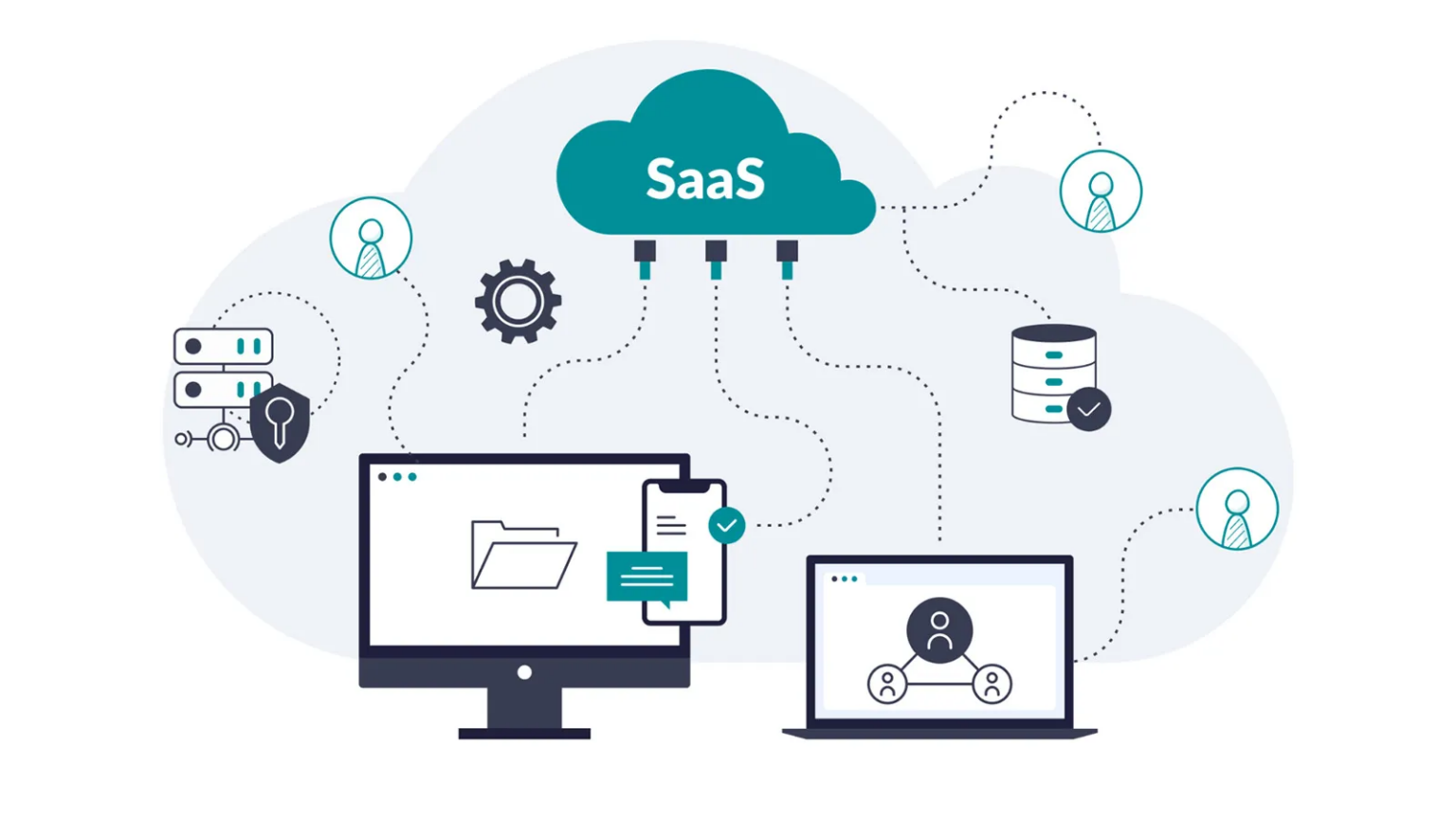


This article will focus on Best SaaS Tools to Manage Business Finances. Choosing the right software to Managing business finances is extremely important because the right choice will help eliminate time consuming tasks, decrease the chances of making critical mistakes, and give you powerful tools to track important business metrics in real time.
These include QuickBooks Online and FreshBooks for small business and NetSuite ERP for big businesses.
Why Choose SaaS Tools to Manage Business Finances
Automatic Updates
With SaaS finance tools, business finance data is stored in the cloud, meaning you can access it anytime and anywhere. It also encourages real-time cooperation, meaning no employee or accountant is stuck in one location to collaborate.
Tasks That Do Not Need Human Involvement
These tools also do repetitive functions, such as system-generated invoices, keeping trace of user expenses, auto bank reconciliations, and automatically creating reports. This type of automation also saves money as it saves time, and it is error free.
Can Get Bigger, Just Like My Company
SaaS tools can accommodate any type of company, and can even accommodate expansion. This is because these tools can accommodate added transactions, added users and even added functions.
Provide Real-Time Financial Insights
These SaaS tools offers analytics and dashboards which provides insight into cash flows, company expenses, and profits. These information can help in making decisions of the company.
More Expensive But Not in the Way You Think
The pricing model used is a subscription based system. Instead of spending a lot of money suddenly to get a lot of IT hardware, you can spend a little bit of money over time to get just what you need.
Security and Compliance
Top SaaS providers use cloud storage, encryption, and audit logs to secure financial data. Most top SaaS providers also comply with global accounting and taxation standards.
Easy Integration
SaaS finance tools provide seamless workflows across different business areas by integrating with various CRMs, payroll, payments, and e-commerce tools.
Key Point & Best SaaS Tools to Manage Business Finances
| SaaS Tool | Key Point |
|---|---|
| QuickBooks Online | Popular for small to medium businesses; easy bookkeeping and invoicing. |
| Xero | Cloud-based accounting with strong integration and multi-currency support. |
| FreshBooks | Best for freelancers & small businesses; simple invoicing and time tracking. |
| Zoho Books | Affordable solution with automation, inventory management, and client portal. |
| NetSuite ERP (Oracle) | Comprehensive ERP for large businesses; advanced financial and inventory control. |
| Sage Intacct | Cloud financial management with strong reporting and scalability. |
| Wave Accounting | Free accounting software; ideal for small businesses and startups. |
| Odoo Finance | Integrated suite with finance, inventory, and CRM in one platform. |
| Expensify | Expense management and receipt tracking; simplifies reimbursements. |
| Ramp | Corporate card + expense management; focuses on automation and savings. |
1. QuickBooks Online
QuickBooks Online is the business accounting software most used by small to mid-sized businesses. Features such as automated invoicing, expense tracking, payroll breakdowns, and financial statement reporting make it easier to manage cash flow and generate reports ready for tax season.

The platform’s user-friendly design facilitates financial collaboration in the cloud. In regard to the Best SaaS Tools to Manage Business Finances list, the built-in extensive app ecosystem, superior customer service, and seamless banking and e-commerce platform integration make QuickBooks the best choice for comprehensive financial management.
QuickBooks Online Features, Pros & Cons
Top Features:
- invoicing & billing automation
- bank reconciliation & transaction import
- payroll integration
- tax reporting & filing
- real-time financial dashboards
Pros:
- quick & easy setup
- 3rd party integration
- good customer support training
- good for scalable SMBs
- mobile app
Cons:
- expensive
- not good reporting
- difficult to learn
- can be an issue
- payroll fees & other fees
2. Xero
Xero is accounting software tailored to small to mid-sized companies, allowing them to manage and execute their banking, invoicing, and payroll. Additionally, its tax and currency features are especially important to global clients, and Xero’s more than 800 3rd party software integrations provide clients productivity and automation solutions.

Xero also makes it to the list of Top SaaS Tools to Manage Business Finances for its ability to provide real-time reporting, an intuitive dashboard, and financials reporting, secure storage of documents in the cloud that clients can access anytime.
Xero’s software helps clients analyze their spending, helps clients analyze their finances, and helps financial controllers manage finances. This makes it an option for clients looking for a scalable, trustworthy, and, fully online financial management option.
Xero Features, Pros & Cons
Top Features:
- multi-currency
- bank feeds
- inventory
- reporting
- unlimited users
Pros:
- nice dashboard
- good for global
- strong integration
- good multi-currency
- unlimited access
Cons:
- not good payroll
- difficult learning
- can be very expensive
- budgeting not good
- add ons needed
- and other fees
3. FreshBooks
FreshBooks is designed for freelancers and small business owners, which is why it incorporates invoicing, and billing time and expense reporting, and, billing of clients and reporting of income and expense streams. Its automation of invoicing and payment reporting helps clients save time and also reduces mistakes.

FreshBooks, l due to its integration with many 3rd party payment systems, is constantly in the top ranking of Best SaaS Tools to Manage Business Finances. Its ability to help clients automate their accounting, optimize tracking of profit margins of projects, and analyze finances without the need for an accounting personnel, is perfect for small business.
FreshBooks Features, Pros & Cons
Top Features:
- Invoicing clients & reminders for payments
- Billing for time tracked & projects
- Capturing expenses from receipts
- Reports on profit & loss
- Payment gateways integration
Pros:
- Great for freelancers & businesses providing services
- Interface is clean & easy to navigate
- Billing and communication with clients is simple
- Time tracking is very efficient
- Their app works well
Cons:
- Features for inventory are few
- Not suited for large companies
- Competitors have better and more comprehensive reporting
- Compared to Xero/QuickBooks there are fewer integrations
- Workflows that are automated are not very advanced
4. Zoho Books
With automated invoicing, workflows, banking integration, and inventory management, Zoho Books is a highly versatile accounting system. They offer great solutions for small and medium businesses. They also allow seamless collaboration through client portals and have great tools for tax compliance.

Among the Best SaaS Tools to Manage Business Finances, they stand out for automation and allowing businesses to keep accurate records and save time on tedious work. They also integrate with a range of other Zoho products like CRM and project management solutions which is great for businesses needing a unified solution for Finance, Operations, and Client Management.
Zoho Books Features, Pros & Cons
Top Features:
- Workflows and rules that are automated
- Integrations and reconciliation for banking
- Portals for clients
- Managing inventory
- Tools for compliance with taxes
Pros:
- Great value for the price
- Very good features for automation
- Works with the Zoho suite (Projects, CRM)
- Customer support is good
- Invoices and reports can be customized
Cons:
- Integrations that are third-party are fewer
- Payroll functions are restricted in some areas
- Can be hard to set up the configuration at first
- The user interface can be outdated
- Their app works, but is not great
5. NetSuite ERP (Oracle)
NetSuite ERP by Oracle is a fully-fledged enterprise resource planning system aimed at large corporations. It includes financial management, inventory management, procurement, and advanced reporting. Its cloud-hosted solution is scalable and offers access to users worldwide.

NetSuite ERP stands out among the Best SaaS Tools to Manage Business Finances for large complex organizations that require multiple departments’ activities to be integrated.
It allows organizations to integrate their financials, automate their processes, and gain insights via real-time dashboards. Its capability to manage multiple entities, currencies, and tax configurations is perfect for businesses that require fully integrated financial and operational management.
NetSuite ERP (Oracle) Features, Pros & Cons
Top Features:
- Complete ERP with finances & accounting
- Support for Multiple entities and currencies
- Report generation for finances is advanced
- Management for orders and inventory
- Dashboards that are real time
Pros:
- Perfect for big and complicated companies
- Advanced customization options
- Robust analytics and reporting
- Provides centralized control over business processes
- Offers solid governance and security
Cons:
- Extremely high price
- Long implementation time
- Administration requires a high level of expertise
- Small businesses do not benefit from this
- Additional costs for different modules
6. Sage Intacct
Sage Intacct provides advanced complexity in accounting, reporting, and compliance. With a multi-entity structure, automated workflows, and dashboards in real-time, this multi-dimensional product is scalable for any growing business.

With top-tier reporting, seamless automation, and a multi-dimensional approach for reducing simple mistakes and manual entry, Sage Intacct as a cloud-native solution is a preferred partner for any growing business.
Sage Intacct is a top contender for Best SaaS Tools to Manage Business Finances as automation and reporting greatly reduce the manual effort during the closing process and advise to owners on where to focus effort from an ROI standpoint.
Sage Intacct Features, Pros & Cons
Top Features:
- Outstanding financial reporting.
- Consolidation of multiple entities.
- Processes can be automated.
- Dashboards updated in real time.
- Ancillary tools and audit trails for compliance.
Pros:
- Best fit for mid-sized and larger businesses.
- Numerous unique accounting capabilities.
- Grows along with the business.
- Extensive capabilities for reliable ongoing integrations.
- Good customer support.
Cons:
- Complicated to set up.
- Expensive.
- Large businesses only.
- Insufficient features for ERPs that are non-financial.
- Often training is needed.
7. Wave Accounting
Wave Accounting is simple, free software to manage accounting, scuessing, and invoicing, receipts, and expense tracking. The platform offers a simple to use dashboard that provides basic reporting, and financial Wave Accounting is one of the Best SaaS Tools to Manage Business Finances that is simple, effective, and most importantly free.

It is obvious that Enterprise Software offers advanced features, but it is equally obvious that cash flow tracking, expense management, and tax-prepared report generation is advanced. The platform is cloud-based and effective for any business needing easy and reliable accounting services with little financial investment.
Wave Accounting Features, Pros & Cons
Top Features:
- Accounting for free.
- Unlimited tracking of expenses and income.
- Ability to scan receipts.
- Invoicing and ability to make payments.
- Basic reporting features
Pros:
- Basic accounting is free.
- Basic accounting is free.
- Suitable for small businesses.
- Clean interface.
- No fees for users.
Cons:
- Lacks features for advanced users.
- Payments for Payroll are an expense.
- There is no support in multi-currency for the plan that is free.
- Few integrations.
- Inadequate for large teams
8. Odoo Finance
Odoo Finance has invoicing, accounting, budgeting, and reporting, along with other Odoo apps. Because of this, Odoo Finance allows for the use of additional Odoo apps, like CRM or inventory management. As such, Odoo Finance, along with other Best SaaS Tools to Manage Business Finances, is a great tool for flexibility, automation, and better synergy of various business functions.

Customizable reporting and dashboards provides insight to a business’s financial wellbeing without the need for multiple software systems. This leads to streamlined workflows and better reporting. Odoo Finance is a viable \s true \s financial management solution.
Odoo Finance Features, Pros & Cons
Top Features:
- Integrated accounting & invoicing
- Budgeting & forecasting
- Expense management
- Financial dashboards in real time
- Odoo CRM/Inventory seamless integration
Pros:
- Configurable and modular
- Integrated suite across business areas
- Priced reasonably for growing companies
- Automation tools are good
- Community apps are an open platform
Cons:
- Best use requires configuration
- Support in quality varies
- Certain modules are chargeable extras
- Module by depth varies in feature
- Neginners have a steep learning curve
9. Expensify
Expensify is best for frequent employee reimbursements, as it tracks expense management and automated receipt management. This is because employees can document a receipt through the mobile app, and categorize it as a business expense for reimbursements.

Employees can also sync the app with the business’s accounting software so that the expense is recorded. Expensify sits among other Best SaaS Tools to Manage Business Finances because it makes corporate expense tracking easy, and it reduces the time it takes for accounting to do reimbursements by a great degree.
Expensify also integrates with other accounting software. Because of this, businesses always know their spending, have better compliance to spending policies, and have less to no manual reporting. Because of this it is a great choice for businesses that want to simplify their expenses.
Expensify Features, Pros & Cons
Top Features:
- Mobile app receipt capture
- Automatic categorization of expenses
- Rules for policy compliance
- Reconciliation of corporate cards
- Accounting systems integration
Pros:
- Expense automation is excellent
- Spend visibility in real time
- Mobile experience is simple
- Manual receipt entry reduction
- Tools in reporting are strong
Cons:
- Only invoices are focused
- For complete accounting integration is required
- User pricing can rise
- Tools for budgeting are few
- Not a complete accounting platform
10. Ramp
Ramp offers corporate card management, automated expense report generation, and financial insights in one place. Ramp helps businesses streamline spending, budget effectively, and gain control over cash flow visibility.

Ramp is one of the Best SaaS Tools to Manage Business Finances because of its commitment to automation, helps businesses save money, and offers integrations with accounting systems like QuickBooks and Xero. Businesses can simplify the management of approvals and the setting of spend limits, as well as the generation of reports.
These features help to minimize administrative tasks. Real time analytics and a user friendly interface help streamline the decision making process for finance teams. These features combine to make Ramp a top choice for businesses that want to modernize and automate their management of corporate expenses and finances.
Ramp Features, Pros & Cons
Top Features:
- Spend management & corporate cards
- Suggestions for automated savings
- Policies for expense in real time
- Tools for accounting integration
- Analytics & reporting in advance
Pros:
- Cost saving with automation
- Team spend control
- Budget insight in real-time
- A great integration ecosystem
- Easy onboarding
Cons:
- Only for cardholding companies
- Incomplete accounting suite
- Limiting features on upper-tier plans
- Analytical tools have learning curves
- Payroll integration is lacking
Conclusion
Effective and precise financial management requires identifying the appropriate SaaS tool. There are tools for all business sizes and needs, ranging from QuickBooks Online, FreshBooks, and Wave Accounting for small business purposes, to NetSuite ERP and Sage Intacct for enterprise-grade solutions.
These Best SaaS Tools to Manage Business Finances automate tasks, enhance reporting, and enable real-time reporting so businesses can streamline bookkeeping and save time while lowering the likelihood of error. These tools enable businesses to better manage their cash flow, optimize their decision-making, and sustain their financial well-being through 2026 and further.
FAQ
What are the best SaaS tools to manage business finances?
The top SaaS tools include QuickBooks Online, Xero, FreshBooks, Zoho Books, NetSuite ERP, Sage Intacct, Wave Accounting, Odoo Finance, Expensify, and Ramp. They help automate bookkeeping, invoicing, expense tracking, and reporting for businesses of all sizes.
Which SaaS tool is best for small businesses?
For small businesses, QuickBooks Online, FreshBooks, Zoho Books, and Wave Accounting are highly recommended. They offer affordable plans, easy-to-use interfaces, and essential features like invoicing, expense tracking, and financial reporting.
Which SaaS tool is best for large enterprises?
Enterprise-level businesses benefit from NetSuite ERP, Sage Intacct, and Odoo Finance. These platforms provide advanced financial management, multi-entity support, inventory tracking, and real-time analytics for complex organizational needs.
Can SaaS tools automate accounting tasks?
Yes. Most modern SaaS finance tools automate invoicing, expense categorization, bank reconciliations, and reporting, reducing manual work and minimizing errors. Tools like Ramp and Expensify also automate expense management and approval workflows.