


Institutional Dark Pools are private trading platforms where major investors execute orders without disclosing their size, price, or identity. I will talk about this in this article.
- What is Institutional Dark Pools?
- Technologies Enabling Private On-Chain Trading
- Fully Homomorphic Encryption (FHE):
- Zero-Knowledge Proofs (ZK-proofs):
- Multi-Party Computation (MPC):
- Secure Enclaves / Trusted Execution Environments (TEEs):
- Hybrid Privacy Solutions:
- How Institutional Dark Pools Work On-Chain
- Placement of Orders
- Secure Process of Order Matching
- Verification of Trades
- Settling of Trades
- Exclude Sites of Regulator Compliance Reporting
- Benefits of On-Chain Private Trading for Institutions
- Large Order Anonymity:
- Diminished Market Influence:
- Settlements are Speedier and Safer:
- A No Trade Secrets Loss Approach to Regulatory Compliance:
- Accountability and Confirmability:
- Decentralized and Traditional Finance Integration:
- Traditional Dark Pools vs On-Chain Dark Pools
- Challenges and Limitations
- High Computational Costs:
- Scalability Issues:
- Regulatory Uncertainty:
- Integration with Traditional Systems:
- Limited Adoption and Liquidity:
- Security Risks:
- Future Outlook
- Conclusion
- FAQ
Institutions can trade safely, reduce market effect, and preserve privacy by utilizing on-chain dark pools, which use cutting-edge technology like Fully Homomorphic Encryption and Zero-Knowledge Proofs. For effective, private trade, these tools are connecting decentralized markets with traditional finance.
What is Institutional Dark Pools?
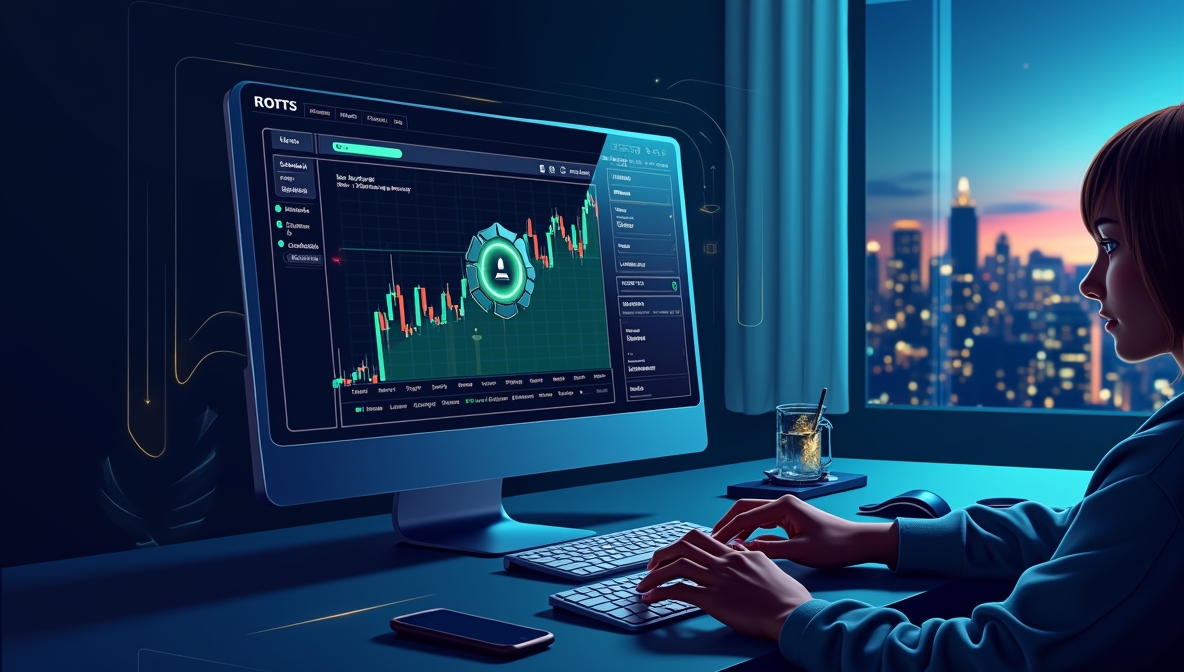
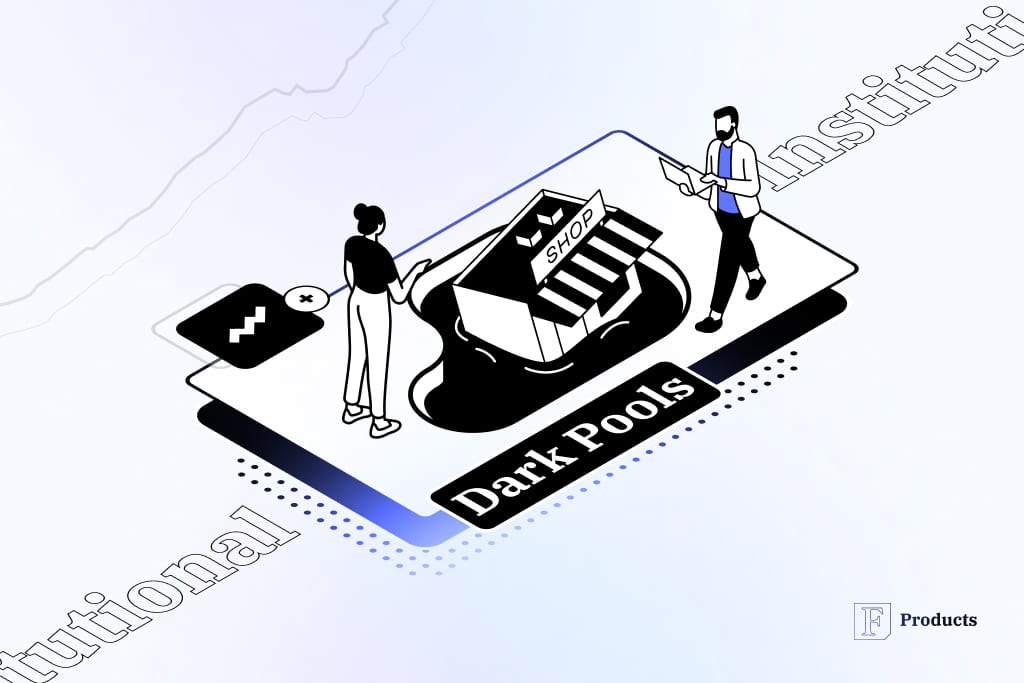
In order to reduce their impact on the market, big investors like banks, hedge funds, and mutual funds place sizable orders in institutional dark pools, which are private trading venues.
Dark pools, as opposed to standard exchanges, avoid price slippage and front-running by other market participants by hiding the quantity, price, and identity of deals until after they are executed.
Transparency has been restricted by their historical centralization under the authority of brokers or financial institutions.
Blockchain advances have led to the emergence of on-chain institutional dark pools, which use technology like as Fully Homomorphic Encryption (FHE) and Zero-Knowledge Proofs (ZK-proofs) to enable decentralized, private, and verifiable trades.
Technologies Enabling Private On-Chain Trading

Fully Homomorphic Encryption (FHE):
- Keeps trade details private even during order matching.
- Allows for the trade order to be encrypted and the matching order to remain confidential.
Zero-Knowledge Proofs (ZK-proofs):
- Proofs of trade verification do not need to include the order, the price, the participants, etc.
- Also decreases the chances of front-running and maintains the privacy of institutions.
Multi-Party Computation (MPC):
- Where the computation is split among different participants so that individual trade details aren’t exposed.
- Enhances security and prevents data breaches.
Secure Enclaves / Trusted Execution Environments (TEEs):
- Execute trades in a private manner using hardware that provides a separate trading environment.
- Sensitive data is kept private, and the system operates as it should.
Hybrid Privacy Solutions:
- Off-chain private calculations and on-chain private order mixing are combined.
- Provides the required transparency for auditing and the confidentiality for trading.
How Institutional Dark Pools Work On-Chain
Placement of Orders
- When institutional investors are ready to place a big order in a dark pool, they do it using something like Fully Homomorphic Encryption (FHE) or Zero-Knowledge (ZK) proofs.
- Details like order size, order price, and identities of the participants are not visible on public blockchains.
Secure Process of Order Matching
- Orders are matched by decentralized protocols or smart contracts, leaving sensitive information out of reach.
- While FHE allows for some encrypted computation, ZK proofs provide the ability to demonstrate that the order is valid.
Verification of Trades
- The system does not disclose trade information and does verification externally.
- To prevent manipulation, some verification must hold to prove that no trade rules have been broken.
Settling of Trades
- Trades that have been matched are settled on the blockchain through secure smart contracts.
- Counterparty risk is lessened, and settlement is speeded by atomic cross-exchange of assets.
Exclude Sites of Regulator Compliance Reporting
- Trade information that have been encrypted are shown to no one and are lessened to comply.
- Details of the trade are still encrypted and do not abide by the rules, thus the institutional method is still protected.
Benefits of On-Chain Private Trading for Institutions
Large Order Anonymity:
- Because of the confidentiality surrounding the trade’s size and price, as well as privileged identities, market manipulation and front-running are not an issue.
Diminished Market Influence:
- Large trades are in the greatest interest of the market and will not negatively affect the value of an asset. This ensures that trades can be executed with no delay.
Settlements are Speedier and Safer:
- The use of smart contracts for on-chain settling means that there is little to no counter party risk and clearing can happen at any time.
A No Trade Secrets Loss Approach to Regulatory Compliance:
- A privacy trade secret can be maintained while allowing for compliance with regulations through selective non-disclosure.
Accountability and Confirmability:
- Confidential trade data is not exposed thanks to FHE and ZK-proof.
Decentralized and Traditional Finance Integration:
- On-chain private trading allows decentralized finance to be integrated with traditional trading’s privacy standards.
Traditional Dark Pools vs On-Chain Dark Pools
| Feature | Traditional Dark Pools | On-Chain Dark Pools |
|---|---|---|
| Control & Ownership | Operated by banks or brokers (centralized) | Decentralized protocols or blockchain-based platforms |
| Transparency | Limited; trade details often hidden | Transparent audit trails via blockchain; privacy preserved using FHE/ZK-proofs |
| Privacy | Orders hidden until after execution | Orders encrypted and verified without revealing size, price, or participants |
| Settlement | Manual or through centralized clearinghouses | Automated on-chain settlement via smart contracts |
| Market Impact | Reduced but can still be influenced by intermediaries | Minimal; privacy-preserving tech prevents front-running and slippage |
| Regulatory Oversight | Traditional regulators monitor centralized pools | Compliance possible via selective disclosure while maintaining privacy |
| Technology | Conventional order matching systems | Blockchain, smart contracts, FHE, ZK-proofs, MPC, TEEs |
| Accessibility | Restricted to institutional participants | Potentially open to institutions and DeFi protocols |
| Security | Relies on broker infrastructure; counterparty risk exists | Cryptographic security reduces counterparty risk and ensures trade integrity |
Challenges and Limitations
High Computational Costs:
- Execution of trades is delayed due to the large amount of computing resources needed for some technologies to be utilized such as; Fully Homomorphic Encryption (FHE) and Zero-Knowledge Proofs (ZK-proofs)
Scalability Issues:
- Blockchains currently have a lot of limitations in regards to the amount of throughput and because of this large volumes of trades at high frequencies becomes nearly impossible to execute.
Regulatory Uncertainty:
- If on-chain dark pools are used, compliance concerns may occur, as trading in a privacy-oriented manner could lead to concerns regarding the current rules that are still in flux.
Integration with Traditional Systems:
- The costs and complexity of integrating private on-chain trading with current banking and brokerage systems can be significant.
Limited Adoption and Liquidity:
- Large trades may become more difficult to execute as fewer participants in the on-chain private pools can lead to less liquidity.
Security Risks:
- The data regarding trades is encrypted, but financial threats may still be present due to flaws in the protocols or smart contracts.
Future Outlook
As blockchain privacy technologies advance, institutional dark pools on-chain appear to have a bright future.
Institutions may now safely and effectively conduct big trades without disclosing sensitive information because to developments in fully homomorphic encryption, zero-knowledge proofs, and hybrid privacy solutions.
As banks, hedge funds, and DeFi protocols look for quicker settlements and less market effect, adoption is probably going to increase. It is anticipated that regulatory frameworks would change to allow for trades that protect privacy while striking a balance between supervision and secrecy.
On-chain dark pools have the potential to revolutionize institutional trading in the future by combining decentralized markets and traditional finance while improving efficiency, security, and transparency.
Conclusion
Large-scale transaction execution has undergone a radical change thanks to institutional dark pools on-chain. They allow institutions to preserve privacy, lessen their influence on the market, and settle trades quickly by utilizing technology like Fully Homomorphic Encryption and Zero-Knowledge Proofs.
Even though there are still issues with scalability, computing costs, and regulatory ambiguity, continuous innovation is opening the door for wider usage. By bridging the gap between traditional finance and decentralized markets, these private on-chain trading systems provide institutional investors with a safe, open, and effective environment while heralding a new era of private, tech-driven trade.
FAQ
What are institutional dark pools?
Institutional dark pools are private trading venues where large investors execute trades away from public exchanges, keeping order size, price, and identity hidden to minimize market impact.
How do on-chain dark pools differ from traditional ones?
On-chain dark pools use blockchain technology for automated settlement and transparency, combined with privacy-preserving methods like FHE and ZK-proofs, unlike centralized traditional dark pools.
What technologies enable private on-chain trading?
Key technologies include Fully Homomorphic Encryption (FHE), Zero-Knowledge Proofs (ZK-proofs), Multi-Party Computation (MPC), and secure enclaves or hybrid privacy solutions.
What are the benefits for institutions?
Benefits include confidentiality of large orders, reduced market impact, faster and secure settlement, regulatory transparency without compromising privacy, and access to DeFi liquidity.
What are the challenges?
Challenges include high computational costs, scalability issues, regulatory uncertainty, integration with traditional systems, limited liquidity, and potential smart contract vulnerabilities.