
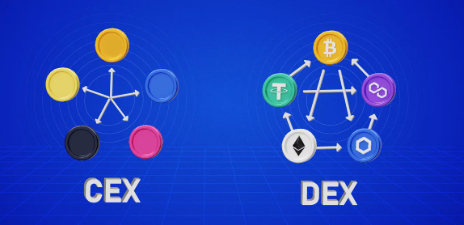

I’ll talk about perpetual DEXs versus CEXs in this post, examining how centralized platforms like Binance and Bybit are being surpassed by decentralized exchanges that support perpetual contracts.
- What is Perpetual DEXs?
- What is CEXs?
- Key Differences Between Perpetual DEXs vs CEXs
- How DeFi Beat Binance & Bybit
- Protection of user Funds
- Lower Trading Costs
- No Permission to Trade
- Available for Proof – On-Chain
- Flexible Dual Mechanism
- Incentives for Loyalty and Growth
- Why Perpetual DEXs Surpassed CEXs
- Non-Custodial Security
- Lower Trading Costs
- On-Chain Transparency
- Geographic Discrimination-less Accessibility
- DeFi Flexibility
- Decentralized Community Governance
- Regulatory Resilience
- Key features of Perpetual DEXs vs CEXs
- Metrics & Evidence
- Trading Volume
- User Adoption
- Total Value Locked (TVL)
- On-Chain Transparency Metrics
- Growth Trends Compared to CEXs
- Challenges & Considerations for DEXs
- Implications for Traders and the Market
- Change in trading patterns
- Increased Market Containment
- Pressure for Centralized Exchanges to Develop
- Integration with DeFi
- Trust
- Decreased Regulatory Focus
- Increased Innovation and Competition
- Future Outlook
- Conclusion
- FAQ
We’ll look at the reasons behind traders’ migration to DEXs, the benefits of trading with non-custodial leverage, and the difficulties encountered by both platforms, emphasizing how the market for cryptocurrency derivatives is changing and the direction of decentralized finance.
What is Perpetual DEXs?
DEFi platforms that enable traders to take leveraged long or short bets on cryptocurrency assets without an expiration date are known as perpetual DEXs, or decentralized exchanges offering perpetual contracts. In contrast to conventional CEXs, smart contracts allow users to trade straight from their wallets while maintaining custody of their money.
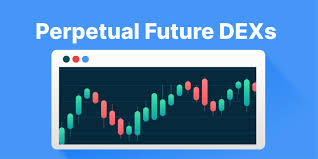
For pricing and liquidity, these platforms rely on decentralized order books or automated market makers (AMMs). Transparency on the chain, reduced fees, and yield-enhancing interoperability with other DeFi protocols are important aspects. Because of their confidentiality, worldwide accessibility, and resistance to censorship, well-known examples such as dYdX, GMX, and Perpetual Protocol have become popular.
What is CEXs?
Crypto trading platforms run by centralized businesses that serve as middlemen between buyers and sellers are known as Centralized Exchanges (CEXs). They provide features like futures contracts, leveraged trading, and spot trading, frequently with quick execution and great liquidity.
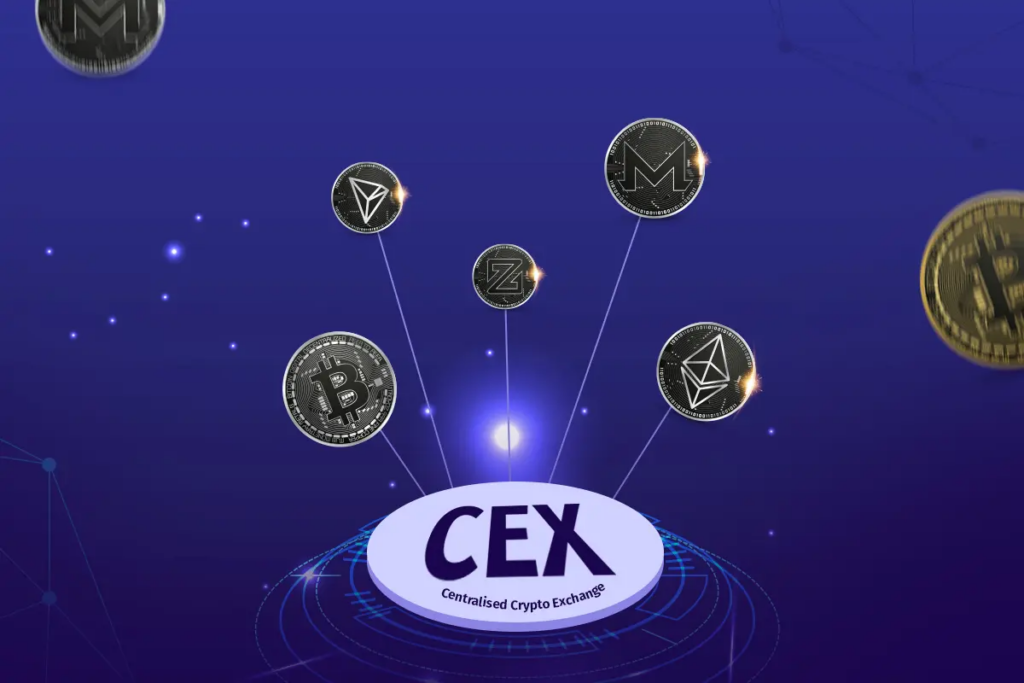
The platform retains private keys when users deposit money into the exchange’s custody, which adds convenience but also exposes users to counterparty risk. CEXs are well-liked by both novice and experienced traders due to their user-friendly interfaces, sophisticated trading tools, and customer service.
Coinbase, Bybit, and Binance are prominent examples. Convenience and control must be balanced, though, as they are subject to regulatory inspection, hacker danger, and sporadic withdrawal limitations.
Key Differences Between Perpetual DEXs vs CEXs
| Feature | Perpetual DEXs | CEXs (Centralized Exchanges) |
|---|---|---|
| Custody of Funds | Non-custodial – users control their wallets | Custodial – exchange holds users’ funds |
| Trading Fees | Typically lower fees | Higher fees, including trading & withdrawal fees |
| Transparency | Fully on-chain, auditable, and verifiable | Mostly opaque, limited public data |
| Accessibility | Permissionless, global access without KYC | KYC and geographic restrictions apply |
| Liquidity | Depends on decentralized pools, may be fragmented | High liquidity and deep order books |
| DeFi Integrations | Can combine trading with staking, yield farming, and AMMs | Limited DeFi integration |
| Governance | Community-driven via token voting | Decisions made by centralized management |
| Security | Reduced counterparty risk but exposed to smart contract bugs | Subject to hacks, withdrawals frozen in crises |
| Speed & Scalability | Limited by blockchain/network, improved with layer-2 | High-speed execution, minimal latency |
| Regulatory Pressure | Harder to regulate, operates in a gray area | Subject to strict regulations and compliance |
How DeFi Beat Binance & Bybit
Protection of user Funds
Because DEXs are non-custodial, users are empowered with ownership of their crypto and trade assets, and as a result, trust and counterparty risk issues lessen.
Lower Trading Costs
DeFi platforms are more cost-effective due to trading and withdrawal fees being lower, which results in more high-frequency and leveraged traders.
No Permission to Trade
Global adoption is easier with no KYC and no geo-blocking.
Available for Proof – On-Chain
Proof of funding rates, liquidity, and other rules are available for users to keep track of to verify.
Flexible Dual Mechanism
Withdraw and trade dual mechanism.
Incentives for Loyalty and Growth
Token owners garner influence over DeFi protocols and receive payment for their loyalty.
Why Perpetual DEXs Surpassed CEXs
Non-Custodial Security
Users have control over their funds eliminating the risks of hacked exchanges and insolvency.
Lower Trading Costs
Decentralized protocols typically charge less fees than centralized exchanges.
On-Chain Transparency
Greater trust and auditability exist as trades and liquidity are on-chain.
Geographic Discrimination-less Accessibility
There are no KYC or region-based trading restrictions.
DeFi Flexibility
Community Governance Users are able to use leveraged trades in combination with yield farming, staking, and other DeFi.
Decentralized Community Governance
DEXs are more decentralized than centralized exchanges since a number of DEXs give voting rights to protocol token holders.
Regulatory Resilience
CEXs are regulatory compliant, while DEXs are more difficult to be censored or restricted due to decentralized nature.
Key features of Perpetual DEXs vs CEXs
| Feature | Perpetual DEXs | CEXs (Centralized Exchanges) |
|---|---|---|
| Custody & Security | Non-custodial; users control funds; smart contract risk exists | Custodial; exchange holds funds; risk of hacks or insolvency |
| Fees | Lower trading and withdrawal fees | Higher fees; includes trading, withdrawal, and sometimes deposit fees |
| Transparency | Fully on-chain; all trades and liquidity visible | Mostly opaque; limited public access to order books and trades |
| Access & Onboarding | Permissionless; no KYC; global access | KYC required; access may be restricted by region |
| Liquidity Mechanism | AMMs or decentralized order books; can be fragmented | Centralized order books; high liquidity and tight spreads |
| Leverage & Trading Options | Perpetual contracts with decentralized funding rates | Perpetual contracts, futures, and margin trading with centralized control |
| Integration with DeFi | Can combine trading with staking, yield farming, and other DeFi protocols | Limited integration; mostly standalone trading |
| Governance | Community governance via protocol tokens | Decisions made by company management |
| Execution Speed | Dependent on blockchain/network; improved with layer-2 solutions | Fast execution, low latency due to centralized servers |
| Regulatory Exposure | Less regulated, harder to enforce | Heavily regulated; must comply with local laws and financial authorities |
Metrics & Evidence
Trading Volume
- DEXs like GMX and dYdX have daily trading volumes of $1-2 billion. This is greater than some CEXs for similar products.
- Perpetual contract volume is consistently increasing on-chain even during periods of low volatility.
User Adoption
- Perpetual DEXs are seeing the number of unique wallet addresses interacting with these platforms increase by between 3-5x year-on-year.
- DEXs are preferred by active traders for the flexibility and the ability to trade from anywhere in the world.
Total Value Locked (TVL)
- DeFi perpetual trading protocols have over $500M – $1B of TVL. This shows trust in DeFi and the liquidity available.
- Higher TVL improves price stability and reduces slippage, attracting more traders.
On-Chain Transparency Metrics
- Metrics like open interest, funding rates, and liquidity pools are fully auditable, boosting trust and adoption.
- Users can independently verify positions and funding, unlike opaque CEXs.
Growth Trends Compared to CEXs
- DEX volumes grew even when regulation and withdrawal freeze on Binance and Bybit were put in place.
- There was rapid growth in DEX usage with the introduction of Layer-2 scaling and cross-chain DEX integration.
Challenges & Considerations for DEXs
Liquidity Fragmentation – The more pools and/or chains liquidity is divided into, the more slippage there is and the less efficient the pricing.
Smart Contract Risks – Protocols have bugs and vulnerabilities that can lead to hacks, and loss of funds.
Slippage & Price Impact – Limited liquidity in pools can cause large enough trades to move the market price.
Impermanent Loss – When market prices fluctuate against their position, liquidity providers can lose money.
Regulatory Uncertainty – There are possible future legal constraints for decentralized platforms because they are in a regulatory gray area.
User Complexity – Understanding wallets, gas fees, and liquidation makes leveraged trading on DEXs confusing for novices.
Network Congestion & Fees – The more activity there is on a blockchain, the more expensive and slower we will have to wait for the execution of our transactions.
Implications for Traders and the Market
Change in trading patterns
Traders have shown high demand for decentralized solutions pushing self-custodied exchange use over plain custody exchange use, pushing decentralization.
Increased Market Containment
As Perpetual DEXs use grows, less developed countries will have access to trading without the market containment of KYC and geo-blocking.
Pressure for Centralized Exchanges to Develop
Centralized exchanges in the market like Binance and Bybit will have to create decentralized exchange (CEX) like functionalities such as higher fees, decentralized finance (DeFi) layer 2 solutions, etc.
Integration with DeFi
More leveraged sophisticated trading strategies will arise as traders will combine their traded leveraged positions with DeFi yield farming, staking, and liquidity provisioning.
Trust
Users are trading against CEXs because they have access to on-chain liquidity, funding rates, and risk, while the CEXs remain opaque to their users.
Decreased Regulatory Focus
An increase in the use of decentralized derivatives in the market will cause increased scrutiny and regulation as it falls under the derivatives of the DeFi scope.
Increased Innovation and Competition
The use of DEXs in the market will increase smart contract and cross-chain trading innovations, and increase the overall use and development of layer 2 solutions in the blockchain ecosystem.
Future Outlook
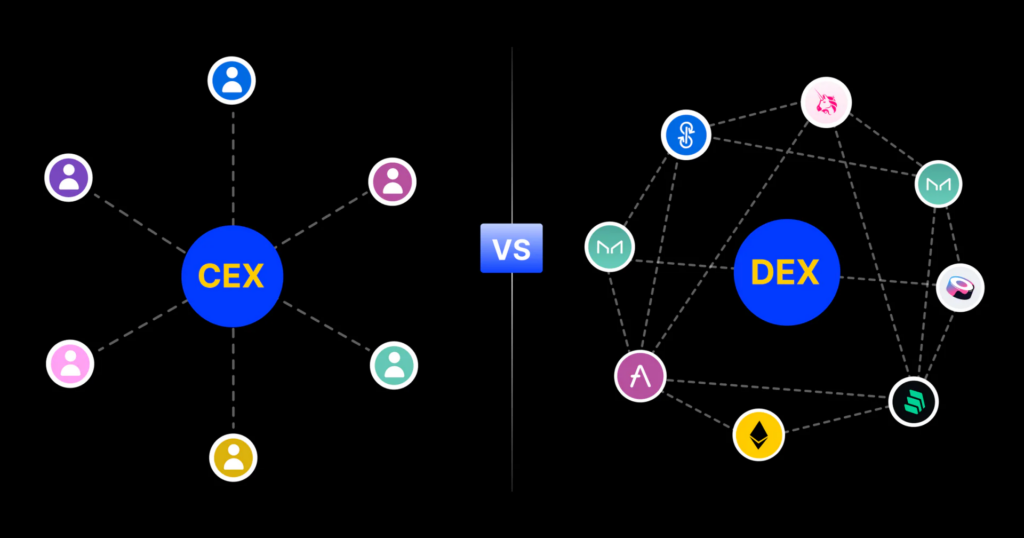
Future prospects for perpetual DEXs against CEXs indicate that decentralized trading will continue to expand and innovate. DEXs are anticipated to take a bigger chunk of leveraged trading volumes as traders place a higher priority on security, transparency, and non-custodial control.
DEXs will become more competitive as a result of cross-chain integrations and Layer-2 scaling solutions that further lower fees and speed up execution.
In order to keep users, centralized exchanges could use hybrid models that include decentralized elements. The market is generally moving toward a more decentralized, open, and creative trading ecosystem, albeit the rate of adoption will depend on the clarity of regulations.
Conclusion
By providing security, transparency, and worldwide accessibility that centralized exchanges like Binance and Bybit find difficult to match, perpetual DEXs have completely changed the landscape of leveraged trading. DEXs have drawn an increasing number of traders and liquidity because to their reduced fees, non-custodial control, and smooth DeFi interfaces.
Although there are still issues like regulatory ambiguity and smart contract hazards, there is no denying the trend toward decentralized trading. Perpetual DEXs’ emergence is indicative of a larger shift in the cryptocurrency market, as traders’ interactions with derivatives are becoming more and more influenced by innovation, community governance, and decentralization.
FAQ
What is a Perpetual DEX?
A Perpetual DEX is a decentralized exchange that offers perpetual contracts—derivatives without expiration dates—allowing users to trade with leverage while keeping full custody of their funds.
How is a CEX different from a DEX?
Centralized exchanges (CEXs) like Binance and Bybit hold users’ funds and manage order books centrally, while DEXs operate on-chain with smart contracts, giving users control over their assets.
Why are Perpetual DEXs gaining more volume than CEXs?
DEXs offer lower fees, on-chain transparency, global access without KYC, and integration with DeFi opportunities, attracting traders who value security, flexibility, and yield options.
Are Perpetual DEXs safe to trade on?
While non-custodial trading reduces exchange risk, smart contract vulnerabilities and liquidity risks exist. Using audited platforms and smaller leverage can mitigate these risks.
Can beginners use Perpetual DEXs?
Yes, but they need to understand wallet management, gas fees, liquidation mechanics, and leverage trading basics. Many DEXs are improving UX to simplify access.