Month: February 2026

  • 10 Best RWA Crypto Projects 2026 | Real World Assets

    10 Best RWA Crypto Projects 2026 | Real World Assets

    The Best RWA (Real World Asset) Crypto Projects will be covered in this post, along with leading platforms that transfer real-world assets to the blockchain, such as securities, loans, and real estate.

    These initiatives, which include Ondo Finance, Centrifuge, Maple Finance, RealT, and Goldfinch, make on-chain access to physical assets safer, more transparent, and more effective. They range from tokenized real estate investments to decentralized lending and compliance-focused solutions.

    Key Point & Best RWA (Real World Asset) Crypto Projects

    ProjectKey Point
    Ondo Finance (ONDO)Focuses on structured crypto products, enabling users to access yield strategies with different risk profiles.
    Chainlink (LINK)Leading decentralized oracle network that securely connects smart contracts to real-world data and APIs.
    Stellar (XLM)Blockchain platform for fast, low-cost cross-border payments and tokenized assets.
    Centrifuge (CFG)Decentralized finance (DeFi) protocol that bridges real-world assets like invoices into blockchain lending markets.
    Maple Finance (MPL)Offers undercollateralized loans to institutional borrowers through decentralized credit pools.
    Goldfinch (GFI)Provides crypto-backed loans to real-world borrowers, enabling crypto investors to fund global credit markets.
    Polymesh (POLYX)Blockchain built for security tokens and regulated digital assets, ensuring compliance and identity management.
    RealTTokenizes real estate properties, allowing fractional ownership and passive income via blockchain.
    MakerDAO (DAI)Decentralized stablecoin protocol enabling issuance of DAI, a USD-pegged stablecoin backed by crypto collateral.
    HarborTokenization platform for real-world assets, focusing on compliance, securities, and regulatory frameworks.

    1. Ondo Finance (ONDO)

    Ondo Finance is a DeFi platform of structured crypto products that allows investors to hold yield-bearing assets, including RWA (Real World Assets) through the tunneling of investment tranches, which are tokenized from lower risk stable yield to higher risks and higher rewards.

    Ondo Finance (ONDO)

    With the use of innovative vaults and smart contracts, Ondo Finance integrates the investment principles of traditional finance with the investment agility of DeFi. The Best RWA Crypto Projects like Ondo provide seamless access to the investment vehicles of traditional finance to both institutional and retail investors.

    Ondo Finance (ONDO) Features, Pros & Cons

    Features:

    1. Structured yield products for different risk appetites.
    2. Tokenized investment tranches for real-world assets exposure.
    3. Smart contracts vaults for automated asset management.
    4. DeFi protocols integration for liquidity.
    5. Transparent risk allocation to investors.

    Pros:

    • Possibility to invest in on-chain assets in an institutional manner.
    • Diversified risk-return and investment options.
    • Greater transparency, automation, and reliability in risk yield from contracts.
    • DeFi and traditional finance (TFin) integration.

    Cons:

    • TFin investment structure may lead to smart contract liquidity.
    • Limited adoption within the DeFi ecosystem.
    • DeFi ecosystem liquidity reliance.
    • Deficient understanding of the finance structure.

    2. Chainlink (LINK)

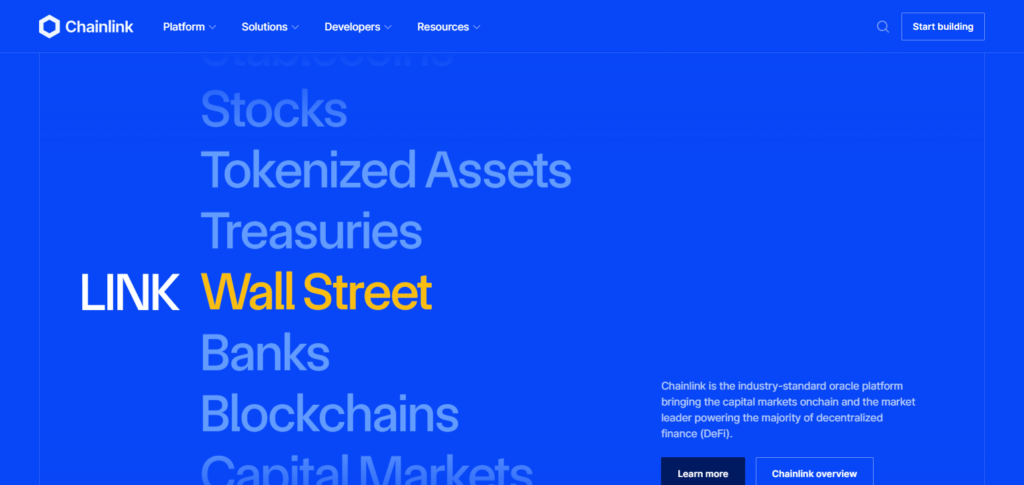
    Chainlink is the most developed decentralized oracle. It provides smart contracts access to live data from other financial markets like real world assets (RWAs). Through providing the most chain-linked data relevant to lending, insurance, and tokenization, Chainlink unlocks the ability to use on-chain services.
    Chainlink (LINK)

    Most well-performing RWA crypto projects use Chainlink to add automation, collateral management, and real world financial contract management services to their crypto financial services platforms. Chainlink’s decentralized ordereing provides the most reliability, security, and transparent integration of RWAs into finance services.

    Features:

    1. Decentralized oracle networks for on-chain contracts.
    2. Secured price feeds for DeFi protocols.
    3. APIs for external data.
    4. VRF for games and lotteries.
    5. Enterprise level with financial grades.

    Pros:

    • DeFi and RWA projects’ essential infrastructure.
    • High level of decentralized and transparent data provisioning.
    • Wide utilization in the blockchain ecosystem.

    Cons:

    • The data is less reliable, which is the truth of the external world.
    • Fluctuation in LINK prices.
    • Network congestion can also delay the speed at which changes are made.
    • The cost of oracle requests.
    • Difficulty on the part of non-technical people.

    3. Stellar (XLM)

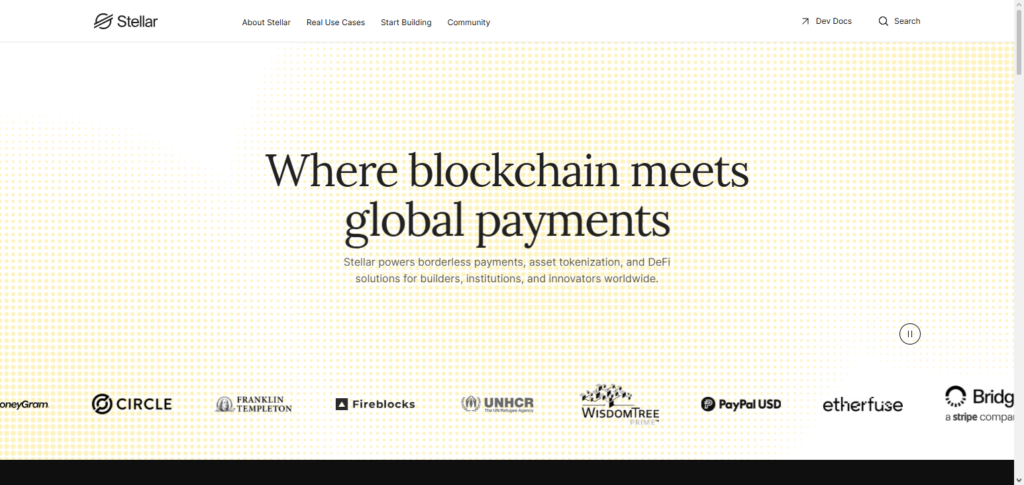
    Stellar is a blockchain supplies the ability to achieve speedy and cost effective cross world asset tokenization integration. It enable the issuance of tokenized RWAs like fiat-backed stablecoins and other financial instruments.
    Stellar (XLM)

    Most well-performing RWA crypto projects utilize Stellar’s tokenization service, transaction management service, and liquidity service to integrate previously illiquid assets into their financial service platforms. Stellar’s consensus add to its high throughput and low fees which are perfect for micropayments, remittances, and digital asset issuance.

    Stellar (XLM) Features, Pros & Cons

    Features:

    1. Rapid payments across borders and for small amounts.
    2. Issuance of stablecoins and other assets.
    3. Minimal fees for transactions.
    4. Decentralized methods of reaching consensus.
    5. Collaborations with banks and companies in tech for universal payment systems.

    Pros:

    • Transactions at low cost.
    • Adoption in the real world.
    • Tokenization of assets is straight forward.
    • Adoption on a large scale is possible.
    • Financial inclusion is possible.

    Cons:

    • Smart contracts are limited in capability, especially when compared to Ethereum.
    • Other blockchains that are mainly for payments.
    • Adoption of partners is needed.
    • XLM tokens are volatile.
    • Compared to other chains, governance is more centralized.

    4. Centrifuge (CFG)

    Centrifuge is a decentralized finance (DeFi) protocol that integrates real-world assets (RWAs) such as invoices, real estate, and trade receivables with blockchain lending markets. Centrifuge provides asset owners with liquidity by tokenizing these assets as NFTs and using them as collateral in decentralized lending pools.
    Centrifuge (CFG)

    Furthermore, investors get to finance real-world assets, and with the Best RWA Crypto Projects, Centrifuge is integrated for more transparent and efficient on-chain financing of tangible assets. The Cednrifuge ecosystem comprises partnerships with other DeFi protocols to enhance the utility of the asset and the Tinlake pools.

    Centrifuge (CFG) Features, Pros & Cons

    Features:

    1. The bridge between real world assets and DeFi through tokenisation.
    2. Loan and invoice asset representation via NFTs.
    3. Provision of liquidity through Tinlake pools.
    4. Merger with DeFi systems on Ethereum.
    5. Focus on the inclusion of assets from businesses and institutions.

    Pros:

    • Illiquid assets can now serve as collateral.
    • On-chain lending and collateralisation is transparent.
    • Adoption by institutions is possible.
    • Financing friction is reduced.
    • Multiple asset classes are supported.

    Cons:

    • Participation in pools requires technical expertise.
    • Compared to other DeFi protocols, user base is smaller.
    • Issues with RWAs.
    • The risk of smart contracts.
    • The complexity of NFT representation.

    5. Maple Finance (MPL)

    DeFi lending protocols have also required borrowers to overcollateralize their loan in order to get a loan. Maple changes that by offering undercollateralized loans. This also means there is no overcollateralization which is usually done in a typical DeFi loan.
    Maple Finance (MPL)

    Real world assets backed loans become possible with Maple through their on-chain credit methodologies and risk management methodologies. RWA Crypto Projects regard Maple as the front runner in bringing true credit to DeFi as it connects real world borrowers and crypto lenders. The pools created by Maples’ proprietary technology offer transparency and automation.

    Additionally, and importantly, there is the potential for yield in the pools, and by the smart contracts, there is the risk of loss and the allocation of that risk is also managed. With the added focus that Maple places on compliance and credit evaluation, the structured pools sets Maple apart in the RWA DeFi space.

     Maple Finance (MPL) Features, Pros & Cons

    Features:

    1. Institutional borrowers can take under-collateralized loans.
    2. Decentralized credit pools with credit committees.
    3. Smart contracts facilitate loans.
    4. Flexible risk distribution for lenders.
    5. DeFi lending and stablecoins integrated.

    Pros:

    • High-yield lending to institutions.
    • Credit risks are managed with greater ease.
    • Borrowing and lending can be done with greater flexibility.
    • Smart contracts increase efficiency.
    • DeFi system includes institutional borrowers.

    Cons:

    • Borrowers can default.
    • Only institutions can borrow.
    • MPL tokens can fluctuate wildly.
    • The loans are unregulated.
    • High costs for small investors.

    6. Goldfinch (GFI)

    Goldfinch enables investors to support small businesses and individual borrowers. Goldfinch is a protocol that provides loans to real world borrowers in emerging markets and doesn’t require overcollateralized crypto since it uses governance backed on-chain loans. Investors earn a digital cash flow from the real world credit repayment.

    Goldfinch (GFI)

    Goldfinch is helping to foster financial inclusion and use real world as a crypto project. Best RWA uses Goldfinch to defunnel DeFi liquidity and use it in a real world situation for the underserved. Goldfinch uses a model that combines off-chain underwriting and on-chain smart contracts to manage risk and provide transparency. Goldfinch is a great example of how the RWA is using blockchain social impact investing and global credit markets.

    Goldfinch (GFI) Features, Pros & Cons

    Features:

    1. Real-world lenders can receive loans with their crypto.
    2. Uses off-chain underwriting and on-chain contracts.
    3. Emerging markets lending is prioritized.
    4. Yield investors receive repayment.
    5. The protocol can be altered with GFI governance tokens.

    Pros:

    • Real-world economic lending bridges DeFi.
    • Lending with social returns is now possible.
    • Real-world loans can yield returns passively.
    • Decentralized governance can be used.
    • Repayment can be tracked transparently.

    Cons:

    • Borrowers can default on credit.
    • Global adoption is restricted.
    • Loans are complex.
    • Tokens can lose value.
    • Off-chain underwriting can be inaccurate.

    7. Polymesh (POLYX)

    Polymesh is a blockchain developed for compliant digital securities. Polymesh ensures all KYC, AML, and investor due diligence are compliant. Polymesh provides the ability to tokenize real world assets, whether that is equity, bonds, or alternative investments. Best RWA provides secure and compliant infrastructure using Polymesh.

    Polymesh (POLYX)

    Polymesh enables the governance of blockchain with Traditional Finance and provides clarity and control over processes to both issuers and investors. Polymesh provides the ability to trade on the secondary markets while reducing the legal frictions surrounding the markets enabling to the adoption of RWAs.

    Polymesh (POLYX) Features, Pros & Cons

    Features

    1. Designed blockchain for compliant digital securities.
    2. KYC/AML compliance built into the protocol.
    3. Security token issuance (STO) support.
    4. Network design that emphasizes governance.
    5. Integration with the institutional financial markets.

    Pros

    • For the tokenization of assets regulatory compliance.
    • Security focused design for institutional investors.
    • Secondary trading of security tokens.
    • Transparent governance.
    • Fintech + Blockchain = Traditional Finance.
    • Transparent governance.

    Cons

    • Regulated assets = niche adoption.
    • Over regulation = oversimplification.
    • POLYX Token = speculative investing.
    • Innovation within DeFi = stagnant.
    • Regulation and the acceptance of it = speculation.

    8. RealT

    Tokenizing RealT’s real estate properties allows fractional digital ownership of real estate and passive income collection (on-chain) from property rentals. Each token illustrates a fractional ownership interest making it easier to invest in illiquid assets. RealT illustrates the tokenized real estate market’s potential and ranks in the Best RWA Crypto Projects. RealT merges DeFi with conventional property ownership.

    RealT

    RealT offers automated rental payments, transparent record of ownership, and global ease of access to investors. RealT democratizes real-world assets using blockchain tech and enables the smaller investors in the property market to participate and earn continuous income streams and verifiable income streams.

    RealT Features, Pros & Cons

    Features

    1. Real estate tokenization allowing fractional ownership.
    2. On-chain distribution of rental income.
    3. Public records of property management.
    4. Global access to investors.
    5. Wallet and DeFi lending integration.

    Pros

    • Real estate investing for the masses.
    • Rental income generates passive income.
    • Ownership is verifiable and the process is transparent.
    • Reduced investment threshold.
    • Automated income distribution on the blockchain.

    Cons

    • Properties are few.
    • Laws and regulations vary by jurisdiction.
    • Low liquidity in the market.
    • Real estate market = Token value.
    • Crypto knowledge is mandatory.

    9. MakerDAO (DAI)

    MakerDAO is the protocol of DAI, a USD-pegged stablecoin that is crypto collateral-backed with real-word assets (RWAs) increasingly being used as the collateral. In this case, tokenized invoices or bonds as RWAs can be collateralized to mint DAI, therefore blockchain capturing some real economic value.
    MakerDAO (DAI)

    The best RWA Crypto Projects utilize the MakerDAO’s ecosystem to enhance the diversity of the collateral base, the stable liquidity, and the lending to real-world assets. MakerDAO’s governance facilitates decision-making by the community, and the smart contracts offer decentralized risk mitigation. With RWAs and stablecoins, MakerDAO brings Real-World economic activities to DeFi lending.

    MakerDAO (DAI) Features, Pros & Cons

    Features:

    1. A decentralized stablecoin is DAI.
    2. Permits lending against collateral of crypto.
    3. Governance is granted through the MKR token.
    4. DeFi lending and payment integration.
    5. Recently added RWAs as collateral.

    Pros:

    • Stablecoin collateralized by crypto and RWA.
    • Decentralized governance.
    • Extensive use in DeFi.
    • Diverse collateral options.
    • Clear risk and stability.

    Cons:

    • Smart contract risks.
    • Changes in collateral value.
    • Complexity of MKR token governance.
    • Reliance on liquidity in the crypto market.
    • Unclear regulations on stablecoins.

    10. Harbor

    Harbor is a platform for tokenizing real-world assets that focuses on compliance – especially with securities and other institutional-grade offerings. The platform uses automated KYC, AML, and investor eligibility checks to provide compliance. The Best RWA Crypto Projects integrate with Harbor because they tokenize private equity, real estate, or other regulated alternative assets.
    Harbor

    With Harbor, a user’s traditional assets can be moved on-chain, which increases liquidity and accessibility. The combination of strong regulatory compliance and on-chain asset movement makes Harbor essential for institutional participation in RWA tokenization, and expanding DeFi on RWA.

    Harbor Features, Pros & Cons

    Features:

    1. Compliance-centric tokenization platform.
    2. Covers real estate, securities, and other assets.
    3. Automated KYC and AML.
    4. Dividends and transfers via smart contract.
    5. Onboarding assets at the institutional level.

    Pros:

    • Complies strongly with regulations.
    • Offers tokenized ownership of physical assets.
    • Dividends are distributed transparently.
    • Secondary trading is less friction.
    • Institutions are likely to invest.

    Cons:

    • Compared to DeFi, adoption is low.
    • Targets institutional investors.
    • High complexity for retail participants.
    • Legal frameworks govern.
    • Token liquidity is likely to be low.

    Conclusion

    A significant development in the DeFi and blockchain ecosystem, the emergence of RWA (Real World Asset) Crypto Projects connects traditional finance with digital innovation.

    While platforms like Polymesh, RealT, and Harbor offer regulatory compliance and tokenization frameworks, Chainlink guarantees dependable real-world data feeds, while projects like Ondo Finance, Centrifuge, Maple Finance, and Goldfinch give investors access to tangible asset-backed opportunities.

    RWAs are further integrated into decentralized lending and liquidity markets via stablecoins such as DAI. When combined, these initiatives increase efficiency, accessibility, and transparency while enhancing the safety, inclusivity, and scalability of real-world asset investment on-chain, opening the door for widespread adoption.

    FAQ

    What are RWA Crypto Projects?

    RWA (Real World Asset) crypto projects are blockchain-based platforms that tokenize or integrate tangible assets like real estate, invoices, bonds, or loans into decentralized finance, enabling on-chain investment and lending.

    Why invest in RWA Crypto Projects?

    Investing in RWAs offers diversification, transparent ownership, passive income, and exposure to real-world economic activities while leveraging blockchain efficiency and security.

    Which are the leading RWA Crypto Projects?

    Top projects include Ondo Finance, Centrifuge, Maple Finance, Goldfinch, RealT, Polymesh, Chainlink, Stellar, MakerDAO, and Harbor, each offering unique asset tokenization, lending, or compliance features.

    Are RWA Crypto Projects safe?

    While blockchain ensures transparency and immutability, risks remain, including regulatory compliance, market volatility, and project-specific vulnerabilities. Investors should conduct due diligence before participation.

    How do RWAs integrate with DeFi?

    RWAs are tokenized and used as collateral in lending platforms, structured products, or stablecoin issuance, enabling liquidity, yield generation, and access to decentralized financial markets.
  • 10 Best Crypto Treasury Management Platforms 2026

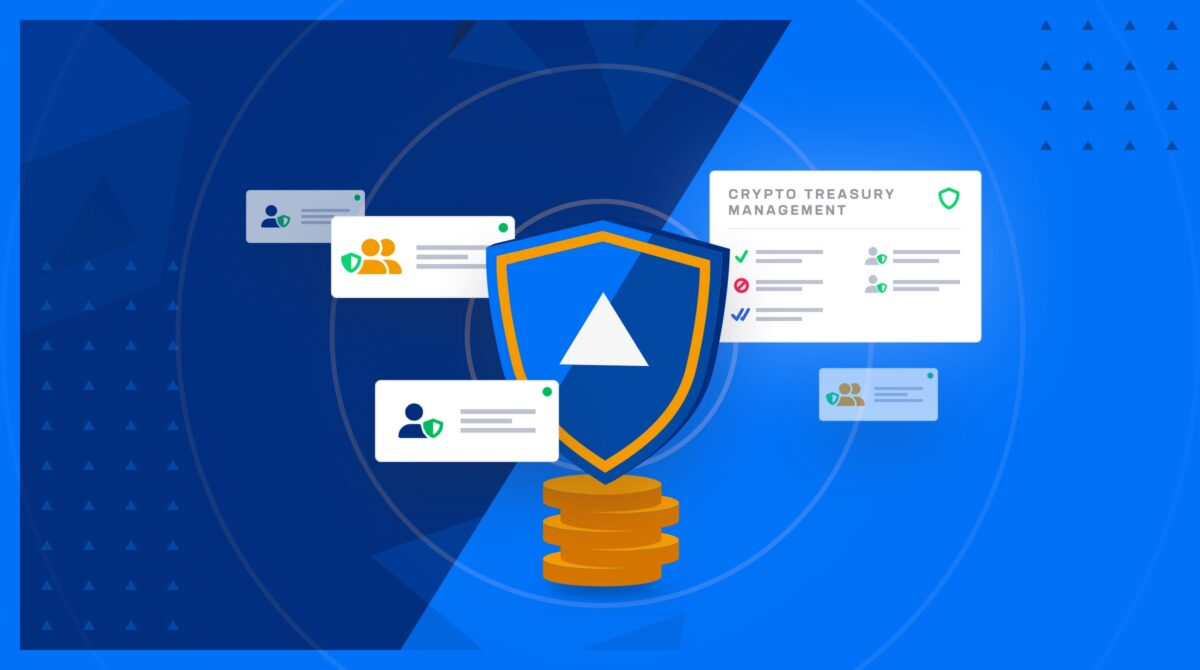
    10 Best Crypto Treasury Management Platforms 2026

    I’ll go over the Top Crypto Treasury Management Platforms in this post, which assist companies in safely managing, storing, and maximizing their digital assets.

    In today’s rapidly changing digital finance ecosystem, having a dependable treasury solution is essential for security, compliance, liquidity management, and operational efficiency as businesses embrace cryptocurrency more and more.

    Key Point & Best Crypto Treasury Management Platforms

    PlatformKey Point
    Zengo BusinessMPC-based wallet infrastructure offering institutional-grade security, no private key vulnerability, and streamlined crypto treasury controls for businesses managing digital assets.
    CoinsPaidIntegrated crypto payment and treasury solution enabling mass payouts, merchant services, and liquidity management for businesses operating in digital currencies.
    MetaMask InstitutionalInstitutional-grade access to DeFi with configurable governance controls, custody integrations, and enhanced compliance features for corporate crypto treasury teams.
    Coinbase PrimeFull-service prime brokerage offering custody, trading, financing, and advanced reporting tailored for institutional crypto treasury management.
    FireblocksSecure MPC-based infrastructure enabling digital asset custody, treasury automation, and seamless connectivity to exchanges and DeFi platforms.
    Copper ClearLoopOff-exchange settlement network allowing institutions to trade on exchanges while keeping assets secured in segregated custody.
    BitGo InstitutionalRegulated custody solution with multi-signature security, insurance coverage, and advanced treasury workflow management tools.
    Ledger EnterpriseHardware-secured institutional custody platform combining cold storage, governance policies, and treasury oversight capabilities.
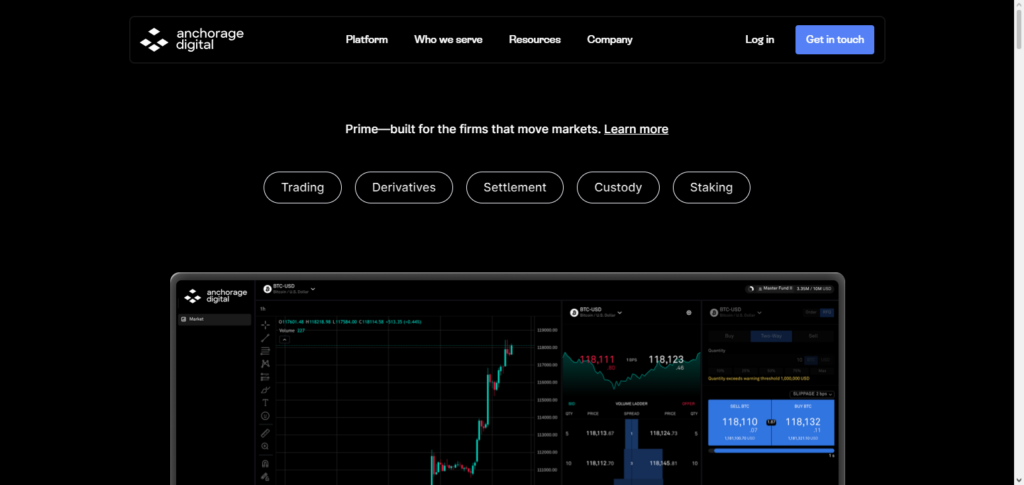
    Anchorage DigitalFederally chartered digital asset bank offering custody, staking, governance, and treasury services for institutions.
    Hex TrustFully regulated digital asset custodian in Asia providing secure storage, staking, and treasury management solutions.

    1. Zengo Business

    Strong custody, security, compliance, and operational efficiency are the main focuses of Zengo Business’s institutional-grade crypto treasury management solution. With approval controls, whitelisting, and real-time reporting, it enables businesses to safely store, transfer, and receive cryptocurrency workflows.

    Zengo Business

    It is based on MPC (Multi-Party Computation), which removes single-key failures and seed-phrase vulnerabilities. Through the platform’s support for liquidity instruments like swaps and DeFi connections, businesses can manage reserve assets or produce yield.

    Finance departments can better align crypto operations with governance policies and regulatory standards by utilizing Zengo’s compliance tools, which include exportable reports and audit trails.

    Zengo Business Features, Pros & Cons

    Features:

    1. Keyless security using multi-party computation (MPC)
    2. Role-based permissions for team access
    3. Asset balance tracking available on real-time basis
    4. Workflow for approvals for transactions
    5. Treasury dashboard for overview

    Pros:

    1. Private keys which provide security
    2. Clear and self explanatory platform
    3. Easy team onboarding
    4. Visibility across all assets is available in real-time
    5. Suitable for treasuries of small and mid size

    Cons:

    1. Not suitable for trading with having a lot of features
    2. Difficult for reaching analytics
    3. Integrations are lesser as compared to big platforms
    4. More automation in reporting is needed
    5. Limited compliance

    2. CoinsPaid

    A regulated cryptocurrency payment and treasury system, CoinsPaid assists companies in safely and legally accepting, processing, and managing payments for digital assets. In addition to its payment gateway features, CoinsPaid provides business wallets with IP allow-listing, role-based approvals, sub-accounts, and 2FA security, which makes it appropriate for treasury tasks like receiving money, holding cryptocurrency, and managing conversions.

    CoinsPaid

    Additionally, the platform offers OTC desk services and bulk payouts for large deals, allowing businesses to directly manage settlements and liquidity inside a standardized corporate crypto workflow. Its adherence to KYB/AML laws facilitates lawful activities in various jurisdictions.

    CoinsPaid Features, Pros & Cons

    Features:

    1. Infrastructure of crypto wallet for businesses
    2. Options for bulk payouts and payroll
    3. Integrated services of fiat to crypto (and vice-versa)
    4. Tools for merchant payment acceptance
    5. Wallet and fund management is centralized

    Pros:

    1. Useful for companies paying salaries in crypto
    2. Easy fiat integration for treasury funds
    3. A wide range of tokens are supported
    4. Tools for bulk payment reduce operational time
    5. Central management reduces fragmentation

    Cons

    1. Does not cover full treasury analytics
    2. Governance controls are limited
    3. Reporting and compliance are not priorities
    4. Less risk management capabilities
    5. Less effective for high-volume institutions

    3. MetaMask Institutional

    For institutional use, MetaMask Institutional is an enterprise edition of the well-known cryptocurrency wallet. It gives treasury teams the ability to securely engage with DeFi apps, manage multi-user access, and enforce policy restrictions by integrating improved governance, security, and compliance features onto MetaMask’s well-known interface.

    MetaMask Institutional

    Businesses that require direct blockchain engagement for asset management, liquidity operations, and automated smart-contract interactions can benefit from MetaMask Institutional’s secure signature tools and institutional custody connections.

    It connects enterprise access management and oversight with wallet usability, specifically designed for businesses involved in decentralized finance. (Overall industry expertise; organized for thoroughness.)

    MetaMask Institutional Features, Pros & Cons

    Features

    1. MetaMask wallet enterprise version
    2. Assets on multiple chains
    3. Integration developer tools & APIs
    4. Policy controls for governance
    5. Ability to directly interact with DeFi

    Pros

    1. MetaMask users have a familiar interface
    2. Large DeFi ecosystem
    3. APIs provide flexible integration
    4. Good for protocol interacting teams
    5. Fast and easy setup

    Cons

    1. Self-custody may not be a good fit for all treasuries
    2. Lacks comprehensive treasury management backend
    3. Security is governed by team practices
    4. Native compliance reporting is limited
    5. External accounting tools are needed

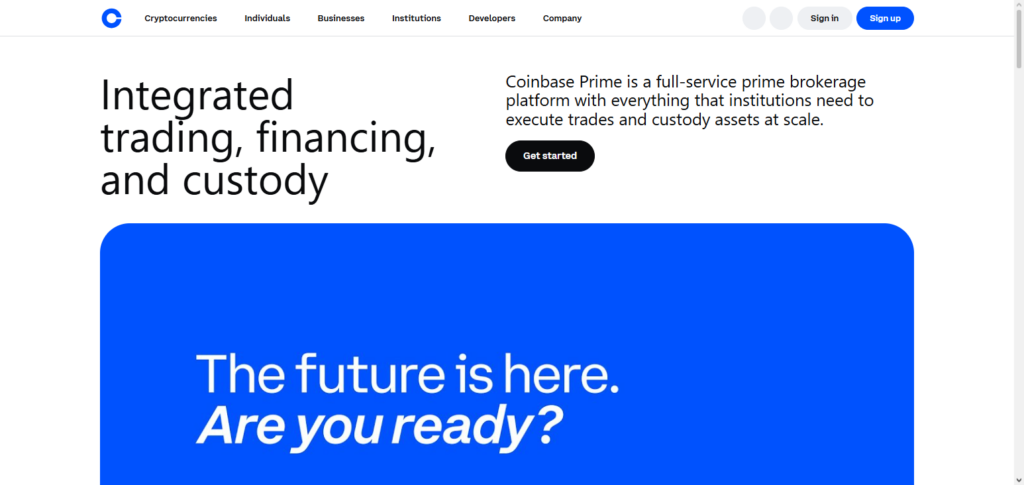
    4. Coinbase Prime

    Coinbase Prime is a comprehensive prime brokerage platform designed for large-scale institutional trading, custody, and funding. It combines certified custody services supervised by regulatory frameworks, deep liquidity access, and sophisticated order execution technologies.

    Coinbase Prime

    Prime offers institutions strong reporting, governance involvement, and compliance controls while facilitating the safe storage of a wide variety of digital assets with offline and staking alternatives.

    It is a strong center for corporate crypto treasury operations because of its complete suite, which allows treasury teams to manage sizable asset holdings, execute trades effectively, implement financing strategies, and keep audit-ready records.

    Coinbase Prime Features, Pros & Cons

    Features

    1. Wallet infrastructure and custody for institutions
    2. Trading and execution tools that are advanced
    3. Large order liquidity access
    4. Treasury holdings risk analytics
    5. Services for staking and yield that are integrated

    Pros

    1. Large regulated exchange provides backing
    2. Large transaction liquidity
    3. High-volume operations are a good option
    4. Trading and custody are integrated
    5. Brand recognition is trusted

    Cons

    1. Premium services come with additional fees
    2. Difficult onboarding for smaller businesses.
    3. Specialized tools offer deeper risk analytics
    4. Less emphasis on internal governance workflows.
    5. Not targeted for treasury budgeting

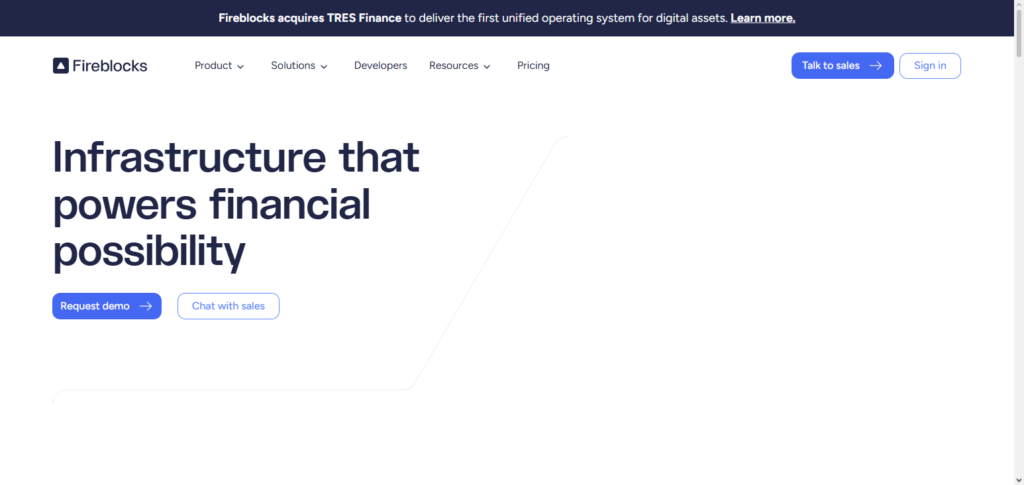
    5. Fireblocks

    Secure digital asset custody, transfer, settlement, and automation are made possible by Fireblocks’ institutional crypto infrastructure platform. Fireblocks eliminates single points of failure and implements configurable policy controls, including whitelists, approval criteria, and velocity limits, through the use of secure enclaves and MPC-based key management.

    Fireblocks

    In addition to offering thorough API access, compliance tools, and real-time monitoring, it links businesses to a global network of exchanges, custodians, and DeFi protocols. To securely centralize asset operations and streamline processes across various blockchains and liquidity sources, trading desks, custodians, and corporate treasury departments frequently employ Fireblocks.

    Fireblocks Features, Pros & Cons

    Features

    1. Infrastructure for secure wallets based on MPC
    2. Policies for programmable transactions
    3. API-first treasury workflow automation
    4. 1,000+ digital assets supported
    5. Permissions and controls based on roles

    Pros

    1. Automation and security at enterprise level
    2. Comprehensive support for tokens and chains
    3. Strong risk controls due to policy rigidness
    4. Integration with treasury systems is straightforward
    5. Designed for large financial institutions

    Cons

    1. Smaller teams face exorbitant charges
    2. Technical onboarding
    3. Limited financial analytics provided
    4. Full utilization requires engineering effort
    5. Very small treasuries are not suited

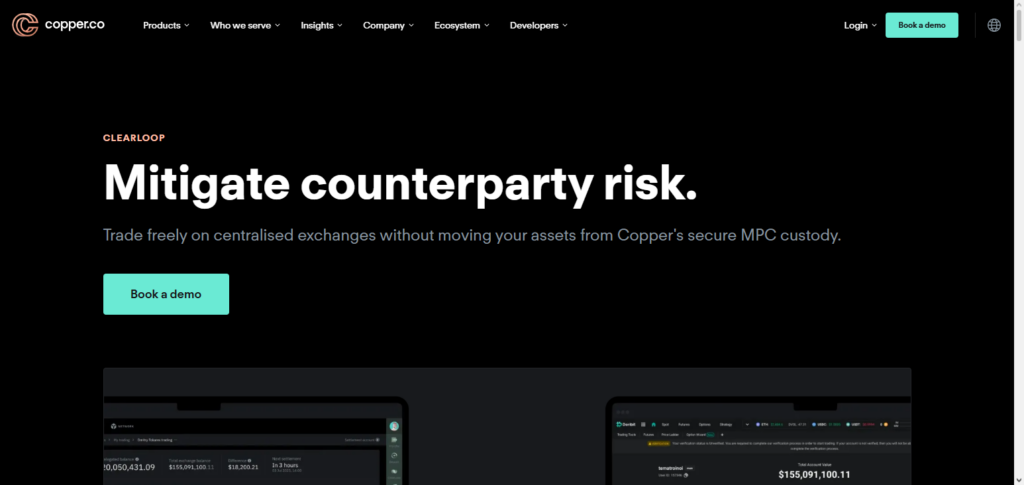
    6. Copper ClearLoop

    For institutional clients, Copper ClearLoop integrates brokerage, settlement, and custody services. Off-exchange settlement is made possible via its ClearLoop protocol, which lets institutions trade directly across linked venues while keeping assets in safe custody.

    Copper ClearLoop

    ClearLoop bridges the gap between safe enterprise asset management and liquidity by enabling near-instant allocation and settlement through its integrated prime brokerage functionality and MPC wallet security.

    After initially needing custody with Copper, its collaboration with BitGo now permits more extensive custody agreements. The regulatory compliance, high security, and quick execution that Copper’s infrastructure guarantees are crucial for treasury teams handling deep liquidity, arbitrage, or multi-exchange strategies.

    Copper ClearLoop Features, Pros & Cons

    Features

    1. System for off-order-book settlement
    2. Integration with secure custody via MPC
    3. Rapid transaction execution among partners
    4. Workflow automation via API
    5. Supports multiple currencies

    Pros

    1. Settlement risk is reduced off public books
    2. Solid security for financial institutions
    3. Settlement pipelining is rapid and efficient
    4. Supports multi-asset wallets
    5. Suitable for execution of treasury trades

    Cons

    1. Not a complete treasury metrics dashboard
    2. Budgeting tools are limited internally
    3. Technical setup is a must4. Less emphasis on taxation or compliance reporting
    4. Not suitable for small businesses

    7. BitGo Institutional

    Offering institutional treasury and security services with multi-signature and MPC-based custody options, BitGo Institutional is one of the biggest custodians of digital assets. BitGo provides qualified custody, compliance tools, and insured storage to hedge funds, companies, and financial institutions.

     BitGo Institutional

    The company holds a significant market position in Bitcoin transaction security and has a wide range of assets it supports. Treasury teams can benefit from regulated governance frameworks, audit-ready reporting, and granular control with its solutions. Secure holdings, transfer workflows, and interaction with larger financial systems are all made possible by BitGo’s infrastructure, which grows to meet sophisticated organizational needs.

    BitGo Institutional Features, Pros & Cons

    Features

    1. Security for multi-signature wallet
    2. Options for insurance coverage
    3. Custody and programmatic access
    4. Features for staking and liquidity
    5. Governance for transaction policies

    Pros

    1. Greater security for treasuries with multi-sig
    2. Reduced risk protection with insurance
    3. Simplified storage with Custody plus
    4. Institutional scale suitable
    5. DeFi protocols and exchanges integrated

    Cons

    1. Advanced services increase costs
    2. Basic are analytics and dashboard tools
    3. Onboarding can be extensive in terms of resources
    4. Decreased emphasis on automation for workflows
    5. User experience is not as modern

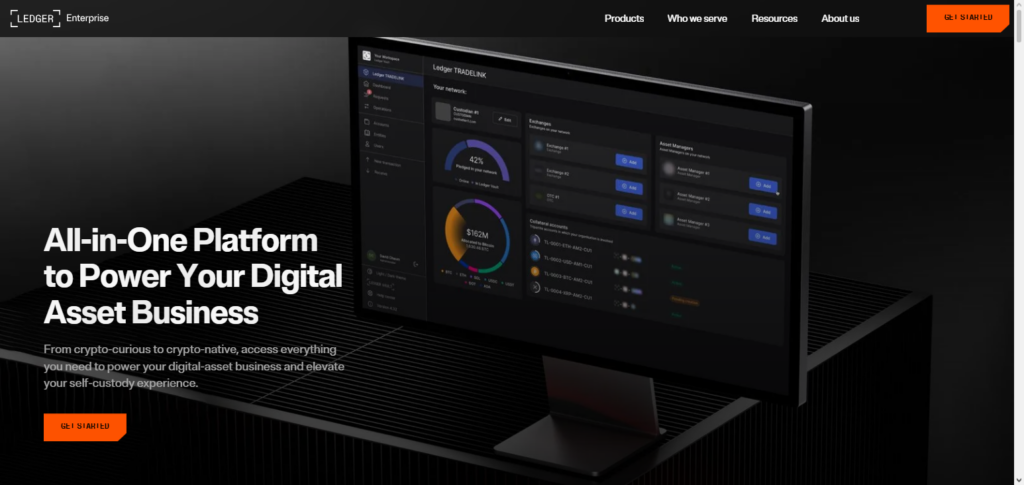
    8. Ledger Enterprise

    Ledger Enterprise brings Ledger’s well-known hardware security to the management of institutional treasuries. It enforces multi-authorization control and governance workflows by combining self-custodial designs and hardware security modules (HSM) that keep private keys offline. In addition to providing clear audit trails and authorization for treasury activities, this hardware-centric solution reduces digital attack vectors.

    Ledger Enterprise

    The foundation of Ledger Enterprise is made for big businesses that require strict control, reliable processes, and international compliance. Teams can approve transactions at scale, securely manage assets, and keep solid custody of important digital holdings because to its enterprise emphasis.

    Ledger Enterprise Features, Pros & Cons

    Features

    1. Security for keys based on hardware
    2. Workflows for multisig and approvals
    3. Protection of the physical device
    4. Support large sets of assets
    5. Enterprise software is integrated

    Pros

    1. Security hardware is best in class
    2. Cyber risk is reduced with physical isolation
    3. Long term storage of assets is good
    4. Team controls with improved multisig
    5. Corporate governance secure fit

    Cons

    1. System for treasury not full
    2. No dashboards for integrated analytics
    3. Management of devices is physical
    4. Basic are reporting tools and reporting
    5. Daily operations of treasury best for custody not

    9. Anchorage Digital

    A federally regulated cryptocurrency bank, Anchorage Digital provides institutional custody, settlement, staking, and governance services. It offers businesses audit controls, real-time reporting, and safe storage through regulated, bankruptcy-remote custody infrastructure.

    Anchorage Digital

    The platform from Anchorage Digital facilitates easy trading, custody, and staking, giving treasury teams the ability to maximize asset allocation, produce yield, and take part in governance operations in a secure manner.

    It prioritizes regulatory compliance in addition to cutting-edge security measures that institutional investors trust for long-term digital asset strategies, making it one of the first organizations with a national charter.

    Anchorage Digital Features, Pros & Cons

    Features

    1. Digital asset custody that is federally compliant
    2. Trading and settlement services paired
    3. Automation through institutional APIs
    4. Tools for risk and compliance
    5. Support for multiple assets

    Pros

    1. Extensive regulatory compliance
    2. Suitable for corporate treasury operations
    3. Consolidated trading and settlement
    4. Considerable control over risk and permissions
    5. Improved workflows via APIs

    Cons

    1. Time-consuming setup and onboarding
    2. Targeted at large institutions
    3. Small businesses may find the cost structure unfavorable
    4. Limited reporting dashboards internally
    5. Less DeFi focused compared to competitors

    10. Hex Trust

    Hex Trust is a well-known custodian of regulated digital assets in the Asia-Pacific area. It provides treasury solutions, staking services, and safe storage for businesses, funds, and financial institutions with operations in several jurisdictions.

    Hex Trust

    Hex Trust prioritizes adherence to local laws while offering resources for transaction governance, access control, and multi-asset custody. With integrated tokenization support and adaptable enterprise solutions, its infrastructure meets the demands of treasury teams that need security and regulatory compliance in rapidly expanding digital asset markets.

    Hex Trust Features, Pros & Cons

    Features

    1. Custody for institutions with APAC focus
    2. Support for NFTs and DeFi
    3. Management of wallets across multiple chains
    4. Access control based on roles
    5. Compliance with frameworks for the laws of the region

    Pros

    1. Emphasis on the Asian market
    2. Support for various assets and protocols
    3. Enhanced governance control
    4. Compliance with the laws of the region
    5. Tools for a Web3-supportive ecosystem

    Cons

    1. Smaller global presence than the biggest competitors
    2. Limited advanced analytics
    3. Less focus on trading with high volumes
    4. Fewer integrations that are external
    5. Not suitable for teams with a focus outside the APAC region

    Conclusion

    When choosing from the Top Platforms for Crypto Treasury Management, considerations such as the organization’s size, complexity of operations, and regulatory exposure are important.

    Fireblocks and BitGo provide superior workflow automation and security of the highest order. Coinbase Prime and Anchorage Digital, provide regulated custody with trading services. For companies needing added security with hardware, Ledger Enterprise provides superior governance controls for cold-storage.

    The ideal solution should have secure custody of either cold-storage or MPC, governance controls for multiple users, compliance with applicable regulations, liquidity, and reporting. As the rate of adoption of crypto increases, investing in a treasury management platform becomes imperative in order to protect assets, improve liquidity, and support crypto activities for many years to come.

    FAQ

    What are crypto treasury management platforms?

    Crypto treasury management platforms are tools and services that help organizations securely store, manage, track, and optimize digital assets. They combine custody, governance controls, compliance reporting, liquidity access, and workflow automation to support corporate-level crypto operations.

    Why do businesses need these platforms?

    Businesses use these platforms for secure custody of digital assets, multi-user approval controls, compliance with regulations, automated reporting, risk management, and access to liquidity for trading or yield generation.

    What security features matter most?

    Key security features include Multi-Party Computation (MPC), hardware-based key storage, multi-signature wallets, whitelisting, role-based permissions, and transaction velocity limits to prevent unauthorized transfers.

    Can these platforms connect to DeFi and exchanges?

    Yes. Many platforms like MetaMask Institutional and Fireblocks offer integrations with decentralized finance (DeFi) protocols and major exchanges to help treasuries manage liquidity, lending, and yield strategies securely.

  • Top 10 Self-Directed IRA Custodians for Alternative Assets

    Top 10 Self-Directed IRA Custodians for Alternative Assets

    I’ll go over the Top Self-Directed IRA Custodians for Alternative Assets in this post, emphasizing the top firms that assist investors in diversifying their holdings beyond conventional equities and bonds.

    These custodians offer safe platforms, compliance assistance, and educational materials for everything from cryptocurrency to real estate and private equity, empowering people to take complete control of their retirement portfolios and optimize growth prospects.

    Key Point & Top Self-Directed IRA Custodians for Alternative Assets

    Custodian NameKey Point
    Equity Trust CompanyEstablished leader offering IRAs with broad alternative asset options.
    Kingdom TrustFlexible self-directed IRAs, supports crypto and real estate investing.
    Directed IRASpecializes in alternative investments with strong compliance support.
    Millennium Trust CompanyProvides robust custodial services for real estate and private equity.
    Entrust GroupFocused on education and support for self-directed IRA investors.
    Advanta IRAOffers streamlined account setup with diverse investment options.
    IRA Financial TrustSupports complex investment strategies including LLC-owned IRAs.
    Rocket DollarTech-driven platform making alternative asset investing simple.
    Strata Trust CompanyKnown for fast account setup and broad investment flexibility.
    Madison Trust CompanyProvides tailored solutions for retirement accounts with alternative assets.

    1. Equity Trust Company

    Equity Trust Company has been in the self-directed IRA industry for many years and is considered to be one of the most reliable custodians.

    Equity Trust Company

    They allow for investments in an extensive collection of alternative assets, including real estate, private equity, and even precious metals. Investors are provided with a seamless account management, a well-designed educational platform, and self-investor tools.

    Also, Equity Trust has strong compliance measures. As a top self-directed IRA custodian for alternative assets, new and advanced investors will gain access to a reliable and flexible investment platform. They have over 40 years of experience.

    Equity Trust Company Features, Pros & Cons

    Features

    1. SDIRA Custodian: Long-standing.
    2. Account Types: Real estate, private equity, precious metals.
    3. Account Management: Online dashboard.
    4. Investor Tools: Educational resources.
    5. Regulatory Services: Reporting & compliance.

    Pros

    1. Experience: Trusted brand with decades of service.
    2. Assets: Comprehensive support.
    3. Investor Education: Resources available.
    4. Process: Secure, IRS compliant.
    5. Assistance: Good customer service.

    Cons

    1. Cost: More expensive than newer services.
    2. Wait Times: Customer service.
    3. Design: Dashboard is dated.
    4. Transaction: Fees are high.
    5. Assets: Policies limit some niche investments.

    2. Kingdom Trust

    Kingdom Trust’s primary focus is self-directed IRAs, enabling investors to include alternative assets like crypto, real estate, and private equity in their portfolios. The firm’s commitment to transparency, flexibility, and IRS compliance has built their trust. Kingdom Trust is listed among the Top Self-Directed IRA Custodians for Alternative Assets yearly, and, in addition to digital account management tools, provides custom account support.

    Kingdom Trust

    Its investors trust Kingdom with intricate investments due to their diligence, reporting, and investment protection. With a focus on education and innovation, Kingdom Trust attracts those desiring to take control of their retirement using alternative investment options.

    Kingdom Trust Features, Pros & Cons

    Features

    1. Custodial Services: Digital.
    2. Assets: Cryptocurrencies & digital.
    3. Investments: Real estate & private.
    4. Fees: Pricing transparency.
    5. Account Management: Services tailored.

    Pros

    1. Investment: Cryptos.
    2. Investment: Solutions custom.
    3. Speed: Account setup.
    4. Trust: IRS compliant.
    5. Competition: Pricing.

    Cons

    1. Fees: Crypto custody.
    2. Design: Interface complex.
    3. Investment: Account small.
    4. Features: Advanced need learning.
    5. Support: Limited in person.

    3. Directed IRA

    With a self-directed IRA, you take control of your investment decisions. Instead of stocks and bonds, you can use your retirement accounts to invest in real estate, private placements, and promissory notes. Directed IRA is one of the top self-directed IRA custodians and offers an educational, responsive, and customer-service-oriented approach to the management of your accounts.

    Directed IRA

    The platform’s focus on compliance and IRS regulations makes it one of the safest options for investors to complete complex transactions. The custodian directs the account, and the investor directs the investment, which is why most clients prefer using Directed IRA. It is the best option for investors who want to diversify their portfolios with alternative assets while staying compliant.

    Directed IRA Features, Pros & Cons

    Features

    1. More than just crypto
    2. Specialized account representatives
    3. Support with real estate and private placements
    4. Extensive compliance supervision
    5. Webinars and educational resources

    Pros

    1. Excellent support for investors
    2. Good support for complicated transactions
    3. Documentation and processes are easy to understand
    4. Support staff is quick to respond
    5. Various options for investment

    Cons

    1. Limited technology compared to industry peers
    2. Basic users may need to engage in more manual processes
    3. More complicated to understand fee structures
    4. Less brand awareness
    5. Some investment options may need additional approval

    4. Millennium Trust Company

    Millennium Trust Company provides specialized self-directed IRA services centered on alternative assets like real estate, private equity, and cryptocurrencies. Millennium Trust is recognized for guiding investors to manage and diversify their retirement accounts safely and compliantly.

    Millennium Trust Company

    As a custodian on the list Millennium Trust remains a leader for self-directed IRAs for alternative assets due to their flexibility and fast account openings.

    Investors appreciate their clear fee structures and educational resources that help investors make informed decisions. With their technology and expertise, Millennium Trust offers alternative assets to both novice and experienced investors to help them grow their retirement savings.

    Millennium Trust Company Features, Pros & Cons

    Features

    1. Custodial service for all SDIRA accounts
    2. Custodial services for real estate, private equity, and crypto
    3. Top-tier compliance
    4. Multi-asset reporting
    5. Support teams

    Pros

    1. Great deal of regulatory knowledge
    2. Handles complicated alternative transactions
    3. Documentation and reporting are easy to understand
    4. Good standing with financial advisors
    5. The platform is stable and scalable

    Cons

    1. Not as user-friendly for DIY investors
    2. Higher fees for accounts with lower balances
    3. Complicated assets may take additional time to set up
    4. Limited service for smaller accounts
    5. Some investors have observed slow response times

    5. Entrust Group

    Renowned custodian Entrust Group enables investors to use self-directed IRAs for alternative assets, such as startups, real estate, and private equity. Entrust Group, one of the Best Self-Directed IRA Custodians for Alternative Assets, makes investing easier with informative seminars, guidelines, and prompt customer service.

    Entrust Group

    Its platform is perfect for investors who need control and security because it allows sophisticated transactions while adhering to IRS regulations. Entrust Group is a top option for people looking to diversify beyond conventional equities and bonds while optimizing retirement growth prospects because of its decades of knowledge and individualized advice.

    Entrust Group Features, Pros & Cons

    Features

    1. Custodian with a focus on education
    2. Support for real estate & private debt
    3. Guides and workshops for investors
    4. SDIRA and Solo 401(k) plans are flexible
    5. Compliance and Tax Reporting

    Pros

    1. Great educational content
    2. Nice for first-time SDIRA investors
    3. Investment flexibility
    4. Support staff is responsive
    5. Fees are very transparent

    Cons

    1. Their platform is a bit outdated
    2. Their fees may be a bit higher than other platforms
    3. They offer limited crypto custody
    4. They have basic reporting
    5. They have strenuous manual processing around some assets

    6. Advanta IRA

    Advanta IRA helps investors understand self-directed IRAs with alternative assets, including real estate, private loans, and startups. From the Top Self-Directed IRA Custodians for Alternative Assets list, Advanta IRA highlights ease of account creation, fee structure, and support for challenging investment strategies.

    Advanta IRA

    Upon receiving educational support, investors described the company as helping them navigate retirement investments that are outside of the mainstream.

    Advanta IRA’s platform, like others, keeps you within the guidelines of the IRS, protecting you from the common mistakes other clients make. This makes Advanta IRA the best option for accessible investing and for seasoned investors looking to broaden their portfolio and pursue additional growth opportunities.

    Advanta IRA Features, Pros & Cons

    Features

    1. Streamlined IRA setup
    2. Supports real estate and alternative assets
    3. Account specialists
    4. Investment tracking online
    5. Communication with clients is consistent

    Pros

    1. Simple onboarding and funding
    2. Pricing is competitive
    3. Customer support is very helpful
    4. They are great for small and mid-size investors
    5. They provide decent investment support

    Cons

    1. They have fewer complex tools
    2. They are not effective for large and multifaceted deals
    3. They offer limited support with cryptocurrency
    4. Their company is smaller than most
    5. They have a lack of educational content

    7. IRA Financial Trust

    IRA Financial Trust provides a diversified approach to self-directed IRAs, including LLC-owned IRAs, real estate, and private equity. The Trust is one of the Top Self-Directed IRA Custodians for Alternative Assets.

    IRA Financial Trust

    It supports self-directed IRA investors with investments and sophisticated strategy tools while ensuring adherence to IRS regulations for investors to maintain the flexibility to complex structures for their retirement accounts. IRA Financial Trust is one of the most respected companies in the industry for dealing with complex investment structures and providing guidance for clients who want to diversify into non-traditional assets.

    IRA Financial Trust Features, Pros & Cons

    Features

    1. They assist with LLC-owned SDIRAs
    2. Support for complex investments
    3. They offer real estate and private equity
    4. Guidance is personalized
    5. They offer Compliance monitoring

    Pros

    1. They are great for seasoned investors
    2. They support complex structures like a checkbook IRA
    3. Their compliance is very strong
    4. They offer a flexible investment menu
    5. Their support is very skilled

    Cons

    1. There is a learning curve with LLC structures.
    2. Account fees can be steep.
    3. Less user-friendly design.
    4. Fewer digital resources.
    5. More responsibility is needed.

    8. Rocket Dollar

    A technology-driven platform called Rocket Dollar provides self-directed IRAs that enable investments in unconventional assets including cryptocurrency, startups, and real estate. Rocket Dollar, one of the Best Self-Directed IRA Custodians for Alternative Assets, makes account management easier and gives investors complete control over their retirement savings.

     Rocket Dollar

    The platform offers clear pricing, helpful tutorials, and prompt customer service. For tech-savvy investors looking to diversify outside of traditional markets, Rocket Dollar is perfect because of its emphasis on innovation and adaptability. Investors can swiftly finance alternative investments while adhering to IRS regulations thanks to its simplified procedure.

    Rocket Dollar Features, Pros & Cons

    Features

    1. Tech enhanced SDIRA & Solo 401(k) tools.
    2. Blockchain, real estate, & startup funds.
    3. Transparent pricing.
    4. App accessibility.
    5. Self-custody.

    Pros

    1. Distinct, Uncluttered interface.
    2. Tech-forward investors.
    3. Pricing is not a mystery.
    4. Easy to set up.
    5. Crypto features are robust.

    Cons

    1. Certain asset classes require a third-party custodian.
    2. Younger companies: Rocket Dollar is not as established as the older players.
    3. Insufficient support for newcomers.
    4. Education resources are minimal.
    5. More support for passive investors is not prioritized.

    9. Strata Trust Company

    Investments in real estate, private equity, and other alternative assets are made possible by Strata Trust Company’s self-directed IRAs and solo 401(k) accounts. Strata Trust, one of the Best Self-Directed IRA Custodians for Alternative Assets, places a strong emphasis on quick account opening, affordable fees, and committed customer service.

    Strata Trust Company

    Investors have access to digital tools and educational materials that make complicated transactions easier while maintaining IRS compliance. Both novice and seasoned investors seeking unconventional retirement growth possibilities are drawn to its adaptable platform. Strata Trust is a good option for managing a variety of alternative investments because of its technology, advice, and compliance support.

    Strata Trust Company Features, Pros & Cons

    Features

    1. Account set up is fast.
    2. Support for SDIRA & Solo 401(k).
    3. Private company and real estate investing.
    4. User-friendly interface.
    5. Custodial services are secure.

    Pros

    1. Speedy onboarding.
    2. Reasonable pricing.
    3. Updated user interface.
    4. Good Trust & Safety.
    5. Excellent customer support.

    Cons

    1. More basic features lack sophistication.
    2. Fewer libraries of teaching materials.
    3. Less of an investing community.
    4. Variable Crypto solutions.
    5. Some services are only available through a manually initiated feature.

    10. Madison Trust Company

    Madison Trust Company focuses on self-directed IRAs and solo 401(k) plans, allowing investors to diversify with alternative investments such as real estate, private equity, and promissory notes. Madison Trust is recognized as one of the Top Self-Directed IRA Custodians for Alternative Assets.

    Madison Trust Company

    They provide a tailored account platform, educational resources, and client support. They help investors with compliance, complex transactions, and safe navigation.

    Madison Trust Company prioritizes security, investor education, and flexibility; they help investors to refine their retirement plans, and shift their investments away from merely traditional stock and bond options, optimizing potential for long term value growth.

    Madison Trust Company Features, Pros & Cons

    Features

    1. Servicing of SDIRA is personalized.
    2. Real estate plus other assets.
    3. Plans for Solo 401(k).
    4. Tax compliance and reporting
    5. Resources for educating clients

    Pros

    1. Support is helpful and personalized
    2. Investment options are flexible
    3. Fee schedules are easy to understand
    4. Great for diversified investment portfolios
    5. Compliance team is very responsive

    Cons

    1. Platform is simpler and less tech-focused
    2. Higher fees for smaller accounts
    3. Payment options include very limited cryptocurrency
    4. Limited options for self-service
    5. Significant learning curve for novice investors

    Conclusion

    Investors can diversify beyond conventional equities and bonds by navigating the world of self-directed IRAs. The best self-directed IRA custodians for alternative assets, including Equity Trust Company, Kingdom Trust, Directed IRA, Millennium Trust Company,

    Entrust Group, Advanta IRA, IRA Financial Trust, Rocket Dollar, Strata Trust Company, and Madison Trust Company, provide the knowledge, compliance assistance, and adaptable platforms required to handle alternative investments like cryptocurrency, real estate, and private equity with assurance.

    Investors may take charge of their retirement portfolios, unleash fresh growth potential, and create long-term financial stability with a variety of non-traditional assets by selecting the best custodian.

    FAQ

    What is a self-directed IRA?

    A self-directed IRA (SDIRA) is a retirement account that allows investors to hold alternative assets beyond traditional stocks, bonds, and mutual funds. These can include real estate, private equity, cryptocurrencies, promissory notes, and more. It provides flexibility and control, but requires choosing a knowledgeable custodian to ensure IRS compliance.

    Why should I choose a self-directed IRA custodian?

    Custodians handle the administrative, reporting, and compliance aspects of SDIRAs. The Top Self-Directed IRA Custodians for Alternative Assets, such as Equity Trust Company and Kingdom Trust, provide guidance, secure account management, and support for complex investments.

    What types of alternative assets can I invest in?

    With a self-directed IRA, you can invest in real estate, private equity, startups, cryptocurrencies, promissory notes, and more. The custodian ensures transactions comply with IRS rules, protecting your retirement savings from penalties.

    Are self-directed IRAs riskier than traditional IRAs?

    They can be, because alternative assets may carry higher risk and less liquidity. However, with the right custodian and careful due diligence, investors can mitigate risks and diversify their portfolios effectively.

    How do I choose the best custodian for my needs?

    Consider factors like investment options, account fees, customer support, experience, and educational resources. The Top Self-Directed IRA Custodians for Alternative Assets, including Directed IRA, Millennium Trust, and Entrust Group, are trusted for their flexibility and compliance expertise.

  • What Is Tokenised Treasury Yield? Explained Simply

    What Is Tokenised Treasury Yield? Explained Simply

    This post will explain what tokenized Treasury yield is and how it connects digital finance and conventional government bonds.

    With tokenized treasury yields, investors can profit from fractional ownership, quicker settlements, and worldwide accessibility by using blockchain-based tokens. We’ll look at its benefits, drawbacks, and reasons for its popularity in contemporary investment.

    What Is Tokenised Treasury Yield?

    The process of transforming conventional government treasury bonds into digital tokens that have the same potential to generate interest on a blockchain or other digital platform is known as tokenized Treasury Yield.

    These tokens give investors additional flexibility, liquidity, and transparency while enabling them to enjoy the steady, low-risk returns of government assets. Tokenized treasury yields, in contrast to traditional treasury investments, are easily trackable through digital wallets, fractionalized for smaller investments, and tradeable around-the-clock.

    What Is Tokenised Treasury Yield?

    With additional advantages like quicker settlement, worldwide accessibility, and integration with decentralized finance (DeFi) systems, investors still receive interest rates comparable to those of traditional bonds.

    However, before investing in tokenized treasury income, issues including platform security and regulatory uncertainty must be taken into account.

    How Tokenised Treasury Yield Works

    Tokenisation of Treasury Bonds

    • A traditional government bond is paired with a blockchain and converted into a digital token.
    • Every token constitutes a fraction of ownership of the linked Treasury bond and the associated interest yield.

    Investing Through Digital Platforms

    • Tokens are obtainable by investors on regulated platforms or digital wallets.
    • Minimum amounts for investments can be fractional, allowing wider participation.

    Yielding Earnings

    • Token holders, like traditional bondholders, are entitled to earnings.
    • Wallets can be set to receive interest payments on an automatic basis.

    Trading and Liquidity

    • On any of the supported marketplaces, tokens can be traded or transferred anytime (even in the middle of the night).
    • This is what makes tokens more liquid than standard treasury bonds.

    Transparency and Tracking

    • All transactions via the blockchain are secure and can be verified.
    • With the blockchain, investors can track everything including their holdings, yield, and payment history.

    Benefits of Tokenised Treasury Yield

    Improved Liquidity

    • Tokenised Treasury Yields have improved liquidity than traditionally issued Treasury Bonds because they can be traded on digital platforms 24×7 with the freedom of anytime buying or selling.

    Fractional Investments

    • Tokenised Treasury Yields allow investment in fractional amounts of Treasury Yields. This opens investment to people with limited capital.

    Faster Settlement

    • With tokenised Treasury Yields, the time consuming processes of the traditional bond markets are eliminated because the settlement occurs almost instantaneously on the blockchain.

    Transparency and Security

    • Blockchain technology records and tracks current ownership, as well as, interest payments, which, in turn, minimizes the chances of fraudulent activities.

    Global Accessibility

    • Tokenised Treasury Yields can be purchased by anyone with a digital wallet. This eliminates the geographical limitations of traditional Treasury markets.

    Integration with DeFi Platforms

    • Tokenised Treasury Yields can be utilized in DeFi for staking, lending, or yield farming which can increase your returns.

    Automatic Interest Distribution

    • Yield payments are sent automatically to the investors’ wallets.

    Who Can Benefit From Tokenised Treasury Yield

    Retail Investors

    • Treasury yields can now be accessed by individuals looking for low end stable return investments.

    Crypto Enthusiasts

    • Users of blockchain can treasury return plus digital asset flexibility.

    Small and Medium Investors

    • Government bonds have opened for small investments through fractional tokenization.

    Institutional Investors

    • Improved liquidity, faster settlement, and simplified portfolio management aid treasury yields.

    DeFi Users

    • Users can further earn from these tokens through staking, lending, or yield farming.

    Global Investors

    • There is easy access to treasury yields by users across the world regardless of complicated local bond market registration or yield restrictions.

    Tips For safe Tokenised Treasury Yield

    Select Compliant Systems

    • Invest on systems that are operationally licensed or compliant to regulation. This lowers exposure to fraud.

    Check Token Backing

    • Confirm that the tokens are fully backed by treasury bonds or government securities.

    See the Security Systems

    • Invest on systems that have enhanced cyber security. This may include 2FA and cold storage of assets.

    Know the Costs

    • Be sure to understand all transactional costs, management costs, or costs of the redemption that may come after your investment.

    Start with Less

    • Start with less to understand the systems in the processes and the systems before commiting with larger amounts.

    Updates on Regulations

    • Tokenised treasury yields should not be the only assets in your portfolio, in order to minimize risks, have multiple assets in your portfolio.

    Risks and Considerations

    Risks and Considerations

    Regulatory Risk

    • Tokenised financial products are new and unique and therefore operate in an unchartered legal territory. Laws may govern the trading, ownership, and taxation of these tokens.

    Platform Risk

    • Tokens are digital representations of ownership of real world assets. If the platform is hacked, experiences downtime, or is poorly managed, you may lose all your assets.

    Liquidity Risk

    • Even though liquidity is increased by tokenisation, there may be limited buyers (or no buyers at all) in the secondary market for the token, and you may not be able to sell it right away.

    Tech Risk

    • There may be bugs or delays on the blockchain that cause you to lose some or all of your tokens and that may cause the tokens to lose their value or result in the interest not being paid (or paid late) to you.

    Counterparty Risk

    • If the token is backed by other tokens, the people managing the backing tokens may also be able to control and/or redistribute the tokens that you have.

    Future of Tokenised Treasury Yield

    Tokenized Treasury Yield appears to have a bright future as digital finance keeps expanding. More investors can now access government-backed yields more quickly, transparently, and worldwide thanks to the growing use of blockchain technology and decentralized financing (DeFi).

    Treasury investments are now more flexible than ever thanks to tokenization, which enables fractional ownership, round-the-clock trading, and connection with other digital financial products.

    Mainstream usage is anticipated to rise as platforms become more secure and legal frameworks change, connecting traditional finance with the digital economy. This invention has the potential to change the way that institutional and ordinary investors get steady returns, increasing the efficiency and inclusivity of treasury yields globally.

    Pros & Cons

    ProsCons
    Improved Liquidity – Tokens can be traded 24/7, unlike traditional bonds.Regulatory Uncertainty – Evolving laws may impact trading and ownership.
    Fractional Investment – Small investors can access treasury yields.Platform Risk – Security breaches or mismanagement can cause losses.
    Faster Settlement – Blockchain enables near-instant transactions.Technology Risks – Bugs, smart contract vulnerabilities, or network issues can affect returns.
    Transparency & Security – Blockchain provides verifiable ownership and payments.Market Liquidity – Some tokens may have limited buyers, affecting quick exits.
    Global Accessibility – Investors worldwide can participate without local restrictions.Interest Rate Risk – Changes in rates or bond yields can impact returns.
    DeFi Integration – Tokens can be used in staking, lending, or yield farming.Counterparty Risk – Platforms or intermediaries may fail to distribute payouts properly.

    Conclusion

    To sum up, Tokenized Treasury Yield connects the accessibility and flexibility of digital finance with traditional government bond investments. Treasury bond investors can benefit from fractional ownership, quicker settlement, worldwide accessibility, and more transparency by transforming their bonds into blockchain-based tokens.

    Although it provides consistent profits and DeFi integration, it is crucial to pay close attention to platform security, market risks, and regulatory compliance. Tokenized Treasury yields are anticipated to become a popular investment choice as the digital finance ecosystem expands, increasing the accessibility and effectiveness of low-risk, interest-earning options for both institutional and retail investors.

    FAQ

    What is Tokenised Treasury Yield?

    It’s a digital representation of traditional government bonds, where each token reflects the bond’s interest-earning value on a blockchain, offering faster, more accessible investment.

    How does it work?

    Treasury bonds are tokenised and distributed on digital platforms. Investors earn interest like traditional bonds, can trade tokens 24/7, and track holdings via wallets.

    Who can invest?

    Retail investors, crypto enthusiasts, institutional investors, and global participants with digital wallets can invest in tokenised treasury yields.

    What are the benefits?

    Key benefits include liquidity, fractional ownership, transparency, faster settlement, global access, and potential integration with DeFi platforms.

    What are the risks?

    Risks include regulatory uncertainty, platform security, market liquidity issues, technology vulnerabilities, and changes in interest rates.

  • 10 Best AI Wealth Management Platforms for HNW Investors

    10 Best AI Wealth Management Platforms for HNW Investors

    The Best AI Wealth Management Platforms for HNW Investors will be covered in this article, with an emphasis on how AI is changing risk analysis, portfolio management, tax optimization, and individualized financial planning.

    In order to assist high-net-worth investors in effectively managing complicated assets and attaining long-term wealth growth through more intelligent, technologically driven strategies, these platforms integrate sophisticated algorithms with data-driven insights.

    What Are AI Wealth Management Platforms?

    AI wealth management platforms are digital investment systems that improve asset allocation, automate portfolio management, and provide individualized financial insights through the use of artificial intelligence, machine learning, and data analytics.

    In order to rebalance portfolios, control risk, enhance tax efficiency, and facilitate goal-based planning, these systems examine enormous volumes of market and customer data.

    High-net-worth investors can manage complex financial portfolios more effectively and individually with the help of AI wealth management platforms, which provide scalable, data-driven decision-making. These platforms are frequently paired with human advisors in hybrid models.

    Why HNW Investors Need AI-Powered Wealth Management

    Manage Complex Portfolios at Scale – Simply put, AI can manage more accounts/portfolios at the same time than manual methods can.

    Personalized Investment Strategies – By measuring risk, time, and personal goals machine learning can create customized strategies for individuals.

    Advanced Risk Management – AI can manage exposure and track/eliminate risk constantly.

    Tax Optimized – Smart tax loss harvesting and rebalancing can capture taxes, minimizing tax loss.

    Data Driven Decisions – AI can find patterns and insights faster than any human.

    Time Efficiency – The automation of tedious tasks allows for more time to be dedicated to strategic thinking.

    Scenario & Goal Planning – AI has the ability to do extensive what-if scenarios for legacy planning, tax and estate planning.

    Consistency & Discipline – Emotional attachment to decisions can be taken away.

    Hybrid Advisor Support – Complex needs can be met with precision AI and human collaboration.

    Future Ready Wealth Management – In a world of digital finance, high value clients can maintain their edge with instant tailored planning and real time portfolio management.

    Key Point & Best AI Wealth Management Platforms for HNW Investors

    PlatformKey Point
    Fidelity Go (AI-Enhanced)AI-driven portfolio allocation combined with Fidelity’s low-cost funds and automatic rebalancing.
    WealthfrontAdvanced AI tax-loss harvesting and automated financial planning for high-net-worth investors.
    Empower (Personal Capital)Hybrid AI analytics with human advisors focused on holistic wealth and retirement planning.
    Betterment PremiumPersonalized AI portfolio management backed by certified financial planners for complex wealth needs.
    Range AI WealthAI-powered financial modeling and scenario planning tailored for ultra-high-net-worth families.
    Morgan Stanley Next Best Action AIPredictive AI insights that guide advisors on optimal investment actions for clients.
    UBS MyWay AIGoal-based AI investing with deep personalization across global asset classes.
    Goldman Sachs Marcus InvestInstitutional-grade AI strategies offering diversified portfolios with disciplined risk management.
    Schwab Intelligent Portfolios PremiumAI-optimized portfolios paired with unlimited access to human financial advisors.
    Vanguard Digital Advisor (AI-Enhanced)AI-driven, long-term investing using Vanguard’s low-expense index fund expertise.

    1. Fidelity Go (AI Enhanced)

    Fidelity’s automated wealth management platform, Fidelity Go (AI-Enhanced), builds and maintains diverse investments in line with a user’s objectives and risk tolerance through algorithm-driven portfolio design.

    Fidelity Go (AI Enhanced)

    It provides automatic rebalancing and no advisory fees for balances under $25,000, which lowers friction for novice or experienced investors. By modifying allocations in response to shifting market circumstances and objectives, the AI component streamlines investment strategy.

    Once balances surpass specific thresholds, it also provides financial coaching. One of the Best AI Wealth Management Platforms for HNW Investors, Fidelity Go is an AI-powered platform that blends simplicity of use with Fidelity’s extensive investment knowledge.

    Fidelity Go (AI Enhanced) Features

    1. AI portfolio allocation.
    2. Portfolio rebalancing automation.
    3. Investment recommendations based on goals.
    4. Minimum investments that are low.
    5. Tools and research from Fidelity are integrated.

    Fidelity Go (AI Enhanced) Pros & Cons

    ProsCons
    Low overall costsLimited advanced customization
    Simple onboardingFewer tax-optimization features
    Automated rebalancingNo dedicated human advisor
    Backed by Fidelity researchNot ideal for ultra complex portfolios
    Intuitive mobile/web experienceAI tools more basic than some peers

    2. Wealthfront

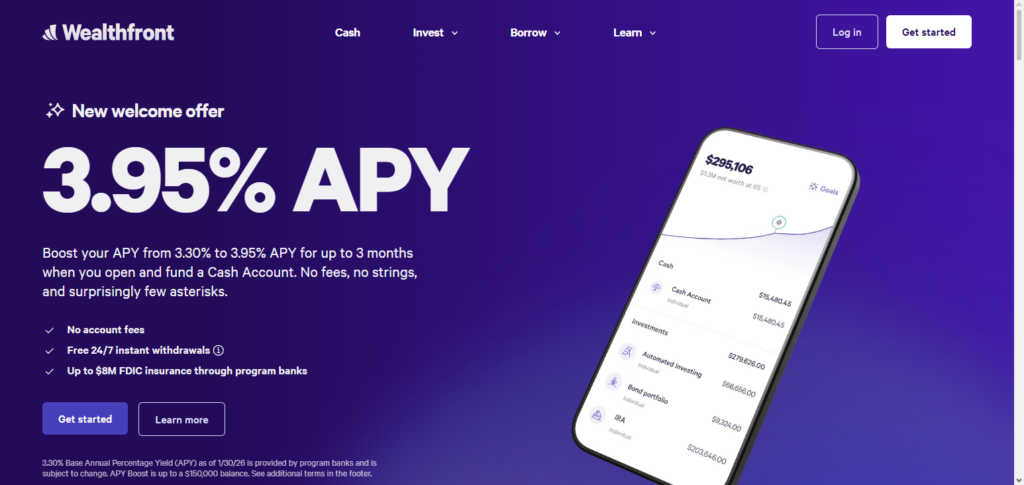
    Wealthfront is a completely automated, AI-powered robo-advisor that is well-known for its advanced goal-based financial planning and tax-loss harvesting. Its AI engine can apply direct indexing for larger accounts to improve tax efficiency, reallocate portfolios to maintain optimal diversification, and continuously study markets.

    Wealthfront

    Additionally, Wealthfront offers sophisticated tools like the “Path” financial planner, which employs predictive modeling to assist clients in investigating retirement, home-buying, and other financial objectives.

    Wealthfront is frequently listed as one of the Best AI Wealth Management Platforms for HNW Investors looking for tech-forward, hands-off portfolio management due to its automation and deep analytics.

    Wealthfront Features

    1. Automation of tax-loss harvesting.
    2. AI for portfolio rebalancing.
    3. Direct indexing to improve tax saving investments.
    4. Financial goals planning (Path).
    5. Savings tools and cash management.

    Wealthfront Pros & Cons

    ProsCons
    Strong tax-loss harvestingNo human financial advisor
    AI-optimized rebalancingLimited alternative investments
    Goal-based planning toolsNot ideal for bespoke strategies
    Direct indexing optionAutomated only
    Competitive feesLess personal engagement

    3. Empower (Personal Capital)

    Empower (previously Personal Capital) provides a hybrid wealth management experience by combining human financial advice with AI-powered data. The platform analyzes risk exposure, investment performance, and cash flow across all accounts using AI to provide tailored insights and suggestions.

    Empower (Personal Capital)

    Comprehensive financial dashboards that show long-term forecasts, retirement preparedness evaluations, and hidden costs are beneficial to users. HNW investors have access to human advisors who are assisted by advanced algorithms that maximize wealth planning and portfolio development.

    Empower distinguishes out among the Best AI Wealth Management Platforms for HNW Investors for individuals who value both cutting-edge technology and human skills by fusing algorithmic insights with expert advice.

    Empower (Personal Capital) Features

    1. AI analytics powered dashboard.
    2. Integration of human financial advisors.
    3. Comprehensive tracking of net worth.
    4. Retirement projections and income projections during retirement.
    5. Analysis of fees and investment performance.

    Empower (Personal Capital) Pros & Cons

    ProsCons
    Hybrid AI + human advisorHigher advisory fees
    Comprehensive analyticsRequires minimum balance
    Retirement projectionsDashboard can be complex
    Tracks cash flow & net worthNot fully automated
    Fee transparency toolsSome features underused

    4. Betterment Premium

    Betterment’s premium robo-advisor service is intended for wealthy individuals who desire unrestricted access to licensed financial advisors in addition to automated investing.

    While machine learning aids in risk management and asset selection optimization, the AI core dynamically rebalances portfolios, harvests tax losses, and creates diversified portfolios suited to individual objectives.

    Betterment Premium

    The advanced goal-based investment framework of Betterment complements long-term plans such as legacy or retirement.

    It is one of the best AI wealth management platforms for HNW investors who want sophisticated customisation and expert assistance without having to handle every detail by hand because of its potent algorithms and human planners.

    Betterment Premium Features

    1. AI portfolio construction optimization.
    2. Certified planners who are accessible without limits.
    3. Management of tax and tax loss harvesting.
    4. Investment planning based on goals.
    5. Rebalancing that is automated.

    Betterment Premium Pros & Cons

    ProsCons
    Unlimited planner accessHigher fee tier than basic
    AI-optimized investingLimited alternative assets
    Automated rebalancingNot institutional-grade depth
    Smart tax-loss harvestingBasic interface
    Easy goal setupLess control for advanced traders

    5. Range AI Wealth

    High earners and high-net-worth households can centralize their complicated financial lives with Range AI Wealth, an AI-first wealth management platform. In contrast to conventional robo-advisors, Range integrates cutting-edge AI analytics with a comprehensive financial planning suite that addresses retirement, investing, taxes, estate planning, and equity compensation plans in a single view.

    Range AI Wealth

    By providing flat pricing and utilizing AI to predict projections, integrate cashflow data, and optimize tax outcomes, its algorithms lessen reliance on asset-based costs. Range stands out among the Best AI Wealth Management Platforms for HNW Investors for investors with complex portfolios and planning requirements, particularly when thorough wealth management is just as important as portfolio outcomes.

    Range AI Wealth Features

    1. Overview of finances that is AI driven and holistic.
    2. Budget and cash flow modeling.
    3. What-if and scenario planning.
    4. Insights on tax optimization.
    5. Structure of fees that is transparent and flat.

    Range AI Wealth Pros & Cons

    ProsCons
    Holistic financial viewSmaller brand presence
    Deep analyticsLearning curve
    Flat transparent pricingNot fully automated robo
    Tax optimization insightsRequires active engagement
    Integrates cash flow & investmentsNot globally available

    6. Morgan Stanley Next Best Action AI

    Designed for institutional and high-net-worth advising, Morgan Stanley’s Next Best Action AI technology uses predictive analytics to suggest timely, data-driven decisions for each client.

    Morgan Stanley Next Best Action AI

    The technology creates tailored “next best” advice for advisors to improve portfolio choices and customer interactions by analyzing hundreds of data signals, including market conditions, past client behavior, and risk preferences.

    For wealthy clients looking for customized plans, this AI technology improves decision quality and response speed while supporting human advisors rather than replacing them. It is one of the Best AI Wealth Management Platforms for HNW Investors because of its high-touch strategy, which emphasizes individualized, evidence-based guidance.

    Morgan Stanley Next Best Action AI Features

    1. AI guiding advisor that is predictive.
    2. Analytics of behavior and market for signals.
    3. Investment recommendations that are personalized.
    4. Monitoring of data in real time.
    5. Integrated risk evaluation tools

    Morgan Stanley Next Best Action AI Pros & Cons

    ProsCons
    Personalized AI guidanceNot a standalone robo
    Enhances advisor decisionsHigh advisory fees
    Deep data analyticsRequires advisor relationship
    Real-time suggestionsLess transparent AI logic
    Supports complex portfoliosNot mass-market accessible

    7. UBS MyWay AI

    As part of larger strategy changes in wealth technology, UBS has been shifting away from standalone digital robo-advisor products, but UBS MyWay AI was the company’s attempt to incorporate AI into individualized wealth planning and portfolio construction for wealthy investors. Low profitability and difficulties acquiring new clients have caused many larger banks, including UBS, to cut back on their use of entirely digital wealth platforms.

    UBS MyWay AI

    The goal of MyWay AI was to use personalized behavioral and financial data to customize investment and planning strategies for sophisticated clients, reflecting the continuous demand for adaptive AI in the Best AI Wealth Management Platforms for HNW Investors, even though some services have been closed or integrated into more comprehensive advisor-assisted offerings.

    UBS MyWay AI Features

    1. Investment design based on goals
    2. Insights from behavioral profiling
    3. Risk modeling and diversification
    4. Customized asset allocation
    5. UBS advisory services integration

    UBS MyWay AI Pros & Cons

    ProsCons
    Personalized allocation focusDiscontinued/merged offering
    Goal-oriented planningRequires UBS advisor relationship
    Behavioral insightsLimited public details now
    Global bank backingNot standalone platform
    Risk-based modelingLess consumer access today

    8. Goldman Sachs Marcus Invest

    In the past, Marcus Invest from Goldman Sachs was an automated wealth management service that used algorithms for rebalancing and asset allocation based on user risk profiles.

    But in 2024, Goldman Sachs closed Marcus Invest and moved investor accounts to Betterment, illustrating the larger difficulties big banks have in maintaining consumer-focused robo platforms.

    Goldman Sachs Marcus Invest

    Marcus Invest’s legacy, despite its demise, demonstrates how smart investors may benefit from cutting-edge technology and customized digital investing.

    Its evolution into a top AI wealth manager like Betterment demonstrates how, despite the evolution of legacy products, top robo-advisor engines continue to be essential to the Best AI Wealth Management Platforms for HNW Investors.

    Goldman Sachs Marcus Invest Features

    1. Portfolio allocation based on automated risk assessment
    2. Tools for tracking performance
    3. Portfolio rebalancing on a regular basis
    4. Investment interface (digital)
    5. Cash management (historical)

    Goldman Sachs Marcus Invest Pros & Cons

    ProsCons
    Institutional investment rigorDiscontinued service
    Easy digital interfaceMigrated to Betterment
    Automated allocationNo advanced tax tools
    Performance tracking toolsNo human advisor tier
    Strong brand credibilityNot actively developed

    9. Schwab Intelligent Portfolios Premium

    For investors who appreciate both algorithmic rebalancing and human assistance, Schwab Intelligent Portfolios Premium was a hybrid product that combined automated portfolio management with financial planner access.

    However, due to strategic adjustments back toward more straightforward digital services and core advisory capabilities, Schwab has phased out this premium tier, ending it by early 2026.

    Schwab Intelligent Portfolios Premium

    Customized planning support, tax-loss harvesting, and automatic diversification and rebalancing were formerly offered via the platform’s AI algorithms.

    The market for automated wealth management was impacted by Schwab’s wider robo services, which helped shape the development of the Best AI Wealth Management Platforms for HNW Investors, even though the premium service is ending.

    Schwab Intelligent Portfolios Premium Features

    1. Automated asset allocation powered by AI
    2. Harvesting of tax losses
    3. Access to human advisors
    4. Goals-based planning and financial roadmaps
    5. All-in-one account aggregation

    Schwab Intelligent Portfolios Premium Pros & Cons

    ProsCons
    Access to human plannersPremium tier discontinued
    Goal planning toolsSome features limited now
    Tax-loss harvestingRequires hybrid access
    Schwab ecosystem integrationUI less modern
    Automated AI allocationNot pure AI focus

    10. Vanguard Digital Advisor (AI Enhanced)

    Vanguard’s automated investment platform, Vanguard Digital Advisor (AI Enhanced), employs algorithms to generate customized glide pathways according to risk profiles, long-term objectives, and extensive financial planning requirements.

    It contains tools like tax-loss harvesting, debt payoff analysis, and goal-planning services and mainly uses inexpensive Vanguard ETFs to manage diverse portfolios.

    Vanguard Digital Advisor (AI Enhanced)

    Its AI layers, which provide long-term projections and automatic rebalancing, assist in matching investing strategies with investors’ life goals.

    Vanguard Digital Advisor is one of the Best AI Wealth Management Platforms for HNW Investors looking for disciplined, goal-oriented robo solutions supported by Vanguard’s investment philosophy. It is trusted for its cheap fees and strong planning tools.

    Vanguard Digital Advisor (AI-Enhanced) Features

    1. Allocations personalized by AI
    2. Portfolios of Vanguard ETFs at a low cost
    3. Modeling for long-term goals
    4. Rebalancing with consideration of tax implications
    5. Tools for retirement planning

    Vanguard Digital Advisor Pros & Cons

    ProsCons
    Low-cost ETF portfoliosLimited human advisor access
    AI-driven customizationBasic AI tools vs peers
    Tax-aware rebalancingFewer alternative investments
    Strong retirement planningNot for ultra bespoke needs
    Disciplined long-term strategyLess interactive interface

    Conclusion

    The top AI wealth management systems for HNW investors mix human knowledge, automation, and sophisticated data analytics to produce more intelligent, tailored financial results.

    While hybrid models like Empower, Betterment Premium, and Schwab combine AI insights with expert advisers for complicated financial needs, platforms like Fidelity Go, Wealthfront, and Vanguard Digital Advisor thrive in cost effectiveness and disciplined portfolio management.

    Morgan Stanley and UBS’s institutional solutions demonstrate how AI improves large-scale decision-making. AI-powered platforms are a crucial component of contemporary wealth management methods since they help HNW investors with better risk management, tax efficiency, and long-term planning as AI develops.

    FAQ

    What is an AI wealth management platform?

    An AI wealth management platform uses artificial intelligence and machine learning to automate investment decisions, optimize portfolio allocation, analyze risk, and provide personalized financial insights. These platforms help high-net-worth (HNW) investors achieve smarter, data-driven outcomes with less manual effort.

    Why should HNW investors consider AI-powered platforms?

    AI platforms can identify patterns in large datasets, enhance tax strategies (like tax-loss harvesting), dynamically rebalance portfolios, and simulate financial scenarios. For HNW investors with complex needs, AI adds speed, precision, and personalization beyond traditional wealth management.

    Are AI platforms safe for managing large portfolios?

    Yes—when backed by reputable firms and robust security practices. Many platforms combine AI with human advisors for oversight, ensuring risk controls and regulatory compliance while protecting client data.

    Do these platforms replace human financial advisors?

    Not completely. While AI can automate many tasks, hybrid models (like Empower/Personal Capital or Betterment Premium) integrate human advisors to provide strategic guidance, especially for complex financial situations.

    How do fees for AI wealth management platforms compare to traditional advisors?

    Generally, AI platforms charge lower fees than traditional advisory services because automation reduces overhead. Fee structures vary (flat fee, percentage of assets, subscription), so compare costs before choosing.

  • 10 Best Crypto Prime Brokerage Platforms 2026

    10 Best Crypto Prime Brokerage Platforms 2026

    The top options for professional traders, hedge funds, and institutional investors will be the main emphasis of my discussion of the Best Crypto Prime Brokerage Platforms in this post.

    These platforms facilitate the effective management of huge cryptocurrency portfolios by offering deep liquidity, safe custody, sophisticated trading tools, and loan services.

    It is crucial to comprehend these prime brokers in order to minimize counterparty and operational risks and maximize capital efficiency.

    Why Choose Crypto Prime Brokerage Platforms

    Liquidity and Large-Scale Trading

    Because of their ability to merge liquidity from multiple exchanges and OTC desks, prime brokers enable institutions to complete **large crypto trades without worrying about negative price impacts**.

    Security for Institutional Investors

    The prime broker platforms offer **multisig wallets, personal custody, and MPC-based technology** to keep their customers’ crypto assets safe from theft and protection errors.

    Accessible Derivatives and Financing

    Institutions coming to these platforms have access to **trading, margin lending, and borrowing derivatives** to help devise layered strategies and use funding more efficiently.

    Management of Capital and Risk

    The platforms offer **collateral management, lending, and settlement services** to help their customers utilize their funds to the fullest and lessen the risk associated with counterparties and operations.

    Management of Compliance and Reporting

    Positively impacting the institutions’ **requirements of compliance and reporting** is possible because crypto prime brokers offer their services adhering to regulations or best work practices.

    Technological Advancement and APIs

    Institutions have access to **quality, readily usable APIs, trading systems, and current market information** to help them automate their operation and trading practices.

    Key Point & Best Crypto Prime Brokerage Platforms

    PlatformKey Point
    Genesis TradingLeading institutional crypto lender and OTC trading desk.
    FalconXProvides digital asset trading with liquidity aggregation and APIs for institutions.
    CopperCustody and prime brokerage services for institutional crypto clients.
    BitGo PrimeInstitutional trading platform with integrated custody solutions.
    Anchorage DigitalRegulated crypto bank offering custody, trading, and financing services.
    Nexo PrimeOffers institutional lending and borrowing against crypto assets.
    Cumberland (DRW)One of the largest OTC crypto trading desks globally.
    Galaxy DigitalDiversified crypto financial services firm (trading, asset management, banking).
    MatrixportProvides crypto trading, custody, lending, and financial products for institutions.
    Kraken InstitutionalInstitutional trading and custody services from the Kraken exchange.

    1. Genesis Trading

    The best crypto prime brokerage platform is Genesis Trading, a reputable institutional crypto broker with a focus on capital markets, financing, and high-volume over-the-counter trading.

    Genesis Trading

    Since its founding in 2013, it has provided services to professional investors, hedge funds, and asset managers looking for deep liquidity for significant Bitcoin and altcoin trades. Genesis offers financing options, derivatives exposure, and customized execution to assist organizations in effectively allocating capital across markets.

    Sophisticated cryptocurrency investors choose it because, despite its emphasis on over-the-counter and custom trading, it also collaborates with custodians to provide safe settlement and third-party solutions that reduce counterparty risk.

    Genesis Trading Features, Pros & Cons

    Features:

    1. Institutional OTC trading desk
    2. Lending and borrowing services
    3. Derivatives and structured products
    4. Deep liquidity for large trades
    5. Counterparty risk management

    Pros:

    • Established reputation among institutions
    • Access to large liquidity pools
    • Flexible lending and financing solutions
    • Supports professional and high-net-worth investors
    • Custom trading solutions

    Cons:

    • Lending arm faced bankruptcy issues
    • Limited retail access
    • High minimum trade sizes
    • Regulatory scrutiny in multiple regions
    • Onboarding can be slow

    2. FalconX

    Top Crypto Prime Brokerage Platform: FalconX is a top international prime broker that provides institutional clients with cutting-edge trading, liquidity, and execution services. FalconX, which offers spot, derivatives, FX, and credit services, is well-known for combining traditional financial prime brokerage processes with crypto markets and aggregating deep market liquidity across hundreds of coins.

    FalconX

    For hedge funds, asset managers, and proprietary trading organizations, it offers margin financing, institutional-grade APIs, and trading access around-the-clock. Due to FalconX’s large liquidity infrastructure and technology-driven approach, professional investors may execute sophisticated strategies with solid risk management and low slippage.

    FalconX Features, Pros & Cons

    Features:

    1. Aggregated liquidity across exchanges
    2. Spot and derivatives trading
    3. Institutional-grade APIs
    4. Margin financing and credit
    5. Real-time market data

    Pros:

    • Access to multi-exchange liquidity
    • Advanced execution and risk tools
    • 24/7 trading for institutions
    • Efficient capital management
    • High scalability for large clients

    Cons:

    • Limited geographic coverage
    • Less known outside institutional circles
    • Focused on large trades
    • Limited retail interface
    • Complex onboarding for smaller firms

    3. Copper

    Best Crypto Prime Brokerage Platform: Copper specializes in prime brokerage infrastructure and institutional-grade custody, particularly with its ClearLoop off-exchange settlement network.

    Copper

    By keeping assets safe in separate vaults, Copper’s MPC-based custody and collateral management system lowers counterparty risk while enabling institutions to trade on major exchanges. It is useful for hedge funds, trading companies, and treasury operations because of its primary services, which include safe custody, settlement, lending, and collateral management.

    The company’s technology, which institutional clients depend on to maximize capital usage and safeguard digital assets, places a high priority on security, operational effectiveness, and quick settlement across several exchanges.

    Copper Features, Pros & Cons

    Features:

    1. Multi-party computation (MPC) custody,
    2. ClearLoop off-exchange settlement network,
    3. Prime brokerage and collateral management,
    4. Multi-exchange trading support,
    5. Institutional risk management

    Pros:

    • Industry-leading security
    1. Lower risk with counterparties
    2. Capital use is optimized
    3. Multiple digital currencies can be used
    4. Accepted by hedge funds as well as trade firms

    Cons:

    1. Mostly institutional clients
    2. Initial setup is difficult
    3. Less liquidity compared to top OTC desks
    4. Tools are limited with a focus on retail
    5. Fees are high for transactions that are small

    4. BitGo Prime

    BitGo Prime, the best cryptocurrency prime brokerage platform, offers a full range of institutional prime services based on regulated custody infrastructure. Through a qualified custody environment that prioritizes security and compliance, BitGo’s platform integrates trading execution, financing, collateral management, and settlement.

    BitGo Prime

    In order to maximize capital efficiency, it provides automated settlement through the Go Network, credit and lending facilities, and deep liquidity for both spot and derivatives across thousands of assets. BitGo Prime is attractive to institutional investors and trading organizations that value asset protection in addition to sophisticated execution and risk-management features because of its multi-sig and MPC security frameworks and extensive insurance coverage.

    BitGo Prime Features, Pros & Cons

    Features:

    1. Custody for qualified institutions
    2. Liquidity for spots and derivatives
    3. Solutions for lending and financing
    4. Go Network for automated settlement
    5. Security via multi-sig and MPC

    Pros:

    1. Strong infiltration with regulators
    2. Coverage with insurance and strong security
    3. Deep liquidity that is available with institutions
    4. Solutions that are capital efficient
    5. Operations for trade that are professional are supported

    Cons:

    1. Sizes for trades that are high
    2. Retail investors are not considered in design
    3. Integration can be difficult
    4. Fees are not public
    5. Onboarding is heavily documented

    5. Anchorage Digital

    Anchorage Digital, a fully integrated institutional platform that combines trading, settlement, custody, and derivatives services under a regulated framework, is the best cryptocurrency prime brokerage platform. Anchorage, the first legally authorized cryptocurrency bank in the US, offers institutional clients real-time settlement, safe custody, and access to advanced trading instruments including futures and options.

    Anchorage Digital

    Deep liquidity, sophisticated order types, and API access catered to corporate treasuries, hedge funds, and asset managers are all features of its Prime offering. Anchorage’s on-chain settlement capabilities and compliance-focused infrastructure assist institutions in managing complexity while upholding strong risk controls and regulatory alignment.

    Anchorage Digital Features, Pros & Cons

    Features:

    1. Bank for crypto that is charters federally and is U.S
    2. Services for custody and settlement
    3. Trading of spots and derivatives
    4. Access to institutional API
    5. Risk and compliance management

    Pros:

    1. Banking license from the U.S. that is fully regulated
    2. On-chain settlement reduces risk
    3. Advanced trading tools
    4. High compliance standards
    5. Supports large institutional portfolios

    Cons:

    1. Primarily U.S.- based
    2. Slow onboarding
    3. Documentation is complex
    • Not available to retail clients
    • Limited margin trading flexibility

    6. Nexo Prime

    Nexo Prime is an institutional prime brokerage solution that provides trading, lending, borrowing, and custody services all on one cohesive platform, making it the best cryptocurrency prime brokerage platform.

    Nexo Prime

    It offers competitive execution for spot and futures trading, liquidity provisioning, and over-the-counter (OTC) services, and is tailored for institutional clients, corporate investors, and high-net-worth individuals. In addition to providing credit lines and leverage options,

    Nexo Prime interfaces with top custodians such as Fireblocks and Ledger Vault to guarantee institutional-grade asset security. Clients can effectively manage digital asset portfolios with its extensive service package, which offers 24/7 assistance and diverse liquidity access.

    Nexo Prime Features, Pros & Cons

    Features:

    1. Borrowing and lending for institutions
    2. Trading, both spot and OTC
    3. Custody partnerships with Fireblocks/Ledger Vault
    4. Credit and leverage
    5. Support for multiple assets

    Pros:

    • Trading and lending on one platform
    • Credit and margin flexibility
    • High liquidity for large clients
    • Support available 24/7
    • Portfolio management is made easier

    Cons:

    • Institutional focus
    • Few derivatives
    • Less presence worldwide
    • Countries have different regulatory clarity
    • Smaller trades incur high fees

    7. Cumberland (DRW)

    One of the biggest OTC liquidity providers and institutional trading desks in the cryptocurrency industry, Best Crypto Prime Brokerage Platform-Cumberland (DRW) serves financial institutions, trading firms, and hedge funds. Cumberland, a DRW company, is an expert in competitive pricing, deep liquidity execution, and custom trading solutions for major digital assets.

     Cumberland (DRW)

    It offers effective market access with minimal price impact and excels at big block deals. Despite not being a conventional “prime broker,” Cumberland is essential to professional cryptocurrency trading techniques globally due to its function as a counterparty and liquidity backbone for institutional investors.

    Cumberland (DRW) Features, Pros & Cons

    Features:

    1. Large desk for OTC trading
    2. High liquidity for spot trading
    3. Services for market making
    4. Tailor made pricing and execution
    5. Support for both spot and options

    Pros:

    • Ensured liquidity and market making
    • Substantial trades have a trusted counter party
    • Tailored trading options
    • Clients worldwide, with focus on institutions
    • Block trades have efficient execution

    Cons:

    • Not a prime broker, full service
    • Emphasis placed only on large trades
    • Custody is not offered
    • Limited sophistication on derivatives
    • Access is denied to retail clients

    8. Galaxy Digital

    Galaxy Digital is a diversified digital asset financial services company that provides institutional trading, lending, and advisory services. It is the best cryptocurrency prime brokerage platform. Its Global Markets business provides institutional clients with capital markets execution, bespoke lending, derivatives solutions, and high-touch over-the-counter trading.

    Galaxy Digital

    Through its GK8 infrastructure, Galaxy also offers asset management, structured products, and custody, fusing risk controls, regulatory compliance, and deep liquidity. Institutional investors depend on Galaxy for integrated financial services that connect digital assets and traditional finance, as well as for customized execution and strategic insights.

    Galaxy Digital Features, Pros & Cons

    Features:

    1. Desk for OTC trading
    2. Derivative trading and structured products
    3. Services for lending and borrowing
    4. Solutions for asset management
    5. Services for Custody

    Pros:

    • Services for institutions are diversified
    • Presence in strong markets
    • Strong liquidity
    • Trading and custody are combined
    • Manager of risk

    Cons:

    • Fee structures are complicated
    • Focus is primarily Canada/America
    • Onboarding requirements are above average
    • Presence globally is lacking compared to competitors
    • Focus on large clients, smaller clients may be neglected.

    9. Matrixport

    Top Crypto Prime Brokerage Platform: Matrixport is a full-service institutional digital asset ecosystem that provides prime brokerage in addition to OTC trading, custody, lending, and structured products. The primary services offered by Matrixport include leveraged borrowing, cheap exchange rates, substantial liquidity, and a strong online platform for managing loan and trading operations.

    Matrixport

    Its institutional viability is increased through partnerships with custody and settlement providers, which lower counterparty risk and offer safe access across several exchanges. Institutional and corporate clients looking for innovative digital asset strategies and capital efficiency are served by its diverse product package.

    Matrixport Features, Pros & Cons

    Features

    1. Ecosystem of prime brokerage
    2. Services in trading and lending
    3. Products that are structured
    4. Custody and collateral management
    5. Connection to multiple exchanges

    Pros

    • Solutions that are institutionalized and integrated
    • Efficiency in capital and management of risk
    • Extensive support for assets
    • Portfolio that is large and complex is supported
    • Operations for institutions is made easier

    Cons:

    • Focus on Asia is more than anywhere else
    • Less liquidity compared to OTC desks that are top
    • Derivatives are not offered as much
    • Reputable in markets that are western, less so.
    • Onboarding is complicated

    10. Kraken Institutional

    Kraken Institutional, the best cryptocurrency prime brokerage platform, expands its long-standing exchange infrastructure into a comprehensive institutional prime brokerage service that includes trading, custody, and credit facilities.

    Kraken Institutional

    The institutional services offered by Kraken include financing options, regulated custody through Kraken Financial, and extensive liquidity from its exchange and OTC desks.

    Under well-defined regulatory frameworks, it offers sophisticated execution, risk management tools, and safe custody solutions to asset managers, hedge funds, and corporate investors. The institutional service from Kraken is meant to satisfy the exacting operational and compliance requirements of seasoned market players.

    Kraken Institutional Features, Pros & Cons

    Features

    1. Access to trading via exchange and OTC
    2. Custody is offered via Kraken Financial
    3. Trading in spot and futures
    4. Facilities for credit and lending
    5. Institutional support and APIs

    Pros

    • Compliance and custody that is regulated
    • Support for multiple assets and deep liquidity
    • Infrastructure that is dependable
    • Reach that is global for clients that are professional
    • Lending and credit are options that are efficient

    Cons:

    • Service that is less tailored compared to brokers that are boutique* Restrictions in U.S. regulations
    • Derivatives sophistication limited
    • Trade minimums are high
    • Advanced features are limited in comparison to FalconX/Genesis

    Conclusion

    The market for cryptocurrency prime brokerage platforms is becoming more and more complex, serving professional traders, hedge funds, and institutional investors that want deep liquidity, safe custody, and cutting-edge trading tools.

    While Copper and BitGo Prime prioritize institutional-grade custody with collateral management and risk mitigation, platforms such as Genesis Trading and FalconX thrive in high-volume OTC execution and liquidity aggregation.

    Anchorage Digital and Nexo Prime offer compliance-focused services by fusing regulated banking infrastructure with trading and lending alternatives. While Matrixport and Kraken Institutional provide integrated trading, lending, and custody ecosystems, Cumberland (DRW) and Galaxy Digital offer custom trading and market-making services.

    Institutional requirements for capital efficiency, security, liquidity, and regulatory compliance will determine which platform is ideal, but taken as a whole, these platforms are the top choices for seasoned players in the cryptocurrency market.

    FAQ

    What is a crypto prime brokerage platform?

    A crypto prime brokerage platform provides institutional investors with trading, custody, lending, and execution services in digital assets. These platforms offer deep liquidity, risk management tools, and often OTC execution to help hedge funds, asset managers, and professional traders efficiently manage large crypto transactions.

    Why do institutions need a prime brokerage for crypto?

    Institutions require secure custody, capital efficiency, and market access. Prime brokers enable block trades without slippage, access to derivatives and lending, and operational support, which individual exchanges alone cannot provide reliably.

    Which platforms are considered the best?

    Leading platforms include: Genesis Trading, FalconX, Copper, BitGo Prime, Anchorage Digital, Nexo Prime, Cumberland (DRW), Galaxy Digital, Matrixport, and Kraken Institutional. Each excels in liquidity, custody, execution, or regulatory compliance.

    How do these platforms ensure security?

    Most use multi-party computation (MPC), multi-signature wallets, and regulated custody frameworks. Platforms like Copper, BitGo Prime, and Anchorage Digital emphasize insurance coverage, segregated accounts, and operational safeguards to protect institutional funds.

    Can institutions access derivatives and lending through these platforms?

    Yes. Platforms such as Genesis, FalconX, Nexo Prime, and Galaxy Digital provide derivatives trading, margin financing, lending, and borrowing solutions for sophisticated portfolio strategies.

  • 10 Best Crypto Tax Automation Software in 2026

    10 Best Crypto Tax Automation Software in 2026

    The Best Crypto Tax Automation Software, which assists traders and investors in automatically calculating cryptocurrency gains, losses, and tax obligations, will be covered in this article.

    Reliable tax software is crucial for correct reporting, compliance, and stress-free filing as cryptocurrency transactions get more complicated with DeFi, NFTs, and staking. Let’s investigate the best platforms on the market right now.

    What is Crypto Tax Automation Software?

    A digital tool called crypto tax automation software is made to automatically monitor, compute, and report taxes on cryptocurrency transactions. It arranges transactions, transfers, staking rewards, DeFi activity, and NFT sales after connecting to your cryptocurrency exchanges, wallets, and blockchains via secure APIs or CSV uploads.

    The software generates ready-to-file reports like Form 8949 or other jurisdiction-specific papers by calculating capital gains, losses, and taxable income in accordance with your nation’s tax laws.

    Crypto tax automation software saves time, lowers errors, and assists investors in staying in compliance with changing tax laws by doing away with manual spreadsheets and intricate computations.

    Why Use Crypto Tax Automation Software

    Automatic Transaction Tracking – Automatic transaction tracking imports trades, transfers, staking rewards, DeFi activity, and NFTs directly from exchanges and wallets, so you do not have to do manual data entry.

    Gain and Loss Calculation – Software calculates capital gain, loss, and crypto income automatically using approved methods such as FIFO, LIFO, and HIFO.

    Saves time and efffor – Offers tax reports that are ready to download and walk you through manual processes.

    Ensure Tax Compliance – Country specific tax forms are available, and the ever-changing world of crypto tax is at the software’s fingertips.

    Handles Complex Crypto Actions – Activities such as DeFi, yield farming, airdrops, forks, and margin trading are all properly categorized.

    Audit Risk Reduction – Documentation and transparency are maximized by providing audit ready reports and transaction trails.

    Multi Exchange and Wallet Support – View all of your crypto activity in one, unified dashboard.

    Tax Loss Optimization – Real time tracking of tax liabilities optimizes loss taxes.

    Safe API Data Integration – Sync financial data to software via API.

    Perfect for Active Investors and Traders – Users with a lot of trades or multiple crypto accounts can especially benefit from this software.

    Key Point & Best Crypto Tax Automation Software

    SoftwareKey Points
    KoinlySupports 800+ exchanges & wallets, automatic transaction syncing, DeFi/NFT support, capital gains tracking, and country-specific tax reports.
    CoinLedgerSimple user interface, automated gain/loss calculations, IRS Form 8949 support, TurboTax integration, and portfolio tracking features.
    CoinTrackerReal-time portfolio tracking, tax-loss harvesting tools, seamless exchange sync, NFT support, and direct TurboTax integration.
    ZenLedgerEnterprise-grade reporting, audit support package, DeFi & staking compatibility, multi-exchange import, and tax professional collaboration tools.
    TaxBitIRS-compliant tax forms, enterprise accounting tools, real-time gain tracking, exchange integrations, and regulatory-focused infrastructure.
    CryptoTaxCalculatorAdvanced DeFi & NFT tax handling, global tax compliance, bulk transaction imports, capital gains summaries, and customizable reporting.
    TokenTaxCPA-backed tax filing services, margin & derivatives support, DeFi compatibility, tax-loss harvesting, and personalized tax assistance.
    BearTaxEasy CSV uploads, automated gain calculations, audit-ready reports, exchange API support, and affordable pricing tiers.
    BlockpitEuropean tax compliance focus, automated transaction categorization, audit trail documentation, DeFi support, and portfolio insights.
    Ledgible Crypto TaxInstitutional-grade crypto accounting, GAAP reporting tools, enterprise integrations, audit support, and digital asset reconciliation features.

    1. Koinly

    With support for more than 800 exchanges, wallets, and blockchains worldwide and tax reports for more than 20 countries, Koinly is one of the most popular and top crypto tax automation software products available. It classifies trades, computes gains, losses, and revenue from staking, NFTs, and DeFi activities, and automatically syncs transactions via APIs or CSV uploads.

    Koinly

    Koinly simplifies filing by producing official tax forms such as IRS Form 8949, Schedule D, HMRC, and other country-specific reports that can be exported to widely used tax software. Crypto tax reporting is made simpler and more effective for both traders and investors by its user-friendly dashboard, which provides real-time tax position knowledge throughout the year.

    Koinly Features, Pros & Cons

    Features

    1. Automated transaction sync via API & CSV
    2. 800+ Exchange, wallet & blockchain support
    3. Gain/income & cost basis calculations
    4. DeFi, NFTs, and staking activity support
    5. Reports for specific countries

    Pros

    1. User-friendly for all
    2. Robust data source support
    3. Real-time tax estimate dashboard
    4. Various cost-basis calculatons available
    5. Major jurisdiction tax PDFs

    Cons

    1. Manual review required for DeFi/NFT reporting
    2. Limited reports for lower plan levels
    3. No CPA filing service in app
    4. Reports of sync errors in reviews
    5. Premium levels are expensive

    2. CoinLedger

    The finest crypto tax automation software for beginners is CoinLedger, which is perfect for customers filing in the US and Canada. CryptoTrader was its previous name.Connect exchanges and wallets, import trades, and instantly generate correct tax returns and supporting papers like IRS Form 8949 and Schedule D—it streamlines the entire tax process.

    CoinLedger

    The platform automates cost-basis computations and gain/loss tracking, and it interacts with popular exchanges, DeFi protocols, and NFT transactions. Even first-time filers may easily navigate cryptocurrency tax season with CoinLedger’s user-friendly interface and guided procedure. Additionally, it provides tools like CPA share links and tax-loss harvesting analysis to facilitate communication with tax experts.

    CoinLedger Features, Pros & Cons

    Features

    1. Easy exports into popular tax tools
    2. Summary of tax-loss harvesting
    3. H&R Block & TurboTax exports
    4. Form 8949 & Schedule D generation
    5. Tax gain & loss automation

    Pros

    1. Fast report generation
    2. Compliance in tax support in the USA
    3. DeFi involves a few advanced automation tools
    4. The workflow is user friendly
    5. Good documentation & stimulation guides

    Cons

    1. Forms for taxes outside the USA are few
    2. Reporting for advanced automation DeFi tools are limited3. No access to direct accountant portal.
    3. Each tax year, the costs can be significant.
    4. Not the best option for large enterprises.

    3. CoinTracker

    One of the top crypto tax automation software systems, CoinTracker offers robust portfolio management and tax filing assistance for more than 500 exchanges and wallets. Its real-time dashboard instantly updates as markets change, tracking both your tax liability and cryptocurrency net worth at the same time.

    CoinTracker

    In order to calculate correct capital gains and income tax reports, CoinTracker classifies trades, DeFi activity, and NFT events and makes it simple to import transactions.

    It is appropriate for multi-jurisdiction portfolios since it supports both international tax jurisdictions for customers in many nations as well as U.S. forms like IRS 8949 and Schedule D. CoinTracker effortlessly integrates tax compliance and portfolio management with mobile apps and connection with TurboTax/H&R Block.

    CoinTracker Features, Pros & Cons

    Features

    1. Portfolio tracking dashboard.
    2. Syncs over 500 wallets and exchanges.
    3. Calculates tax liabilities and capital gains.
    4. Supports NFTs and DeFi.
    5. Exports tax reports to (TAX/TurboTax).

    Pros

    1. Great for insights on portfolios.
    2. Data is updated with auto-sync.
    3. Reporting for multiple jurisdictions.
    4. Reporting for multiple jurisdictions.
    5. Supports mobile apps.

    Cons

    1. Premium subscription required for full functionality.
    2. Portfolio size negatively impacts reporting speed.
    3. Reporting for tax optimization is limited.
    4. Accounting functionality is rudimentary.
    5. Tax report fees are high.

    4. ZenLedger

    The best cryptocurrency tax automation software, ZenLedger, combines robust support features for active traders and complex portfolios with tax reporting. It supports DeFi, staking, and NFT activity, automatically imports transaction history, and connects to hundreds of wallets and exchanges.

    ZenLedger

    In addition to producing comprehensive tax reports, such as IRS Form 8949 and Schedule D, ZenLedger provides audit-ready documentation, which is very helpful in the event that tax authorities have concerns about your files.

    Its 24/7 customer service across a variety of plans, which guarantees assistance is always available when needed, is one of its distinguishing characteristics. It may cost more than some of its rivals, but for heavy users, its comprehensive documentation and interface with well-known tax filing programs like TurboTax make it a good option.

    ZenLedger Features, Pros & Cons

    Features

    1. Syncs with dozens of wallets and exchanges.
    2. Tax reports are audit ready.
    3. Includes mobile, DeFi, staking and NFTs.
    4. Can export to TurboTax.
    5. Tax summaries and income categorization.

    Pros

    1. Ideal for complicated portfolios.
    2. Excellent compliance features.
    3. Good customer service.
    4. Detailed adjustments are well broken out in reporting.
    5. Great for tax pros

    Cons

    1. Pricier tiers are available.
    2. Reporting is less updated.
    3. There is a learning curve.
    4. Manual adjustments are required to a degree.
    5. Don’t expect successor· follows with CPA draining.

    5. TaxBit

    For individuals, companies, and institutions alike, TaxBit is the top enterprise-grade crypto tax automation software that automates tax computations and reporting at scale. TaxBit, which was developed by tax lawyers and certified public accountants, centralizes the intake of data from wallets and exchanges, computes cost basis, profits, and losses automatically, and produces tax forms that are in compliance.

    TaxBit

    It is appropriate for sophisticated use cases beyond personal tax filings since it facilitates worldwide tax compliance across more than 150 countries and thousands of assets while interacting with key banking systems. TaxBit’s strong automation and audit-ready reporting reduce human labor and guarantee accuracy, assisting customers in adhering to ever-more-complex requirements in the realm of digital assets.

    TaxBit Features, Pros & Cons

    Features

    1. Engine that calculates taxes automatically.
    2. Company and personal financial records
    3. Tax projections in the moment
    4. Compliance for more than150 countries
    5. Trail documenting for audits

    Pros

    1. Built with CPA/taxexpert foundation
    2. Compliant with regulations
    3. Business use is scalable
    4. Tracking complete and precise
    5. Integration for enterprise use

    Cons

    1. More expensive than the most elementary tools
    2. Onboarding is complicated
    3. Newcomers do not find the interface easy to use
    4. Less visualization of portfolio
    5. Wizard for filing not embedded

    6. CryptoTaxCalculator

    For traders and investors who require comprehensive support for computations and reporting across exchanges, wallets, DeFi, and NFT activity, CryptoTaxCalculator is the most flexible crypto tax automation software platform. It creates ready-to-file tax reports that accountants can examine, automatically aggregates transaction data, and arranges and classifies deals.

    CryptoTaxCalculator

    CryptoTaxCalculator assists in optimizing tax liabilities while guaranteeing compliance with many tax jurisdictions, supporting FIFO, LIFO, and other cost-basis methodologies. For both occasional and regular traders looking for simplified tax reporting, it strikes a mix between accuracy, usability, and adaptability, even though it might not have all the sophisticated portfolio tracking tools available in larger platforms.

    CryptoTaxCalculator Features, Pros & Cons

    Features

    1. Supports multiple tax and cost-basis methodologies
    2. History of exchanges and wallets imports
    3. Supports decentralized finance and staking
    4. Tax reports that are detailed are generated
    5. Exports for accountants

    Pros

    1. Tax methodologies flexible
    2. Support for multiple jurisdictions
    3. Tracking of deductions and losses
    4. Built for traders and investors
    5. Categorization of transactions in detail

    Cons

    1. Lack of polish is presistent for the interface
    2. Delays with large datasets
    3. Inconsistent assistance
    4. Tool for direct filing not available
    5. ‘Best not to use for institutions

    7. TokenTax

    One of the greatest cryptocurrency tax automation software choices for intricate and high-end tax filing situations is TokenTax. TokenTax is perfect for high-net-worth people and professionals managing sizable or complex portfolios because it provides CPA-assisted filing services in addition to automated transaction synchronization from exchanges and wallets.

    TokenTax

    It facilitates a range of cryptocurrency operations, like as cross-border transfers, margin and derivatives trading, and DeFi. In order to simplify end-to-end tax compliance, TokenTax also interfaces with TurboTax and other filing systems.

    Although it costs more than many of its rivals, users looking for individualized support during tax season find that the combination of professional tax advice and sophisticated analytical tools makes the price point worthwhile.

    TokenTax Features, Pros & Cons

    Features

    1. Trades and wallets synchronised
    2. Filing with a CPA is an option (assisted)
    3. Margin and derivatives trades are supported
    4. Reporting of equities and NFTs
    5. TurboTax is integrated

    Pros

    1. Excellent support for Complex Tax Scenarios
    2. Assistance from CPA is an option
    3. Great support for derivatives
    4. In addition to the previous claims, there are available extensive analytical tools
    5. Excellent global assistance

    Cons

    1. Among the highest priced tools
    2. Too sophisticated for beginners
    3. CPA assistance requires payment
    4. Can be seen as a messy UI
    5. Some even the most basic users overpay for functionalities

    8. BearTax

    With key capabilities for integrating transactions by API or CSV and automatically calculating gains, losses, and taxable income, BearTax offers the most straightforward crypto tax automation software experience. Beginners may easily use it because to its straightforward user interface, which also supports standard reporting choices and downloadable reports that are audit-ready.

    BearTax

    Those who want a simple platform to handle cryptocurrency tax requirements without unnecessary bells and whistles may find BearTax’s affordability and emphasis on core tax functions appealing. BearTax offers dependable computations and compliance capabilities that enable customers to effectively automate tax filing throughout tax season, while having a feature set that may not be as comprehensive as those of its larger rivals.

    BearTax Features, Pros & Cons

    Features

    1. Imports via APIs & CSV
    2. Automated Gain/Loss calculations
    3. Crypto tax reports
    4. Support for NFTs taxes
    5. Summaries ready for audits

    Pros

    1. User-friendly and neat platform
    2. Low-end pricing
    3. Rapid report generation and easy imports
    4. Best suited for low volume portfolios
    5. Suitable for beginners

    Cons

    1. Basic features are advanced
    2. Basic DeFi management
    3. International tax form features are basic
    4. Agent portal not available
    5. Portfolio analysis limited

    9. Blockpit

    Blockpit is a top crypto tax automation software platform with a European focus that makes it easier to track, analyze, and report crypto taxes across wallets and exchanges. It automatically synchronizes transactions, classifies them, and generates tax reports that adhere to the laws of different nations.

    Blockpit

    In addition to offering ready-to-file tax summaries for investors to use for their own or an accountant’s assistance, Blockpit supports a wide variety of assets and protocols. Users can avoid mistakes and expedite the tax-filing procedure with the aid of its transparent, compliant reports.

    Blockpit is a reliable option for consumers who require trustworthy crypto tax computation and reporting solutions because of its emphasis on user-friendliness and demographic tax compliance.

    Blockpit Features, Pros & Cons

    Features

    1. Automatic transaction synchronization and categorization
    2. Multi-country reporting for taxes
    3. Support for NFTs and DeFi
    4. Downloadable reports that meet legal requirements
    5. Tracking and coverage of blockchain

    Pros

    1. Excellent focus on tax reporting for Europe
    2. Compliance overview is easy
    3. Plenty of supported assets
    4. Reporting is easy
    5. Good overview of taxes

    Cons

    1. Limited US tax forms
    2. Cost of advanced subscriptions is high
    3. Manual adjustment are necessary at times
    4. Reporting is slow for account that are large
    5. Lower sophisticated tax strategy

    10. Ledgible Crypto Tax

    For accountants, organizations, and tax experts who manage the digital assets of numerous clients, Ledgible Crypto Tax is the top crypto tax automation tool available. It creates comprehensive cost-basis, tax, and reporting outputs and collects, normalizes, and reconciles crypto data for smooth integration with accounting systems.

    Ledgible Crypto Tax

    The platform from Ledgible delivers sophisticated reporting features, such as 1099 and 8949 data for compliance and audit preparation, and supports SOC-audited security requirements.

    It combines digital asset tax compliance with more general financial reporting requirements, making it perfect for businesses managing complex portfolios, multi-entity accounting, and institutional-level tax operations due to its scalability and enterprise emphasis.

    Ledgible Crypto Tax Features, Pros & Cons

    Features

    1. Support for tax and accounting of enterprise level
    2. Data normalization and reconciliation
    3. Multi-client handling
    4. Workbooks ready for audit in detail
    5. Connects to accounting books

    Pros

    1. Optimal for accountants/institutions
    2. Profound, extensive tax analytics
    3. Grows with large portfolios
    4. Merges with financial accounting
    5. Reporting with high compliance

    Cons

    1. Overly complex for personal use
    2. Enterprise pricing is high
    3. Time to configure is necessary
    4. Unfriendly to beginners
    5. Consumer offerings are limited

    Conclusion

    Your needs and tax jurisdiction determine which is the best crypto tax automation software in your case. Other variables include the complexity of your transactions and the volume at which you trade.

    If you trade at high frequencies or use automated trading, you will not want to use CoinTracker or Koinly, while ZenLedger and TokenTax may be a better fit. For enterprise-level trading, compliance and accounting integrations of a crypto tax software like TaxBit or Ledgible may better suit your needs.

    Optimally, the software will be able to automatically pull your transactions, calculate your gains and losses correctly, support your DeFi and NFT activities, and allow you to generate tax reports that meet the compliance requirements of your jurisdiction.

    The right crypto tax software will let you rest easy that you will not face the penalties and audit risks that come with filing your taxes manually. Savings in time will be necessary to maintain the accuracy of the software.

    FAQ

    What is crypto tax automation software?

    Crypto tax automation software automatically imports cryptocurrency transactions from exchanges, wallets, and blockchains, categorizes them, and calculates your taxable gains, losses, and income. It prepares ready-to-file tax reports based on your country’s regulations, saving time and reducing errors compared to manual calculations.

    Why do I need crypto tax automation software?

    Because every crypto trade, swap, NFT sale, or DeFi activity can have tax implications, tracking all transactions manually is error-prone and time-consuming. Tax automation software simplifies this process and helps ensure compliance with tax laws.

    Which is the best crypto tax automation software for beginners?

    For beginners, tools like Koinly and CoinLedger are popular due to their intuitive interfaces, wide exchange support, step-by-step workflows, and built-in tax reporting features.

    Can crypto tax software handle DeFi and NFT transactions?

    Yes — most top platforms, such as ZenLedger, TaxBit, and Blockpit, support DeFi protocols, staking, yield farming and NFT transactions, automatically calculating tax liabilities for complex activity.

  • 10 Best Cross-Border B2B Payment Gateways for Global Firms

    10 Best Cross-Border B2B Payment Gateways for Global Firms

    The Best Cross-Border B2B Payment Gateways for International Businesses will be covered in this post. International expansion necessitates economical, safe, and effective payment options.

    Selecting the appropriate gateway guarantees seamless transactions, support for many currencies, and prompt payouts to partners, suppliers, and vendors across the globe. We’ll look at the best platforms that facilitate smooth cross-border payment management for multinational corporations.

    What is a cross-border B2B payment gateway?

    A digital infrastructure called a cross-border business-to-business payment gateway makes it possible for companies to transmit and receive money securely and effectively across international borders.

    These gateways handle several currencies, control foreign exchange rates, and guarantee adherence to national and international financial regulations, in contrast to conventional domestic payment systems.

    They frequently offer features that make it simpler for businesses to pay suppliers, vendors, and partners throughout the globe, including as mass payouts, multi-currency accounts, API interfaces, and fraud protection.

    A cross-border B2B payment gateway helps companies cut expenses, save time, and confidently grow internationally by simplifying international transactions.

    How To Choose Cross-Border B2B Payment Gateways for Global Firms

    Geographic Coverage – Verify that the payment gateway encompasses a broad range, covering all the countries where your suppliers, business partners, or customers are based, focusing particularly on the emerging markets.

    Multi-Currency Support – Identify payment solutions that enable the sending, receiving, and storing of balances in various currencies to help reduce foreign exchange expenses.

    Fees & Exchange Rates – Evaluate and contrast the transfer costs, markup on foreign exchange, and any hidden fees to arrive at the best possible deal for a service that is likely to involve numerous cross-border transactions.

    Security & Compliance – Identify cross-border payment gateways that offer the highest possible encryption, PCI compliance, and fraud loss coverage; in addition to local and cross-border financial law compliance.

    Integration & Automation – Confirm that the payment solution has the ability to integrate with your various systems, such as your enterprise resource planning (ERP) software, accounting and/or e-commerce solutions, and provide a means for automated processes through an application programming interface (API) or equivalent.

    Transaction Speed – Determine whether all the financial transactions you make are settled at real time or at least the same business day in order to ensure a fluid working capital cycle and avoid payment delays.

    Customer Support – Customer support should be available at all business hours, especially for payment systems that involve a lot of money or transactions for which you require support.

    Flexibility & Scalability – Choose a gateway that manages growing transaction volumes and adapts as your business enters new markets.

    Analytics & Reporting – Sophisticated reporting and dashboard tools facilitate payment monitoring, expense tracking, and financial management.

    Reputation & Reviews – For long-term reliability, consider customer reviews, reputation in the industry, and reliability history.

    Key Point & Best Cross-Border B2B Payment Gateways for Global Firms

    Payment GatewayKey Point
    Wise Business (formerly TransferWise)Offers low-cost, fast international transfers with transparent fees and multi-currency accounts for businesses.
    PayoneerProvides global payment solutions, local receiving accounts, and seamless mass payouts for freelancers and enterprises.
    Adyen for PlatformsEnterprise-grade payment platform supporting cross-border B2B transactions with multi-currency and risk management tools.
    AirwallexEnables global payments, FX conversions, and local bank accounts with competitive rates and strong API integration.
    RapydA comprehensive B2B payment network with cross-border payouts, multi-currency wallets, and embedded payment capabilities.
    Worldpay (FIS Global)Trusted global payment processor offering secure cross-border B2B transactions, multi-currency support, and fraud protection.
    ThunesFocuses on fast international payouts and cross-border transfers with extensive global coverage in emerging markets.
    PayPal B2B Cross-BorderSimplifies invoicing, mass payments, and international transfers with familiar interface and strong buyer protection.
    Corpay (Fleetcor)Provides global payment and treasury solutions, FX management, and automated mass payouts for enterprises.
    Transpay (Mastercard)Enables global mass payouts and cross-border B2B transfers with secure, scalable, and fast settlement options.
    1. Wise Business (formerly TransferWise)

    Wise Business is an excellent choice for businesses looking for fair and easy international transfers. Wise Business has multi-currency accounts and low fees with real exchange rates, allowing businesses to send and receive money internationally without hidden fees.

    Wise Business (formerly TransferWise)

    Businesses can streamline payment management, schedule recurring transfers, and track payments in real-time with its user-friendly interface.

    Wise Business is an excellent option for businesses looking to expand internationally. When reviewing the Best Cross-Border B2B Payment Gateways for Global Firms, Wise is remarkably quick, and clear financials, making global payments easy for any business.

    Wise Business (formerly TransferWise) Features, Pros & Cons

    Features

    • Real Exchange Rate FX
    • Multi-currency Business Accounts
    • Batch Payments
    • API Access
    • Transparency in Fees

    Pros

    • Low Foreign Exchange and Transfer Fees
    • Real-Time Exchange Rate
    • Simple Dashboard
    • Rapid Transfers Globally
    • Structure of Fees are Clear

    Cons

    • Small Support Country List
    • No Credit Options Available
    • Does Not Fit Complex Businesses
    • Some Currency Transfers are Delayed
    • No Sophisticated Treasury Management Tools

    2. Payoneer

    Payoneer provides businesses with global payments solutions, enabling them to send and receive payments in various currencies. Businesses can operate as local companies internationally, and Payoneer provides competitive conversion rates and local receiving accounts in the US, Europe, UK, and Japan.

    Payoneer

    Payoneer is highly recognized for mass payments, cross-border B2B payments, and payments to freelancers. When evaluating cross-border B2B payment gateways for global companies and considering ease of use and integration with other systems, Payoneer is one of the best options for both small and medium sized companies, as well as large companies because of its extensive network and mass payments.

    Payoneer Features, Pros & Cons

    Features

    • Regional Receiving Accounts
    • Solutions for Mass Payouts
    • Wallets for Multiple Currencies
    • Integrations into Marketplaces
    • Batch payments and API

    Pros

    • Remarkable Coverage Globally
    • Outstanding for Marketplaces
    • FX Charges are Good
    • Simple Set-up
    • Freelance and Business to Business is Supported

    Cons

    • Charges for User Withdrawals are High
    • Coverage is Limited in Certain Areas
    • Support for Users is Poor
    • Charges for Accounts are Monthly
    • No Complete Banking Services

    3. Adyen for Platforms

    Adyen for Platforms is designed to manage high volumes of multi-currency transactions. It provides enterprise-level solutions for B2B cross-border payments, advanced fraud protection, and real-time reporting. For seamless onboarding and payout solutions, Adyen’s APIs enable companies to embed payment capabilities into their platforms.

    Adyen for Platforms

    Finding a service provider that balances flexibility and security is vital as companies expand internationally. In the context of evaluating the best cross-border B2B payment gateways for global firms, Adyen stands out for complex international transactions due to its reliability and solid infrastructure.

    Adyen for Platforms Features, Pros & Cons

    Features

    • Payments across Multiple Currencies
    • Global Payment Processing
    • Fraud Detection
    • Reports in a Unified Format
    • Custom API

    Pros

    • Platform is Enterprise Grade
    • High Quality Security
    • Adaptable Systems
    • Analytical Tools that are Advanced
    • Outstanding Compliance

    Cons

    • Higher cost for SMEs
    • Complex for new users
    • Devs needed for customization
    • Opacity for fee structure
    • Smaller businesses face limitations

    4. Airwallex

    Global businesses receive multi-currency accounts, international payment options, and foreign exchange services from Airwallex. Businesses use the platform to pay suppliers, manage expenses, and receive payments from customers in multiple countries and at a lower cost. For automation and seamless, customizable payment workflows, Airwallex’s API integration is an added value.

    Airwallex

    Companies making international payments appreciate the quick payment processing and straightforward exchange rate pricing. While evaluating the Best Cross-Border B2B Payment Gateways for Global Firms Airwallex’s innovation, cross-border payment solutions, and global presence without the use of a traditional banking system caught our attention.

    Airwallex Features, Pros & Cons

    Features

    • Accounts in several countries
    • Automated foreign exchange
    • Automation via API
    • Management of business costs
    • Payments across borders

    Pros

    • Foreign exchange services
    • Payments in several countries
    • Quality APIs
    • Onboarding speed
    • Multiple services offered

    Cons

    • Shortage of financial services
    • Payments to particular countries
    • Inconsistent support
    • Charges for certain advanced functions
    • Not completely integrated

    5. Rapyd

    Rapyd is a cross-border payments provider and global multi-currency fintech services to businesses. He also provides international firms with local e-wallets, cards, and bulk payment solutions. Rapyd has a unified API for system integration and streamlining operational workflows.

    Rapyd

    With an extensive network, Rapyd provides businesses with quick, safe, and compliant payments. While assessing the Best Cross-Border B2B Payment Gateways for Global Firms, we have chosen Rapyd for its global reach and ability to eliminate the complexities of international payments for businesses of any size.

    Rapyd Features, Pros & Cons

    Features

    • Global networks of payouts
    • Wallet solutions
    • Cards issuance
    • Support of several currencies
    • Unified API

    Pros

    • Global coverage
    • For more than one service, one API
    • Multiple payout choices
    • Payments in local currencies
    • Marketplace friendly

    Cons

    • Fees are complicated
    • Delays in onboarding
    • Not always cost-effective
    • Support for users is weak
    • Varying regionally in compliance

    6. Worldpay (FIS Global)

    Worldpay, a division of FIS Global, offers businesses scalable and safe cross-border payment solutions. It provides a dependable worldwide network and facilitates risk management, fraud detection, and multi-currency transactions.

    Worldpay (FIS Global)

    Worldpay ensures operational efficiency by integrating with enterprise systems to automate reporting and invoicing. Its platform is advantageous to businesses that need strong compliance and payment security.

    Worldpay is regarded as one of the Best Cross-Border B2B Payment Gateways for Global Firms because of its extensive feature set, solid reputation, and capacity to manage huge volumes of international transactions for major corporations.

    Worldpay (FIS Global) Features, Pros & Cons

    Features

    • Payments in different currencies
    • Tools for invoicing
    • Integration of fraud & risk tools
    • Reporting services
    • PCI-compliant platform

    Pros

    • Enterprise brand trust
    • Strength in Security
    • High throughput
    • Compatible with ERPs
    • Universal coverage

    Cons

    • High cost for small businesses
    • Time-consuming procedures
    • Outdated systems
    • Extended agreements
    • Non-clear costs

    7. Thunes

    Thunes focuses on cross border B2B payments and international payouts in developing markets. Its service enables businesses to make payments in a number of countries at the same time.

    Thunes

    Thunes has a network of regional collaborators and financial service providers facilitating the payment and supporting multiple currencies, real time tracking and automated disbursement, all of which minimize operational frictions.

    In the course of identifying the Best Cross-Border B2B Payment Gateways for Global Firms, Thunes stood out for its fast services in developing countries and its adoption by businesses with a large number of international suppliers and vendors.

    Thunes Features, Pros & Cons

    Features

    • Network for global payments
    • Real-time monitoring
    • Local collaborators
    • Transfers in multiple currencies
    • API integration

    Pros

    • Outstanding service in developing economies
    • Quick payments
    • Extensive partner network
    • Clear costs
    • Beneficial for suppliers

    Cons

    • Some areas have insufficient coverage
    • Limited additional service offerings
    • Minimal foreign exchange tools
    • Not complete banking services
    • Smaller company compared to larger payment processors

    8. PayPal B2B Cross-Border

    PayPal’s B2B offering helps international businesses invoice, make mass payments, and make payments in different countries. PayPal supports all major global currencies, and offers buyer and seller protection.

    PayPal B2B Cross-Border

    The fact that PayPal is well known, and is easily integrated into many online platforms, is why it is widely used by all sizes of businesses.

    Companies can track payments, set up automated payments, and manage account balances in multiple currencies. PayPal B2B is listed in the top tier of payment gateways for global companies for B2B cross border payments due to the convenience, reputation, and speed of securely providing cross-border payment services.

    Cross-Border PayPal B2B Features, Pros & Cons

    Features

    • Payments in different currencies
    • Protection for buyers/sellers
    • Invoicing features
    • Payouts in bulk
    • Other services

    Pros

    • Simple setup
    • Reputable company
    • Accepted everywhere
    • Strong protections
    • Good for small and medium-sized enterprises (SMEs)

    Cons

    • Elevated service costs
    • Foreign exchange (FX) markups
    • Risk of account freezes
    • Minimal automation for larger businesses
    • Potentially very costly for high volume business

    9. Corpay (Fleetcor)

    Corpay, a division of Fleetcor, offers businesses automated mass payouts, treasury management, and worldwide payment solutions.

    Corpay (Fleetcor)

    With improved compliance features, it facilitates B2B transactions, foreign exchange, and multi-currency accounts. Businesses may enhance cash flow visibility, minimize payment friction, and streamline global operations using Corpay.

    Corpay is commended in the discussion of the Best Cross-Border B2B Payment Gateways for Global Firms for fusing secure cross-border payments with corporate finance solutions, making it appropriate for mid-sized and large businesses requiring strong control over international cash flow.

    Corpay (Fleetcor) Features, Pros & Cons

    Features

    • Payments worldwide
    • Tools for managing FX risk
    • Treasury services
    • Invoice automation
    • Accounts in multiple currencies

    Pros

    • Excellent treasury functionality
    • Effective risk management
    • Greater focus on enterprises
    • Supports many currencies
    • Payments automation

    Cons

    • Pricing is complicated
    • More difficult to understand
    • More effective for larger companies
    • Not great for new companies* The system is occasionally sluggish

    10. Transpay (Mastercard)

    Transpay, which is backed by Mastercard, specializes in cross-border B2B transactions and quick, scalable global mass payouts. It provides safe settlement for cross-border transactions, API integration, and support for many currencies.

    Transpay (Mastercard)

    Companies can reduce costs and processing delays while effectively reaching partners and vendors around the globe.

    Transpay stands out for its dependability, speed, and Mastercard-backed network midway through the assessment of the Best Cross-Border B2B Payment Gateways for Global Firms, offering businesses a reliable alternative for smooth international financial operations across numerous areas.

    Transpay (Mastercard) Features, Pros & Cons

    Features

    • Global mass payouts
    • Multi-currency support
    • API integration
    • Secure settlement
    • Fast transfers

    Pros

    • Reliability of Mastercard network
    • Fast payment processing
    • Good for high volumes
    • Scalable
    • Strong compliance

    Cons

    • Minimal standalone tools
    • Variable costs by corridor
    • Not a full suite
    • Needs integration
    • Additional partners may be needed

    Conclusion

    For multinational corporations looking to expedite international transactions, cut expenses, and guarantee safe, prompt payments, selecting the best cross-border B2B payment gateway is essential.

    From multi-currency compatibility and quick bulk payouts to strong compliance and API connections, platforms like Wise Business, Payoneer, Adyen for Platforms, Airwallex, Rapyd, Worldpay, Thunes, PayPal B2B, Corpay, and Transpay each provide special benefits.

    The best solution can be chosen by assessing your company’s needs, transaction volume, and geographic reach. Ultimately, businesses can grow internationally with confidence and operational efficiency by utilizing the Best Cross-Border B2B Payment Gateways for Global Firms.

    FAQ

    Are these gateways secure for international payments?

    Absolutely. Leading providers employ robust security protocols, regulatory compliance measures, and fraud detection systems to ensure safe cross-border transactions.

    Do these gateways support multi-currency accounts?

    Most top gateways, including Airwallex, Wise Business, and Rapyd, allow businesses to hold, send, and receive multiple currencies, reducing FX costs and streamlining international operations.

    Which are the best cross-border B2B payment gateways?

    Some of the top options include Wise Business, Payoneer, Adyen for Platforms, Airwallex, Rapyd, Worldpay (FIS Global), Thunes, PayPal B2B, Corpay (Fleetcor), and Transpay (Mastercard). Each offers unique features like multi-currency accounts, mass payouts, and API integration.

    Why are cross-border B2B payment gateways important for global firms?

    They simplify international transactions, reduce fees, and ensure timely payments to suppliers, partners, and employees worldwide. Using a reliable gateway helps businesses manage cash flow and scale globally without banking complications.

    What is a cross-border B2B payment gateway?

    A cross-border B2B payment gateway is a platform that enables businesses to send and receive international payments securely and efficiently. These gateways support multiple currencies, provide fast settlement, and often include fraud protection, FX management, and compliance tools.

  • 10 Best Crypto Payment Gateway Providers 2026 Guide

    10 Best Crypto Payment Gateway Providers 2026 Guide

    I’ll go over the top cryptocurrency payment gateway providers in this post, which assist companies in safely and effectively accepting stablecoins, Ethereum, Bitcoin, and other digital assets.
    Selecting the appropriate payment gateway is crucial for lowering prices, preventing chargebacks, and guaranteeing seamless transactions as the use of cryptocurrencies continues to spread throughout the world. Let’s examine the leading platforms, their attributes, advantages, and comparative analysis.

    What is Crypto Payment Gateway Providers?

    Companies that give businesses the ability to securely and effectively accept cryptocurrency payments from clients are known as crypto payment gateway providers. These platforms conduct transactions in digital assets like Bitcoin, Ethereum, and stablecoins, serving as a bridge between retailers and blockchain networks.

    They make it easy to integrate with both online and physical stores by offering solutions including point-of-sale systems, invoicing, checkout plugins, and APIs. Numerous cryptocurrency payment gateways also provide automatic conversion to fiat money, which lowers the risk of price volatility while enabling companies to grow internationally by providing quick, inexpensive, and borderless payment options.

    How To Choose Crypto Payment Gateway Providers

    Cryptocurrencies Accepted

    For a greater reach to varying customers globally, select a payment gateway provider that supports multiple coins.

    Payment Gateway Transaction Fees

    Payment processors have different fees, and some have a greater payment gap (the difference between the payment made by the customer and the payment received by the business, at the bank) than others, meaning that some payment processors are more profitable than others.

    Payment Gateway Automatic Fiat Conversion

    If payment gateways and payment processing supply quotes seem to fluctuate, use a payment gateway that will convert your payments to fiat and send your bank settlements (adding to your bank account) to the country’s currency (the country’s currency \ ( \ country currency ) , e. g., Chinese RMB (Renminbi) .

    Payment Gateway Security & Compliance

    Ensure your payment gateway has robust security measures, like payment data encryption, 2-Factor Authentication, and non-custodial secret payment gateway options.

    Payments Gateway Extensions & Plugins & APIs

    Check your payment gateway to make sure there are APIs, Extensions, and Plugins to connect to your Shopify, WooCommerce, and/or Magento and custom websites.

    Payments Gateway Settlement Times

    Different payment gateways have different timings in terms of payment settlements and transactions. Some payment gateways have instant payments, and others’ payments are dependent on payments based on blockchain confirmations.

    Payment Gateway Global Provider

    For Payment Gateways & Payment Processor’s global reach, make sure they support your home country. Also, if your country has Payment Gates & Payment Processor drawn multiple currency exchange, make sure your country has the ability to payment gateways & payment processors to support multiple countries.

    Key Point & Best Crypto Payment Gateway Providers

    PlatformKey Point
    CoinPaymentsSupports 2,000+ cryptocurrencies, making it one of the most diverse multi-coin payment processors for global merchants.
    BitPayOffers automatic crypto-to-fiat settlement, reducing volatility risk for businesses accepting digital assets.
    Coinbase CommerceNon-custodial payment solution allowing merchants full control over private keys and funds.
    NOWPaymentsProvides flexible instant payouts with automatic coin conversion across 300+ cryptocurrencies.
    Crypto.com PayEnables cashback rewards for customers, encouraging higher engagement and repeat purchases.
    Binance PayZero transaction fees within the Binance ecosystem, ideal for cost-efficient crypto transfers.
    OpenNodeSpecializes in Bitcoin payments with Lightning Network support for near-instant, low-fee transactions.
    GoCoinFocuses on high-risk industries, providing crypto payment acceptance for sectors often restricted by traditional processors.
    AlchemipayBridges crypto and traditional finance by supporting both fiat and digital currency transactions globally.
    PayBitoCombines exchange and payment gateway services, allowing seamless crypto liquidity integration for merchants.

    1. CoinPayments

    CoinPayments is a front runner in the best crypto payment gateway providers category as it is able to feature over 2,000 different cryptocurrencies. This is a pioneering multi-coin feature in crypto payment processing today.

    CoinPayments

    Merchants can accept a variety of digital assets including the major coins like Bitcoin and Ethereum without the need to have multiple separate wallets for the different coins. With built in auto coin conversion processing, CoinPayments will also reduce merchant’s exposure to processing volatility as the system will convert payment processing to stable coins or even fiat automatically.

    Aside from the global coverage and major e-commerce platforms’ plugins, CoinPayments works with businesses that need flexible and scalable means to accept crypto. It even has a robust API for wallets and developer integrations.

    CoinPayments Features, Pros & Cons

    Key Features

    1. 2,000+ cryptocurrencies supported.
    2. Coin conversion is automatic.
    3. Plugins for E-commerce. (Shopify, WooCommerce)
    4. Multi-wallets.
    5. Merchant dashboard and API.

    Pros

    1. Very wide support for coins.
    2. Payout options are flexible.
    3. Integration with stores is easy.
    4. Merchants have built-in wallets.
    5. APIs are developer-friendly.

    Cons

    1. Interface is complex for beginners.
    2. Network fees are higher for some currencies.
    3. No support for chargebacks.
    4. Support is slow.
    5. There may be conversion limits, depending on your account.

    2. BitPay

    BitPay is widely known as one of the best providers of crypto payment gateways, particularly for firms that need dependable crypto-to-fiat settlement options. BitPay eliminates price volatility concerns for merchants and provides predictable revenue in USD, EUR, GBP, etc. by instantly converting customer crypto payments to local currencies.

    BitPay

    Its features include hosted invoices, payment buttons, and settlements through direct deposits to bank accounts and debit cards.

    Supported by Bitcoin, Bitcoin Cash, and Ethereum, as well as various stablecoins, BitPay combines enterprise-grade security, a robust suite of compliance capabilities, and support for merchants worldwide to facilitate the integration of traditional finance with digital currencies and appeals to both enterprises and online merchants.

     BitPay Features, Pros & Cons

    Key Features

    1. Settlements are automatic crypto-to-fiat.
    2. There are hosted invoices.
    3. Buttons for billing and payment.
    4. Some stablecoins are supported.
    5. Settlements via bank deposits and cards are direct.

    Pros

    1. Risk of price volatility is reduced.
    2. Long-standing platform that is trusted.
    3. Onboarding merchants is easy.
    4. Compliance and reporting is strong.
    5. Payouts globally are available.

    Cons

    1. Less support for altcoins compared to the rest.
    2. Some rivals have lower fees.
    3. Certain features are custodial.
    4. Some features are restricted by region.
    5. Micro-transactions are not good for this.

    3. Coinbase Commerce

    Coinbase Commerce is one of the best crypto payment gateways owing to its non-custodial model where merchants own their private keys and funds. This type of model is different from custodial gateways, where funds are not held by the merchants, thus giving merchants more autonomy and security.

    Coinbase Commerce

    They receive funding from the largest cryptocurrency payment processors, including Bitcoin, Litecoin, Ethereum, and USD Coin, making them a favorite for e-commerce, creators, and nonprofits.

    They are easy to adopt due to the ability to integrate with Coinbase wallets, and the plugins for Shopify and WooCommerce. Their fee structures and dashboards are very simple compared to many of their competitors, and they offer a balance between ownership of your crypto and professional-grade offerings, especially for businesses.

    Coinbase Commerce Features, Pros & Cons

    Key Features

    1. Ability to accept non-custodial crypto
    2. Custom dashboard and reporting tools
    3. Integrated wallets
    4. Plugins for major e-commerce platforms
    5. Multi coin support

    Pros

    1. Merchants own their private keys
    2. Added security of being in Coinbase ecosystem
    3. Easy for new users to set up
    4. Predictable cost due to straightforward pricing
    5. Advanced reporting tools for merchants

    Cons

    1. No integrated fiat conversion
    2. Limited altcoins compared to other payment gateways
    3. Network will determine when you can settle
    4. No loyalty features
    5. Support for certain countries can be restricted

    4. NOWPayments

    NOWPayments is among the best crypto payment gateway providers. They allow instant payouts and automated coin conversions for over 300 crypto. As an added bonus, Merchants can decide to receive payment crypto of their selection or automatically convert. They can convert to stablecoins or fiat via supported partners.

    NOWPayments

    NOWPayments has customizable payment buttons and offers plugins to your desired e-commerce site (WooCommerce, Shopify, MageMoment, etc.) They also have an invoicing feature. Developers can achieve integrations fairly seamlessly via the provided API and documentation. With lower payment alternative and and support for both on chain and off chain transactions, they are the best provider for developers looking for for control and adaptable payment acceptance globally.

    NOWPayments Features, Pros & Cons

    Key Features

    1. Over 300 crypto options for payment
    2. Automatic coin conversion
    3. Payment button and plugin
    4. Immediate payouts
    5. Developer API

    Pros

    1. Variety of coin payment options along with trusted conversion
    2. Low prices
    3. Great support for integration
    4. Payouts on demand
    5. Payment options on-chain and off-chain

    Cons

    1. Lesser known brand
    2. Developer intervention may be required for advanced features
    3. Fees for auto conversion
    4. Dependency on partner networks for liquidity
    5. Unsuitable for merchants who only accept fiat

    5. Crypto.com Pay

    Crypto.com Pay is listed as one of the best crypto payment gateway providers due to the cashback rewards program. With the rewards program, customers are incentivized to pay using crypto. Merchants using Crypto.com Pay have the ability to give 10% cashback to customers in CRO tokens.

    Crypto.com Pay

    This in turn increases repeat purchases and raises overall buy/sell activity on the site. The platform has the ability to support multiple crypto currencies and can be integrated seamlessly into online checkouts or in person via QR code payments.

    With the support of the entire Crypto.com ecosystem, (exchange, wallet, and app services), they provide merchant tools and high liquidity especially for consumer-oriented retailers that want to target crypto shoppers.

     Crypto.com Pay Features, Pros & Cons

    Key Features

    1. Cash back on crypto payments
    2. CRO rewards
    3. Payment via app and QR
    4. Tools for merchant checkout
    5. Supports various coins and stablecoins

    Pros

    1. Encouraging customers to use crypto
    2. Compatibility with the Crypto.com ecosystem
    3. Convenient mobile payments
    4. Solid liquidity
    5. Ideal for consumer retail

    Cons

    1. CRO-based rewards could be off-putting
    2. Ecosystem fees
    3. Crypto.com accounts are a must
    4. Fewer plugins compared to others
    5. Support can be slow

    6. Binance Pay

    Binance Pay is also one of the best crypto payment gateway providers for users within the Binance ecosystem as they offer zero transaction fees on many user-to-user transfers. As one of the largest crypto exchanges in the world, they support the payment acceptance of multiple cryptocurrencies and stablecoins.

     Binance Pay

    Merchants can manage their funds within Binance, and can also convert their funds to fiat or any other asset when needed. Coupled with invoicing tools and global reach, they provide QR code payment solutions.

    Binance Pay is the provider for businesses seeking seamless integration for the acceptance of crypto, as their liquidity and security standards are among the best in the industry.

    Binance Pay Features, Pros & Cons

    Key Features

    1. No/little fees on transactions
    2. Many major coins are supported
    3. Integration with Binance ecosystem
    4. Payment via QR & wallet
    5. Payouts can be done in various ways

    Pros

    1. Transactions are economical
    2. Global support is strong
    3. Binance exchange provides strong liquidity
    4. Mobile wallet is easy to use
    5. Settlement is quick

    Cons

    1. Need to have a Binance account
    2. There are fewer tools for enterprises
    3. Not great for use outside the Binance ecosystem
    4. Few options for auto fiat conversion
    5. Customer service can be slow

    7. OpenNode

    OpenNode firmly believes in Bitcoin payments, with expertise in Lightning Network payments, meaning they can close transactions with minimal fees.

    OpenNode

    This provides quick settlements to merchants, especially for micropayments, or high-volume transactions. Since flexible on-chain Bitcoin settlements for Lightning payments have also been added, merchant needs can also be addressed.

    OpenNode has simplified integration for online shops, point-of-sale, and billing systems through use of APIs, Plugins, and Reporting. OpenNode also provides a bonus for added security and optional automatic conversion to fiat. This is especially beneficial for businesses with a focus on efficient payment systems and the adoption of Bitcoin.

     OpenNode Features, Pros & Cons

    Key Features

    1. Bitcoin payments & Lightning Network
    2. Support for on-chain and off-chain
    3. Integrations and API
    4. Settlement of BTC is automatic
    5. Dashboard for Merchant

    Pros

    1. Bitcoin payments that have very low fees and are quick
    2. Micropayments are great
    3. Good tools for developers
    4. Bitcoin ecosystem focused optional
    5. Conversion is automatic

    Cons

    1. Just Bitcoin support
    2. Understanding Lightning is a requirement
    3. Not for multiple coins
    4. Fewer plugins compared to others
    5. Not for audiences interested in altcoins

    8. GoCoin

    Among the best crypto payment gateways for high-risk industries is GoCoin, which allows processing of payments for Bitcoin, Litecoin, and Ethereum. GoCoin provides alternative payment solutions for high-risk clients.

    GoCoin

    GoCoin fully developed and custom-made solutions, and other features that allow the handling of fraud for complex e-commerce situations, including APIs, and hosted checkout pages, and is then redirected to fraud monitoring.

    GoCoin’s compliance, security, and integration flexibility in multiple areas allow merchants to accept digital currency, gaming, and digital goods without the restrictions of traditional banking. GoCoin provides a strong mixture of payment acceptance and risk-managed infrastructure, especially for clients who need reliable gateways in areas where traditional services are provided.

    GoCoin Features, Pros & Cons

    Key Features

    1. Accepts crypto payments
    2. Fraud monitoring
    3. Checkout pages (hosted)
    4. API integrations
    5. Risk management

    Pros

    1. Ideal for high-risk businesses
    2. Multiple coin support
    3. Fraud tools included
    4. Simple checkout
    5. Affordable fees

    Cons

    1. Less coins supported
    2. Outdated interface
    3. Insufficient reporting
    4. Limited reach compared to large gateways
    5. Onboarding requires review time

    9. Alchemipay

    Alchemipay is one of the best crypto payment gateway providers because of its hybrid structure of supporting crypto and traditional fiat transactions, merging the two worlds of decentralized and central finance.

    Alchemipay

    Alchemipay provides merchants with the ability to accept a wide array of digital assets with settlement options in fiat, thus catering to customers across all payment preferences. With strong APIs and developer assistance, Alchemipay is designed to help e-commerce websites and POS systems.

    Alchemipay’s compliance features, risk management, and support for various global currencies are great for international businesses. Alchemipay simplifies the conversion and settlement process, allowing merchants to embrace crypto payments while still having access to traditional banking and fiat systems.

    Alchemipay Features, Pros & Cons

    Key Features

    1. Support for crypto and fiat
    2. API and plugins
    3. Global currencies
    4. Flexible settlement
    5. Reporting and analytics

    Pros

    1. Great crypto to fiat transition
    2. Operates in worldwide markets
    3. Flexible payout options
    4. Great for developers
    5. Strong compliance

    Cons

    1. Less established than old school competitors
    2. Conversion/settlement fees
    3. Less plugins than the best
    4. Support responsiveness is inconsistent
    5. Fiat routes require setup

    10. Paybito

    Paybito came out as one of the best crypto payment gateway providers for the reason that they have an exchange and payment gateway integrated into one. This gives an option to merchants crypto liquidity as they can accept crypto payments.

    Paybito

    This also allows businesses to ease the crypto received and convert to other assets or to fiat, improving flexibility in terms of treasury and decreasing exposure to volatility. Paybito works with wallets, POS, and online checkout systems. It has features to support a wide variety of crypto and compliance mechanisms, also having payment processing features and trading features.

    Paybito also has multi-signature wallets. This results in merchants having the trading and payment processing features that they are looking for. Their unified platform helps businesses that are deep into working with digital assets simplify their functions.

    Paybito Features, Pros & Cons

    Key Features

    1. Gateway + exchange
    2. Multi coin support
    3. Tools for wallets
    4. Merchant integrations
    5. Liquidity support

    Pros

    1. Combined crypto liquidity and processing
    2. Excellent security measures
    3. Good for flexible conversions
    4. Wallet access
    5. Great for treasury management

    Cons

    1. Complexity of combined platforms
    2. Less global user adoption
    3. Charges for certain features
    4. Limited plugin ecosystem
    5. Account creation is necessary

    Conclusion

    Selecting the most suitable option from the top rated cryptocurrency payment gateways depends primarily on your preferences for your business model, target audience, and how you prefer to manage your settlements.

    For instance, those aligned with the business model of prioritizing payment security and compliance, and use of credit card and bank account payment options, are likely to prefer Coinbase Commerce and Bitpay. On the other hand, nowpayment and coinpayment are likely to suit internationally targeting merchants focusing on alternative coins due to their extensive supportive cryptocurrencies.

    Merchants who would like to benefit from the ecosystem of payment cryptocurrencies with strong liquidity as well as customer reward/ incentive programs would likely prefer Crypto.com Pay and Binance Pay. OpenNode would likely suit bitcoin merchants due to its efficiency in the Lightning Network. For some flexibility in treasury management, some hybrid options like Alchemipay and integrated exchange solutions like PayBito would add some flexibility.

    In the end, the most appropriate provider meets your needs with respect to the transactional costs, cryptocurrencies, ease of integration, security, and the flexibility concerning the number of crypto wallets and conversion to cash etc. which in turn will provide you with the seamless acceptance of cryptocurrencies and much lower operational risks.

    FAQ

    What is a crypto payment gateway?

    A crypto payment gateway is a service that enables businesses to accept cryptocurrency payments from customers. It works like a traditional payment processor (e.g., for credit cards) but handles digital assets like Bitcoin, Ethereum, stablecoins, and altcoins. These gateways can provide tools such as invoices, checkout buttons, APIs, and settlement options in crypto or fiat.

    Why should businesses use a crypto payment gateway?

    Accepting crypto payments helps businesses expand their reach to global customers, reduce cross-border transaction fees, avoid chargebacks, and offer faster payment settlement. Many gateways also offer optional automatic conversion to fiat, protecting merchants from cryptocurrency price volatility.

    How do crypto payment gateways differ from traditional payment processors?

    Crypto gateways handle digital asset transactions rather than fiat through banks. They can avoid chargebacks (irreversible crypto payments), support global digital wallets, and offer lower fees and faster settlement. Some also allow optional automatic conversion to fiat, bridging crypto and traditional currency.

    Can crypto payment gateways convert crypto to cash?

    Yes. Many gateways like BitPay and Coinbase Commerce offer automatic or manual fiat settlement, converting crypto payments into USD, EUR, or local currency to protect merchants from price volatility.

  • 10 Best Embedded Finance APIs for Fintech App Developers

    10 Best Embedded Finance APIs for Fintech App Developers

    I’ll go over the top embedded finance APIs for fintech app developers in this post. Without creating infrastructure from scratch, these APIs enable developers to easily incorporate banking, payments, lending, and card issuing into apps.

    Fintech apps may provide consumers worldwide with safe, scalable, and cutting-edge financial services by utilizing platforms such as Stripe Treasury, Marqeta, Plaid, and others.

    Why It Is Embedded Finance APIs for Fintech App Developers Matter

    Accelerated Time-to-Market: Finance APIs are embedded. Developers can quickly include banking, payments, and cards without having to build infrastructure from scratch. This means they can launch products faster.

    Lower Compliance Burden: These APIs cover KYC, AML, and other compliance processes so that fintech developers can build features, rather than spend time learning and fulfilling legal process requirements.

    Provides Scalable Financial Services: Cloud-based APIs allow developers to easily and efficiently scale as their user base grows, with accounts, wallets, cards, and payments.

    Encourages Innovation and Customization: Embedded finance APIs offer customizable and programmable features. Apps that include spend control, lending logic, and loyalty can stand out in their market.

    Improved User Experience: Now that finance is embedded in the app, users can manage money, make payments, borrow, and transact without leaving the app. This increases user engagement and retention.

    Key Point & Best Embedded Finance APIs for Fintech App Developers

    PlatformKey Point
    Stripe Treasury + IssuingEnables businesses to offer banking services, issue cards, and manage money movement via Stripe’s API ecosystem.
    MarqetaProvides modern card issuing, payment processing, and programmable spend controls for fintechs and enterprises.
    PlaidConnects apps to users’ bank accounts for data access, identity verification, and payment initiation.
    SolarisbankGerman-based banking-as-a-service platform offering accounts, cards, and compliance infrastructure for fintechs.
    Railsr (formerly Railsbank)API-driven platform for digital banking, payments, and compliance solutions across multiple regions.
    UnitOffers embedded banking APIs for creating accounts, issuing cards, and managing payments in apps.
    MambuCloud banking platform for core banking operations, lending, deposits, and financial product management.
    FinBoxProvides credit scoring, lending, and risk assessment tools for financial services and fintech apps.
    RapydGlobal fintech-as-a-service platform for payments, card issuing, and cross-border money movement.
    AirwallexEnables businesses to manage multi-currency accounts, payments, and card issuance globally.

    1. Stripe Treasury + Issuing

    Without collaborating with conventional banks, Stripe Treasury + Issuing enables companies to incorporate banking functionalities straight into their apps, facilitating the creation of accounts, fund management, and card issuance.

    Stripe Treasury + Issuing

    Developers may programmatically manage compliance, automate money transfers, and regulate card usage with its powerful API. Stripe Treasury, one of the Best Embedded Finance APIs for Fintech App Developers, guarantees the smooth integration of financial services into apps while offering fraud protection and real-time reporting.

    It is a popular option for fintechs looking to provide complete banking operations without creating the backend from scratch because of its scalable architecture, global reach, and dependability.

    Stripe, Treasury + Issuing Features, Pros & Cons

    Features

    1. Issuing of cards (virtual & physical) + card management
    2. Account management (banking)
    3. Movement of money / Account payouts
    4. APIs of reporting & balance on money, real-time
    5. Risk controls & compliance

    Pros

    1. Stripe’s ecosystems deep integration
    2. Document support and SDK of developer’s support
    3. Scalable from startups to enterprise level
    4. Regulatory compliance facilitated by the platform
    5. Support of global infrastructures + uptime

    Cons

    1. Startups face fee challenges
    2. Lending features are minimal
    3. Default markets of Stripe are the focus
    4. Banking functions are partner reliant
    5. Core banking functionality is not present

    2. Marqeta

    One of the most modern card issuing and payment processing platforms, Marqeta, allows enterprises and fintechs to build customizable programs around debit, credit, and prepaid cards. With products such as an open API, instant card provisioning, real-time controls on transactions, and security tokenization, Marqeta also helps apps create flexible spending, loyalty, and expense management features.

    Marqeta

    Margeta is also one of the best embedded finance APIs for fintech app developers. Its programmability, global issuing, and compliance support, make Marqeta one of the most favored card-based financial services innovators, especially among neobanks, gig economy platforms, and marketplaces.

    Marqeta Features, Pros & Cons

    Features

    1. New card issuance on API
    2. Real-time control & authorization programs
    3. Tokenization, and security
    4. Works debit, and credit (Pre-paid) & debit card
    5. Lifecycle management of cards SDKs

    Pros

    1. Control cards programmable
    2. Settlement & funding options
    3. Spend & rewards analytics are excellent
    4. Advanced protection against fraud
    5. Seamless integration with fintech and marketplace models

    Cons

    1. Lack of comprehensive banking or account-hosted services
    2. Costs may increase with sales volume
    3. Onboarding can be lengthy based on the region
    4. Developers need to build additional systems for complete platform integration
    5. Minimal peer-to-peer banking options

    3. Plaid

    Plaid allows apps to securely connect to users’ bank accounts. These services include account verification, balance checking, transaction history, and identity verification. Because of services such as ACH payment facilitation and fraud risk reduction, and the streamlining of onboarding process, fintech allows apps to effortlessly integrate with new users.

    Plaid

    In addition to a rapidly growing international network, Plaid’s extensive U.S. banking partnerships provide developers with a banking-related fintech solution. It offers real-time financial data to users, which is why most personal finance apps, lending services, and investment management firms use it.

    Plaid Features, Pros & Cons

    Features

    1. Access to bank accounts
    2. APIs for transactions and balances
    3. ID verification
    4. Support for authentication and payment initiation
    5. Supports multiple banks

    Pros

    1. Very large banking system coverage
    2. Rapid syncing of data
    3. Eases KYC / risk management processes
    4. Excellent SDKs and documentation
    5. Reliable reputation within the fintech space

    Cons

    1. Quality of bank access connectivity can be an issue
    2. Very expensive at larger scales
    3. Mainly acts as a data level, not a complete banking backend
    4. Limited options for payment orchestration
    5. Support in certain areas is underdeveloped

    4. Solarisbank

    Solarisbank is an example of a Banking-as-a-Service (BaaS) provider. Solarisbank offers accounts, card issuance, and other compliance-related services to fintechs. In addition to regulatory-banked services, embedded finance apps have access to payment, lending, and identity solutions through the integration of Solarisbank APIs.

    Solarisbank

    From a compliance perspective, embedded finance apps have access to payment, lending, and identity solutions through the integration of Solarisbank APIs. Fintechs building neobanks, lending platforms, or digital wallets to focus on the user experience, not on complex banking systems or backend solutions, and rely on the rapid deployment of new products.

    Solarisbank Features, Pros & Cons

    Features

    1. Banking as a Service platform
    2. Digital accounts and IBANs
    3. KYC and compliance tools
    4. Issuing and processing of cards
    5. Modules for lending and credit

    Pros

    1. Complete regulatory coverage of bank licensing
    2. Comprehensive coverage in Europe
    3. Robust, modular APIs
    4. Built-in compliance and reporting features
    5. Excellent for complete digital banking solutions

    Cons

    1. Takes time to integrate
    2. Has EU region focus
    3. Compared to plug-and-play, takes longer to go to market
    4. May need more advanced technical skills
    5. Not as ideal for basic payments

    5. Railsr (formerly Railsbank)

    Railsr (formerly Railsbank) is a global banking and compliance platform that provides APIs for payments, digital banking, and managing financial accounts. In addition, it provides card issuance, virtual IBANs, and cross-border payments.

    Railsr (formerly Railsbank)

    Best Embedded Finance APIs for Fintech App Developers, Railsr enables developers of Fintech apps to incorporate banking features without the necessity of creating fundamental banking systems.

    With a modular API design and worldwide connectivity, developers can use Railsr for apps requiring multi-currency capabilities and diverse compliance regulation. Many market-wallets and neobanks that want to worldwide financial services while preserving product and experience customization.

    Railsr (previously Railsbank) Features, Pros & Cons

    Features

    1. Financial services products API
    2. Bank accounts & card issuance
    3. Wallets & virtual IBANs
    4. Payments (cross-border)
    5. KYC and compliance

    Pros

    1. Platform has global flexibility
    2. Financial modular building blocks
    3. Perfect for marketplaces & fintech
    4. Supports multiple currencies
    5. Included strong compliance engine

    Cons

    1. Features are region-specific
    2. Complexity implies learning curve
    3. For some apps, simplicity is preferred
    4. Pricing is not transparent
    5. Needs strong technical resources

    6. Unit

    Fintech companies may offer accounts, payments, lending, and card issuance right within their apps thanks to Unit’s embedded banking APIs. Its platform makes fund management, KYC verification, and compliance easier.

    Unit

    The most adaptable of the Best Embedded Finance APIs for Fintech App Developers, Unit supports a wide range of financial products, including digital wallets, credit lines, and savings accounts.

    Unit’s capacity to shorten time-to-market while offering a safe, completely compliant banking backend is advantageous to startups and scale-ups. Fintechs creating embedded finance solutions with an emphasis on user experience and operational efficiency frequently use it because of its developer-friendly documentation and modular services.

    Unit Features, Pros & Cons

    Features

    1. Banking APIs embedded
    2. Wallets & deposit accounts
    3. APIs for credit & lending
    4. Card issuance
    5. Reporting and compliance tools

    Pros

    1. Fintech companies can onboard quickly
    2. Excellent embedded finance design
    3. Documentation & support are good
    4. Overhead is reduced due to built-in compliance
    5. Rapid prototyping is possible

    Cons

    1. Not all companies are as global as competitors
    2. Some APIs are basic to start
    3. For payments, partner integrations may be needed
    4. Less complex analytics
    5. Not always the cheapest

    7. Mambu

    Mambu provides the tools fintechs and other financial institutions need to start, operate, and scale digital banking and lending products via a cloud-native core banking platform. Mambu covers deposit accounts, loans, and orchestration of financial products.

    Mambu

    Mambu provides banking features to embedded finance app developers while giving app owners control over the product logic and customer experience.

    Heavily operational costs are decreased with Mambu’s SaaS model, and the platform is fast to deploy and highly scalable. Mambu’s ecosystem is best suited for fintechs, neobanks, and credit providers who want to improve banking systems, and fully automate financial service to customers without the restraints of a legacy system.

    Mambu Features, Pros & Cons

    Features

    1. Core banking engine in the cloud
    2. Builder for lending products
    3. Support for deposit & savings accounts
    4. Architecture that’s API-first
    5. Tools for orchestration of workflow

    Pros

    1. Excellent for lending & banking
    2. Enormous product complexity flexibility
    3. Accommodates large financial ecosystems
    4. Operational tools are good
    5. Cloud SaaS lessens infrastructure burden

    Cons

    1. More build work is needed initially
    2. By itself, no payments processing
    3. No direct APIs to issue cards
    4. Full stack might need partners
    5. Apps that are small require more work

    8. FinBox

    FinBox is a fintech company in India and other developing markets that provides credit scoring, lending, and risk assessment APIs to businesses. Customers build apps that assess user creditworthiness using alternative data.

    FinBox

    FinBox is one of the best embedded finance APIs for fintech app developers. It allows easy lending and credit decision capabilities to be integrated into apps. Its solutions enable digital onboarding and automated risk to be managed with instant approvals, simplifying operational processes.

    With lending platforms, neobanks, and digital marketplaces, FinBox is aimed at offering instant credit with a decreased risk of default. The embedded finance apps benefit from their focus on compliance, analytics, and data-driven lending.

    FinBox Features, Pros & Cons

    Features

    1. APIs for risk and credit scoring
    2. Evaluation of alternative data
    3. Toolkit for loan origination
    4. Checking for fraud & compliance
    5. Financial profiling of customers

    Pros

    1. Deciding credit is their strong suit
    2. Assists in lowering the risk of defaults
    3. Does well in developing countries
    4. Rapid workflows for decisioning
    5. Lending apps integrate easily

    Cons

    1. Banking stack is not complete
    2. Payment capabilities are limited
    3. Focus is mainly on India / EM
    4. Not ideal for issuing cards
    5. Varying data sources regionally

    9. Rapyd

    Rapyd is an example of a global provider of fintech-as-a-service. This company offers APIs for global payments, card issuance, and international money transfers. They support a variety of payment methods and currencies, including wallets, bank transfers, and credit and debit cards.

    Rapyd

    They provide payment solutions for all legal jurisdictions, including the United States, the European Union, and other global regions. They are one of the best Embedded Finance APIs for Fintech App Developers.

    They make it easy for app developers to add financial services to the app without obtaining international banking licenses. Rapyd is the go-to payment solutions provider for both large and small e-commerce businesses and international B2B service companies.

    Rapyd Features, Pros & Cons

    Features

    1. Payment acceptance globally
    2. Wallets for multiple currencies
    3. Solutions for card issuing
    4. Foreign Exchange Conversions
    5. Application Programming Interface (APIs)

    Pros

    1. Effective support for multi-country business operations
    2. Numerous payment options
    3. Strong for marketplaces & platforms
    4. Integrated wallets & pay-in/out functionality
    5. Satisfactory tools for developers

    Cons

    1. Varying support for different pricing models
    2. Needs regulatory compliance setup
    3. Additional partners for some capabilities
    4. Inconsistent quality of documentation
    5. Self-adjusting risk management controls

    10. Airwallex

    For companies of all sizes, Airwallex offers multi-currency accounts, card issuance, and cross-border payments. Developers may handle foreign transactions, FX conversions, and virtual or actual cards via its APIs. Fintech app developers can use Airwallex’s best embedded finance APIs to streamline international payments, enhance liquidity management, and provide multi-currency wallets.

    Airwallex

    Global financial alliances, competitive foreign exchange rates, and smooth integration are its main advantages. By integrating foreign financial capabilities into apps without having to deal with numerous banking partners, startups and expanding fintechs use Airwallex to streamline operations and provide end users with seamless, reasonably priced cross-border financial services.

    Airwallex Features, Pros & Cons

    Features

    1. Accounts with multiple currencies
    2. Foreign exchange and global payments
    3. Card issuance and management
    4. Treasury API (Application Programming Interface)
    5. Reporting and reconciliation

    Pros

    1. Outstanding global foreign exchange and payments
    2. Strong treasury management features
    3. Excellent for international business operations
    4. Integrated reconciliation components
    5. Friendly for software developers

    Cons

    1. Not the most economical options for every payment route
    2. KYC (Know Your Customer) documentation is necessary
    3. Less emphasis on pure lending
    4. Varying capabilities of the Application Programming Interface by region
    5. Not a fully functional core banking system

    Conclusion

    For fintech app developers who want to provide smooth banking, payments, and lending experiences without creating infrastructure from scratch, selecting the appropriate embedded finance API is essential.

    While Marqeta is a leader in programmable card solutions, platforms like Stripe Treasury + Issuing and Unit are excellent at managing accounts and issuing cards. Solarisbank or Railsr offer fully compliant banking-as-a-service solutions, while Plaid offers dependable financial data connectivity.

    Mambu and FinBox enable core banking and credit decision-making, while Rapyd and Airwallex streamline cross-border payments for global reach. Fintech developers may guarantee regulatory compliance, expedite time-to-market, and provide their users with creative, scalable financial experiences by utilizing these APIs.

    FAQ

  • 10 Best Decentralized Domain Name Services in 2026

    10 Best Decentralized Domain Name Services in 2026

    I’ll talk about the Best Decentralized Domain Name Services in this post, looking at websites that offer censorship-resistant, blockchain-based domains.

    These services provide complete ownership and security while streamlining web3 website access, NFT management, and cryptocurrency transactions. From ENS and Handshake (HNS) to Unstoppable Domains, we will discuss the best options for creating a safe, intuitive, and future-proof digital identity.

    What is Decentralized Domain Name Services?

    Blockchain-based systems known as Decentralized Domain Name Services (DDNS) let people register and administer human-readable domain names independently of centralized authority. Because DDNS stores domain ownership on a blockchain, it is safe, impenetrable, and immune to censorship, in contrast to traditional DNS, which controls domains through centralized registrars.

    These domains can facilitate transactions and online identity management by mapping to web3 applications, decentralized websites, NFTs, and cryptocurrency wallets. On-chain transactions are transparent and verifiable, and users retain complete ownership. DDNS, which offers anonymity, security, and interoperability across several networks, is becoming crucial for smooth web3 interactions as blockchain ecosystems expand.

    Why Choose Decentralized Domain Name Services

    Full ownership – With full control, customers’ domains remain within blockchain technology, so they cannot be controlled or confiscated by third parties.

    Censorship resistant – Because the domains are decentralized, there is no possibility of government or authority domain takedowns.

    Easier crypto transactions – Sending and receiving cryptocurrency can be complicated because of the lengthy wallet string. With DDNS, those wallets can be associated with crypto transactions.

    Cross-platform and multi-use – Web3 is compatible with wallets, decentralized apps, and other NFTs.

    Security and Transparency – When domains are owned, they are stored on a blockchain, which adds a layer of security and the possibility of unalterable audits.

    Cost saving models – DDNS services are saving customers money because they are offering one-time, no-renewal services.

    Interoperability – Some platforms, such as Space ID, are offering cross-domain compatibility, which is enabling multiple-blockchain utilization.

    Enhanced Web3 identity – Bubble has improved the decentralized identity of users, businesses, and developers.

    Improved usability – The integration of wallets, decentralized apps, and other marketplaces can also improve decentralized applications (dApps) and other Web3 services.

    Future innovative technology – Keeping control of your digital assets can be ensured with domain decentralization and blockchain’s growing acceptance.

    Key Point & Best Decentralized Domain Name Service

    Domain ServiceKey Point
    Unstoppable DomainsBlockchain-based domains, primarily for crypto wallets and web3 websites; one-time purchase with no renewal fees.
    Handshake (HNS)Decentralized, permissionless domain naming system; emphasizes censorship resistance and security.
    Ethereum Name Service (ENS)Popular Ethereum-based naming service; maps human-readable names to crypto addresses and decentralized websites.
    Space IDCross-chain web3 identity and domain solution; simplifies login and wallet integration.
    Polkadot Name System (PNS)Domain system built on Polkadot ecosystem; supports multi-chain addresses and identity services.
    Tezos DomainsTezos blockchain-based domains; used for NFTs, wallets, and web3 projects; emphasizes low transaction fees.
    Cardano Name Service (CNS)Cardano-focused human-readable addresses; integrates with wallets and dApps for easier blockchain interaction.
    Aptos Name Service (ANS)Domains built on Aptos blockchain; simplifies crypto transactions and web3 identity.
    Sui Name Service (SNS)Sui blockchain domain platform; offers decentralized identities and wallet mapping.
    Near Name Service (NNS)NEAR protocol-based naming system; supports human-readable addresses and cross-platform wallet integration.

    1. Unstoppable Domains

    Unstoppable Domains is one of the best services that sell decentralized domains and allows customers to register domains across various blockchains. These domains can be used for crypto wallets, decentralized websites, and NFTs. Domains from Unstoppable Domains are purchased with a one-time payment, meaning that there are no renewal fees like some traditional domains.

    Unstoppable Domains

    Being registered on a blockchain, these domains are censorship-resistant and immutable. Unstoppable Domains also accepts a variety of blockchains and crypto wallets, as well as web3 browser integrations. With its unique features, Unstoppable Domains is one of the best decentralized domain name services for users and businesses.

    Unstoppable Domains Features, Pros & Cons

    Features

    1. No renewing fees and a single domain purchase
    2. Domains for web3 and crypto websites that are based on blockchain
    3. Addresses that are human-readable and are associated with crypto wallets and mapped
    4. Integration of NFTs and dApplicatives
    5. Compatibility with multiple chains

    Pros

    1. Easy to use and set for the first time
    2. Ownership on the blockchain is complete
    3. Supports multiple cryptocurrencies
    4. Censorship and resistance is backed with the security

    Cons

    1. Premium domains can cost a significant amount
    2. There are limited options for traditional website hosting
    3. Certain blockchains impose gas fees
    4. The ecosystem is predominantly focused on Ethereum
    5. Basic knowledge of blockchain is required

    2. Handshake (HNS)

    The Handshake (HNS) domain naming system is permissionless and fully decentralized and allows users to enhance internet security without censorship issues. Because domain registrations are auctioned and recorded on the blockchain, users can own these domains with no intermediaries.

    Handshake (HNS)

    HNS attempts to solve challenges with traditional DNS by using a decentralized solution to replace root certificate authorities. HNS provides domain names that are secure, unalterable, and decentralized and provides web3 application and crypto wallet integrations.

    HNS is a transparent and reliable choice for the long term. HNS is best for decentralized domain name services due to its security and censorship resistant technology.

     Handshake (HNS) Features, Pros & Cons

    Features

    1. Decentralized domain naming systems
    2. An auction method for domains that are stored on the blockchain
    3. Integration with crypto wallets
    4. No censorship and permissionless
    5. Registry that is secure and transparent

    Pros

    1. Secure and highly tamper-proof
    2. Decentralized authority over domains
    3. Ownership for the long term is guaranteed
    4. Compatible with decentralized web applications
    5. Community more than centralized

    Cons

    1. Beginners is a challenge
    2. Adoption for decentralized web apps is limited
    3. Set up with the technicality is a must
    4. Difficulty with user-friendly designed interfaces
    5. A limited number of market places are integrated

    3. Ethereum Name Service (ENS)

    Ethereum Name Service (ENS) is the most popular Ethereum-based naming service. It maps names like “alice.eth” to wallet addresses, smart contracts, and decentralized sites. By making crypto transactions and web3 logins easier, ENS improves the overall usability of the Ethereum ecosystem.

    Ethereum Name Service (ENS)

    Additionally, users can associate ENS domains with NFTs, dApps, and resources on IPFS. Because registration is done on-chain, ENS offers transparency and solidifies ownership.

    ENS has earned the status of industry standard after being integrated with multiple wallets, marketplaces, and DeFi services. Because of its popularity, strong community, and compatibility, ENS is among the greatest decentralised domain name services.

    Ethereum Name Service (ENS) Features, Pros & Cons

    Features:

    1. Human readable names based on Ethereum
    2. Mapping of wallet dApps and website addresses
    3. Integration of NFTs
    4. NFT ownership on-chain
    5. Great compatibility with dApps and wallets

    Pros

    1. Vastly accepted in Ethereum based platforms
    2. Decentralized and highly secured
    3. Many applications have cross-chain compatibility
    4. Ownership on Blockchain is clear
    5. Constantly improving and supported by the community

    Cons

    1. There are annual renewal charges
    2. Gas fees may be extremely high
    3. Interoperability is limited to Ethereum
    4. Some names are very expensive
    5. A wallet is required, e.g. MetaMask

    4. Space ID

    Space ID is an identity and domain service across multiple chains, supporting domains and usernames that can be used across different blockchains instead of having to manage different usernames for each chain. Domains are anchored to blockchains, meaning that one’s ownership and privacy are protected.

    Space ID

    The service also integrates with wallets, dApps, and web3 identity services. Space ID is a top choice for decentralized domain name services, providing effective solutions to web3’s identity problems with its seamless multi-chain support and user-friendly interface.

    Space ID Features, Pros & Cons

    Features

    1. Identity and cross-chain domain solutions
    2. A unique username for various wallets
    3. Integration of Web3 logins
    4. Integration of NFTs and dApps
    5. Ownership on-chain

    Pros

    1. Wallet complexity is reduced
    2. Compatible with different blockchains
    3. The interface is easy to use
    4. Ownership is private and secure
    5. Ecosystem is cross-chain growing

    Cons

    1. Limited adoption as this is a new project
    2. Certain features of some chains are limited
    3. Community smaller than ENS or Unstoppable
    4. There is a learning curve for neophytes
    5. Developing some integrations

    5. Polkadot Name System (PNS)

    Polkadot Name System (PNS) is a new decentralized domain service for providing human-readable addresses for users within the Polkadot ecosystem. It features cross-chain identities, wallet, dApp, and NFT project integrations.

    With domain names that are completely controlled and owned by users, secured and stored on-chain, the entire domain ownership process is decentralized.

    Polkadot Name System (PNS)

    Users are able to process Polkadot blockchain transactions and experience enhanced user experience across the entire Polkadot network ecosystem.

    With a robust architecture for decentralized identity systems, combined with focus on the Polkadot ecosystem, PNS is without a doubt one of the best decentralized domain name services.

    Polkadot Name System (PNS) Features, Pros & Cons

    Features

    1. Domain service for the Polkadot ecosystem
    2. Human-readable addresses
    3. Support for multi-chain identities
    4. Ownership on the blockchain
    5. Integration with wallets and dApps

    Pros

    1. Users in the Polkadot ecosystem benefit the most
    2. Decentralized and secure
    3. It is completely permissionless and transparent.
    4. Addresses and Becomes less complex
    5. Supports projects related to identities and NFTs.

    Cons:

    1. It is a Polkadot ecosystem
    2. Less adoption than ENS
    3. Few cross-chain projects
    4. Requires some technical knowledge
    5. Less spaces

    6. Tezos Domains

    Tezos Domains enables users to register domains based on the Tezos blockchain network. They support domains for web3 sites, NFTs, and crypto wallets. Users can register domain names and store their domains fully on-chain, allowing for complete ownership and censorship resistance. Tezos Domains has lower transaction costs as a result of the Tezos blockchain being energy-efficient and lower costs.

    Tezos Domains

    These domains can be integrated with dApps, crypto wallets, and other decentralized content. The integration with the Tezos ecosystem makes Tezos Domains one of the best decentralized domain name services available for personal and professional web3 purposes.

    Tezos DNS Features, Pros & Cons

    1. DNS domains on the Tezos blockchain
    2. Integrates with NFTs and crypto wallets
    3. Ownership remains fully decentralized
    4. Economical fees
    5. Integrates easily with Web3

    Pros:

    1. Environmentally sustainable
    2. Ownership is private and secure
    3. Wallet integration is easy
    4. Built-in NFT functionality
    5. Ownership is fully on you

    Cons:

    1. Less-adopted and smaller ecosystem
    2. Limited cross-chain options
    3. Less dApps integration
    4. Requires more technical knowledge
    5. Recognition is limited outside enthusiast spaces

    7. Cardano Name Service (CNS)

    Cardano Name Service (CNS) enables Cardano users to register simple addresses that replace long wallet strings. CNS domains are fully owned by users and are stored on the Cardano blockchain, meaning no third parties can intervene. CNS domains can be used for crypto wallets, NFTs, and for decentralized websites to improve the ease of transactions and interactions.

    Cardano Name Service (CNS)

    CNS domains also allow users to interact with Cardano dApps and marketplaces, adding great value to developers and users. CNS prioritizes security, ownership, and overall efficiency which makes it reliable and user friendly among the best decentralized domain name services available today.

    Cardano Name Service (CNS) Features, Pros & Cons

    Features:

    1. Readable addresses on Cardano
    2. NFTs and wallets integrated
    3. dApps supported
    4. Ownership on-chain
    5. Identity mapping is secure

    Pros:

    1. Ownership secured and censorship resistant
    2. Affordable transaction fees
    3. Ownership is complete
    4. Integration with the Cardano ecosystem is easy
    5. Transactions are simple

    Cons:

    1. Adoption smaller than services based on Ethereum
    2. Cross-chain options are limited
    3. Few marketplaces support CNS
    4. Onboarding beginners can be challenging
    5. The ecosystem is still growing

    8. Aptos Name Service (ANS)

    Aptos Name Service (ANS) is one of the decentralized domain platforms built on the Aptos blockchain that allows users to register human-readable domains for wallets, NFTs, and web3 projects. With ANS, users can obtain complete ownership of their domains, which are stored securely on-chain. This means that ANS is censorship resistant.

    Aptos Name Service (ANS)

    ANS also integrates with dApps and wallets in the Aptos ecosystem. ANS’s usability and security coupled with the new and rapidly growing network makes ANS very innovative and accessible. These features and focus on the growing Aptos ecosystem, usability, and security make ANS one of the best decentralized domain name services for beginners and advanced web3 users.

    Aptos Name Service (ANS) Features, Pros & Cons

    Features:

    1. Domains based on the Aptos blockchain
    2. Readable wallet addresses
    3. Integration of NFTs
    4. Support of the dApps
    5. Ownership on-chain

    Pros:

    1. Blockchain that is scalable and fast
    2. Security and resistant to censorship
    3. Wallet and NFTs management simplified
    4. Ownership transparency
    5. Multiuse support in a growing ecosystem

    Cons:

    1. Project is in early-stage
    2. Little mainstream adoption
    3. Wallets that are integrated are few
    4. Community is small
    5. Features are in further development

    9. Sui Name Service (SNS)

    Blocking domain issues on the Sui blockchain, Sui Name Service (SNS) facilitates the creation of decentralized identities, as well as human-readable addresses. The longevity of SNS domain names means that they are stored on-chain.

    Sui Name Service (SNS)

    This grants users complete security over the names, which can be connected to crypto wallets, NFTs, and decentralized apps within the Sui network. Simplifying transactions under one digital identity,

    SNS enhances the overall experience of web3 users. SNS has the best decentralized domain name service rankings for security, scalability, and Sui network integration for developers and users within the Sui ecosystem.

    Sui Name Service (SNS) Features, Pros & Cons

    Features:

    1. Domains based on the Sui blockchain
    2. Mapping of decentralized identity
    3. Readable wallet addresses
    4. Integration of NFTs and dApps
    5. Ownership on-chain

    Pros:

    1. Security and proof against tampering
    2. Simplifies web3 identity
    3. A blockchain that is fast
    4. Ownership control of the domains is complete
    5. Ecosystem support that is growing Sui

    Cons:

    1. Project is in very early-stage
    2. Adoption and ecosystem support is limited
    3. Few dApps are integrated
    4. Onboarding of beginners is required
    5. Support of community is limited

    10. Near Name Service (NNS)

    Near Name Service (NNS), built on the NEAR Protocol, acts as a decentralized service that offers human-readable addresses for wallets and web3 applications. With NNS, users have on-chain ownership, meaning they maintain complete control of the service without the risk of third-party ownership.

    Near Name Service (NNS)

    Users can attach their new domains to NFTs, dApps, and decentralized websites, which expands the NEAR ecosystem. NNS prioritizes user-friendly naming, fast transactions, and low fees. It also enhances the usability of decentralized identities by allowing cross-chain applications.

    With the NEAR network, users can seamlessly and securely integrate their NNS addresses, making it one of the best decentralized domain name services for crypto users and developers.

    Near Name Service (NNS) Features, Pros & Cons

    Features:

    1. Domains based on the NEAR blockchain
    2. Wallet addresses that are human-readable
    3. Integration of wallets and dApps
    4. Support of NFTs
    5. Ownership on-chain

    Pros:

    1. Transactions that are fast and fees that are low
    2. Security and resistant to censorship
    3. Interface that is user friendly
    4. Integration of wallets that are cross-platform
    5. Ownership of user is complete

    Cons:

    1. Smaller ecosystem than Ethereum
    2. Limited adoption outside NEAR community
    3. Fewer marketplaces support NNS
    4. Beginners need to onboard
    5. Weak mainstream awareness

    Conclusion

    To sum up, the decentralized domain name services market provides creative solutions that give customers complete control, security, and resistance to censorship. Web3 interactions, NFT management, and crypto transactions are made easier by human-readable addresses offered by platforms such as Unstoppable Domains, ENS, Handshake (HNS), and others.

    While each service has its own advantages, such as ecosystem integration, minimal fees, or cross-chain support, they all place a high priority on on-chain ownership and privacy. These decentralized domain systems are increasingly crucial for smooth web3 identity and online presence as blockchain adoption increases.

    They are essential tools in the decentralized internet era, and selecting the best service depends on your desired functionality, use case, and preferred blockchain.

    FAQ

    What is a decentralized domain name service?

    A decentralized domain name service (DDNS) maps human-readable names to blockchain addresses or digital assets. Unlike traditional domains, it is fully on-chain, giving users ownership, censorship resistance, and enhanced security.

    Why should I use a decentralized domain?

    Decentralized domains simplify crypto transactions, NFTs, and web3 website access. They prevent third-party interference, reduce reliance on central authorities, and ensure your digital identity remains under your control.

    Which are the best decentralized domain name services?

    Top services include Unstoppable Domains, ENS, Handshake (HNS), Space ID, Polkadot Name System (PNS), Tezos Domains, Cardano Name Service (CNS), Aptos Name Service (ANS), Sui Name Service (SNS), and Near Name Service (NNS). Each offers unique features depending on blockchain and use case.

    How do I register a decentralized domain?

    Registration typically involves connecting a compatible crypto wallet, selecting an available domain, and paying a blockchain transaction fee or one-time purchase price. Some platforms may also offer auctions for premium domains.

  • How Central Banks See Stablecoins in 2026: Trends & Insights

    How Central Banks See Stablecoins in 2026: Trends & Insights

    I’ll go over how central banks view stablecoins in this post, including their rising popularity, regulatory issues, and possible effects on monetary policy and financial stability.

    Regulatory frameworks, adoption patterns, integration with central bank digital currencies (CBDCs), and the benefits and hazards stablecoins pose to the global financial system are some of the major trends we will look at in 2026.

    What Are Stablecoins?

    Cryptocurrencies known as stablecoins are made to have a consistent value and are typically based on fiat currencies such as the US dollar, euro, or other assets. Stablecoins provide price stability, which makes them appropriate for trading, remittances, and payments in contrast to more conventional cryptocurrencies like Bitcoin or Ethereum, whose values can swing significantly.

    What Are Stablecoins?

    Generally speaking, they fall into one of three categories: algorithmic stablecoins, which preserve stability by automatically adjusting their supply; fiat-backed stablecoins, which are entirely backed by reserves of conventional cash; or crypto-backed stablecoins, which employ other cryptocurrencies as collateral.

    Although they present security and regulatory issues, stablecoins have grown in prominence in decentralized finance (DeFi), cross-border transactions, and digital commerce. They provide a link between erratic cryptocurrencies and established financial systems.

    How Central Banks See Stablecoins

    How Central Banks See Stablecoins

    Innovation with Caution

    • There is potential for stablecoins to enhance payments, remittance and enhance financial inclusion. Strict risks are monitored.

    Financial Stability Risks

    • Adoption on a large scale could disrupt the existing financial system and liquidity, requiring regulatory attention.

    Monetary Policy Risks

    • Stablecoins could undermine the control of central banks over monetary policy, money supply and interest rates.

    Adequate Reserves & Transparency

    • To avoid de-pegging of the stablecoin and avoid systemic risks, clear reserve backing is essential along with clear reporting.

    CBDC Integration

    • Most central banks view stablecoins as enhancing the digital payments ecosystem, and as a result are more inclusive to CBDC.

    Oversight & Compliance

    • Central banks require stablecoin entities to include licensing, KYC/AML, cybersecurity and other risk compliance mechanisms.

    Consumer Protections

    • Authorities demand the clear and conspicuous disclosure of the described risks, rules for the redemption of the stablecoin and user protections against the insolvency of the stablecoin issuer.

    Regulatory Trends for Stablecoins in 2026

    Global Regulatory Harmonization

    • Uniform frameworks are desired by central banks and coordinating agencies to streamline cross-border compliance regulation.
    • Licensing, reserve, and reporting requirements are the focus of harmonization.

    Mandatory Reserve Backing

    • Stablecoin issuers must hold reserves that are fully fiat or pegged asset transparent.
    • Liquidity audits are a routine component of a reserve peg and de-pegging prevention audit.

    Licensing and Oversight for Issuers

    • Stablecoin issuance is reserved for regulated participants.
    • Regulatory frameworks set capital, functioning, and risk response controls for the regulation.

    Anti-Money Laundering (AML) & KYC Compliance

    • KYC requirements will become more extensive, and the risk of cross-border payments will become more restricted to combat financial crimes.
    • Cross-border payments will become more closely regulated.

    Consumer Protection Measures

    • The disclosure of risk, fee, and redemption policies will become mandatory under the regulation of central banks.
    • The regulation will provide a customer safeguard for insolvent or cyber-attacks.

    Integration with CBDCs

    • Regulations are to be anticipated regarding the interplay of stablecoins and central bank digital currencies (CBDCs).
    • The regulation balances financial stability and digital payment innovations.

    Standards for Cybersecurity and Operational Risks

    • Cybersecurity and technology resilience standards are stringent for stablecoin platforms.
    • In the event of system failures or attacks, contingency planning must be implemented.

    Central Bank Digital Currencies (CBDCs) vs. Stablecoins

    FeatureCentral Bank Digital Currencies (CBDCs)Stablecoins
    IssuerIssued and backed by central banksIssued by private companies or organizations
    Value StabilityStable, pegged directly to fiat currencyUsually pegged to fiat or assets, but risk of de-pegging exists
    RegulationFully regulated by the central bankSubject to regulatory oversight, but varies by jurisdiction
    PurposeEnhance monetary policy, financial stability, digital paymentsFacilitate fast payments, remittances, DeFi, and crypto trading
    Integration with Financial SystemDirectly part of national payment infrastructureMostly operates alongside traditional banking and crypto systems
    Transparency & Reserve RequirementsFully transparent and centrally controlledRequires audits and reserve backing, but standards vary
    Monetary Policy ImpactFully controlled by central banksCan influence money supply indirectly, may affect monetary policy
    Consumer ProtectionGuaranteed by the central bankDepends on issuer and regulatory framework

    Risks and Concerns Highlighted by Central Banks

    Risks Caused by Instability

    • The use of several stablecoins can create banks, liquidity, and run-issues during the stress periods of the market.

    Controlled Monetary Policy

    • The use of stablecoins has the potential to reduce central banks control over the money supply and the interest rate.

    Risks of Reserve Management and De-pegging

    • Failure to maintain or manage reserves can result in trust crises, value instability, and a systemic risk.

    Risks of Cybersecurity

    • Fraud, hacking, and operational failures to possess instruments of the user are also potential causes of true wealth of the user.

    Risks of Money Laundering and Other Illegal Action

    • Stablecoins that operate in a non-regulated or poorly regulated environment can allow for the financing of fraud, terrorism, and tax evasion.

    Risks to the Rights and the Safety of the Consumer

    • The consumer or user is at risk, as there are no guarantees for redeemability, no transparency, or usable recourse if the issuer goes bankrupt.

    Risks Associated with the Legality and Regulation

    • The existence of multiple regulations at the global level results in non-compliance and is a risk to the process of transacting in a borderless way.

    Adoption and Market Trends

    Growing Cross-Border Payments

    • Stablecoins provide a cheaper and quicker alternative to traditional international payment methods.

    DeFi Integration

    • All crypto users will adopt stablecoins as a means for collateral, liquidity, and trading in DeFi.

    Usage in Commerce and Retail

    • Stablecoins settlements are convenient for merchants to accept stablecoins for payment.

    Adoption by Regions

    • Regions such as Europe, Africa and Asia have High Digital and Bank Infrastructure

    Banking and Fintech Collaborations

    • Partnerships allow for traditional finance integration and regulatory compliance.

    Trend Towards Regulated Stablecoins

    • Trust and Market legitimacy comes with regulation and institutional control of stablecoins.

    Institutional Interest

    • Corporate and financial institutions are interested in stablecoins for cross-border transactions and liquidity management.

    Future Outlook

    Future Outlook

    As central banks and financial authorities continue to strike a balance between innovation and financial stability, the future of stablecoins in 2026 is bright but will be strictly regulated. As quicker and more effective substitutes for traditional banking, stablecoins are anticipated to play a significant role in digital payments, international remittances, and decentralized finance.

    There will probably be more cooperation between central banks, fintechs, and regulated issuers to guarantee openness, reserve sufficiency, and adherence to AML/KYC regulations.

    Furthermore, a contemporary, hybrid digital financial environment will be shaped by the coexistence of stablecoins and central bank digital currencies (CBDCs). In order to ensure that stablecoins develop safely and sustainably alongside international financial institutions, authorities will continue to monitor systemic risks, cybersecurity concerns, and monetary policy consequences as use increases.

    Conclusion

    Central banks handle stablecoins in 2026 with a cautious yet hopeful stance. While keeping an eye out for threats to consumer protection, monetary policy, and financial stability, they acknowledge that stablecoins have the potential to improve digital payments, cross-border commerce, and financial inclusion.

    Stablecoins may function safely alongside traditional finance thanks to changing regulatory frameworks around the world that place an emphasis on reserve transparency, licensing, cybersecurity, and AML/KYC compliance.

    Stablecoins’ increasing integration with central bank digital currencies (CBDCs) portends a time when both governmental supervision and private innovation will coexist. Stablecoins are often seen by central banks as an auxiliary instrument that may update the financial system while preserving stability and confidence, rather than as a danger.

    FAQ

    . What are stablecoins?

    Stablecoins are cryptocurrencies designed to maintain a stable value, usually pegged to fiat currencies or assets, making them suitable for payments, remittances, and trading.

    Why are central banks interested in stablecoins?

    Central banks monitor stablecoins to evaluate their impact on financial stability, monetary policy, and payment systems. They see potential benefits but also risks.

    Are stablecoins regulated?

    Yes, most countries in 2026 require issuers to follow licensing, AML/KYC, reserve backing, and cybersecurity rules, although regulatory frameworks vary globally.

    How do stablecoins affect monetary policy?

    Widespread stablecoin use could influence money supply and interest rates, potentially reducing central banks’ control over traditional monetary policy tools.

    What risks do central banks associate with stablecoins?

    Key concerns include financial instability, de-pegging risk, fraud, cyberattacks, money laundering, and consumer protection issues.