
Here, I will cover Top Decentralized Mapping Protocols Reward Contributors which are changing how people collect and share geospatial information.
- Key Point & Top Decentralized Mapping Protocols Reward Contributors
- 1. Hivemapper
- Hivemapper Features, Pros & Cons
- Features
- Pros
- Cons
- 2. DIMO
- . DIMO Features, Pros & Cons
- Features
- Pros
- Cons
- 3. FOAM Protocol
- FOAM Protocol Features, Pros & Cons
- Features
- Pros
- Cons
- 4. MapMetrics
- MapMetrics Features, Pros & Cons
- Features
- Pros
- Cons
- 5. XYO Network
- XYO Network Features, Pros & Cons
- Features
- Pros
- Cons
- 6. Geon Network
- Geon Network Features, Pros & Cons
- Features
- Pros
- Cons
- 7. Cartesi Geo dApps
- Cartesi Geo dApps Features, Pros & Cons
- Features
- Pros
- Cons
- 8. Helium Mobile Mapping
- Helium Mobile Mapping Features, Pros & Cons
- Features
- Pros
- Cons
- 9. DMap Protocol
- DMap Protocol Features, Pros & Cons
- Features
- Pros
- Cons
- 10. GeoDB
- GeoDB Features, Pros & Cons
- Features
- Pros
- Cons
- Conclusion
- FAQ
These blockchain-based systems incentivize people to contribute location data and improve mapping systems and drive insights. I will detail the protocols, their unique offerings and the ways in which they influence the future of decentralized mapping ecosystems.
Key Point & Top Decentralized Mapping Protocols Reward Contributors
| Protocol | Key Point |
|---|---|
| Hivemapper | Uses dashcam data from drivers to build a decentralized global street-level map and rewards contributors with crypto tokens. |
| DIMO | Connects vehicle data from drivers to create a decentralized mobility network for smarter transportation analytics. |
| FOAM Protocol | Blockchain-based mapping system that enables users to verify and submit geospatial points of interest securely. |
| MapMetrics | Incentivizes users to contribute navigation and traffic data through mobile tracking and rewards them in tokens. |
| XYO Network | Uses a network of location-based data collectors (sentinels and bridges) to verify real-world geospatial data. |
| Geon Network | Location-based crypto reward system that allows users to earn tokens by checking in at specific geofenced areas. |
| Cartesi Geo dApps | Builds scalable decentralized geospatial applications using Cartesi’s off-chain computation layer for complex mapping data. |
| Helium Mobile Mapping | Leverages user mobile devices to map wireless coverage and connectivity quality for decentralized telecom data. |
| DMap Protocol | Decentralized mapping framework focused on user-generated geographic data and incentivized spatial contributions. |
| GeoDB | Blockchain-based big data platform that rewards users for sharing anonymized location and social data insights. |
1. Hivemapper
Hivemapper is an excellent example of a decentralized mapping network that incentivizes users to gather street-level imagery through the use of dashcams. Users that drive provide continuous data and are paid for the coverage and quality of imagery.

The data is then used to form a highly dynamic global map. With traditional mapping systems, a central corporation monopolizes the ownership of the map. Hivemapper instead rewards ownership. The distributed ownership structure results in greater coverage, accuracy, and scalability of maps.
The Best Decentralized Mapping Protocols that Compensate Users rewards contributors by allowing anyone who uses a dashcam and drives, to earn cryptocurrency as a passive income. Users of dashcams are now able to get paid for something they likely do every day.
Hivemapper Features, Pros & Cons
Features
- Mapping via dashcam
- HONEY token reward system
- Global maps update in real-time
- AI image processing
- Data owned by the community
Pros
- Clear, legible images
- Contributors incentivized
- Rapid updates
- Global reach and coverage
- Advanced real-world usage
Cons
- Need a dashcam to participate
- Inflexible participation
- High cost for storage and processing
- Privacy in some areas
- Token price speculation
2. DIMO
DIMO stands for Decentralized Infrastructure for Mobility Open. DIMO is a decentralized mapping network that relies on data collected from the connected vehicles of users. DIMO allows users to retain control of the data of their cars while also earning rewards through the sharing of data regarding the location and condition of cars.

The decentralized nature of DIMO encourages developers to create advanced transportation applications. DIMO replaces data monopolies on the automotive industry.
The Best Decentralized Mapping Protocols that Compensate Users, allows for the establishment of advanced traffic systems, community-centered automotive data, and improved driving through the passive sharing of vehicle data.
. DIMO Features, Pros & Cons
Features
- Digital connection to vehicle data
- Control over personal vehicle data
- Car as an IoT device
- Analytics on mobility in real-time
- Ownership of data via blockchain
Pros
- Data privacy is a priority
- Enables smart mobility
- Sharing car data is incentivized
- Good for developers
- Growing partnerships with car companies
Cons
- Only for connected vehicles
- Hardware is needed
- Adoption is low
- Difficult for non-tech users
- Data privacy is inconsistent
3. FOAM Protocol
The FOAM Protocol is an example of a decentralized mapping system that helps users collaboratively build a global map through validated location data and points of interest that are secured through cryptographic proof.
FOAM eliminates the need for traditional GPS systems by implementing a location verification system that relies on the community. Users receive incentives for their efforts in the maintenance and accuracy of the maps.
There is a high degree of assurance that the system will be resistant to tampering, as well as manipulation, and won’t be under the control of a central entity.
Top Decentralized Mapping Protocols Reward Contributors focuses on the safe validation of geospatial data and the usability of the maps in future location-oriented systems by making mapping a transparent, decentralized and reliable process.
FOAM Protocol Features, Pros & Cons
Features
- Verifying location data via blockchain
- Proof of location
- Mapping with blockchain
- POIs are validated by the community
- Proofs of location via cryptography
Pros
- Data tampering is not possible
- No trust mapping system
- Impeccable data integrity
- Innovative location validation
- Extensible for developers
Cons
- Low general use
- Advanced tech is required
- Low user base
- Participation is required
- Competes with GPS
4. MapMetrics
MapMetrics is a decentralized navigation system. Its users are incentivized for their real-time driving and location data through the use of a mobile application. MapMetrics gathers anonymized data from users through the application to assist in the accuracy of the timing and efficiency of the navigation system and in the tracking of traffic congestion.
Users have incentives in the form of tokens. The system is a community-powered ecosystem. Top Decentralized Mapping Protocols Reward Contributors encourages users to constantly data share and thus improves the systems accuracy and intelligence for global traffic and mapping.
MapMetrics Features, Pros & Cons
Features
- Mobile GPS data collection
- Real-time traffic insights
- Token-based rewards system
- Privacy-focused data sharing
- Navigation improvement tools
Pros
- Efficient processing
- Resource and time savings
- Wide-ranging application
- User decentralization
- Geographic flexibility
Cons
- Technical skills required
- Lack of user engagement
- High resource requirements
- Complex constituent networks
- Limited real-time data
5. XYO Network
XYO Network is a decentralized mapping system that leverages a structure of devices it has termed Sentinels, Bridges, and Archivists to verify and/or submit location data. The system focuses on the mapping accuracy of location data and the tamper-proof nature of that data. This system is particularly popular in the world of logistics and delivery.

Participants of XYO deviate from the normal practice of submitting location data as a form of assistance. Instead, they run nodes to verify location data for which they are rewarded. Top Decentralized Mapping Protocols Reward Contributors is similarly concerned with creating a manipulative trustless system of location verification.
XYO Network Features, Pros & Cons
Features
- Location Verification Oracle
- Sentinel and Bridge Nodes
- Blockchain Geospatial Data
- Data Validation via Cryptography
- Track and Trace Solutions
Pros
- Excellent Data Verification
- Great for Logistics and Tracking
- Trusted Security Model
- Large Developer Community
- Real-World Applications
Cons
- Complex Node Setup
- High Energy/Resource Cost
- Reliance on Active Users
- Difficult for Non-Technical Users
- Inter-Node Network Reliance
6. Geon Network
Geon Network is a location-based system in which users can earn cryptocurrency by interacting within certain geofenced areas.
Creatives and businesses can place digital rewards in select physical locations, meaning users get tokens when they visit or check in. This method integrates gamification, location marketing, and blockchain rewards.
It cultivates a real world incentive to explore, as well as create and collect data. Top Decentralized Mapping Protocols Reward Contributors integrates location-based reward systems and tokens, inviting users to take part in decentralized mapping systems, collect data, and move physically to a given location.
Geon Network Features, Pros & Cons
Features
- Geofenced Value System
- Location Based Crypto
- Mobile Check–Ins
- Exploration Based Game
- Business Promotion
Pros
- Fun and Interactive
- Easy to Use on Mobile
- Designed to Get Users Moving
- Earnings Based on Participation
- Assists Business Promotions
Cons
- Poor Global Reach
- Limited Earning Potential
- Dependent on Nearby Geofences
- Adoption is Low
- Competes with Other Reward Systems
7. Cartesi Geo dApps
Cartesi Geo dApps are decentralized geospatial applications. These dApps are built on Cartesi’s infrastructure and take advantage of the scale and flexibility of off-chain computation with on-chain verification.
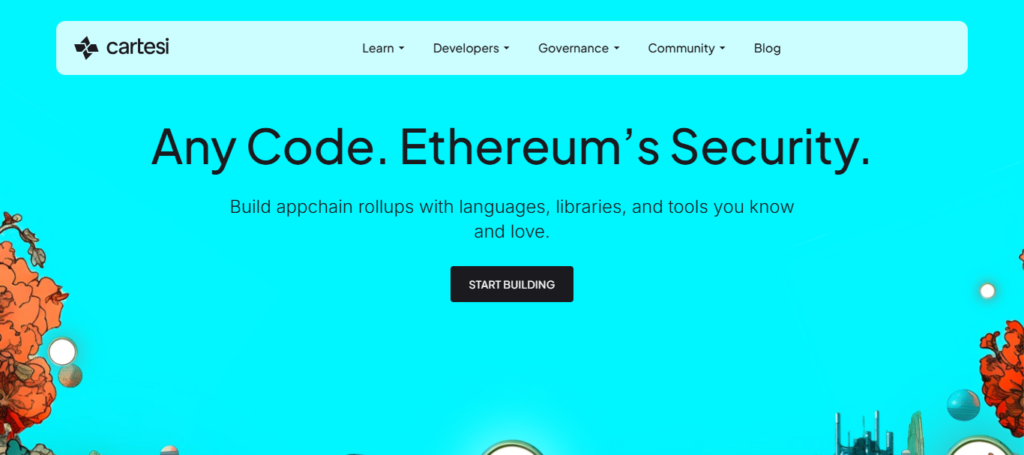
Highly complex spatial mapping and analysis require advanced computing and geodata processing that the current infrastructure handles with ease.
These dApps give users verifiable computations of geospatial data. Contributors and developers benefit from the large scale, high computing, and efficient mapping dApps in decentralized systems of geography.
Cartesi Geo dApps Features, Pros & Cons
Features
- Off-Chain Computing for Mapping
- Geospatial Apps for dApps
- Blockchain with Security
- Easy Development for Security
- Processing of Advanced Spatial Data
Pros
- Very powerful computation
- Logic of advanced mapping is possible
- Less congestion on blockchain
- Development is more flexible
- Greater potential for development and growth
Cons
- Focused on developers (not end-users)
- Higher level of abstraction/complexity
- Low consumer uptake
- Young ecosystems
- Early geospatial use case adoption
8. Helium Mobile Mapping
Helium Mobile Mapping is a system where users of the newly decentralized wireless network contribute their mobile devices for coverage.
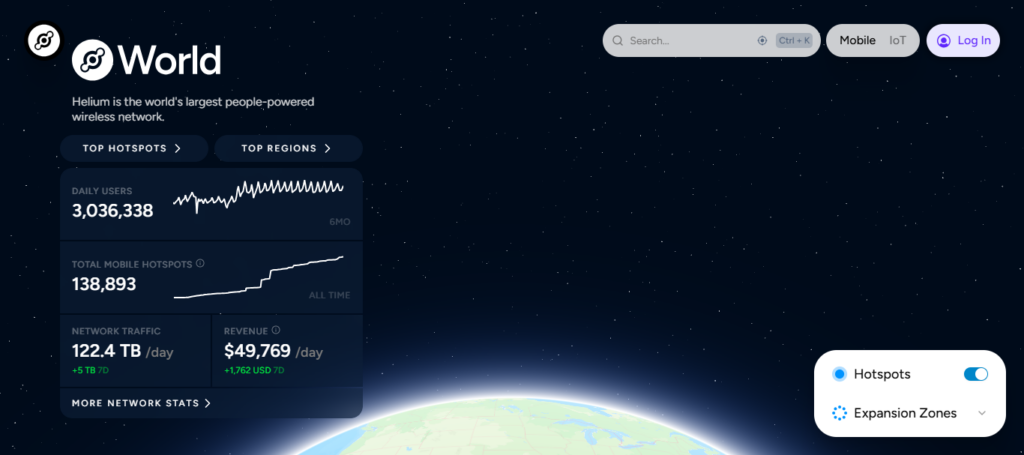
This system brings users to a community sourced map of wireless coverage, signal, and latency for users. Mapping the performance of the wireless systems improves the computation of infrastructure and planning for geolocation.
This system supports decentralized 5g and wireless mapping. Top Decentralized Mapping Protocols Reward Contributors engages users to improve the wireless systems and explore the world to map network performance.
Helium Mobile Mapping Features, Pros & Cons
Features
- Wireless mapping is decentralized
- Tracks Mobile Network Coverages
- User data on connectivity
- Incentive structure based on tokens
- Aiding in building 5G networks
Pros
- Better understanding of mobile coverage
- Does not need advanced hardware
- Significant telecom-related use cases
- Data can be provided passively
- More decentralized network
Cons
- Drains battery
- Minimal income
- Coverage reliant on user density
- Network not fully built
- Privacy in tracking
9. DMap Protocol
DMap Protocol is a framework for decentralized mapping and enables users, for the first time, to provide, validate, and profit from geographic data, without a centralized entity.
The focus is on user-generated mapping content, which includes roads, landmarks, and updates on mapping content and their locations.

Using blockchain technology provides transparency, ownership, and automated reward systems for mapping content contributors. The protocol allows integration with decentralized applications needing accurate mapping content and geospatial data.
Top Decentralized Mapping Protocols Reward Contributors by building a mapping ecosystem that rewards contributors for making the world’s maps more accurate and for adding to evolving decentralized mapping geographic databases.
DMap Protocol Features, Pros & Cons
Features
- Map data is decentralized
- User-made geospatial content
- Verification via blockchain
- Incentives to provide data
- Open-sourced mapping
Pros
- Excellent model of decentralization
- Community mapping is encouraged
- Rewards are transparent
- Can be integrated in many ways
- Complex systems are not needed
Cons
- Very Low user adoption
- Very little actual use
- Relies on network effects
- Competes with leading map systems
- Still in progress
10. GeoDB
GeoDB is a decentralized big data solution, which uses a blockchain-enabled approach to provide users with an incentive through token rewards for providing their geolocation and behavioral data in an anonymous format.
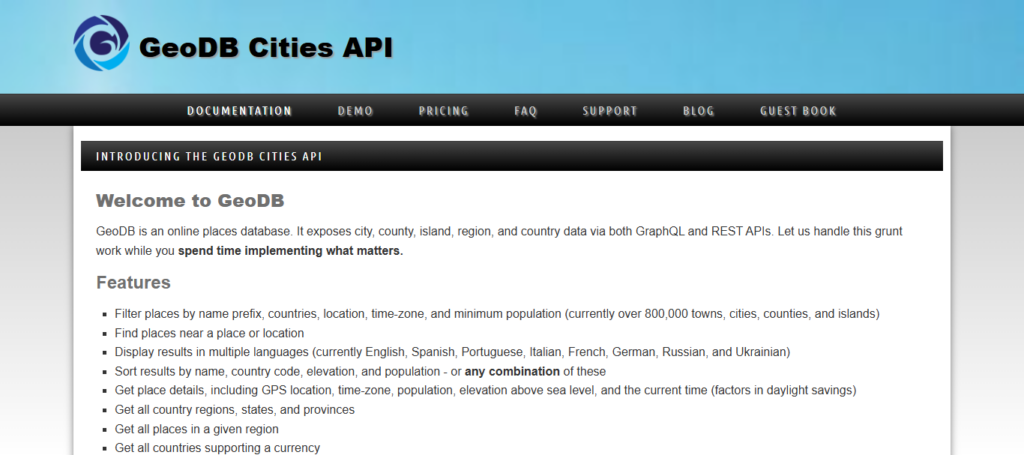
Since GeoDB aggregates location data and behavioral data from a large population of users, the data can be used for valuable analytics and marketplace. GeoDB is an example of one of Top Decentralized Mapping Protocols Reward Contributors because contributors are able to secure pay for providing their location data within a decentralized economy.
GeoDB Features, Pros & Cons
Features
- Geolocation and big data
- Monetization of user data
- Data collection is anonymous
- Blockchain and rewards
- Data and analytics
Pros
- Excellent data monetization
- Privacy is retained
- Can be used to analyze markets
- Passive income opportunity
- High data-shift potential
Cons
- Concerns regarding privacy perception
- Reliance on data purchasers in the marketplace
- Complex limited user control
- Variable token valuation
- Unpredictable policies in certain regions
Conclusion
Decentralized mapping protocols have completely shifted the practices of data collection, validation, and data monetization in the geospatial realm. As opposed to the traditional mapping systems where a small number of large corporations monopolize control, these systems allow everyone to be an active participant.
These everyday users can earn rewards by providing data on the location, mobility, and connectivity, which requires no more effort than walking around and observing daily activities. Each of the mapping protocols makes its own contribution to the extended network, providing transparency and helping the community with building the mapping ecosystem.
The leading decentralized mapping protocols that reward contributors, value movement and the sharing of data as digital assets. These protocols are helping create an equitable protocol that provides users with the ownership of the data they share and incentivizes them, all while making the world’s maps more precise and up to date.
FAQ
What are decentralized mapping protocols?
Decentralized mapping protocols are blockchain-based systems that collect, verify, and store geospatial data from users worldwide. Instead of relying on centralized companies, they allow everyday contributors to share location data and earn rewards for improving map accuracy and coverage.
How do these mapping protocols reward users?
Most platforms reward users with crypto tokens or digital incentives when they contribute useful data such as driving routes, GPS signals, connectivity information, or geofenced check-ins. Rewards depend on data quality, accuracy, and network participation.
Are decentralized mapping platforms safe to use?
Yes, most reputable platforms use encryption, anonymization, and blockchain verification to protect user privacy. However, users should always review permissions and understand what type of location data they are sharing.
What devices are needed to participate?
Typically, a smartphone or vehicle device is enough. Some networks like dashcam-based systems may require additional hardware, while others work through mobile apps or background GPS tracking.
Can users really earn money from these platforms?
Yes, users can earn crypto-based rewards, but earnings vary based on activity level, location demand, and data quality. It is usually considered a passive or supplementary income source.