

In this article, I will be reviewing the top-rated Cash Flow Management Software designed for Startups. Cash Flow Management Software allows owners to manage income, spendings, and financial predictions quickly.
- Key Point & Best Cash Flow Management Software for Startups
- 1. FreshBooks
- FreshBooks Features, Pros & Cons
- 2. Zoho Books
- Zoho Books Features, Pros & Cons
- 3. Float
- Float Features, Pros & Cons
- 4. Pulse
- Pulse Features, Pros & Cons
- 5. PlanGuru
- PlanGuru Features, Pros & Cons
- 6. LivePlan
- LivePlan Features, Pros & Cons
- 7. Wave Accounting
- Wave Accounting Features, Pros & Cons
- 8. Gusto
- Gusto Features, Pros & Cons
- 9. Expensify
- Expensify Features, Pros & Cons
- 10. Ramp
- Ramp Features, Pros & Cons
- Conclusion
- FAQ
These tools aid budgeting, increase clarity in the financial flow, and enhance the decision-making process. Good software provides invoicing, expense tracking, and real-time cash flow so that your startup can manage and improve finances effectively.
Key Point & Best Cash Flow Management Software for Startups
| Software | Key Point |
|---|---|
| FreshBooks | User-friendly accounting with automated invoicing and expense tracking for startups. |
| Zoho Books | Comprehensive cloud accounting with real-time cash flow insights and bank integration. |
| Float | Powerful cash flow forecasting and planning tool to help startups stay financially prepared. |
| Pulse | Simplified cash flow management with visual dashboards and easy expense tracking. |
| PlanGuru | Advanced budgeting, forecasting, and financial analytics to plan startup growth. |
| LivePlan | Business planning software with financial forecasting, KPIs, and scenario modeling. |
| Wave Accounting | Free accounting and invoicing software with basic cash flow management features. |
| Gusto | Payroll and HR software with integrated cash flow insights for small businesses. |
| Expensify | Automated expense reporting and tracking to keep startup spending in check. |
| Ramp | Corporate card with expense management and real-time cash flow visibility. |
1. FreshBooks
FreshBooks is one of the Best Cash Flow Management Software for Startups as it focuses on simplifying the accounting and tracking of finances. Among its many features are automated invoice generation and expense tracking as well as time tracking and invoicing.
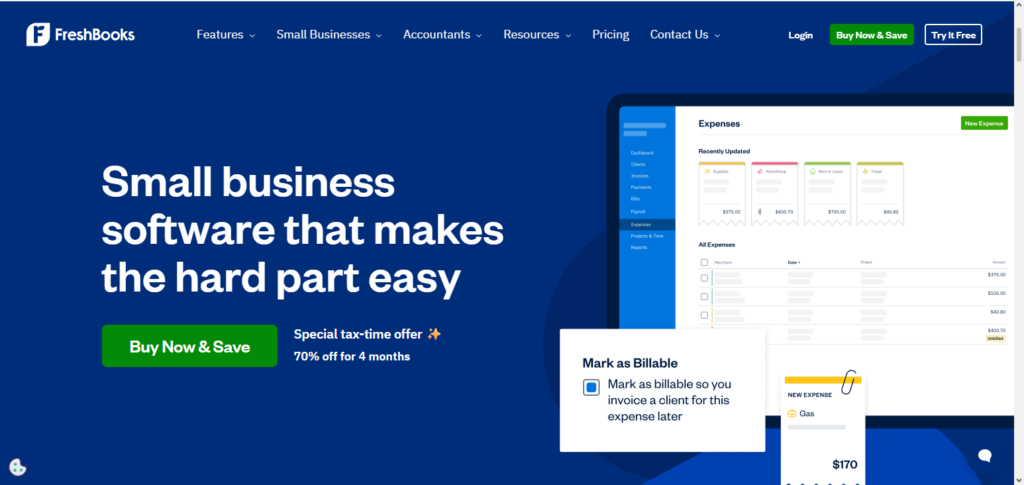
Because of its finances behavioral analytics, it is suited for small businesses and encourages the generation of invoicing and payment tracking. Its interface is user-friendly and non accountants can manage finances as well as accountants.
FreshBooks reports integrate paying services such as Stripe and PayPal. Startups are able to simplify financial decisions using reporting tools that determine their current cash position and level of profitability.
FreshBooks Features, Pros & Cons
Key Features:
- Invoicing is automated
- There is a way to track expenses
- There is a way to track time
- There is an reporting tool
- There are other tools that integrate with the app
Pros:
- There is an easy to read and use interface
- It is servic e based startup friendly
- There are invoicing tools for the clients
- There are financial dashboards
- It is cloud based
Cons:
- There is limited forecasting that is advanced
- There are no ideal options for large enterprise
- There is no included payroll
- There are added features that are required
- There is growtn in price for the teams
2. Zoho Books
With powerful accounting software, Zoho Books was selected as one of the Best Cash Flow Management Software for Startups. Startups are assisted with cash flow management with automated bank feeds, expense tracking, and comprehensive financial reporting.
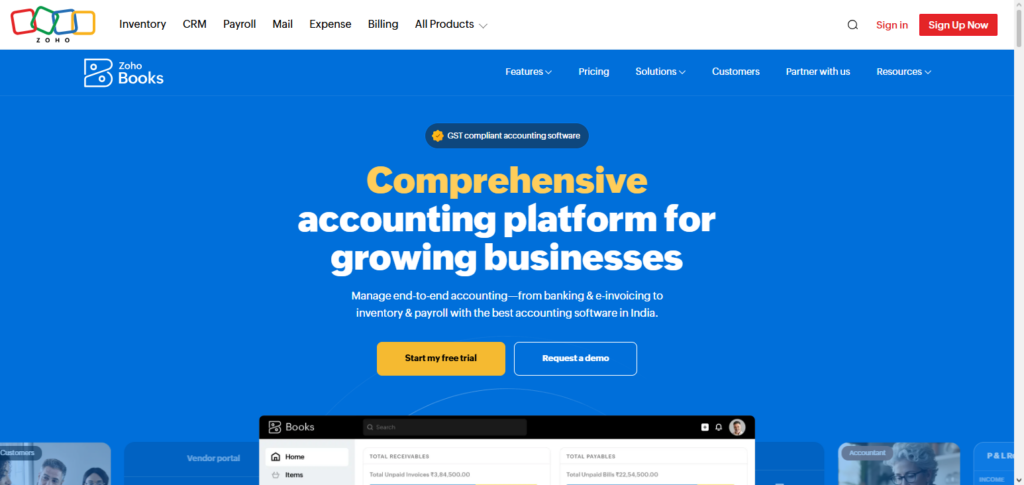
The software enables invoicing, payment reminders, and multi-currency management, which is perfect for businesses with global operations.
Workflow automation is possible by integrating Zoho Books with other Zoho apps or third-party software. Startups are able to view their cash position, unpaid invoices, and future obligations with the real-time dashboard. This enables startups to scale their operations while optimizing cash flow management.
Zoho Books Features, Pros & Cons
Key Features:
- There is an automated way to manage bank feeds
- There is a real time tool to manage cash flow
- There are multiple currencies available
- There are ways track and manage expenses and bills
- There is an integration with the Zoho suite
Pros:
- There are multiple pricing tiers
- There is strong automation
- There are strong tools to manage cash
- It scales with the growth of the business
- The mobile app is excellent
Cons:
- There is a learning curve
- There is limited payroll in certain regions
- Custom reports require to be setup
- There are advanced features that require higher pricing plans
- The UI can be cluttered
3. Float
Float is one of the Best Cash Flow Management Software for Startups as it specializes in cash flow forecasting. With Float, founders can plan future expenses and revenues effectively. With accounting integrations such as Xero, QuickBooks, and FreeAgent, Float pulls real-time data and updates the financial picture.
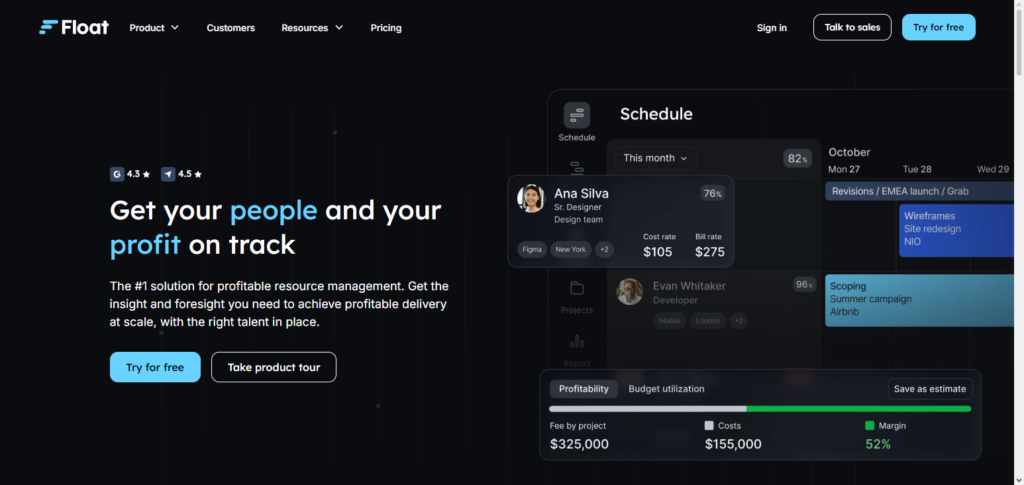
Float specializes in real-time cash forecasting, which reduces the short-term and long-term financial risks of startups by allowing them to plan for strategic increases in expenses and revenues. Float helps startups improve cash flow management by providing visual scenarios and custom, weekly, or monthly forecasts.
Float Features, Pros & Cons
Key Features:
- There is real time forecasting for cash flow
- There is a tool for scenario planning
- There are visual dashboards
- There are integrations with accounting tools
- Weekly and monthly views
Pros:
- Best forecasting accuracy
- Easy visualization of cash trends
- Fast scenerio comparisons
- Simple onboarding
- Works with QuickBooks/Xero
Cons:
- Doesn’t replace full accounting
- Standalone invoicing is limited
- More expensive than basic tools
- Payroll needs are less suited
- Customization is limited
4. Pulse
Pulse is a user-friendly platform that has been awarded as one of the Best Cash Flow Management Software for Startups. Cash flow, pending bills, and future income are presented through easy-to-read visual dashboards.
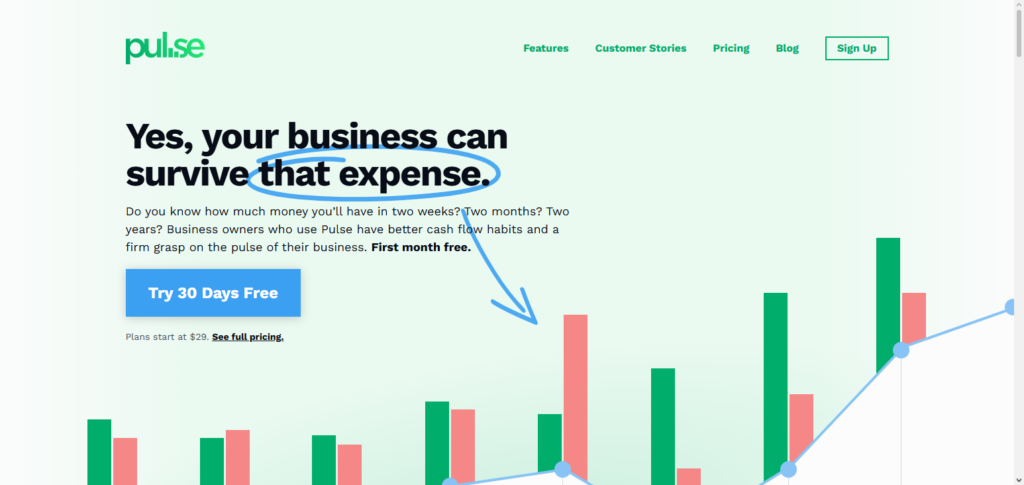
Simple and designed for startups without an elaborate structure, users can track finances without needing an advanced degree in accounting. Users can categorize expenses, create reports, and track cash flow balances in real-time.
Startups or early-stage enterprises that need a transparent view of cash inflows and outflows would benefit the most. Pulse helps startups make strategic decisions, minimize cash flow problems, and optimize expenditures. Pulse also helps startups make plans for future growth.
Pulse Features, Pros & Cons
Key Features:
- Clean cash flow dashboard
- Simple income/expense tracking
- Forecasting tools
- Tagging by category
- Custom date ranges
Pros:
- Extremely simple to use
- Rapid insights to cash
- For beginners there is visual clarity
- For small teams it’s affordable
- Snapshots of useful forecasts
Cons:
- Advanced features are few
- No invoicing and payroll
- Basic are the integrations
- Reporting depth is limited
- For large volumes it is not scalable
5. PlanGuru
PlanGuru is considered one of the Best Cash Flow Management Software for Startups for its budgeting and forecasting capabilities. It helps users develop in-depth budgets, make financial projections for multiple years, and evaluate specific performance indicators. Additionally, PlanGuru offers support for scenario-based planning.

This means, businesses can develop different models of revenue and expense, which most founders view as a challenge. The software also connects to accounting software, such as QuickBooks, to provide real-time data for accurate forecasting.
PlanGuru provides short-term and long-term insights so based on that information, startups are able to control their finances and provide cash flow as a resource for future growth.
PlanGuru Features, Pros & Cons
Key Features:
- Budgeting tools
- Forecasting of multiple scenarios
- Analysis of KPIs
- Projections of cash flow
- Integrations of accounting
Pros:
- Forecasting depth is powerful
- The insights of analytics are useful
- Planning ahead is great
- Scenerio is flexible
- Existing accounting data is used
Cons:
- For beginners it is more complex
- Small startups are priced high
- Usage requires training to be full
- UI seems old
- For tracking cash it is not basic ideal
6. LivePlan
Due to its advanced features of business planning and financial forecasting, LivePlan is one of the Best Cash Flow Management Software for Startups. It offers entrepreneurs the ability to write customizable business plans, track KPIs, and provide accurate forecasts for cash flow projections.
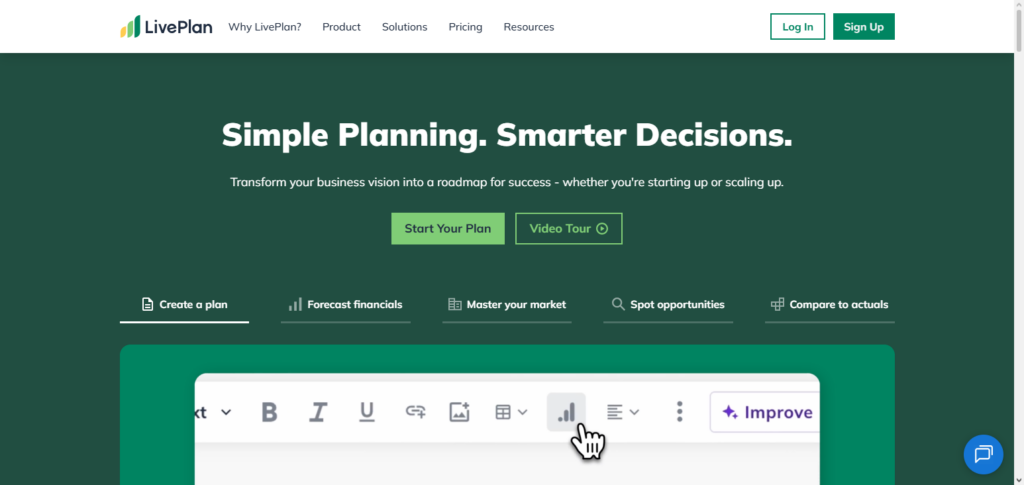
Startups can use LivePlan to assist them in creating different financial scenarios. With the ability to integrate with different accounting software, LivePlan can easily track actual performance and compare it to what was projected.
Startups can easily understand revenue, costs, and how much funding will be needed with the help of the software’s user-friendly dashboard. LivePlan’s ability to present financial data in an easily digestible format is its strongest selling point for investors and stakeholders.
LivePlan Features, Pros & Cons
Key Features
- Business Planning
- Forecasts
- KPI tracking
- Financial dashboards
- Reports
Pros
- Excellent for fundraising and startup companies
- Planning templates are very straightforward
- Financial charts are very useful
- Scenario modeling is very helpful
- Quickbooks integration is good
Cons
- Not a full accounting suite
- No payroll
- More suited for routing and operational planning than daily operational tracking
- Subscription price adds up.
- The advanced features are considered basic on most applications
7. Wave Accounting
Wave Accounting has been recognized several times for providing one of the Best Cash Flow Management Software for Startups for its ability to provide free services for accounting, invoicing, and receipt scanning.
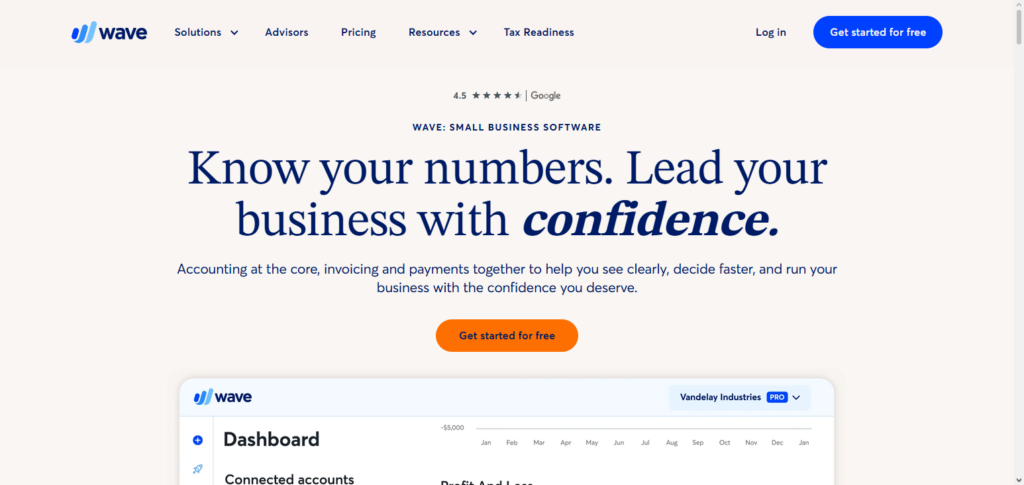
It allows startups to find a way to manage cash flow without the need to utilize expensive software to track income, expenses, and payments. Wave offers a dashboard to provide real time analytics to assist users with cash flow and the ability to create financial statements for users to make informed decisions.
It has simplified accounting for smaller teams with its automation of bank reconciliations and reporting. While it may not have all the tools for the forecasting most people would desire, it does provide a practical alternative for the early stage startups that need to manage cash flow without the need to focus operationally and grow efficiently.
Wave Accounting Features, Pros & Cons
Key Features
- No cost accounting suite
- No cost invoicing
- No cost expense tracking
- No cost bank reconciliation
- No cost receipt scanning
Pros
- Core features at no cost
- Simplistic use dashboard
- Start up budget constraints
- Automatic bank sync
- Cash flow overview is clear
Cons
- Limited forecasting capabilities
- No cost payroll is included in the add on
- The advanced features are considered basic on most applications
- Not the best customer support for large teams
- The advanced features are considered basic on most applications
8. Gusto
Gusto is a payroll and HR software. However, it is also considered one of the Best Cash Flow Management Software for Startups due to its data-driven insights on payroll-related expenses and their impact on cash flow. Startups can automate payroll, tax, and employee benefits payments, and at the same time monitor cash requirements in real time.
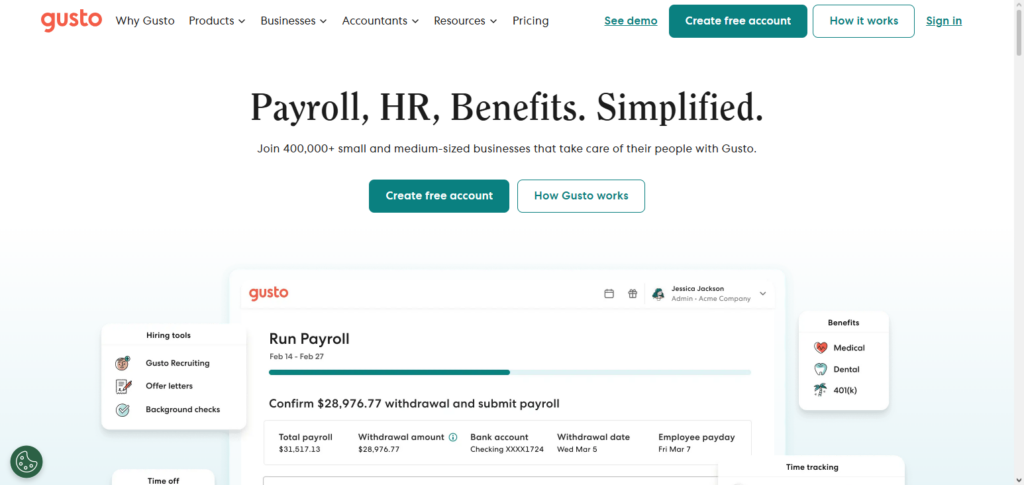
Gusto provides reporting tools to analyze and predict outflows to plan payroll distributions and operational cash outflows. Moreover, Gusto assists in HR administrative work including onboarding, training, and regulatory compliance activities, to ease the load for HR administrative personnel. Gusto streamlines processes for startups to keep cash flow stable, salaries paid on time, and financial planning simpler.
Gusto Features, Pros & Cons
Key Features:
- Automated payroll
- Benefit management
- HR features
- Tax management
- Cash flow insights
Pros:
- Excellent payroll capabilities
- Reduces administrative workload
- Clear payroll cost visibility
- Strong compliance support
- Easy onboarding
Cons:
- Payroll-centric, not full accounting
- Smaller teams will feel the monthly expense more than larger teams.
- Less forecasting functionality.
- Standalone invoicing is not an option.
- Best use case is alongside accounting software.
9. Expensify
Expensify is one of the Best Cash Flow Management Software for Startups for the efficient management of employee expenses and business spending. Expensify software automates the expense report and receipts scanning and reimbursement processes, ensuring reliable tracking of cash outflows.
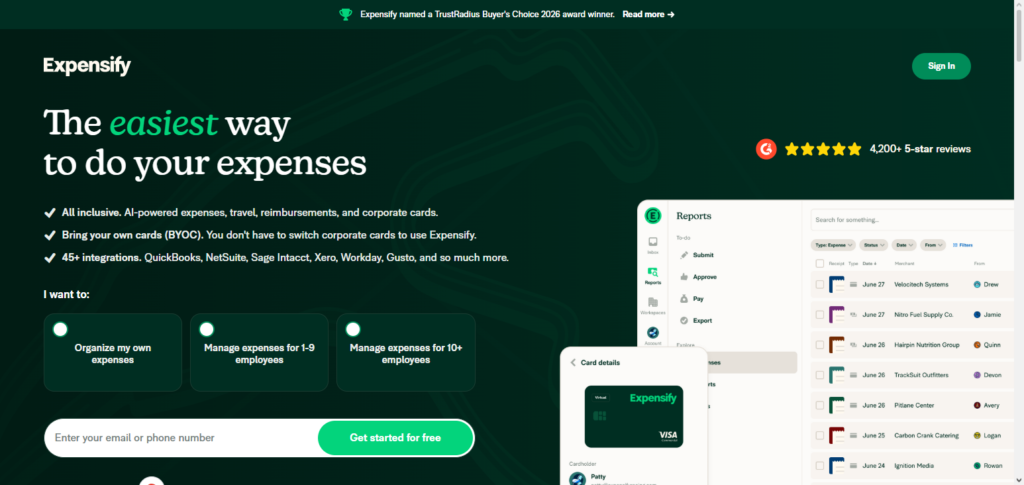
Startups can cover expenses, make reimbursement approvals effortless and integrate with accounting systems like QuickBooks or Xero. Expensify gives founders visibility into real-time spending which helps them better manage and control expenses to ensure healthy cash flow.
Employees can submit expenses from anywhere, and finance teams can track and analyze where the money is going to cut unnecessary losses and make better decisions.
Expensify Features, Pros & Cons
Key Features:
- Scan receipts
- Compile expense reports
- Automate policy compliance
- Account and expense integration
- Expenses tracked in real-time
Pros
- Compliant policy reporting is quick
- Mobile application is easy to use
- Receipt scanning is automatic
- Set spending limits
- Integrate with QuickBooks/Xero
Cons
- No accounting
- Expense reporting only
- No forecasting
- User pricing jumps
- Must train users
10. Ramp
Ramp is one of the Best Cash Flow Management Software for Startups and also serves as a corporate card and expense management tool with real time cash flow tracking. Startups get Ramp’s assistance in confidently analyzing spending patterns, expense categorization, and compliance with budget.
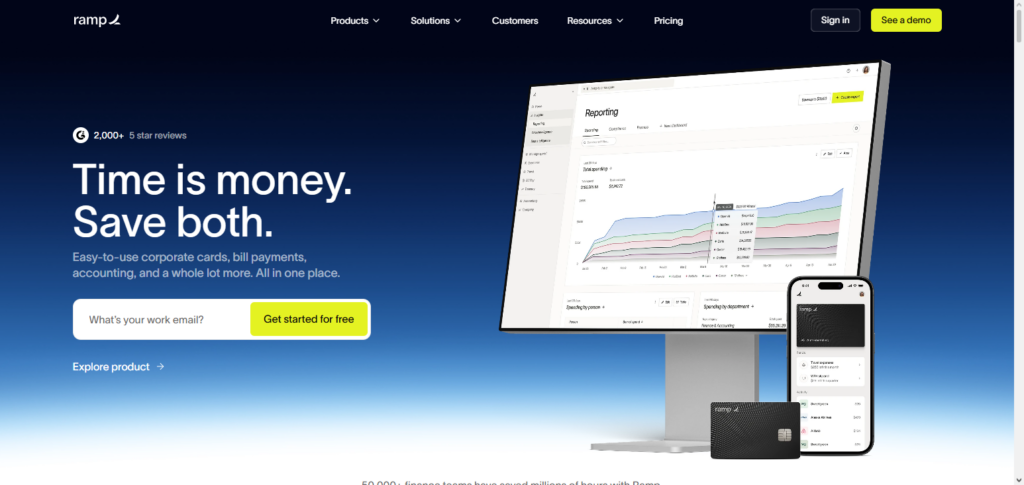
Ramp automates the approval of expenses, tracks receipts, and gives cash back on business spending. Startups gain from optimized spending, reduced financial risk, and data driven decisions to maintain liquidity and scale operations quickly with Ramp.
Ramp Features, Pros & Cons
Key Features:
- Insights into corporate card spending
- Spending policies
- Expenses tracked in real-time
- Budget management notifications
- Integrate with accounting
Pros:
- Cash back
- Good spend policies
- Transparency
- Less waste
- Great spend reporting
Cons
- Accounting not available
- Best suited spend card requirements
- Cash flow forecasting
- Integrations more than 5
- Poor dependent software
Conclusion
Startups need to focus on managing their cash flow to sustain themselves in today’s highly competitive market. The Best Cash Flow Management Software for Startups, such as FreshBooks, Zoho Books, Float, Pulse, PlanGuru, LivePlan, Wave Accounting, Gusto, Expensify, and Ramp, provide various ways to track expenses to understand spending, foresee financials, and optimize expenses.
These tools help startups in implementing real-time financial strategies and make confident decisions. Based on your startup’s size, complexity, and growth objectives, you can select the software that would be the right fit for you. Any software, however, would help you in keeping your cash flow healthy and your startup prosperously growing.
FAQ
What is cash flow management software?
Cash flow management software helps startups track income, expenses, and financial projections in real-time. It provides insights into liquidity, forecasts future cash positions, and simplifies budgeting and reporting.
Why is cash flow management important for startups?
Startups often face fluctuating revenues and expenses. Proper cash flow management ensures bills are paid on time, financial risks are minimized, and resources are allocated efficiently for growth.
Which software is best for small startups on a budget?
Wave Accounting and Expensify are cost-effective options that offer free or affordable features while still providing essential cash flow tracking and reporting.
Can these tools forecast future cash flow?
Yes, software like Float, PlanGuru, and LivePlan offer advanced forecasting and scenario planning to help startups anticipate shortages or surpluses.
Do these platforms integrate with accounting tools?
Most, including FreshBooks, Zoho Books, and Ramp, integrate with popular accounting software like QuickBooks, Xero, or Stripe, ensuring real-time data and accurate cash flow insights.